Tokyo / Guide
Under the Kaminarimon Lantern at Senso-ji, Look Up: There Is a Dragon
Senso-ji and Asakusa浅草寺・浅草
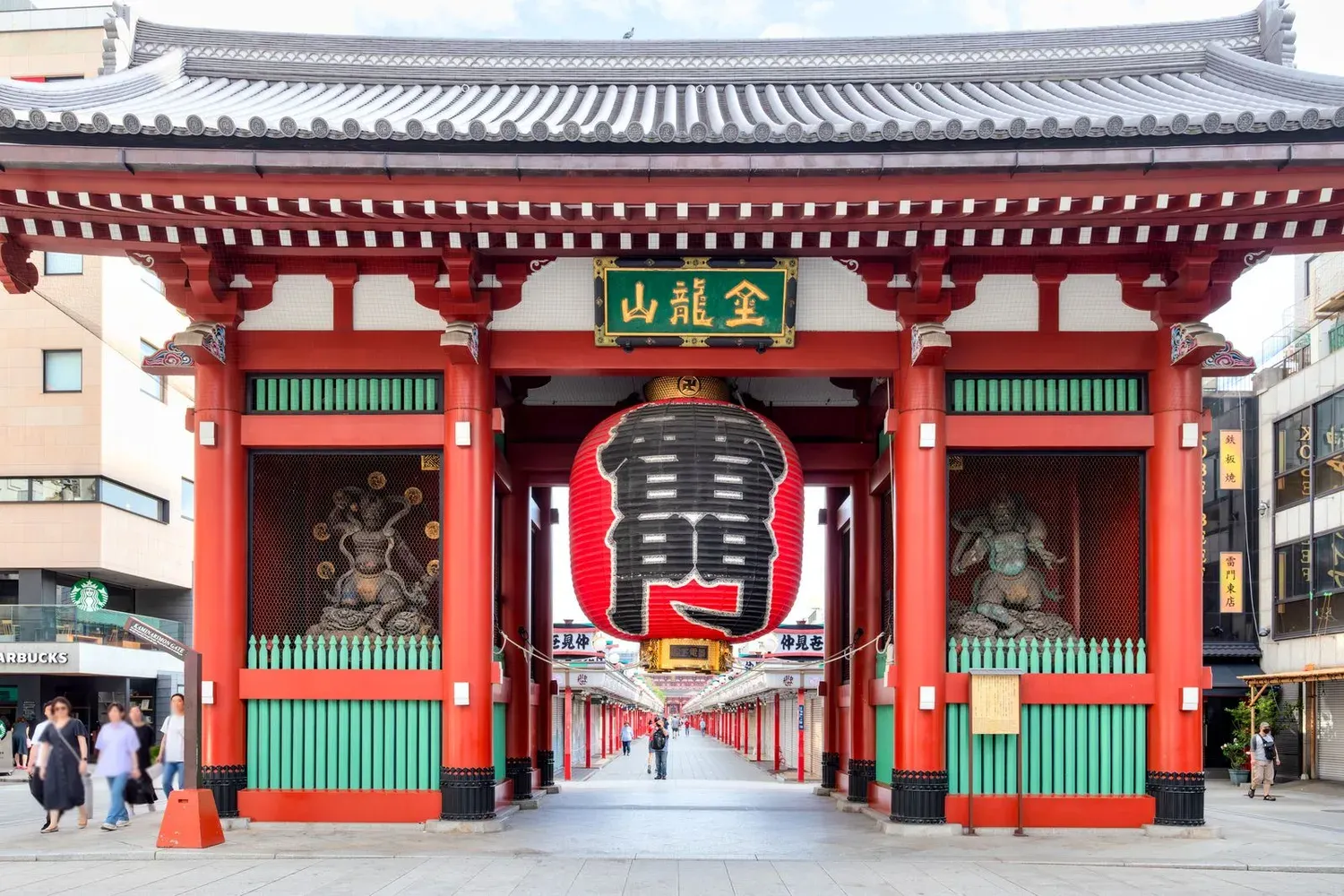
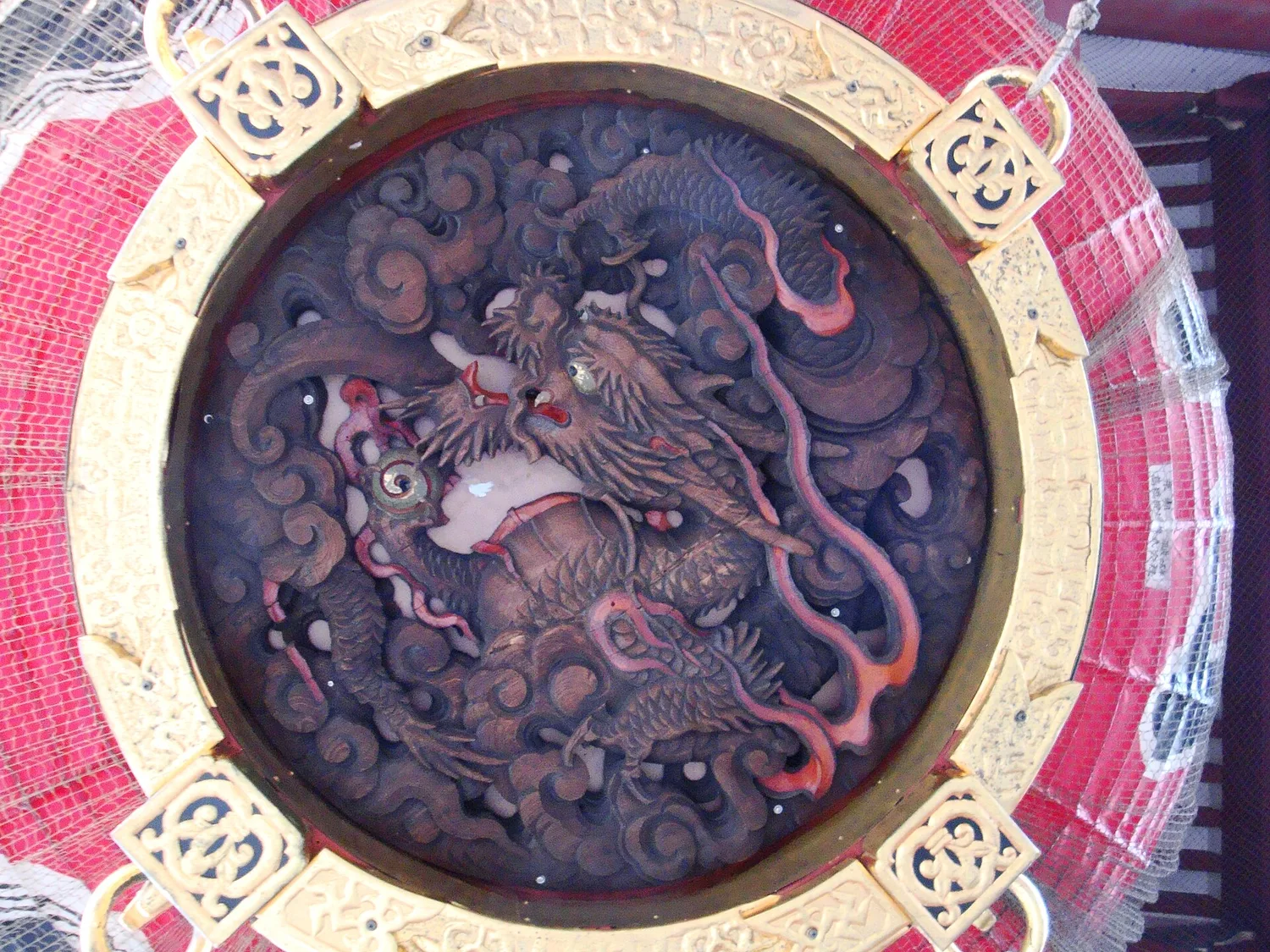
Kaminarimon, the gate you have probably seen in photos of Tokyo, did not exist for 95 years after a fire burned it down. It is easy to photograph its giant red lantern from the front and walk on; I would rather you stand right under it and look up, because a dragon is carved into its underside, and it still makes me smile every time I remember it is there.
That dragon is the first of several. Senso-ji keeps dragons at the gate, behind the gate, over the water where you wash your hands and across the ceiling of the main hall, and once you start looking for them, the walk from the street to the altar turns into a small treasure hunt. Start before late afternoon if you can, because the main hall closes at five; if you arrive later than that, skip ahead to the lit-up grounds and the free terrace instead of rushing the hall.
Start under the lantern
The gate’s formal name is Furaijinmon, the Gate of the Wind and Thunder Gods, after the two figures standing in its side bays. The present gate went up in 1960, paid for by Konosuke Matsushita, then president of Matsushita Electric, the company now called Panasonic.
The lantern is 3.9 meters tall and weighs about 700 kilograms, and from underneath it turns into a great red curve closing in around a carved dragon. Stand beneath it and the crowd noise seems to drop for a second.
Look at the wind god and thunder god before you walk through. What moves me about them is that their heads are older than the gate: the fire of 1865 burned the statues down to their heads, and a sculptor carved new bodies for them later.
Turn around for two more dragons
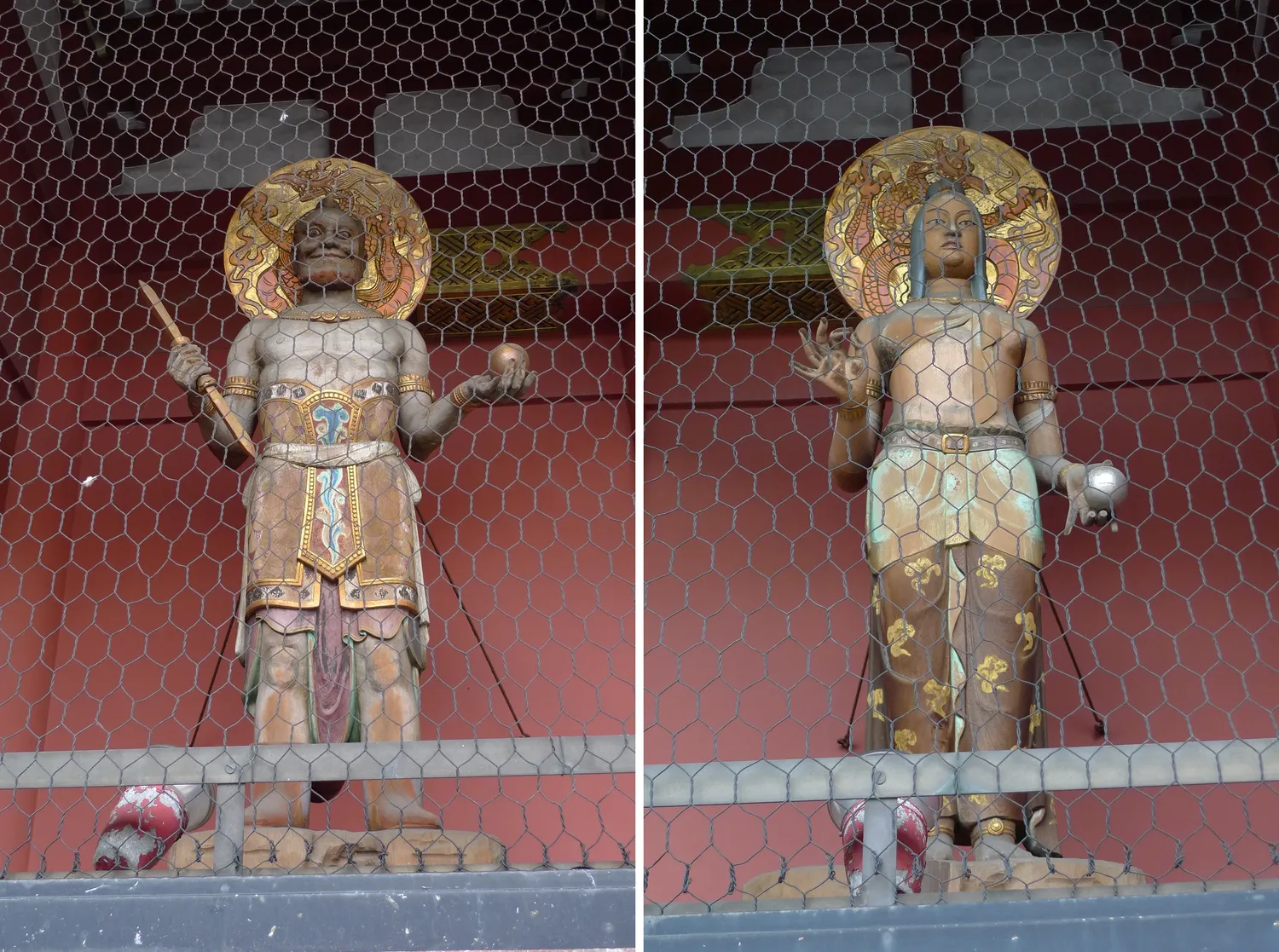
Once you are through the gate, turn around. On the back of Kaminarimon, where the wind and thunder gods stand on the front, there are two tall wooden dragon gods carved from Kiso cypress: Tenryu, in the form of a man, and Kinryu, in the form of a woman. They were given by volunteers from the Matsushita group.
To me the back of the gate feels quieter than the front, and the two dragons are easy to miss while your eyes are still on the lantern.
Walk Nakamise, then come back after dark
From the gate to the next one, Nakamise runs as a line of red-fronted shops on both sides of the approach. Senso-ji says it began around 1685, when people from the neighborhood, asked to help clean the temple grounds, were allowed to set up stalls in return.
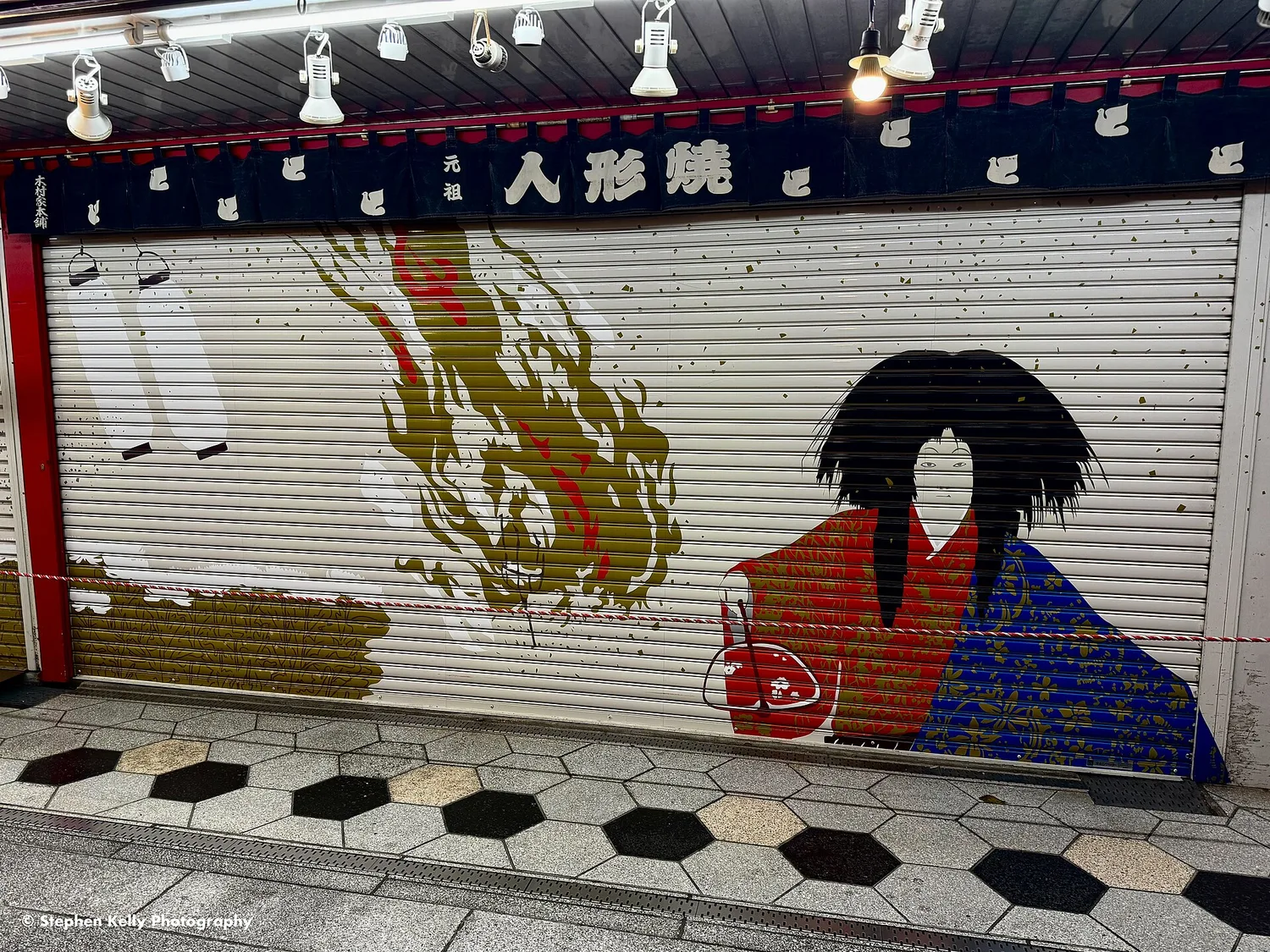
Picture the street in daytime, with snacks and souvenirs on both sides, and then picture it again in the evening, when most of the shops have closed. I prefer the second one. The shutters are painted with a long picture scroll of Asakusa’s history and its festivals through the year, made under the supervision of two professors at Tokyo University of the Arts, one of them the painter Ikuo Hirayama, and you can look for it on the shutters once the shops close.
Most shops close by early evening, so if something catches your eye on the way in, buy it then rather than counting on the walk back. If you buy something to eat, Taito City, which looks after Asakusa, asks one simple thing: do not touch goods in the shops with hands you have just eaten with. It also asks you to take rubbish with you or use a bin.
The sandals at Hozomon
The second gate, Hozomon, has two guardian kings in its side bays and a pair of enormous straw sandals. They are donated by a group of volunteers from Murayama in Yamagata Prefecture.
The story is my favorite at the temple. Demons, Senso-ji says, see sandals that size and think, if this is the size of the one guarding this temple, we had better leave. I like a temple that scares off evil with a joke about shoe size.
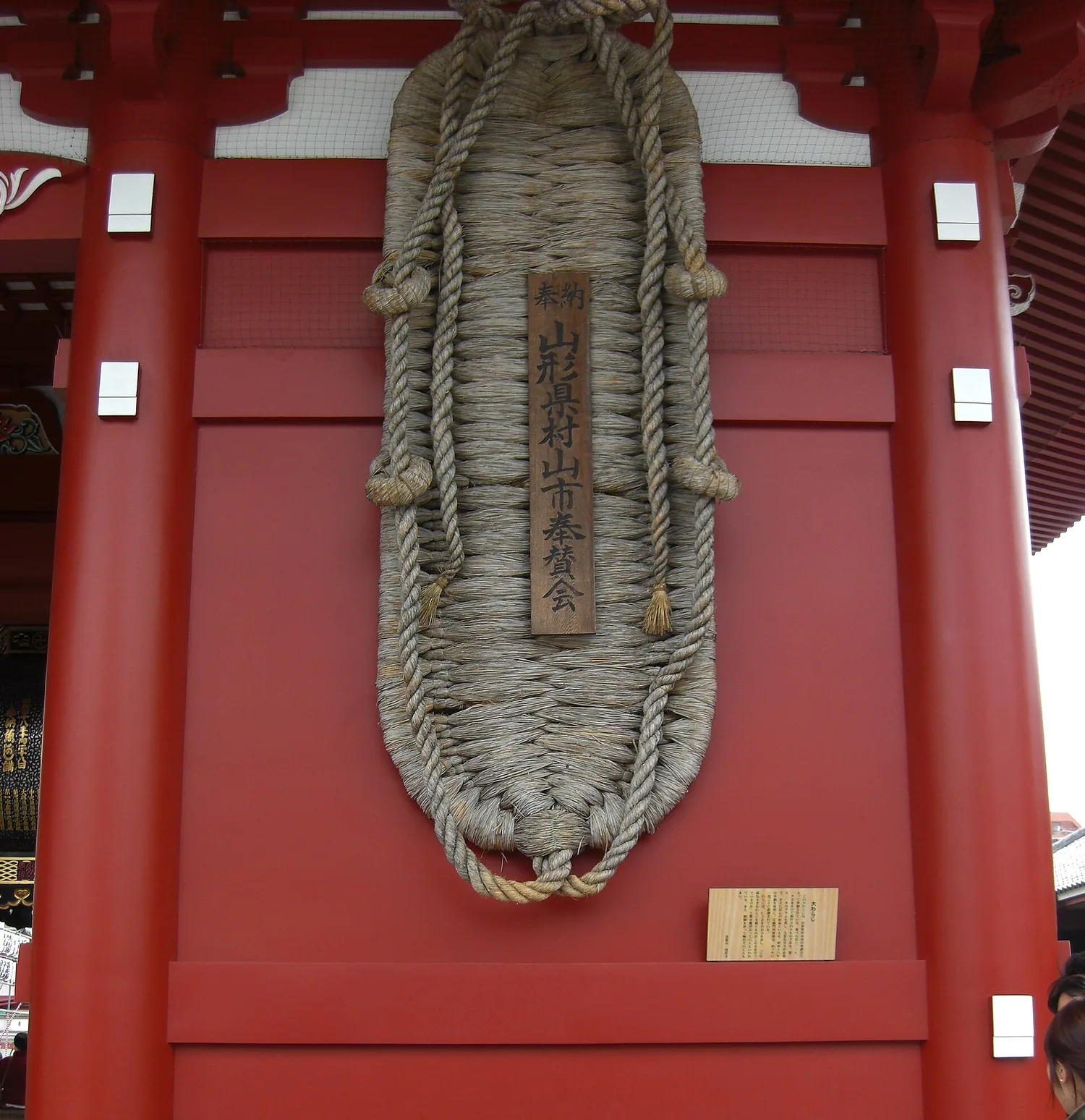
In the Edo period, this gate and Kaminarimon were shut at dusk, and the temple says the grounds then became a silent place with no one coming in or out. If you can, stay until dark and compare the silence the temple describes with what you see now.
The dragon over the water
Before the main hall, on the right, is the water pavilion where you wash your hands. Senso-ji’s way of doing it uses one ladleful of water for everything: hold the ladle in your right hand and rinse your left, switch and rinse your right, pour water into your left hand to rinse your mouth, never touching your lips to the ladle, then tip the ladle up so the last water runs down the handle.
Look up before you leave the basin. A dragon god by the sculptor Takamura Koun rises above the basin, and the ceiling has a dragon painted in ink. Of all the dragons, this one stays with me most, because you meet it with your hands wet and your head bowed.
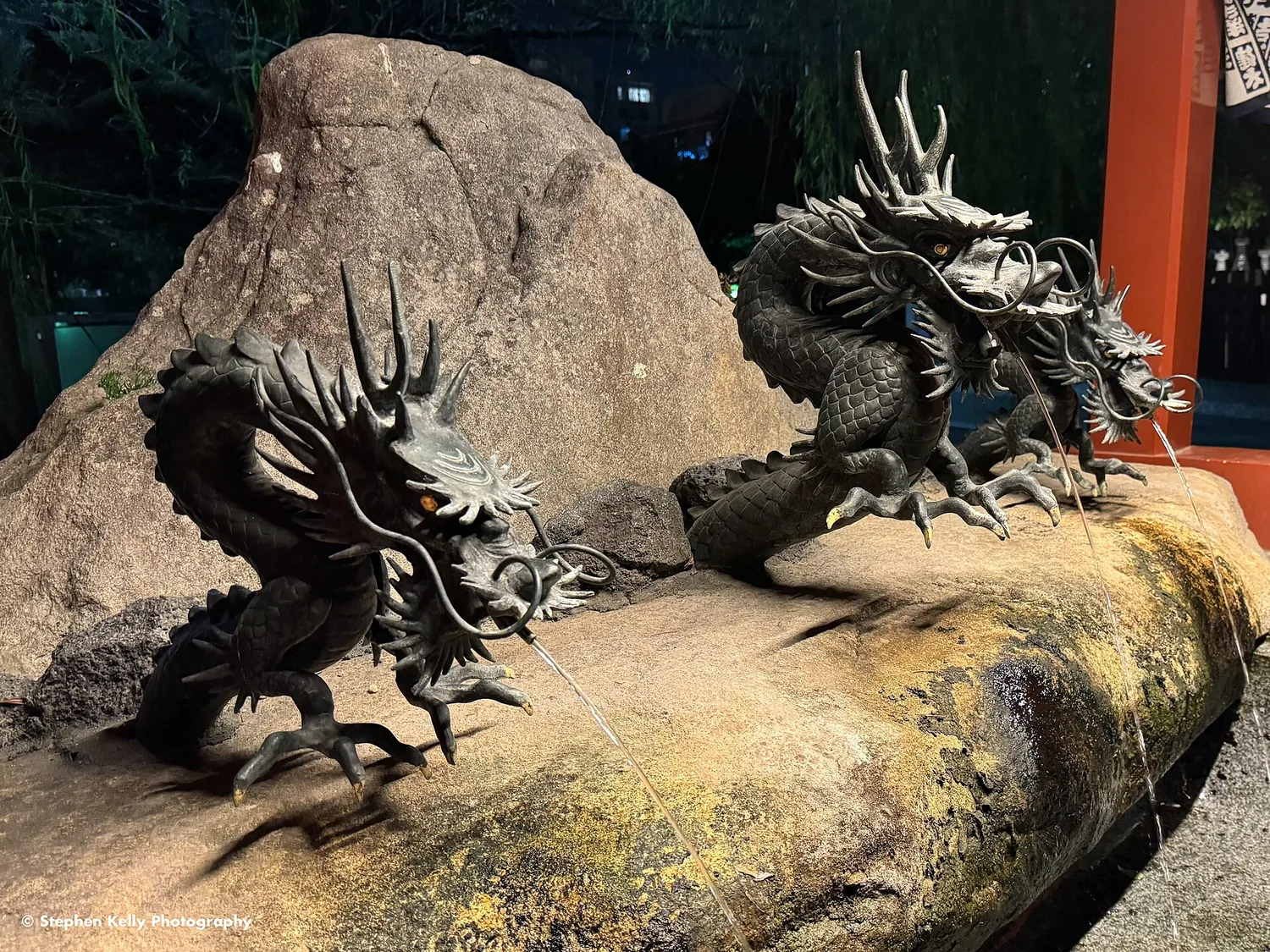
On the way to the hall, people waft smoke from the incense burner over themselves; Taito City says the smoke is believed to ward off bad energy. If you want to join in, waft a little toward yourself and walk on.
The dragon on the ceiling
The main hall you see is not old. The previous hall, a national treasure, burned in the air raid of March 1945, and this one was rebuilt with donations from across Japan. Step inside and look straight up: the center of the ceiling is a painting called Dragon, by Kawabata Ryushi, with heavenly beings on either side.
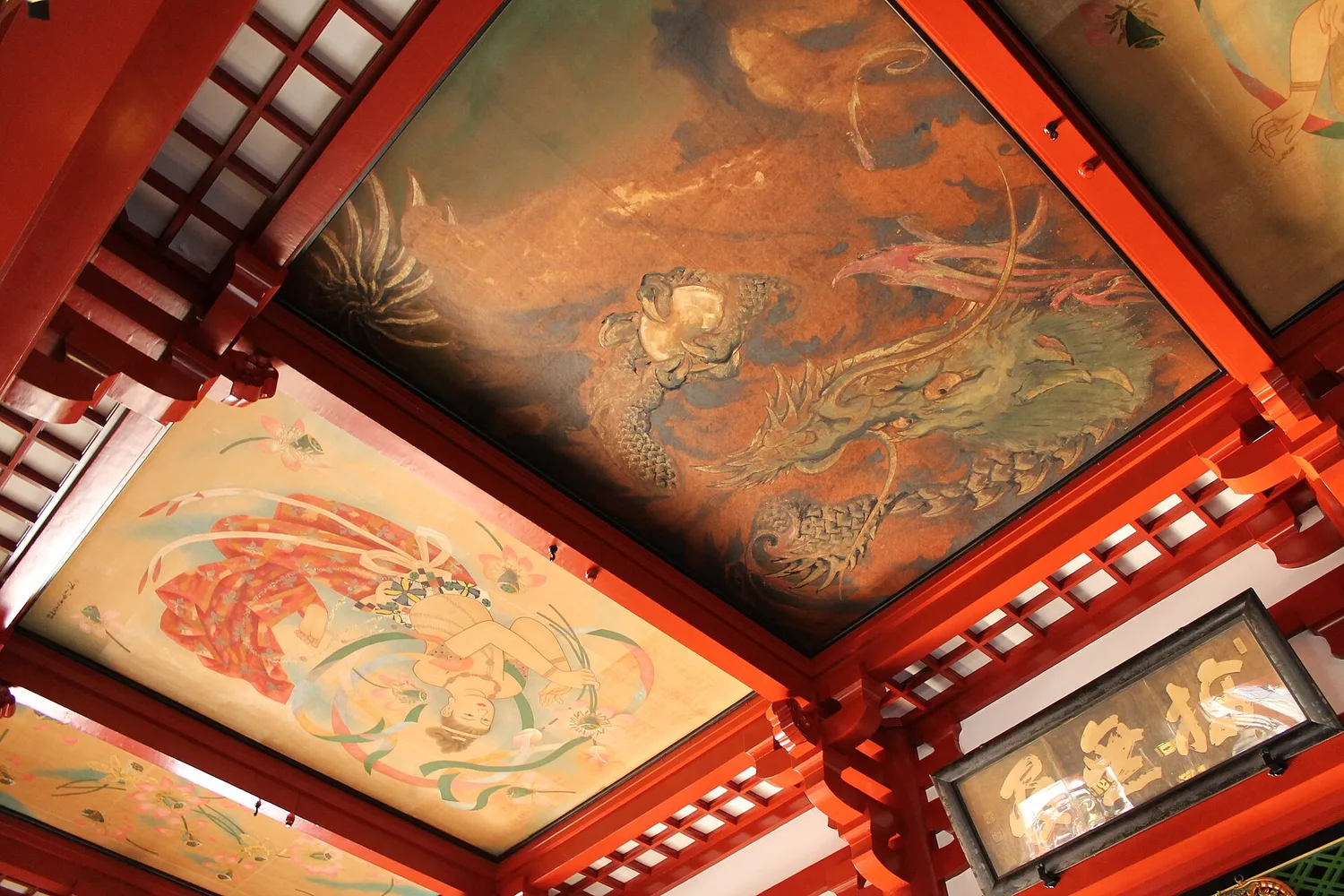
It is the last dragon on this walk, and it is easy to stand under it longer than you planned. Senso-ji’s own way to pray is to put your palms together and say “Namu Kanzeon Bosatsu.”
The temple’s main image is kept hidden; even its stand-in image can be seen only once a year, on 13 December at 2 p.m. In a temple this crowded, I like that the thing at the center of it all stays out of sight.
Then draw a fortune. People often say Senso-ji’s fortunes come up “bad” a lot, and the temple’s answer is cheerful: these are simply fortunes the old way. Put the stick back in its box, and if you get a bad one, tie it at the place set aside for them in the grounds.
After five
The main hall closes in the late afternoon. Taito City says the main hall, the five-storied pagoda and Hozomon are lit softly from around sunset, and it recommends coming just as the lights come on, before the night gets deep.
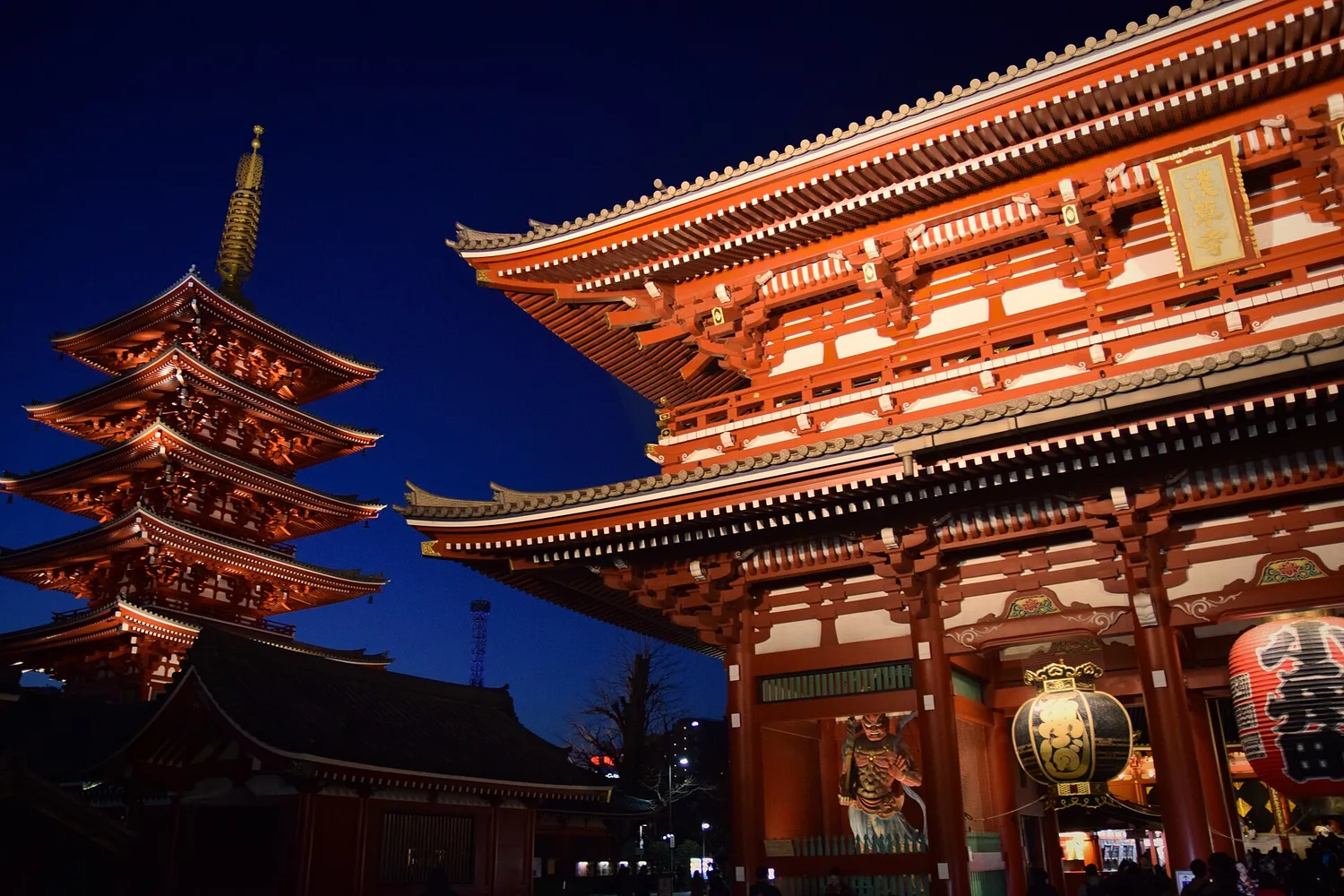
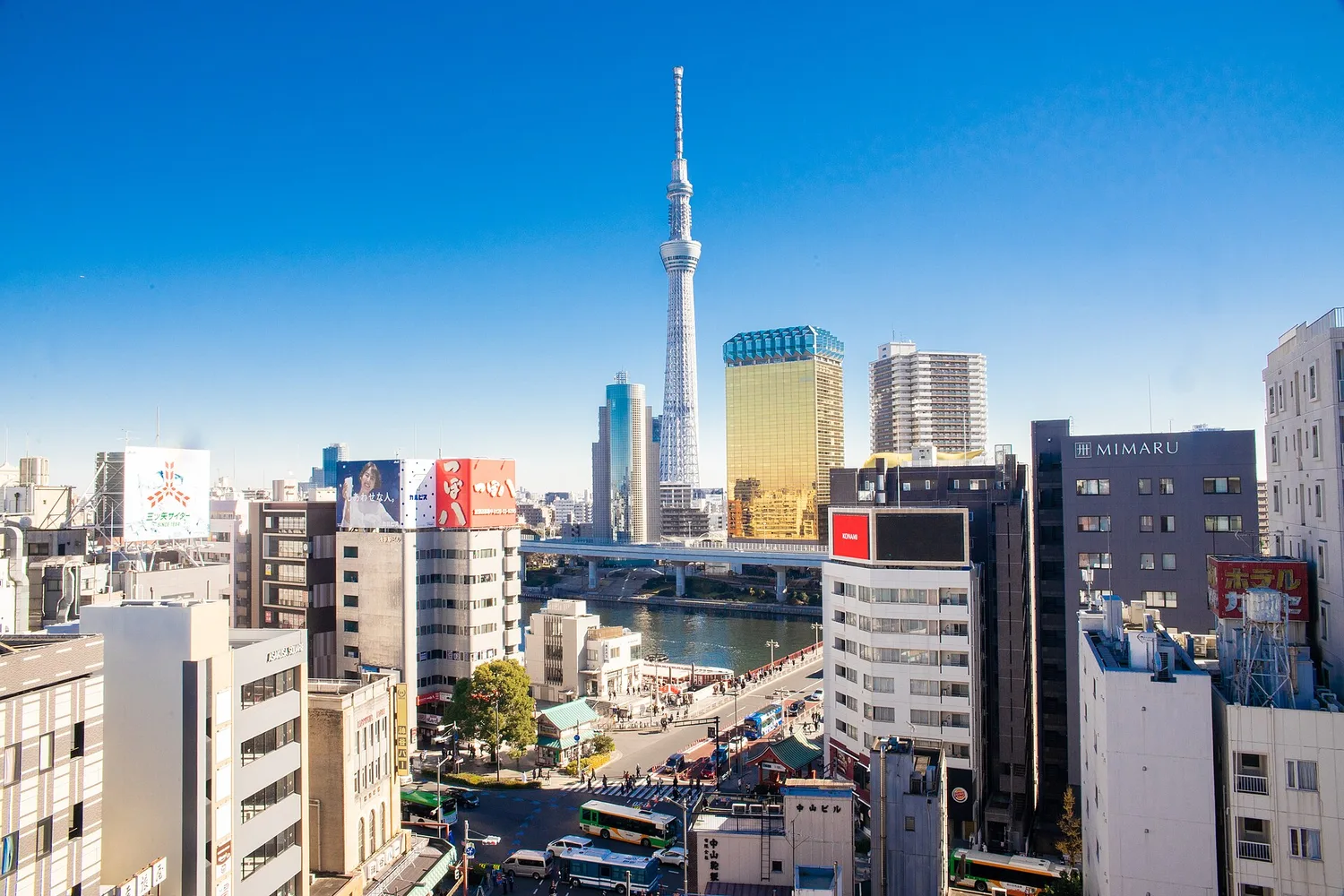
From there, walk back down Nakamise, where most shops have closed and the painted shutters are down, out through Kaminarimon, and across the road to the Asakusa Culture Tourist Information Center. Its 8th-floor terrace is free, and it looks out over Asakusa to Tokyo Skytree. I like ending here because you can look back over the neighborhood you just walked through, with Tokyo Skytree in view.
Come back for a festival
If your dates are flexible, plan around one of the temple’s fairs. In early July, stalls of ground cherries fill the grounds for Hozuki-ichi. Its second day is said to carry the merit of 46,000 days of prayer, which makes it the day I would choose.
In mid-December the stalls sell hagoita, decorated battledores, and a sale can be sealed with a rhythmic three-round clap for the buyer. If you are in Tokyo then, follow the clapping.
Asakusa Shrine, which shares Senso-ji’s address, holds the Sanja Matsuri in May, when about 100 neighborhood portable shrines are carried through the streets. Its hall was given by the shogun Iemitsu and survived both the great earthquake and the war.
Before you go
| Senso-ji | Main hall open 6:00–17:00 (from 6:30 October–March). The stand-in image is shown once a year, 13 December at 14:00. Address: 2-3-1 Asakusa, Taito City, Tokyo (東京都台東区浅草2-3-1). Official website: senso-ji.jp (Japanese) |
| Kaminarimon lantern | 3.9 m tall, 3.3 m wide, about 700 kg; replaced for the sixth time in April 2020. Dragon carved on the base |
| Hozomon sandals | 4.5 m tall, 500 kg, made with 2,500 kg of straw; donated in October 2018, the eighth donation since 1941 |
| Nakamise | About 250 m from Kaminarimon to Hozomon. Most shops close in the evening |
| Asakusa Culture Tourist Information Center | In front of Kaminarimon. 8th-floor terrace free, normally 9:00–22:00; open every day, though the center may close for maintenance. Information in Japanese, English, Chinese and Korean. Address: 2-18-9 Kaminarimon, Taito City, Tokyo (東京都台東区雷門2-18-9). Official page: city.taito.lg.jp (Japanese) |
| Asakusa Shrine | Office 9:00–16:00 weekdays, 9:00–16:30 weekends and holidays. Address: 2-3-1 Asakusa, Taito City, Tokyo (東京都台東区浅草2-3-1). Official website: asakusajinja.jp (Japanese) |
| Fairs | Hozuki-ichi 9–10 July (about 100 stalls); Hagoita-ichi 17–19 December; Sanja Matsuri in May (Asakusa Shrine gives it as the Friday to Sunday around the third Saturday) |
| Getting there | Asakusa Station (Ginza Line, Asakusa Line, Tobu, Tsukuba Express): about 5 minutes’ walk to Senso-ji |
Checked 18 October 2026.
What I would do
I would arrive in the early afternoon, so the hall is still open when I reach the last dragon, and keep the terrace for after the lights come on.
We have visited every place in this guide. The practical information was checked against the official sources below, checked on 18 October 2026.
- Senso-ji (Japanese) — main hall hours, the water pavilion and how to use it, the hidden Buddha and the stand-in figure, the fortunes, the way to pray; Kaminarimon, its lantern and dragon, the wind and thunder gods, the dragon gods on the back; Nakamise’s beginnings; Hozomon, its sandals and lantern, the Edo-period closing; the main hall’s history and ceiling paintings; Hozuki-ichi and Hagoita-ichi: senso-ji.jp/visit/howto.html, senso-ji.jp/faq/, senso-ji.jp/guide/guide01.html, guide02.html, guide03.html, guide04.html, guide12.html, senso-ji.jp/annual_event/13.html, 21.html, senso-ji.jp/access/
- Taito City (Japanese) — the Asakusa Culture Tourist Information Center and its terrace; the night lighting and Nakamise in the evening; the incense smoke; visitor manners: city.taito.lg.jp, t-navi.city.taito.lg.jp/features/32, t-navi.city.taito.lg.jp/spot/1001, t-navi.city.taito.lg.jp/business/features/manner
- Asakusa Nakamise Shopping Street Association (Japanese) — the shutter paintings: asakusa-nakamise.jp/shutter/
- Asakusa Shrine (Japanese) — the Sanja Matsuri, the shrine building, office hours and address: asakusajinja.jp
- Photographs: the lead image of Kaminarimon by くろふね, July 2023 (CC BY 4.0); the dragon under the lantern by Puchku (CC BY-SA 3.0); Tenryu and Kinryu by Motokoka (CC BY-SA 4.0, two photos placed side by side); the Nakamise shutter and the water pavilion dragons by Stephen Kelly (CC BY 2.0); the Hozomon sandal by Luistxo (CC BY-SA 4.0); the main hall ceiling by Sarah Stierch (CC BY 4.0); the pagoda and Hozomon at dusk by Raita Futo (CC BY 2.0); the view from the tourist center by Dick Thomas Johnson (CC BY 2.0). All via Wikimedia Commons, resized and converted to WebP.
Explore other areas
- Hokkaido — Sapporo
- Kanto — Hakone
- Hokuriku — Kanazawa
- Koshin-Tokai — Fuji Five Lakes
- Kansai — Nara
- Chugoku — Hiroshima
- Kyushu — Fukuoka
- Okinawa — Naha
