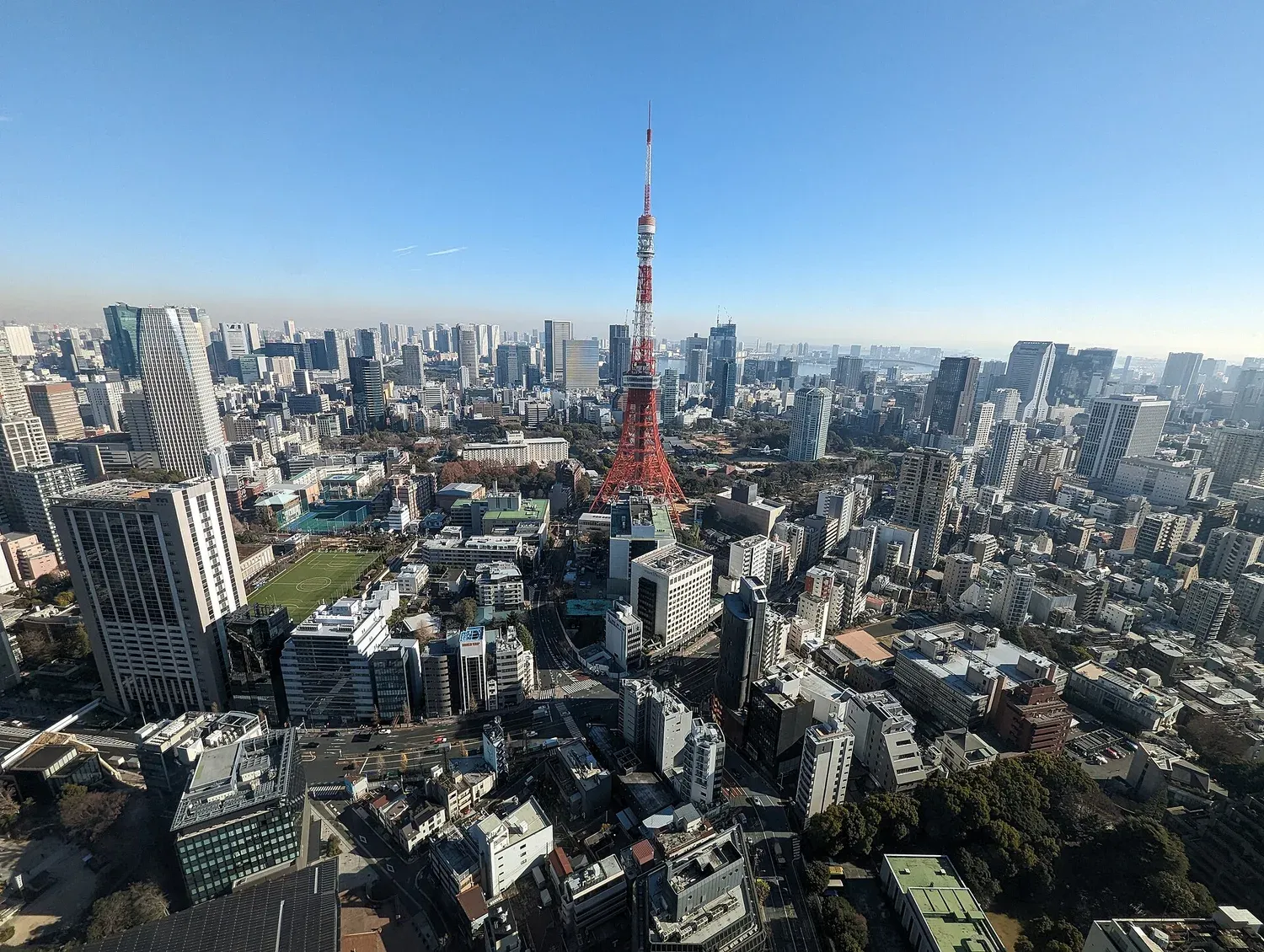
Tokyo / Guide
Tokyo Skytree and Tokyo Tower: One to Look Out From, One to Look At
Tokyo Skytree and Tokyo Tower東京スカイツリー・東京タワー
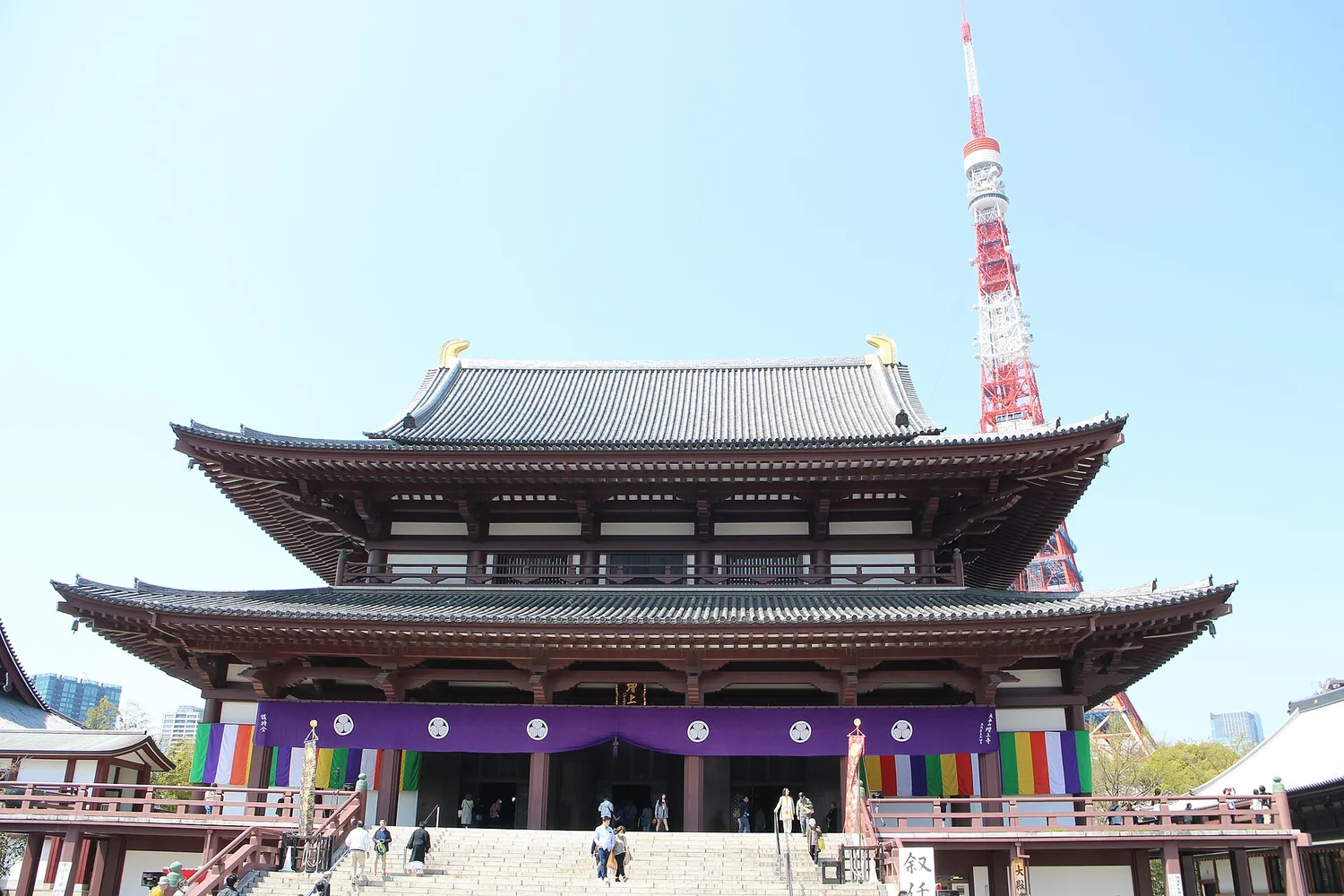
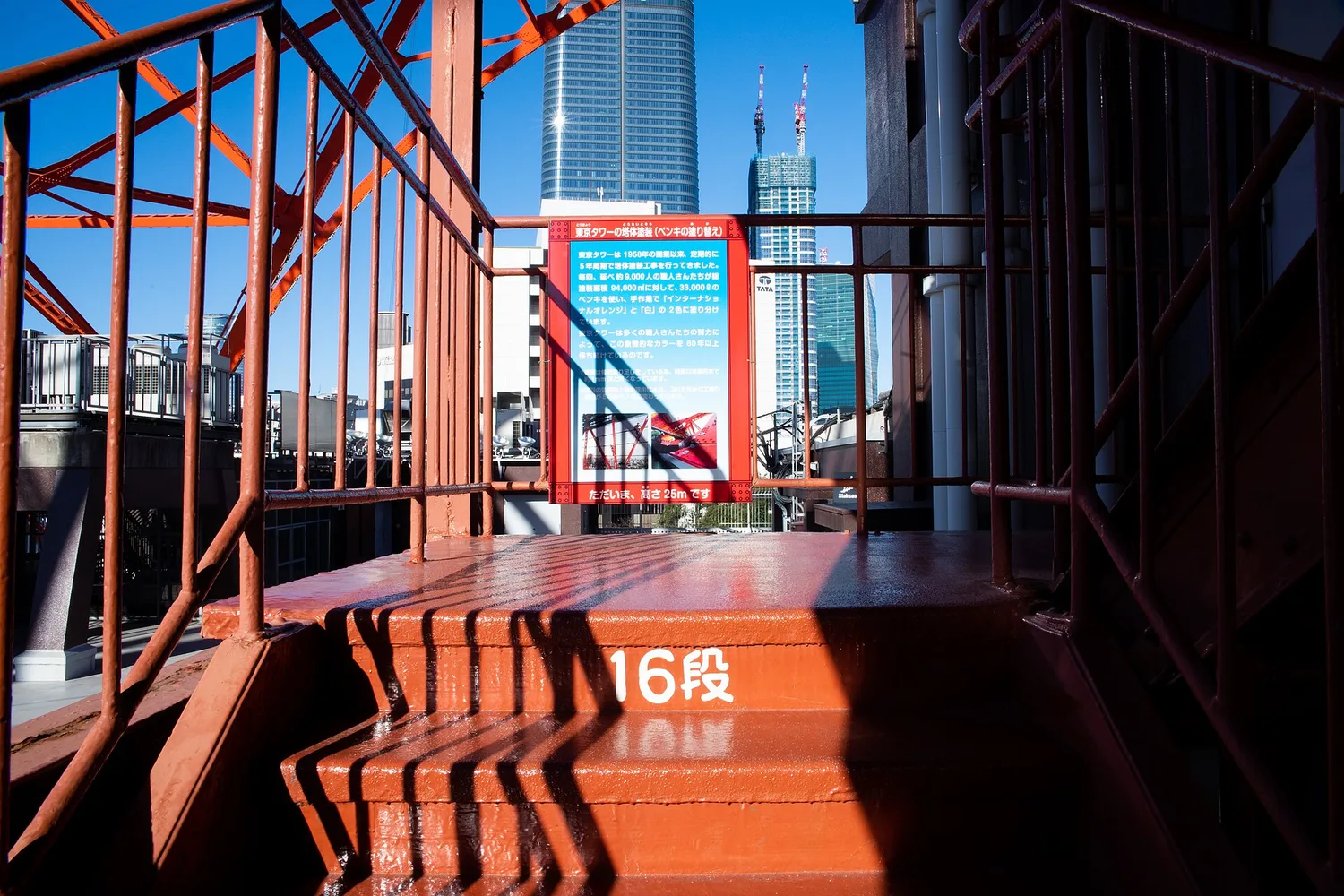
Skytree is for looking out over Tokyo; Tokyo Tower is for looking at the tower itself. Start below it, at Zojoji, where the orange tower rises behind the temple roof, and then, on a weekend, climb its outdoor stairs, about 600 steps up through the steel, rather than ride the elevator. On the stairs the paint is within arm’s reach, and what gets me is that each time the tower is repainted, every stroke goes on by hand, with a brush, in the early-morning hours before it opens.
If you can, do both on the same day and in that order: Skytree first, when it tends to be less crowded and, in the cold months, gives you a good chance of Mt. Fuji, and Tokyo Tower in the afternoon, before its stairs close to climbers.
Skytree: looking out over an old province
I love that Skytree’s height is a pun. The tower was first planned lower and was finalized at 634 meters, a number that can be read “mu-sa-shi,” for Musashi, the old province that took in Tokyo and parts of Saitama and Kanagawa. So when you stand at the windows, you are looking out over land that was once part of Musashi.
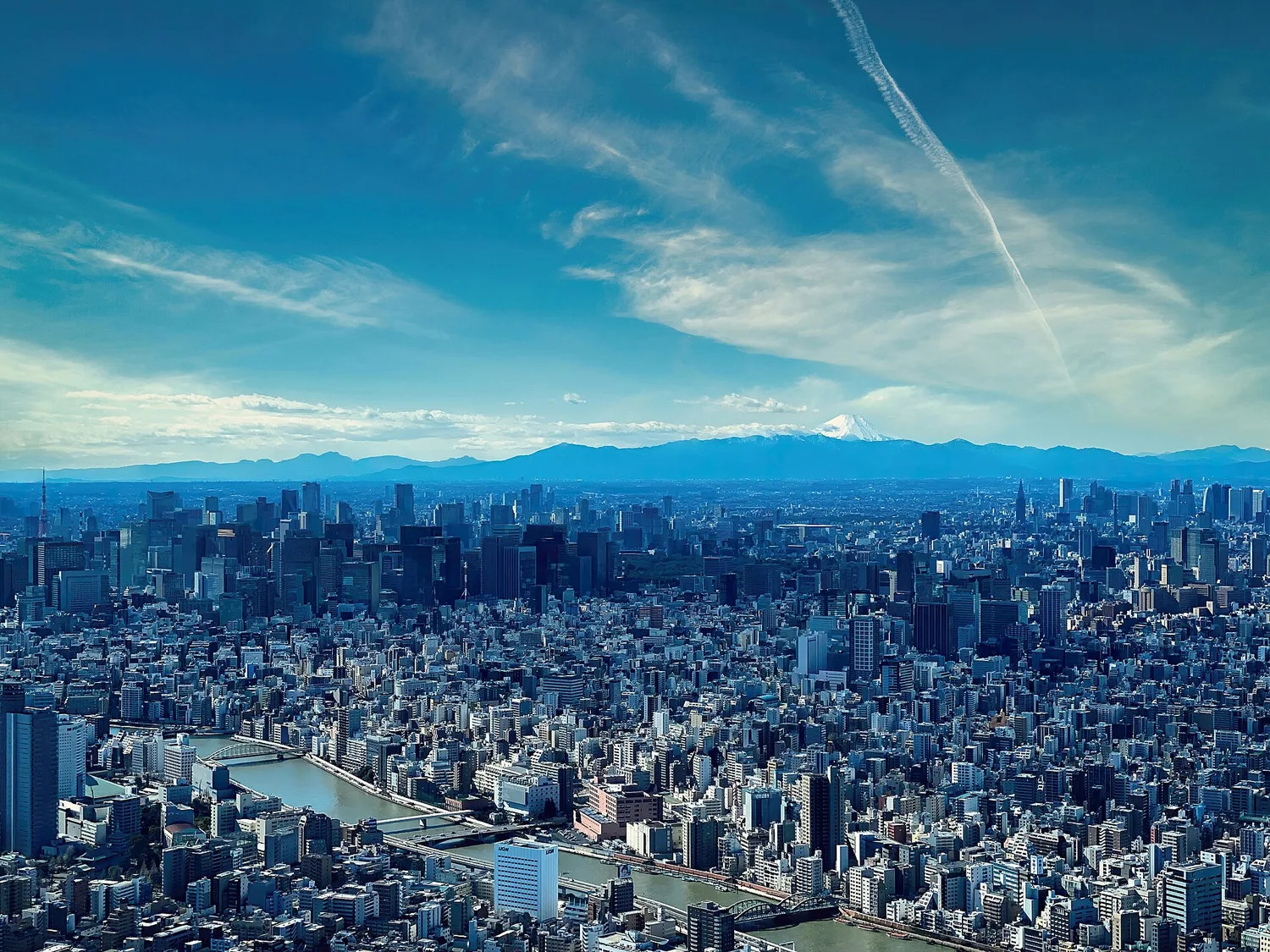
The first deck you reach, the Tembo Deck, has a glass floor you can stand on with an ordinary ticket. Picture the streets of Oshiage directly under your shoes, and decide then whether you want more. You do not have to choose the upper level in advance: if the view grabs you, buy the Tembo Galleria ticket at the machines on the Tembo Deck the same day, unless it is too crowded to sell, and walk up a glass-walled ramp toward the top floor.
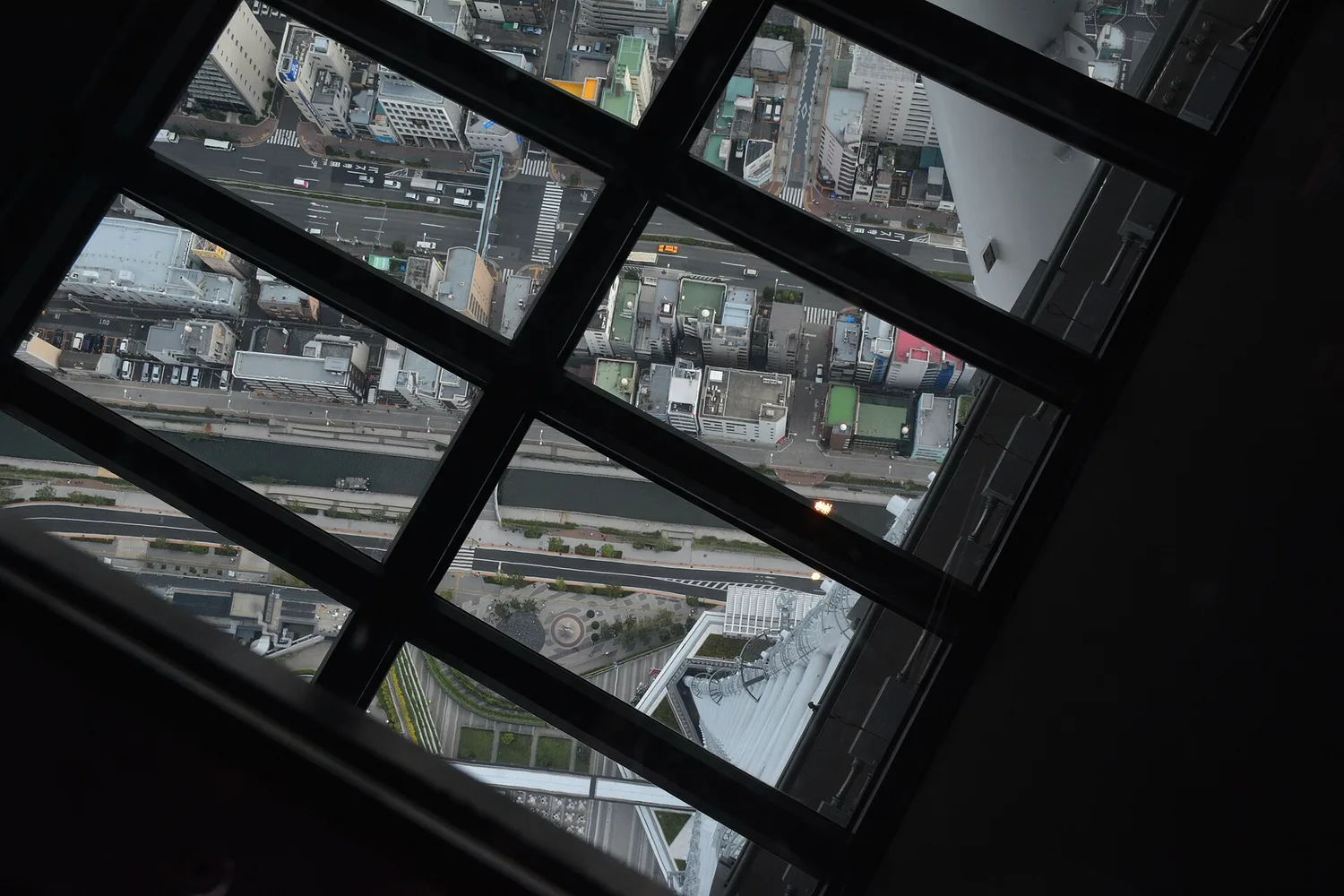
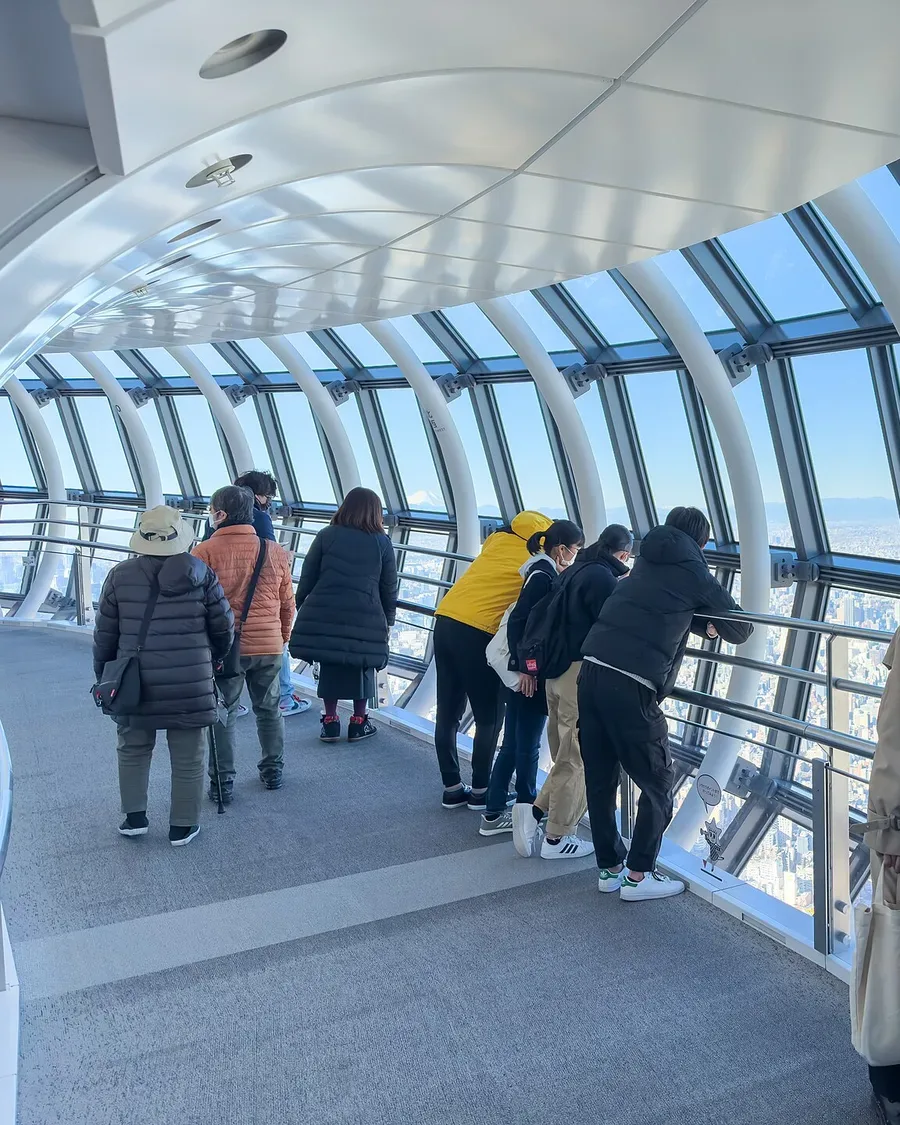
If you are hoping for Mt. Fuji, come in the cold months, when the air tends to be clearer, and go up as early as you can; Skytree says the chance is high on clear, cold days and in the early morning. Nothing guarantees it. On days when the cloud sits low, the official site says you may get a dreamlike view you can only have from up there, and sometimes the windows turn completely white.
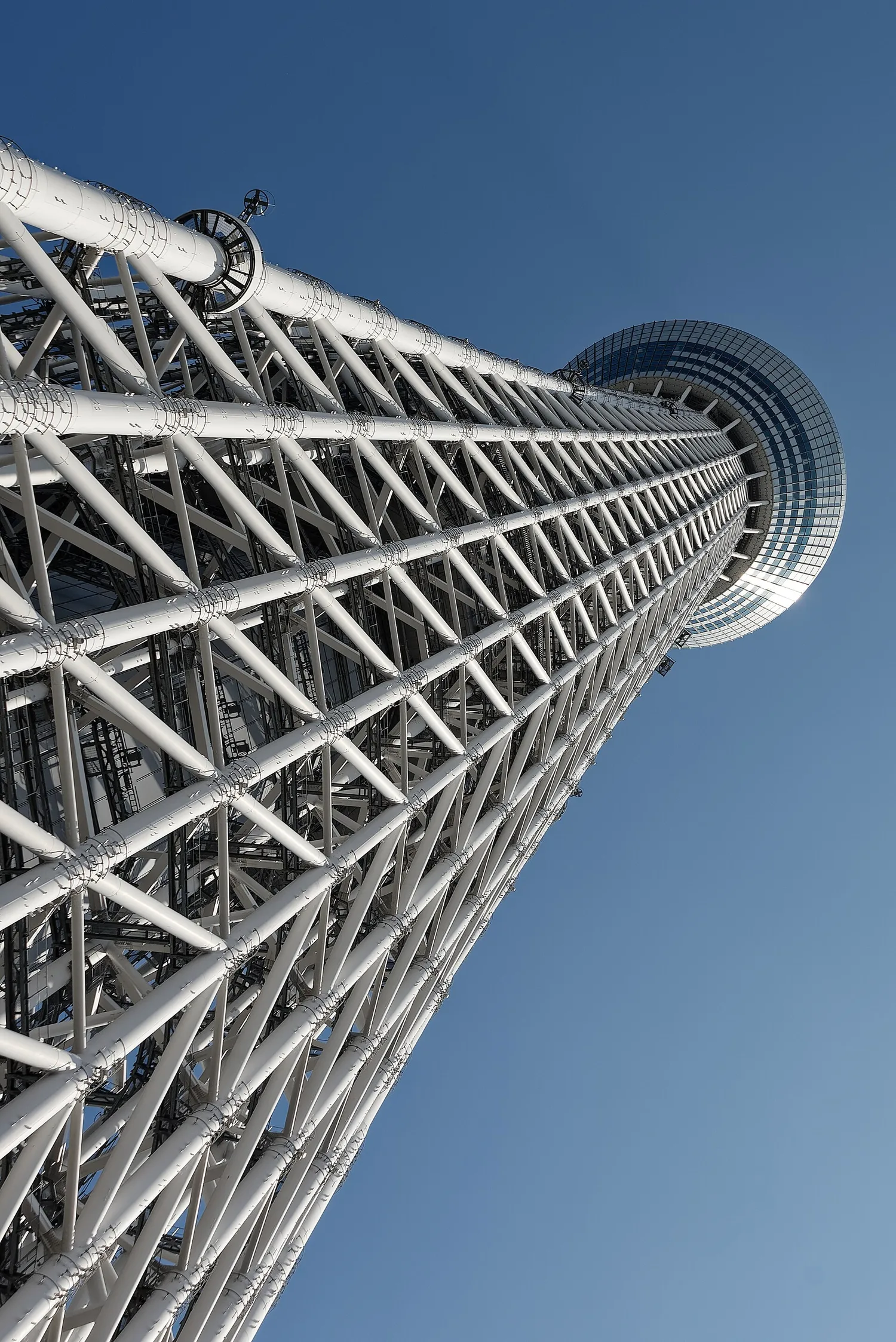
Look at the tower itself on your way in, rather than heading straight for the elevator. It is not plain white: its color, called Skytree White, comes from the palest shade of traditional indigo dye, with a faint blue in it. The column at its center, which holds the emergency stairs, is built to work against the swaying in a big earthquake, and it is named after the central pillar of Japan’s five-storied pagodas, which have no record of falling in an earthquake.
At night Skytree is lit in a pale blue called Iki, after the surface of the Sumida River, or an Edo purple called Miyabi.
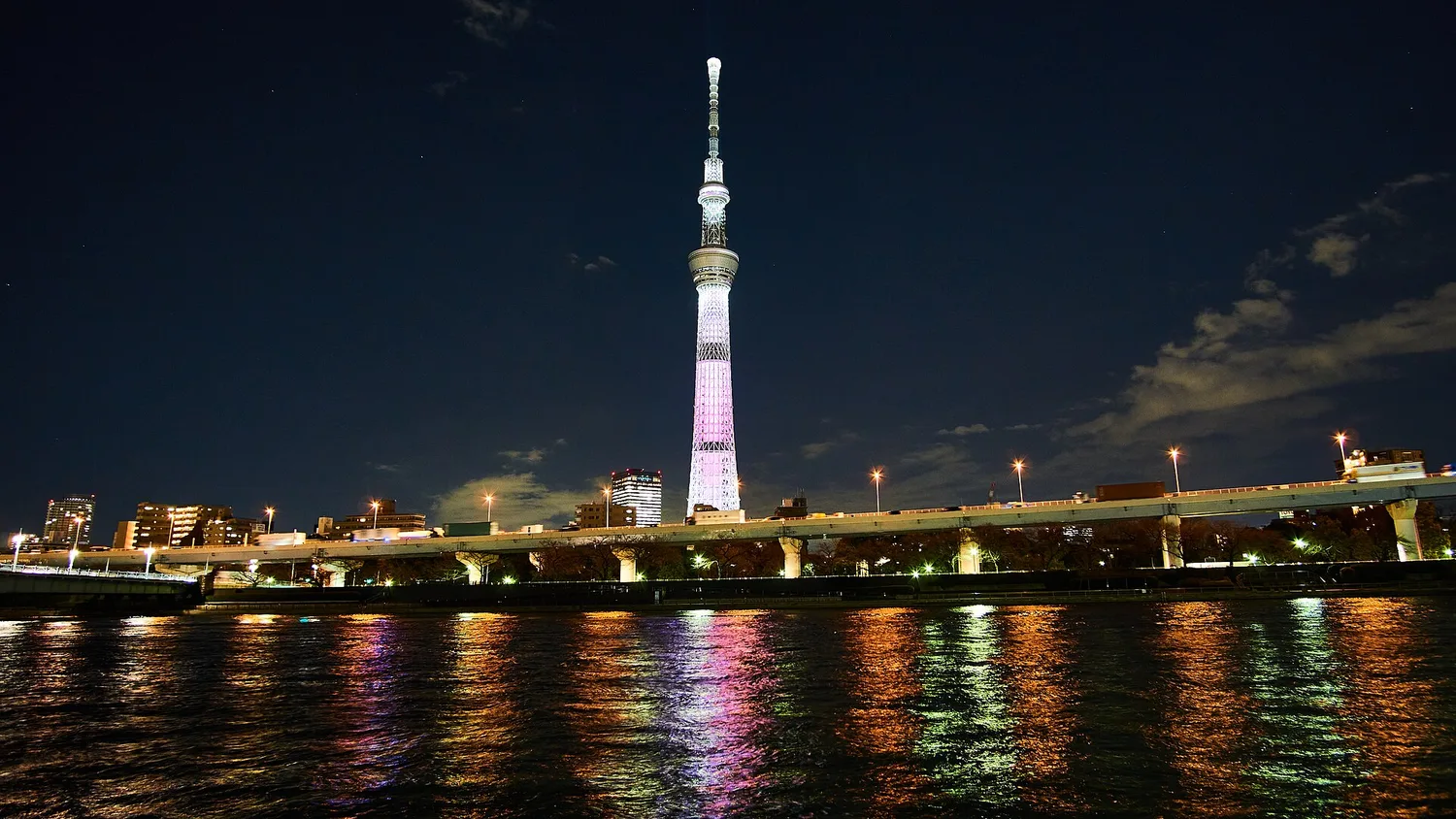
If you walk between Asakusa and Skytree, stop at Makurabashi bridge, where Sumida City says you can see Skytree reflected upside down in the river below.
Tokyo Tower: see it first from Zojoji
Take the subway across the city and start at Zojoji, the big temple at the tower’s foot, with the view Minato City picked for its collection of local landscapes: a temple roof in front and the orange tower rising behind it. Even the hill under the tower is older than it looks; Zojoji’s records call it Kannon Hill, where a stone Kannon was placed in the Kamakura period, and the statue now stands in the temple grounds.
Up the stairs
Before you climb, stand on the roof of Foot Town, the building at the tower’s base, and look straight up into the steel framework above you. On weekends and public holidays, Tokyo Tower opens its outdoor stairs from that roof to the Main Deck. It is a short climb. Imagine the city dropping away on one side, orange steel on the other, and the wind coming through the frame. The climb is included in the normal Main Deck ticket, and climbers receive a certificate.
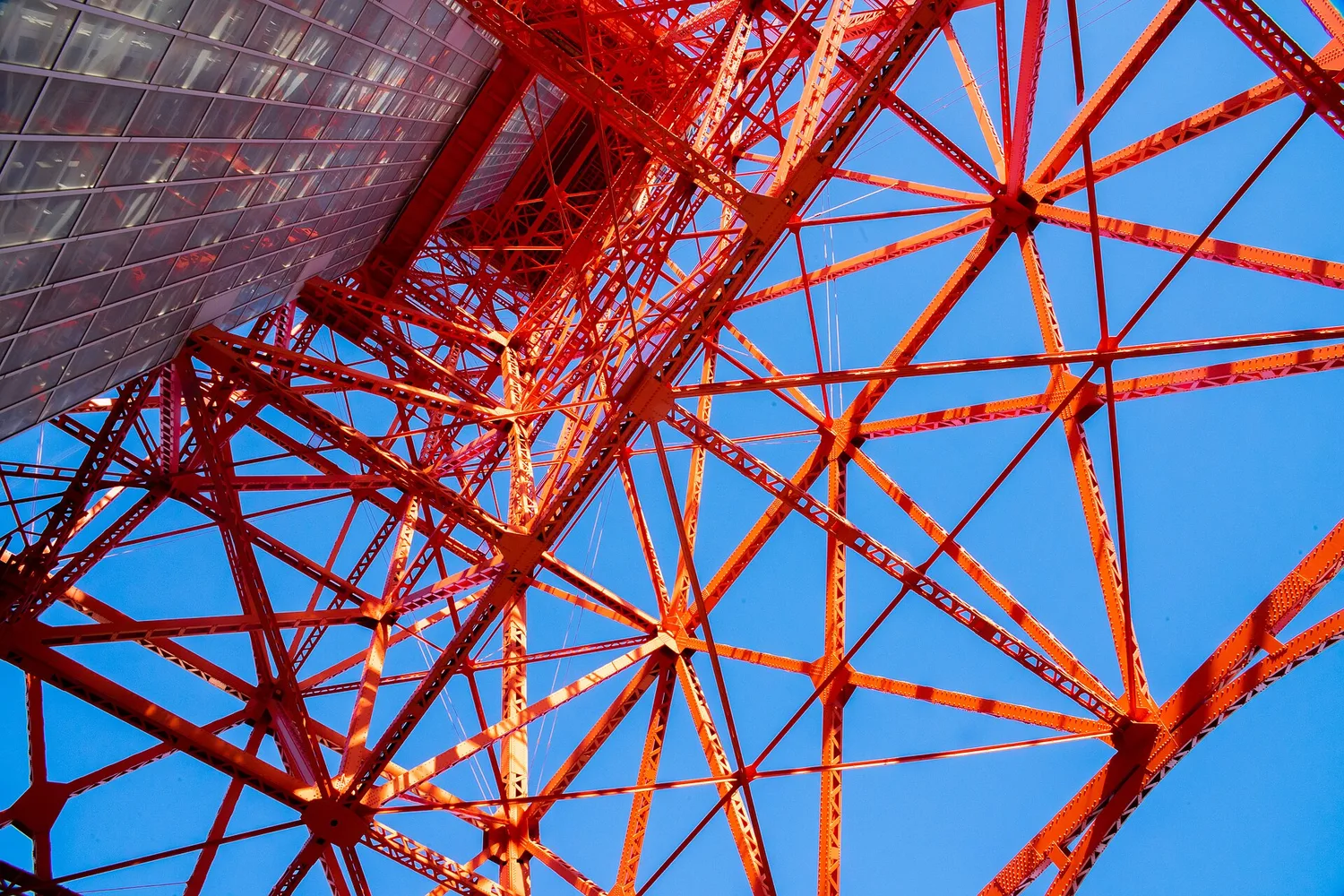
Once you start, you cannot switch to the elevator halfway, so wear shoes you can climb in, and come on a dry day, because the stairs close in rain, storms and heat alerts.
Not quite red
Most people would call Tokyo Tower red and white. Strictly speaking it is International Orange and white, two colors that Japan’s aviation law requires on structures above a certain height.
The repainting comes round roughly every seven years and takes about a year, with scaffolding going up from the top down, and all of the work fits into the hours between sunrise and opening.
The two decks
The stairs bring you to the Main Deck, where a glass panel in the floor called the Skywalk Window lets you look straight down. If you want to go higher, book the Top Deck Tour ahead instead of hoping to buy it on the day; the Top Deck began as a work platform for maintaining the antennas.
After dark
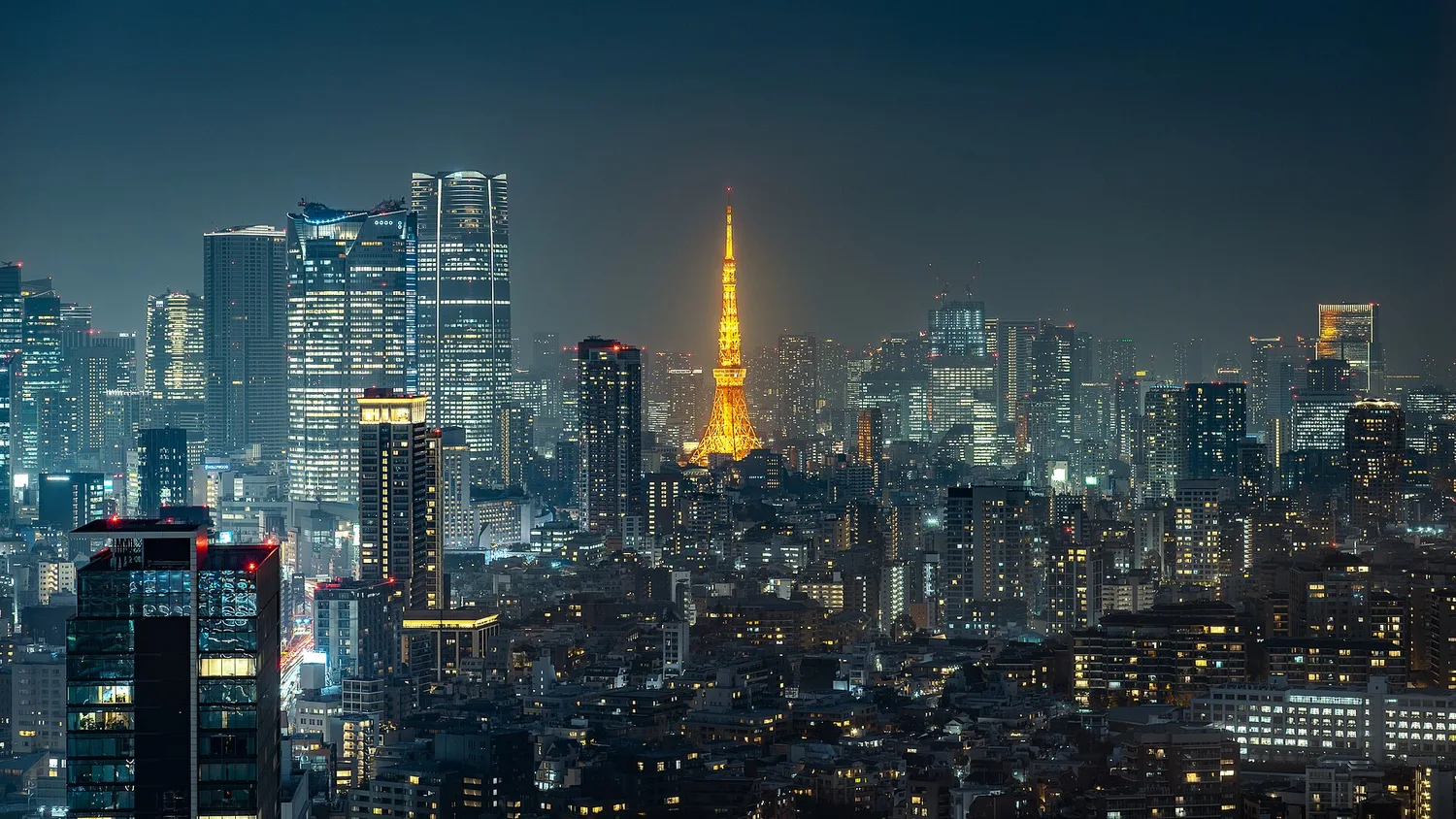
If you can choose your evening, pick a Monday or Thursday. Tokyo Tower’s usual lights, the Landmark Light, change with the season: silver in summer, and from early October, the warm orange most people picture. On those two evenings, from eight to ten, the tower switches to the Infinity Diamond Veil, a pattern of colored LEDs whose color changes every month, and on the hour after sunset the upper part sparkles white for a couple of minutes. The lights normally go out at midnight, and there is a local legend that couples who watch them go out together will be happy.
Before you go
| Skytree: tickets | Tembo Deck (350 m) and Tembo Galleria (450 m). Adults online from 3,000 yen for both decks or from 1,800 yen for the Tembo Deck (prices vary by date); 500 yen extra per ticket at the 4th-floor counter, which may stop selling on busy days. The Tembo Galleria ticket can be bought on the Tembo Deck on the day. No re-entry; no refunds for poor visibility |
| Skytree: hours and crowds | Usually 10:00–22:00 on weekdays and 9:00–22:00 on weekends; last entry 1 hour before closing; check the daily calendar. Generally less crowded just after opening; tends to be crowded about 16:00–19:00 |
| Skytree: Mt. Fuji | A high chance on clear, cold days and in the early morning; November–February tends to offer clearer air |
| Skytree: getting there | Directly connected to Oshiage (Skytree) Station; Tokyo Skytree Station on the Tobu Skytree Line. About 5 minutes from Asakusa. Address: 1-1-2 Oshiage, Sumida City, Tokyo (東京都墨田区押上1-1-2). Official website: tokyo-skytree.jp |
| Tokyo Tower: tickets and hours | Main Deck (150 m): adults 1,500 yen, 9:00–23:00, last entry 22:30. Top Deck Tour (250 m): adults 3,300 yen online or 3,500 yen at the counter, booking required. Tickets online (credit card only) or at the Foot Town 1st-floor counter |
| Tokyo Tower: outdoor stairs | About 600 steps, about 12–13 minutes. Up: weekends and public holidays 9:00–16:00. Down: daily 9:00–20:00. Included in the Main Deck ticket. Closed in rain, storms and heat alerts; no switching to the elevator partway |
| Tokyo Tower: lights | Landmark Light (orange from early October, silver from 7 July). Infinity Diamond Veil on Mondays and Thursdays 20:00–22:00. White sparkle for 2 minutes on the hour after sunset. Lights off around midnight |
| Tokyo Tower: getting there | Akabanebashi Station (Oedo Line) about 5 minutes; Kamiyacho (Hibiya Line) about 7 minutes; Onarimon (Mita Line) about 6 minutes. Operator’s head office: 4-2-8 Shibakoen, Minato City, Tokyo (東京都港区芝公園4-2-8). Official website: tokyotower.co.jp |
| Zojoji | Main hall open 6:00–17:30. Address: 4-7-35 Shibakoen, Minato City, Tokyo (東京都港区芝公園4-7-35). Official website: zojoji.or.jp |
Checked 23 October 2026.
What I would do
I would be at Skytree when it opens on a clear winter weekend, then cross the city to Zojoji and climb Tokyo Tower’s stairs before they close, with the orange steel close enough to touch.
We have visited every place in this guide. The practical information was checked against the official sources below, checked on 23 October 2026.
- Tokyo Skytree (Japanese and English) — the height and its name, the decks and glass floor, tickets and the counter fee, opening hours and crowds, Mt. Fuji and visibility, the color, the central column and the pagoda, the lighting: tokyo-skytree.jp/ticket/, /inquiry/faq/, /about/spec/, and the calendar and lighting pages
- Tokyo Tower (Japanese and English) — prices and hours, the outdoor stairs, the Top Deck Tour, the colors and repainting, the lights and the midnight legend, access: tokyotower.co.jp/plan/open_air_stair/, /plan/towerpedia/, /access/, and the ticket and lighting pages
- Zojoji (Japanese) — Kannon Hill and the stone Kannon, opening hours and address: zojoji.or.jp/keidai/, /faq/
- Minato City (Japanese) — the “Zojoji and Tokyo Tower” view in its landscape selection: city.minato.tokyo.jp
- Sumida City (Japanese) — the reflection of Skytree at Makurabashi: city.sumida.lg.jp
- Photographs: the lead image of Tokyo Tower from Azabudai Hills by Syced, January 2024 (CC0); the view from Skytree by DLKR (CC0); the glass floor by Cheng-en Cheng (CC BY-SA 2.0); the Tembo Galleria by Dick Thomas Johnson (CC BY 2.0, cropped); Skytree from below by Jakub Hałun (CC BY 4.0); Skytree at night by Radek Kucharski (CC BY 2.0); Zojoji and Tokyo Tower by Suicasmo (CC BY-SA 4.0); the steel and the outdoor stairs by Dick Thomas Johnson (CC BY 2.0); Tokyo Tower at night by David Kernan (CC BY 4.0). All via Wikimedia Commons, resized and converted to WebP.
Explore other areas
- Hokkaido — Sapporo
- Kanto — Hakone
- Hokuriku — Kanazawa
- Koshin-Tokai — Fuji Five Lakes
- Kansai — Nara
- Chugoku — Hiroshima
- Kyushu — Fukuoka
- Okinawa — Naha
