What's in this guide33 sections
Quick answer
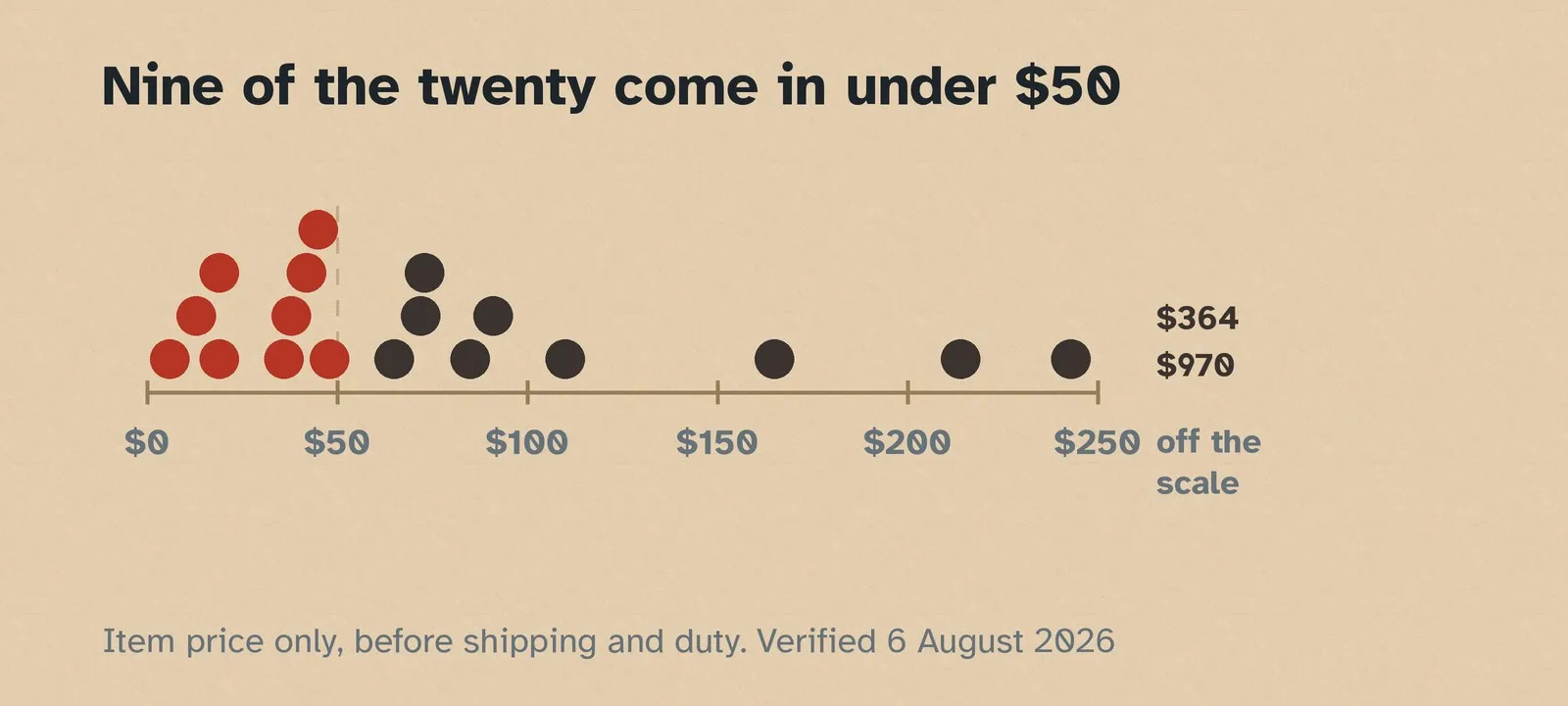
Twenty Japanese gadgets on this page, every one with a live price and a store that ships worldwide. The range runs from a $6 pencil you can use down to the last centimeter to $970 autofocus eyewear, with strong picks at every band between. All twenty come from Japan Trend Shop, which ships by FedEx with tracking, typically 3–6 business days. The sticker price is not the landed price, since no flat shipping rate is published. You do not need a flight to Tokyo for any of them. The page ends where these gadgets begin: Japan's crowdfunding scene, where the Rokid AI glasses passed ¥500 million in backing before hitting general sale in July 2026 at ¥109,890, and promptly selling out. Prices verified 6 August 2026.
Search for Japanese gadgets and two kinds of article come back. The first kind assumes you are already in Japan, “what to buy in Akihabara,” written for a suitcase. The second kind lists ten or eighteen gadgets, and we checked three of the biggest: not one prints a working price.
So the reader who is at home, with a budget, gets nothing to work with. No number, no route to checkout, and often a quiet suggestion to book a flight.
This list is built for that reader. Twenty gadgets, each with the live price and a link to a store that ships worldwide. We checked every price on 6 August 2026, the same way we did for our Japanese gifts guide.
And there is a question the other lists never ask: where do these gadgets come from before they are famous? The answer is stranger than a store shelf, and we will end there.
How we picked these
The same three rules as our gifts guide, applied to every item.
- The price is on the page. Each pick links to a live listing with a US-dollar price, recorded 6 August 2026. Prices move; treat them as a dated snapshot
- The store ships worldwide. All twenty come from Japan Trend Shop, which ships by FedEx with tracking, typically 3–6 business days. No flight required
- We did not buy them. This is a verified catalog check, not a hands-on review. What we confirmed: the item exists, is listed in stock, and costs what we say
The list at a glance
| Gadget | Price | Solves |
|---|---|---|
| Zenshin all-core pencil | $6 | pencil stubs |
| Tombow AirPress pen | $13 | pens that die mid-note |
| Crab noodle ramen timer | $19 | overcooked cup noodles |
| Yazawa wall-mounted sensor light | $19 | dark hallways |
| Slim hand warmer + power bank | $36 | cold hands, dead phone |
| Otonohug white noise machine | $38 | light sleep |
| Gakken mini theremin kit | $42 | quiet afternoons |
| You-Bumi waterproof tablet stand | $45 | bathtub boredom |
| Muro portable washing machine | $48 | laundry on the road |
| Kutsuwa Orista laptop stand | $65 | hunched shoulders |
| ForeverPen | $72 | running out of ink, forever |
| Tanita breath checker | $73 | the question you can’t ask |
| Recolte cordless solo blender | $85 | single-serve smoothies |
| Takoyaki Meister Half | $91 | takoyaki cravings |
| Poketumuri hand iron | $110 | wrinkled shirts in hotels |
| Balmuda The Pot | $165 | clumsy pour-overs |
| Qrio smart lock | $214 | keys |
| Sony Reon Pocket 4 | $243 | summer commutes |
| Panasonic Evangelion desk lamp | $364 | ordinary desks |
| ViXion01S autofocus eyewear | $970 | focusing, done for you |
Twenty is a list. Which one should you actually buy?
Twenty gadgets is a catalogue, not an answer. Narrow it with three questions (can it be shipped to you as it is, will you use it more than once a month, and is it worth that money), and the list collapses to six.
| If you want | Buy | Price | Why this one |
|---|---|---|---|
| To try one thing | Tombow AirPress pen | $13 | Pressurised as you click, so it writes upside down and below freezing. Of everything here, it makes the clearest case for why nobody else built it |
| A gift | Gakken mini theremin kit | $42 | You build it and it makes sound. No need to guess the person’s taste. Gakken’s Otona no Kagaku series barely circulates outside Japan |
| Something for the road | Muro portable washing machine | $48 | Works in a hotel basin. On a long trip it pays for itself the first time you skip a laundry service |
| To upgrade something daily | Balmuda The Pot | $165 | A spout narrow enough to control the pour. The design-appliance format Japan made normal |
| Not to worry about budget | ViXion01S autofocus eyewear | $970 | Lenses that refocus themselves as your gaze moves. The only item here with no equivalent sold anywhere else |
| One thing for the house | Yazawa wall-mounted sensor light | $19 | Battery-powered, no wiring, so it works in a rental |
What the six share is that they are ordinary in Japan and hard to get anywhere else. Anything Japanese that the rest of the world can already buy was left out.
Prices re-checked at Japan Trend Shop on 16 August 2026. Shipping and duty are on top.
Kitchen
Crab noodle instant ramen timer — $19
A crab that sits on your cup noodle lid and counts the three minutes. That is the entire product, and it is exactly right.
Recolte cordless solo blender — $85
A one-person blender with no cord, from the Japanese small-appliance maker Recolte. Blend at the desk, on the balcony, wherever the fruit is.
Takoyaki Meister Half — $91
A half-size takoyaki griddle. Takoyaki (octopus balls, the Osaka street-food staple) is the dish visitors try once and then miss for years. This is the fix, scaled for a home counter.
Balmuda The Pot — $165
Balmuda’s electric kettle, built around one idea: a spout so precise that a pour-over becomes calm instead of chaotic. The best-known name in Japanese small appliances, in its smallest form.
Desk and work
Zenshin all-core pencil — $6
A pencil that is all core (no wooden casing to sharpen away), so you use the whole thing down to the last centimeter. The cheapest item here, and pure Japanese stationery logic: waste offends.
Tombow AirPress pen — $13
A ballpoint that pressurizes its own ink with air on every click, so it writes upward, on damp paper, in the cold. Made for delivery drivers and clipboard work; adopted by everyone who has ever had a pen die mid-sentence.
Kutsuwa Orista laptop stand — $65
A folding laptop stand from a stationery maker, which shows: it packs flat like a folder and sets up like origami.
ForeverPen — $72
A metal stylus-pencil that writes with an alloy tip instead of ink or graphite. It does not run out. Seventy-two dollars for the last pen-shaped object you buy is either absurd or the best deal on this page, and we genuinely cannot decide.
Travel and pockets
Slim hand warmer + power bank — $36
A card-thin hand warmer that is also a phone battery. Two winter problems, one pocket.
Muro portable washing machine — $48
A folding washing machine. It collapses flat for a suitcase and washes a day’s clothes in a hotel room. The kind of object that sounds like a joke until the third day of a trip.
Poketumuri hand iron — $110
A palm-size iron for hotel-room shirt emergencies. The name means “pocket snail,” which is also a fair description of how it works: slow, small, leaves a clean trail.
Sony Reon Pocket 4 — $243
Sony’s wearable temperature controller: a small plate that sits at the back of your neck and actively cools (or warms) your body. Built for the Japanese summer commute, which is all the qualification a cooling device needs.
Quiet problem-solvers
Yazawa wall-mounted sensor light — $19
A motion-sensor light that mounts on any wall. The unglamorous champion of this list: nineteen dollars to never fumble down a dark hallway again.
Otonohug white noise machine — $38
A dedicated white-noise machine for sleep. No app, no subscription, no phone glowing on the nightstand, which is the point.
You-Bumi waterproof tablet stand — $45
A waterproof stand that floats your tablet at the bathtub. Japan takes bathing seriously enough to engineer for it; this is that culture, productized.
Qrio smart lock — $214
A smart lock that fits over the existing thumb-turn on your door (no drilling, no replacing the cylinder) and opens from your phone. Remember this one; it comes back at the end of the article.
The deep end
Gakken mini theremin kit — $42
A build-it-yourself theremin (the instrument you play by moving your hands in the air) from Gakken’s “science for adults” kit series. An afternoon of assembly, a lifetime of annoying the household beautifully.
Tanita breath checker — $73
A pocket device from Tanita, the health-scale maker, that grades your breath from 0 to 5. It answers the one question nobody in your life will answer honestly.
Panasonic Evangelion desk lamp — $364
A Panasonic LED desk lamp styled after Evangelion Unit-01. A serious appliance maker building a serious lamp for a giant fictional robot: a collaboration genre that, as far as we can tell, exists only in Japan.
ViXion01S autofocus eyewear — $970
Eyewear with lenses that refocus themselves in real time as your gaze moves between near and far. The most expensive item on this page and the only one that feels like it arrived a decade early.
What makes Japan gadgets different
Something surfaced while assembling these twenty. Japanese gadgets tend to start from an existing annoyance rather than a new capability.
- A pen won’t write upside down, so it pressurises itself ($13)
- You can’t tell when instant noodles are done, so a crab tells you ($19)
- A pencil is unusable once it’s short, so the whole thing is made of core ($6)
Every one of those annoyances exists everywhere. And almost none of these products are sold outside Japan, for a plain reason: the companies that make them do not export. Of the twenty on this page, only a handful are sold in English by their own manufacturer.
Which turns “buying Japanese gadgets” into something other than shopping. It becomes a logistics question: how do you get a domestic Japanese product across a border? That is what separates it from buying anything else.
Born on crowdfunding, now on shelves
Here is the ending we promised, the place these gadgets come from.
The pipeline for a new Japanese gadget often starts on Makuake, Japan’s largest crowdfunding platform. Most of what launches there never leaves the country, which is why we cover crowdfunded products only after they reach general sale. Three that made the leap:
- Rokid AI glasses, smart glasses with real-time subtitle translation. The Makuake campaign passed ¥500 million in backing (closing in on the platform’s all-time record, per the distributor’s May 2026 announcement) before general sale opened on 10 July 2026 at ¥109,890. As we write this, the official store shows the launch stock sold out
- Aladdin X: began as popIn Aladdin, a Makuake project that put a projector inside a ceiling light. It graduated into one of Japan’s best-known home projector brands and still ships new models today
- Qrio smart lock: the $214 lock in our list above raised its first funding on Makuake back in 2014, with Sony’s backing, as reported by The Wall Street Journal at the time. A decade later it is simply a product you can buy
This is the part of the Japanese gadget world that never shows up in the airport-shopping lists, and it is where we will keep looking. If a crowdfunded gadget is worth importing, it will show up here after it ships for real.
What it costs to get one shipped
Japan Trend Shop ships worldwide by FedEx with insurance and tracking, typically 3–6 business days from payment. It publishes no shipping rate table (the fee is calculated at checkout from weight and destination), so every price on this page is the item price, not the landed price. Between courier shipping, possible customs duties, and currency-conversion markups that on some services reach 5%, the honest move is to cart the item, enter your address, and read the total before you decide.
And for the gadgets that never reach a store that ships abroad (Japan-only releases, Makuake exclusives still in their domestic phase), the route is a proxy shopping service. Our seven-way comparison of Japan proxy services covers how that works and what it really costs.
Will they work once they arrive?
Japan runs on 100 volts, lower than anywhere else, which is enough to talk people out of the purchase. We went back through all twenty of the gadgets above and read the power specification of each one: only three are AC 100V only, the kettle, the takoyaki plate and the desk lamp. Sixteen need no transformer at all. The obstacle that does bite is the battery, not the voltage, and it stops parcels to some countries outright. Do Japanese gadgets work abroad? has the full breakdown, product by product.
FAQ
Can I buy Japanese gadgets without going to Japan?
Yes. All twenty gadgets on this list ship worldwide from Japan Trend Shop by FedEx, typically in 3–6 business days. For Japan-only releases that no exporting store carries, a proxy shopping service can buy and re-ship them.
What is a good Japanese gadget under $50?
The Zenshin all-core pencil ($6), Tombow AirPress pen ($13), crab ramen timer ($19), Yazawa sensor light ($19), slim hand warmer power bank ($36), Otonohug white noise machine ($38), Gakken theremin kit ($42), You-Bumi bath tablet stand ($45), and Muro portable washing machine ($48) all sit under fifty dollars.
Are gadgets cheaper in Japan?
Sometimes on the sticker, but the sticker is not the landed price. International shipping, possible customs duties, and currency-conversion costs all add to an imported gadget’s total. Cart the item, enter your address, and compare the real total before assuming a saving.
What Japanese gadgets started as crowdfunding projects?
The Rokid AI glasses passed ¥500 million on Makuake before general sale in July 2026; the Aladdin X ceiling projector began as popIn Aladdin on Makuake; and the Qrio smart lock raised its first funding on Makuake in 2014 with Sony’s backing. All three are now regular retail products.
Which Japanese gadget should I actually buy?
It splits by use. To try one thing, the Tombow AirPress pen ($13). As a gift, Gakken’s mini theremin kit ($42). For travel, the Muro portable washing machine ($48). To upgrade something you use daily, Balmuda The Pot ($165). If budget is not the constraint, the ViXion01S autofocus eyewear ($970), the only item here with no equivalent sold anywhere else.
Can I buy Japanese gadgets without going to Japan?
Yes. Every price on this page comes from a shop that ships internationally. But the manufacturers themselves almost never sell abroad, so a retailer or a proxy service has to sit in between.
What makes Japanese gadgets different from gadgets anywhere else?
They usually remove an existing annoyance rather than add a new capability: a pen that writes upside down, a timer that watches your noodles, a pencil that stays usable when short. The problem comes first and the object is shaped around it.
Are these prices current?
Every price was read from the store’s live product page on 6 August 2026. Prices and stock change; treat the figures as a dated snapshot and check the linked page before buying.