Tokyo / Guide
Harajuku and Meiji Shrine: Why the Forest Planners Said No to Cedar
Harajuku and Meiji Shrine原宿・明治神宮
The forest at Meiji Shrine would have been cedar if the prime minister of the day had had his way: he wanted something as grand as the cedars at Ise and Nikko. The people planning it refused, judging that only broad-leaved evergreens would survive in Tokyo a century later. So when you walk in from Harajuku, make the walk beneath them part of the visit rather than a way to reach the hall; when I look up into those dark, glossy leaves, I am glad they won that argument.
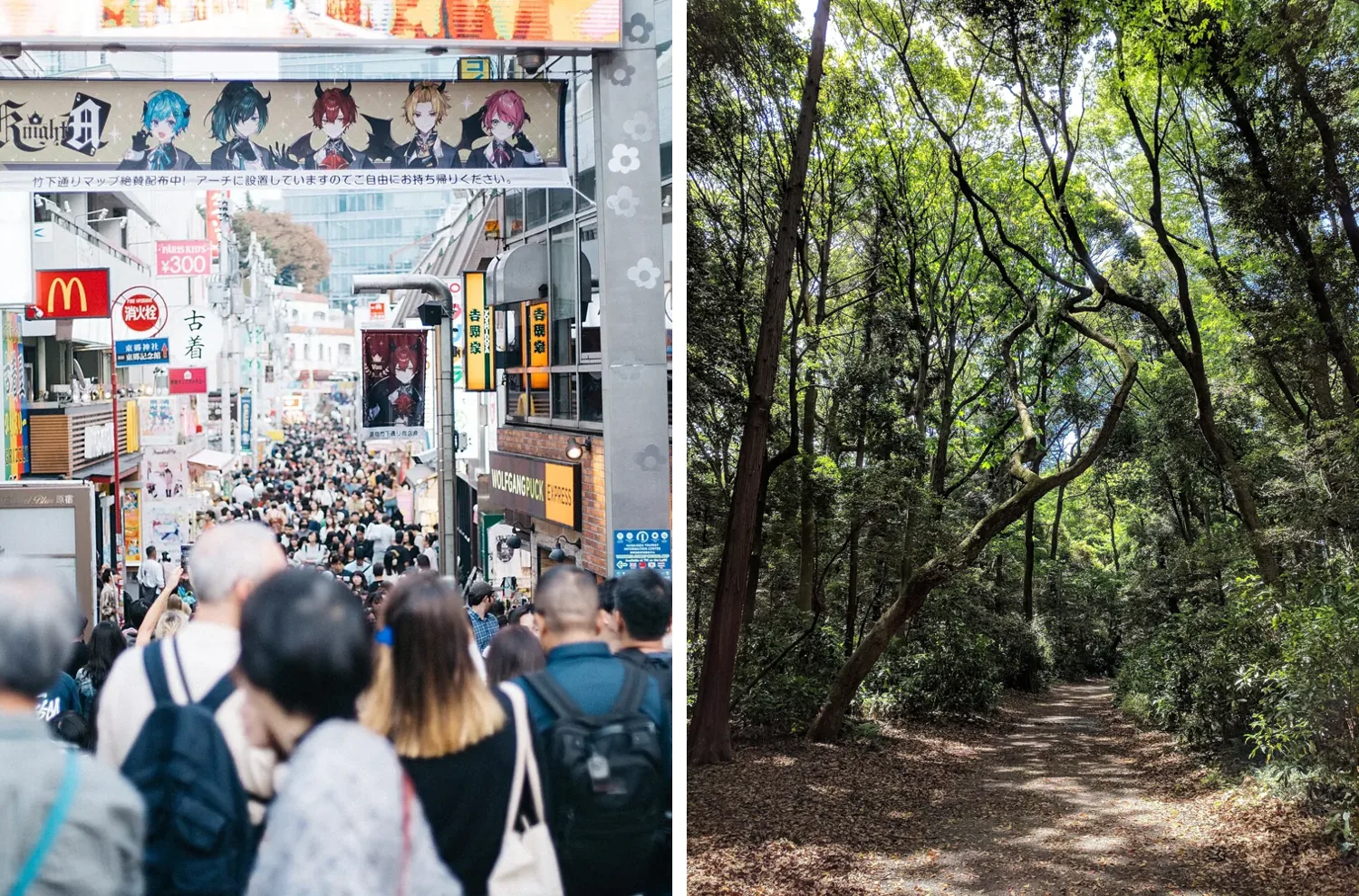
If you want both the shrine and Harajuku’s streets in one day, do the shrine first. Its gates open at sunrise and close at sunset, so in autumn and winter they shut early, while Takeshita Street will still be there when you come out.
Cross the bridge, then keep to the side
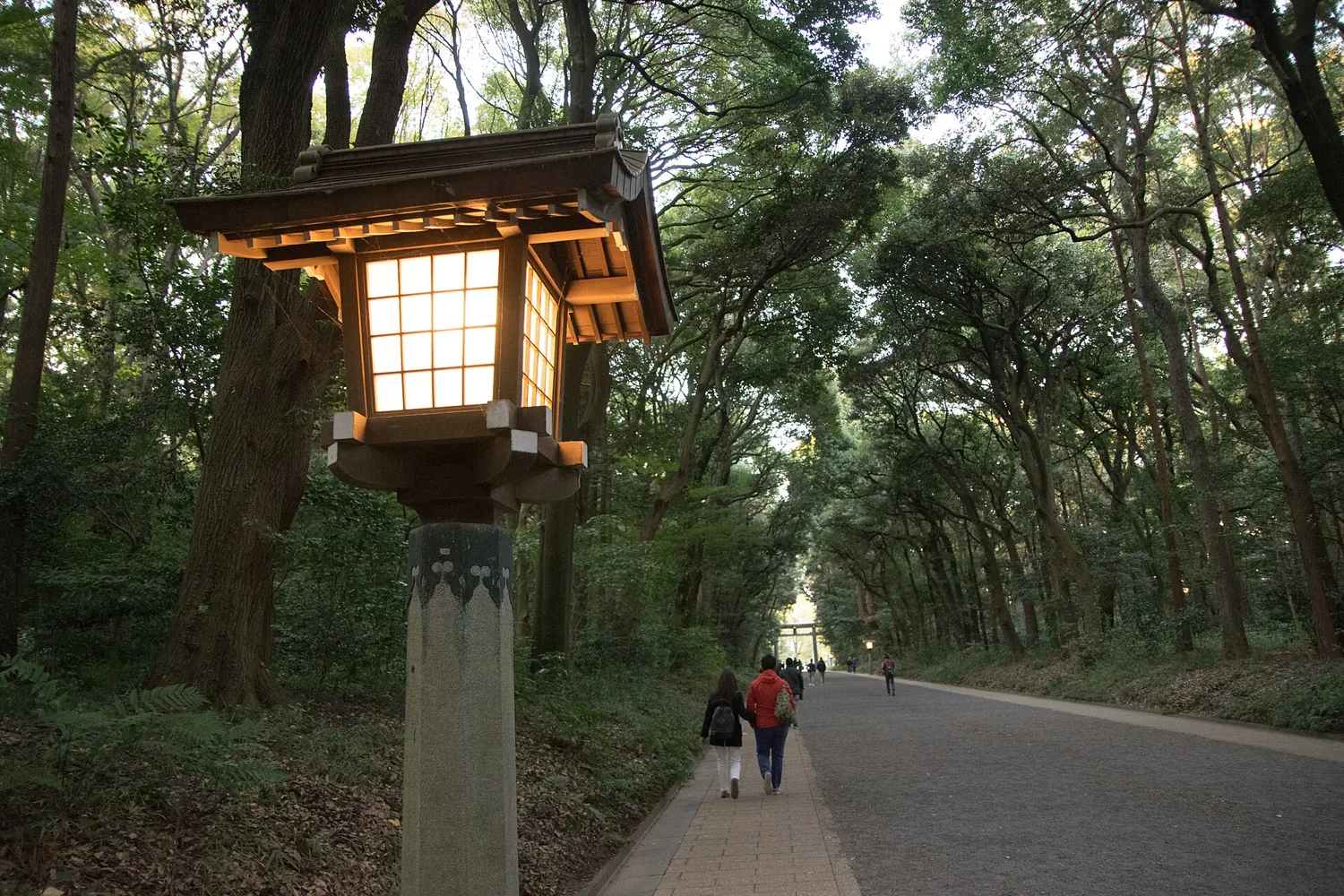
From Harajuku Station, the bridge over the railway takes you straight to the shrine’s south gate. Even the paving on its walkway is patterned with zelkova trees, the trees that line Omotesando, historically the shrine’s front approach. From the gate, the walk to the hall takes about ten minutes.
Once you are through the first torii, you will notice how fast the noise of the station falls away, and how the gravel slows your steps. That is on purpose. Visitors from abroad often ask the shrine why it puts small stones on a path that is harder to walk on, and its answer is that treading on clean stones settles the mind on the way in. The middle of the path is kept for the gods, so walk a little to one side, as people here have long done.
Why the planners said no to cedar
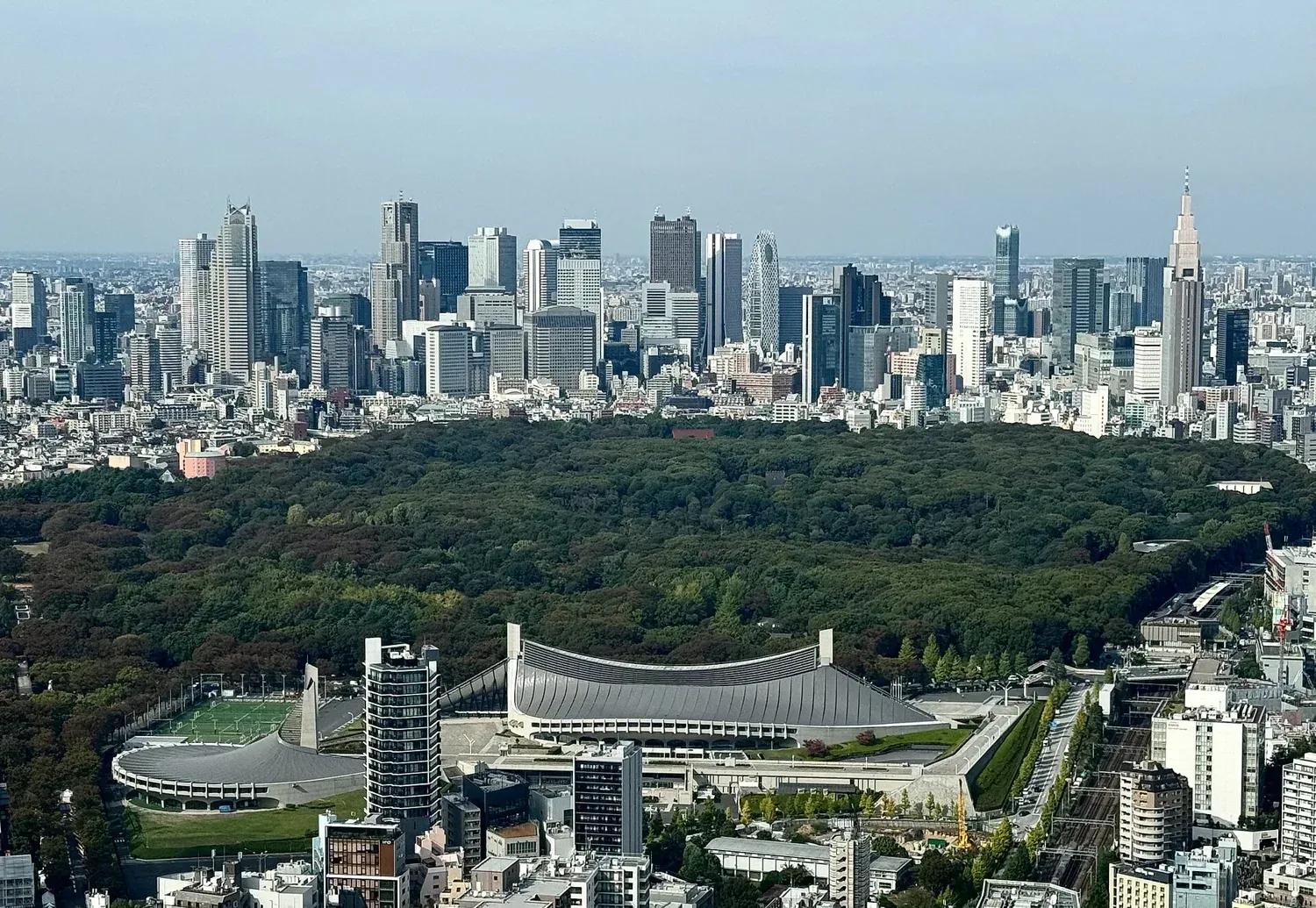
You would take what you are walking through for an old forest, and it is not. Before the shrine was built, the shrine says this land was mostly fields, except for the garden that is still here. About 100,000 trees were then donated and planted, from as far as Sakhalin in the north and Taiwan in the south.
The argument over cedar is the part I love. The prime minister, Okuma Shigenobu, asked whether they meant to turn the shrine into a thicket and wanted a cedar forest instead. The forest planners stood firm: cedar suits damp valleys, not this ground, and pollution was already killing Tokyo’s big old trees. They chose evergreen oak, chinquapin and camphor, trees with dark, shining leaves, and planned a forest meant to last forever. A later survey of the grounds concluded that a man-made forest in the middle of a big city had become as good as a natural one within a few decades.
So look up, not just ahead, and you are looking at the result of that argument. You cannot go into the forest itself; the shrine asks you to stay out of the woods and leave every flower, branch and acorn where it is.
This is the middle of Tokyo, yet the shrine asks drivers on its grounds to go slowly because tanuki and other wild animals sometimes dart out. About 3,000 kinds of living things have been recorded on the grounds, including new species.
The barrels on the way
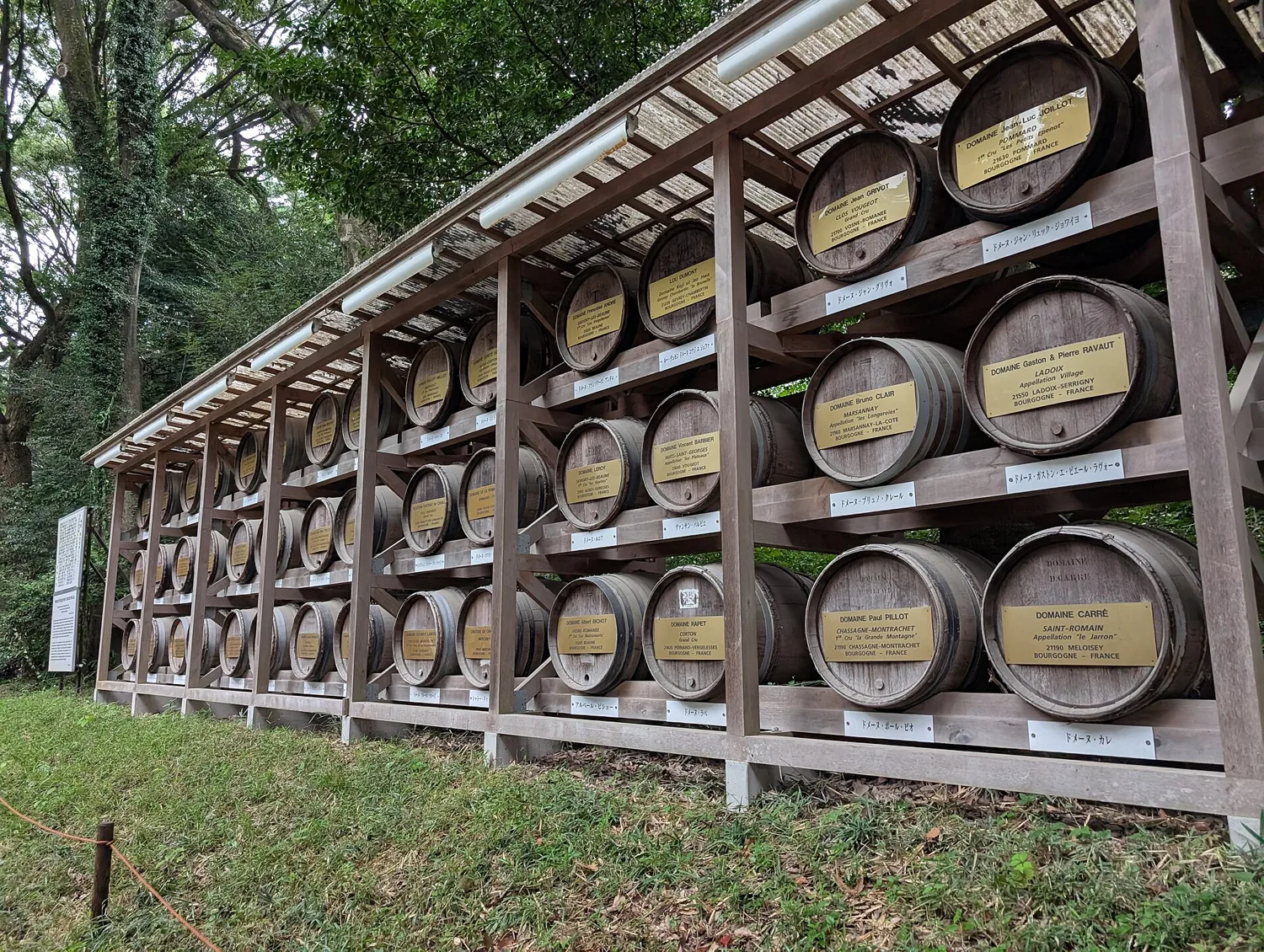
Partway along the approach, you pass rows of barrels, and if you look closely, some of them are wine. You might expect only sake at a shrine. Emperor Meiji, the shrine’s enshrined deity along with Empress Shoken, embraced Western culture and, among Western drinks, particularly liked wine; wine has been offered to him here every year since the barrels were first set out. Sake brewers from around Japan formed their own association to offer sake to the shrine, and one offering is a promise from a sake shop founded in 1596: a set amount of sake every month, for as long as the family lasts.
The torii that came from a mountain in Taiwan
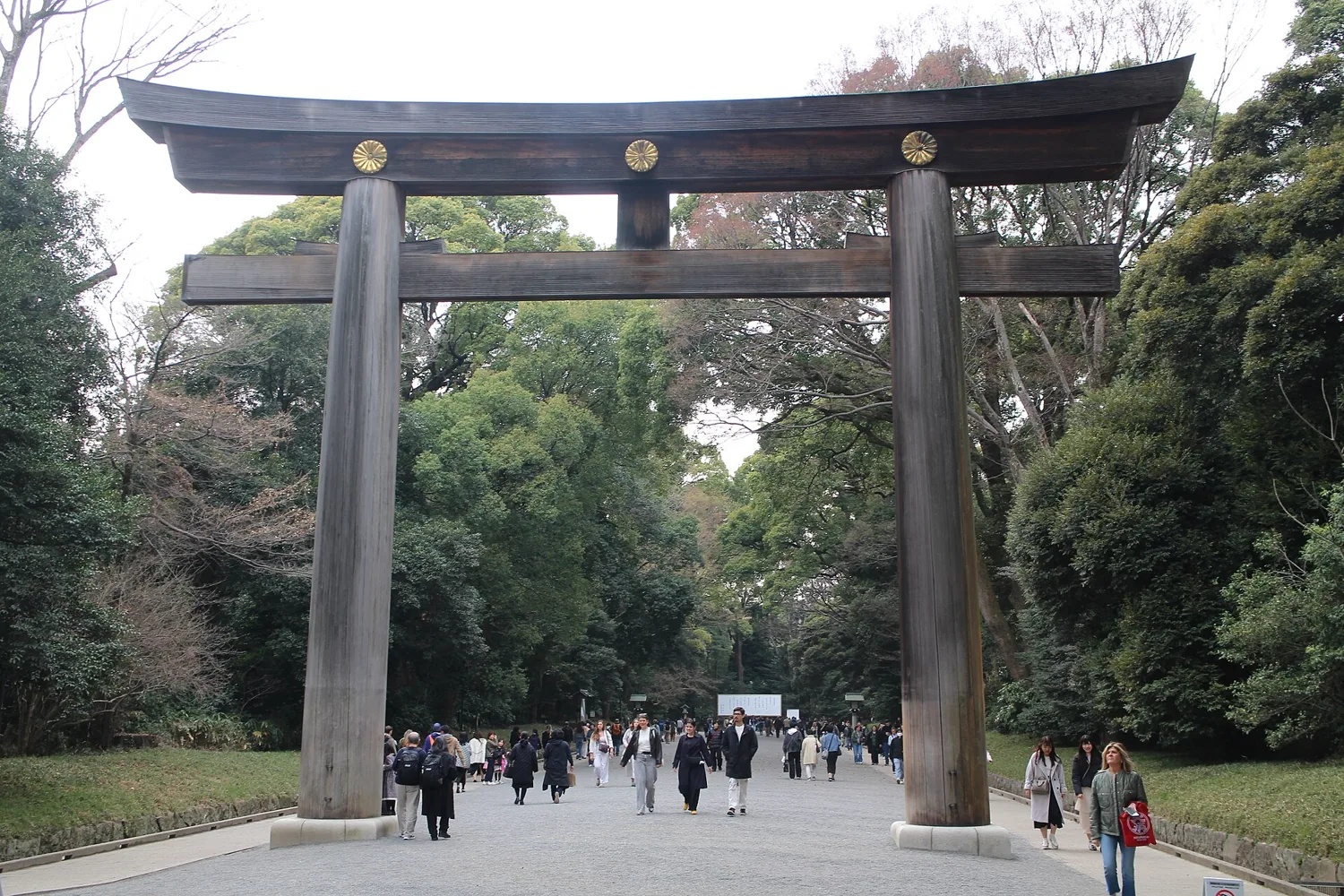
Closer to the hall stands the great torii, the largest wooden torii of its style in Japan. It is not the first one. The original was struck by lightning in 1966, and by then Japan no longer had a cypress large enough to replace it.
A timber merchant went looking in Taiwan and found one more than 1,500 years old, high on a mountain, and brought it out along a road he had to cut into the cliffs. Stand under the pillars and look up the grain before you walk on. The first torii was not thrown away, either: it still stands at Hikawa Shrine in Omiya, outside Tokyo.
At the hall
Before you reach the hall, stop at the water basin. If you have never done this before, rinse both hands, cup a little water in your hands to rinse your mouth, then rinse your hands once more. Do not put the ladle to your lips, and do not throw coins into the water. At the hall, bow twice, clap twice and bow once. The shrine asks you not to film or photograph the main sanctuary where people are praying.
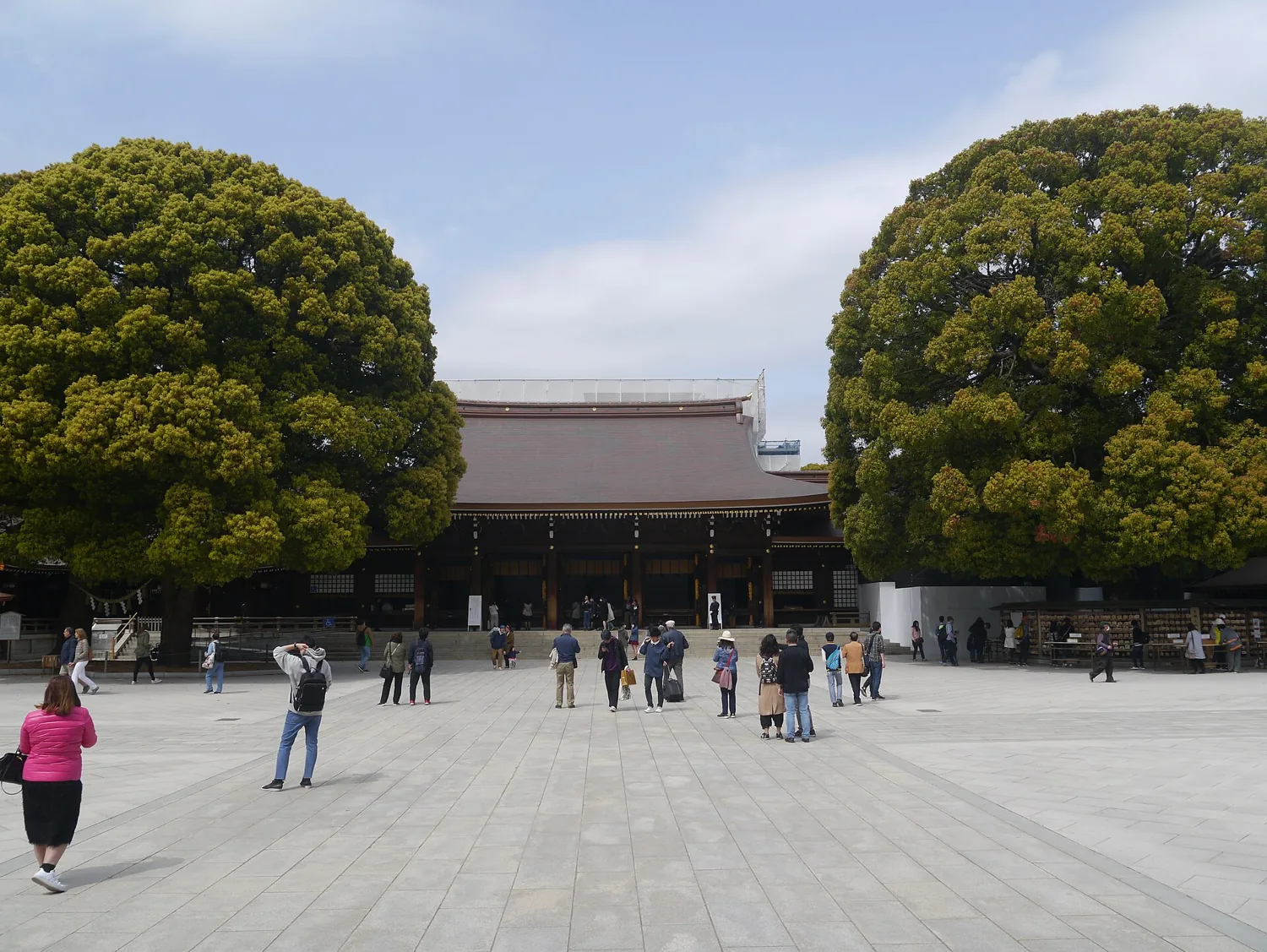
If you look for guardian lion-dogs along the approach, you will not find them. They are here, the shrine says, but inside the inner sanctuary of the hall.
Then draw a fortune. Meiji Shrine’s are my favorite kind, because they give you no verdict at all: no “great blessing” and no “bad luck,” only a poem by Emperor Meiji or Empress Shoken, with an English translation alongside the Japanese. If you have been to Senso-ji, where people say the fortunes come up “bad” a lot, keep the two slips side by side.
The garden and the well
If you have time for only one paid stop, choose the inner garden over the museum. It is older than the shrine: Emperor Meiji had it laid out as a walking garden for Empress Shoken, who was in poor health, and the shrine says it was one of the main reasons the shrine was built here.
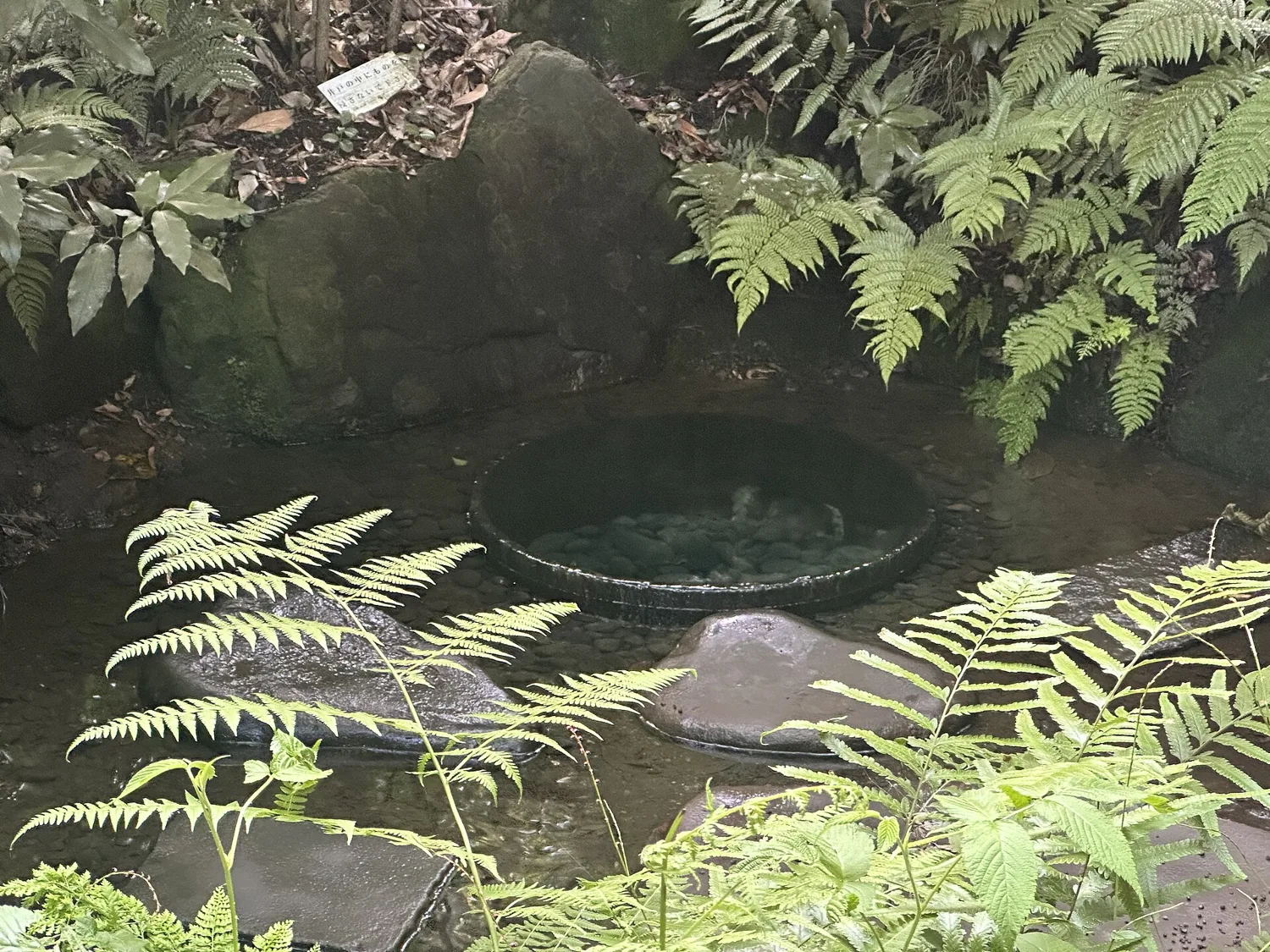
Inside is Kiyomasa’s Well, said to have been dug by Kato Kiyomasa; the shrine itself says no one knows whether he really did. The spring stays at about the same temperature all year. It also depends on the forest: when the trees around it were cut during construction, the water stopped, and when the trees were planted back, it came again. If you are here in June, you will see the garden’s irises, fed by the same water; outside June, come for the well and the quiet.
If you have a second hour, the Meiji Jingu Museum, designed by Kengo Kuma with a gently sloping roof, is the place to see the carriage and portraits from the emperor’s reign; it is usually closed on Thursdays, so check its calendar.
Takeshita Street and Omotesando
Leave by the gate you came in and walk back toward the station; Takeshita Street starts right outside its Takeshita exit. It gets so crowded that its shop association asks you, in English, to keep to the left and move in one direction. If someone tries to steer you into a shop, keep walking.
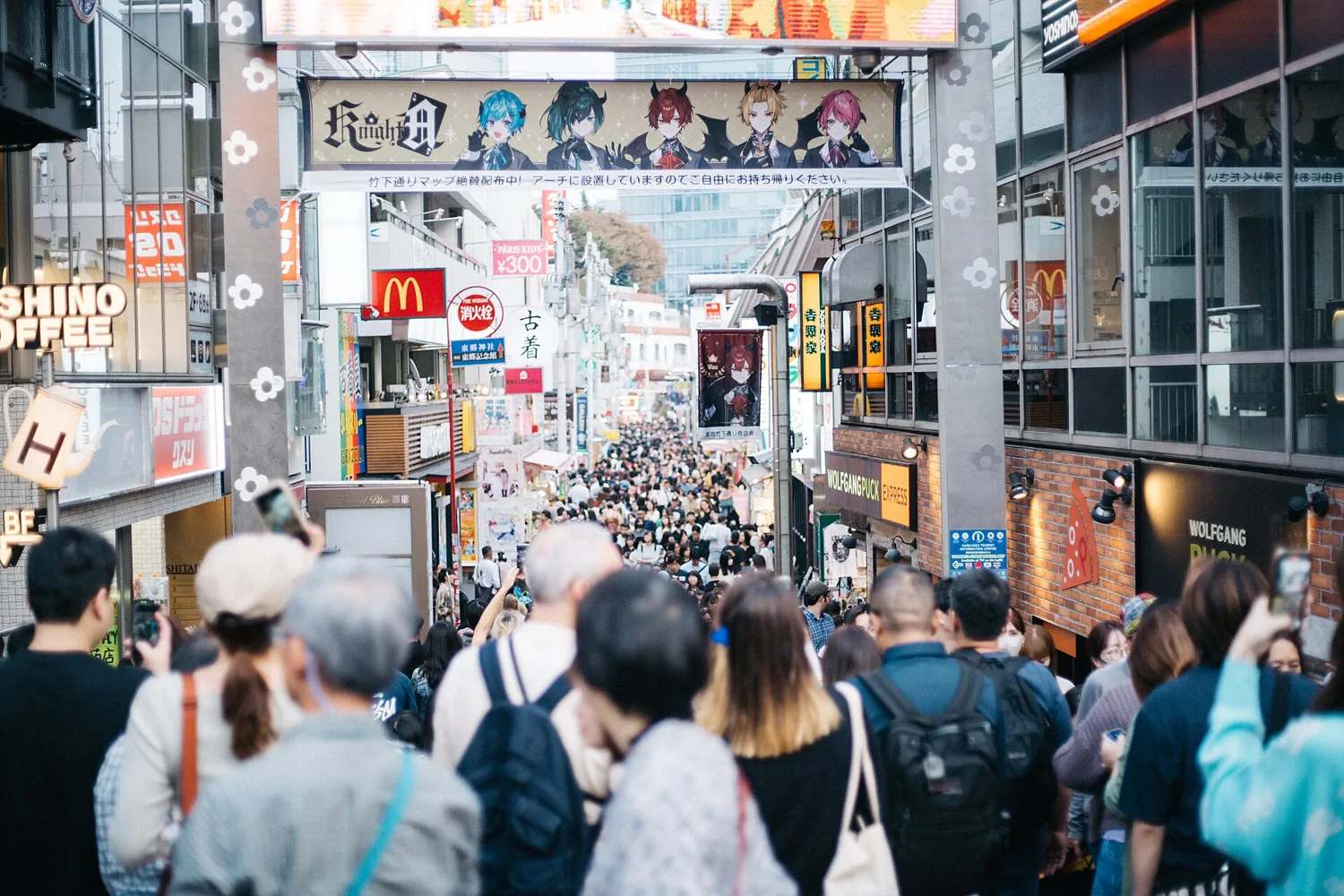
If you want a crepe, this is the street for it, along with other snacks you can carry. Eat it by the shop and leave the wrapper in the shop’s bin.
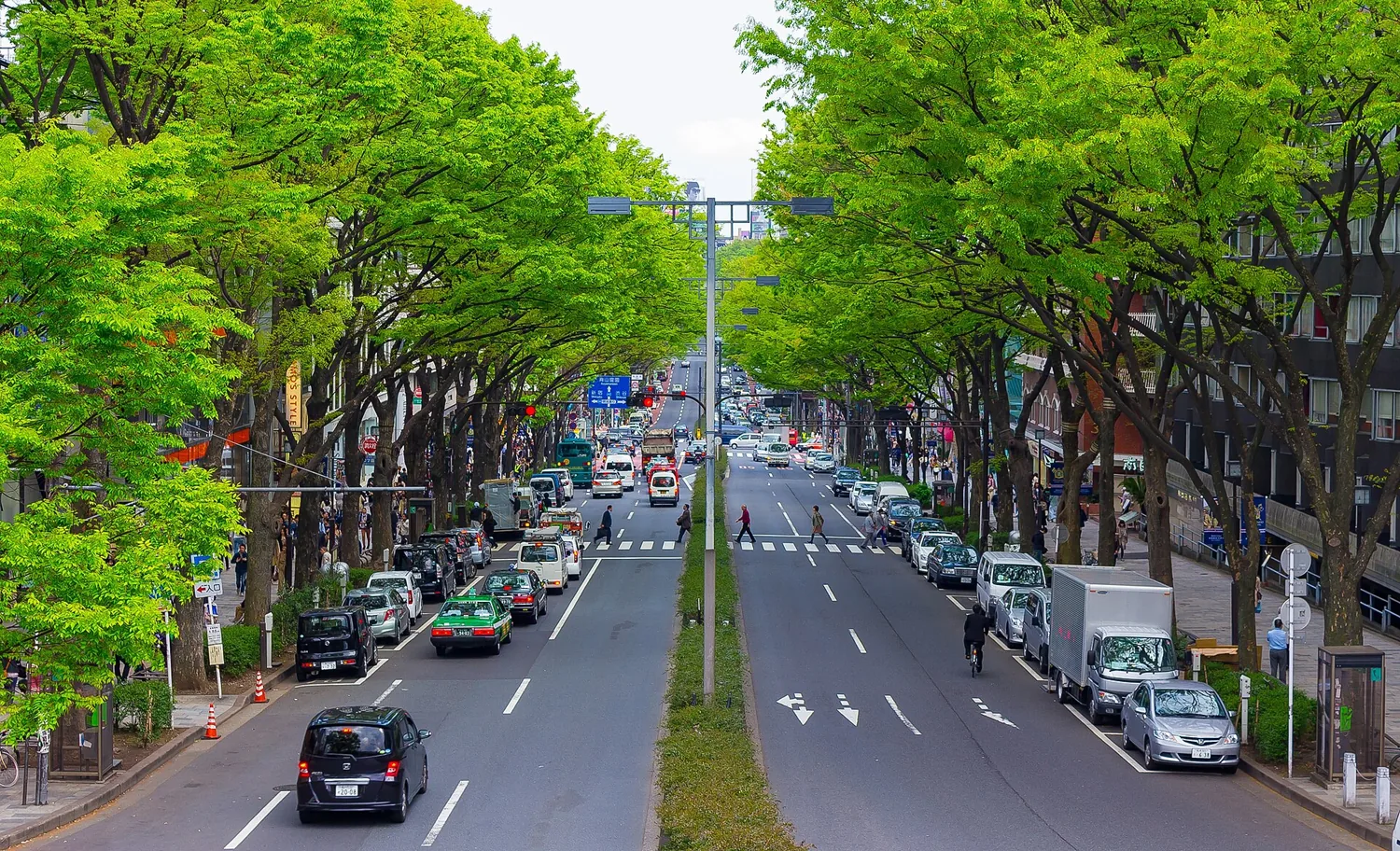
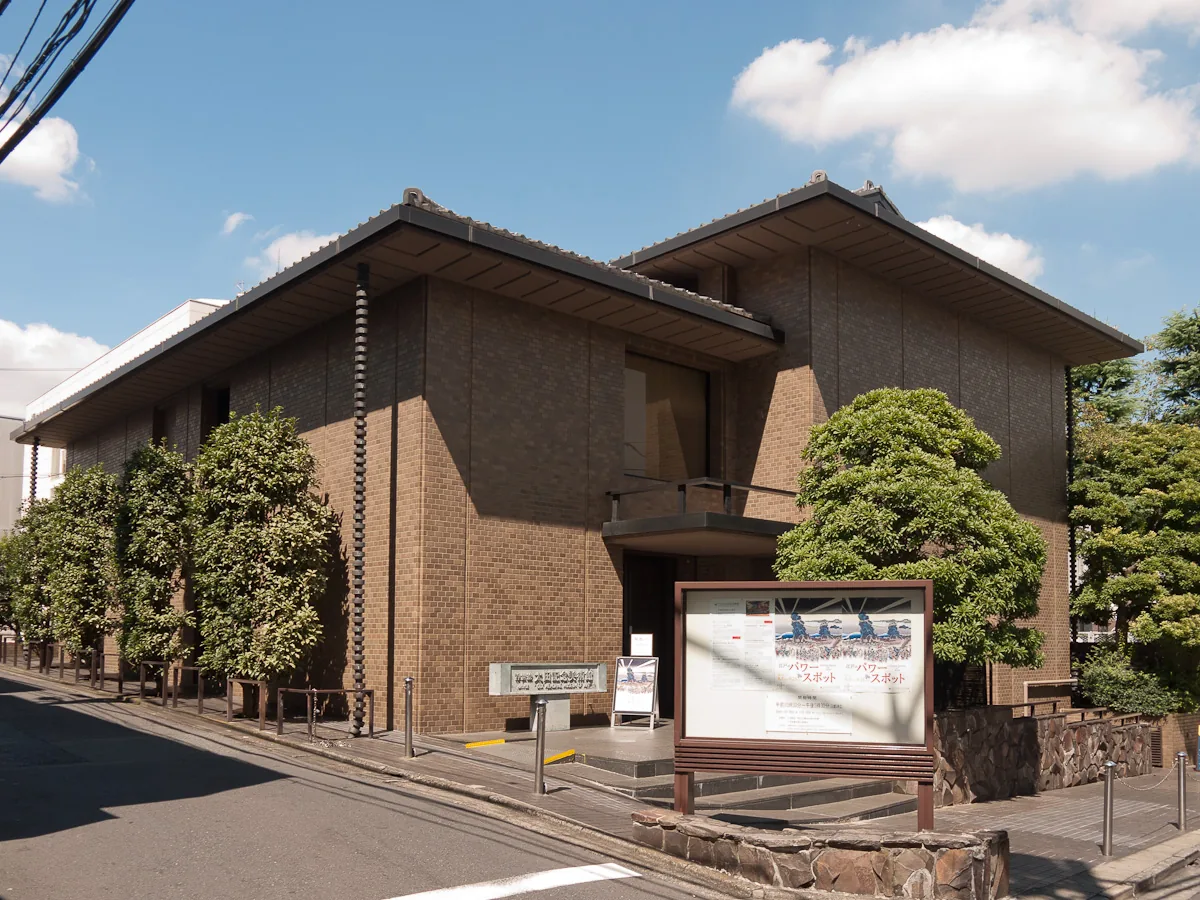
When the crowd gets too much, walk back to the station’s Omotesando exit and head up Omotesando toward Aoyama, under the zelkova trees that are the avenue’s symbol. A short way along, a side street on the left leads to the Ota Memorial Museum of Art, a museum of ukiyo-e built on the collection of Ota Seizo V. Its quiet rooms, after the crowds of Takeshita Street, are where I would end the day. Bring cash, because it does not take cards.
Before you go
| Meiji Shrine | Free. Gates open at sunrise and close at sunset, so the times change every month (October 5:40–16:40, November 6:10–16:10, December 6:40–16:00). Some facilities inside keep shorter hours, mainly 9:00–16:00. About an hour for the shrine alone, two with the garden and museum. Address: 1-1 Yoyogi Kamizonocho, Shibuya City, Tokyo (東京都渋谷区代々木神園町1-1). Official website: meijijingu.or.jp |
| The forest | About 100,000 donated trees planted when the shrine was built (1920); at the start there were about 120,000 trees of 365 species, and a later survey counted about 36,000 of 234 species, grown much larger. Do not enter the woods |
| Wine barrels | Wine offered every year since 2006 |
| Great torii | 12 m tall, pillars 1.2 m across, 13 tonnes; rebuilt in 1975 from a Taiwanese cypress more than 1,500 years old |
| Inner garden (Gyoen) | 500 yen. 9:00–16:30 March–October, 9:00–16:00 November–February; longer hours in June. Open every day. Irises at their best in early to mid June |
| Meiji Jingu Museum | 10:00–16:30 (last entry 30 minutes before). Closed Thursdays, except public holidays and special opening days, and between exhibitions. 1,000 yen |
| Paying at the shrine | Restaurants and the gift shop take cards; the amulet office and the goshuin counter do not |
| Takeshita Street | Pedestrians only 11:00–18:00. Keep left and move in one direction. Street touting is banned: do not stop, do not take a catalogue, do not shake hands. Food shops in Harajuku must provide a bin |
| Litter and smoking in Shibuya City | Dropping litter: 2,000 yen fine. No smoking in outdoor public places, including heated tobacco: 2,000 yen fine. There is a public smoking area by the Takeshita exit of Harajuku Station |
| Ota Memorial Museum of Art | 10:30–17:30 (last entry 17:00). Cash only, no booking needed. Closed on some days between and during exhibitions; check the calendar. About 5 minutes’ walk from the Omotesando exit of Harajuku Station. Address: 1-10-10 Jingumae, Shibuya City, Tokyo (東京都渋谷区神宮前1-10-10). Official website: ukiyoe-ota-muse.jp (Japanese) |
| Getting there | Harajuku Station (JR Yamanote Line) or Meiji-jingumae (Harajuku) Station (Chiyoda and Fukutoshin Lines) for the south gate, about 10 minutes’ walk from the gate to the hall |
Checked 22 October 2026.
What I would do
I would arrive early and look up at the broad-leaved evergreens the planners chose, then head back into Harajuku for a crepe on Takeshita Street and finish among the prints at the Ota Memorial Museum.
We have visited every place in this guide. The practical information was checked against the official sources below, checked on 22 October 2026.
- Meiji Jingu (Japanese and English) — gate hours, visiting etiquette and photography, the forest’s history and the cedar debate, the tree counts, the gravel and the center of the path, the walk from the gates, wildlife and the survey of living things, the great torii, the wine and sake offerings, the lion-dogs, the fortunes, the inner garden and Kiyomasa’s Well, the museum, payments, getting there: meijijingu.or.jp/sanpai/2.php, /about/, /midokoro/, /midokoro/gyoen/, /faq/, /guide/, /museum/, /access/, /en/qa/, /en/etiquette/; the shrine’s history database at rekishidb.meijijingu.or.jp
- Harajuku Takeshita Street shop association (Japanese and English) — pedestrian hours, keeping left, the ban on touting, takeaway food: takeshita-street.com
- Harajuku Omotesando Keyakikai (Japanese) — Omotesando as the shrine’s approach, the zelkova health checks: omotesando.or.jp
- Shibuya City (Japanese) — litter fines, bins at food shops, smoking rules and smoking areas: city.shibuya.tokyo.jp
- Ota Memorial Museum of Art (Japanese) — hours, cash only, access: ukiyoe-ota-muse.jp
- Photographs: the lead image of the forest of Meiji Shrine and Yoyogi Park from Shibuya Sky by Stephen Kelly, October 2023 (CC BY 2.0, cropped); Takeshita Street and the forest path side by side by Dick Thomas Johnson (CC BY 2.0) and Grendelkhan (CC BY-SA 4.0), cropped and combined; the north approach by pohjolanpoluilla (CC BY-SA 2.0); the wine barrels by Syced (CC0); the great torii by Suicasmo (CC0); the worship hall by Zairon (CC BY-SA 4.0); Kiyomasa’s Well by Nesnad (CC BY 4.0); Takeshita Street again by Dick Thomas Johnson (CC BY 2.0); Omotesando by Kakidai (CC BY-SA 3.0); the Ota Memorial Museum of Art by Rs1421 (CC BY-SA 3.0). All via Wikimedia Commons, resized and converted to WebP.
Explore other areas
- Hokkaido — Sapporo
- Kanto — Hakone
- Hokuriku — Kanazawa
- Koshin-Tokai — Fuji Five Lakes
- Kansai — Nara
- Chugoku — Hiroshima
- Kyushu — Fukuoka
- Okinawa — Naha
