Fuji Five Lakes / Guide
Chureito Pagoda: Stop at the Tower Before You Climb to the Deck
Chureito Pagoda (Arakurayama Sengen Park)新倉山浅間公園・忠霊塔
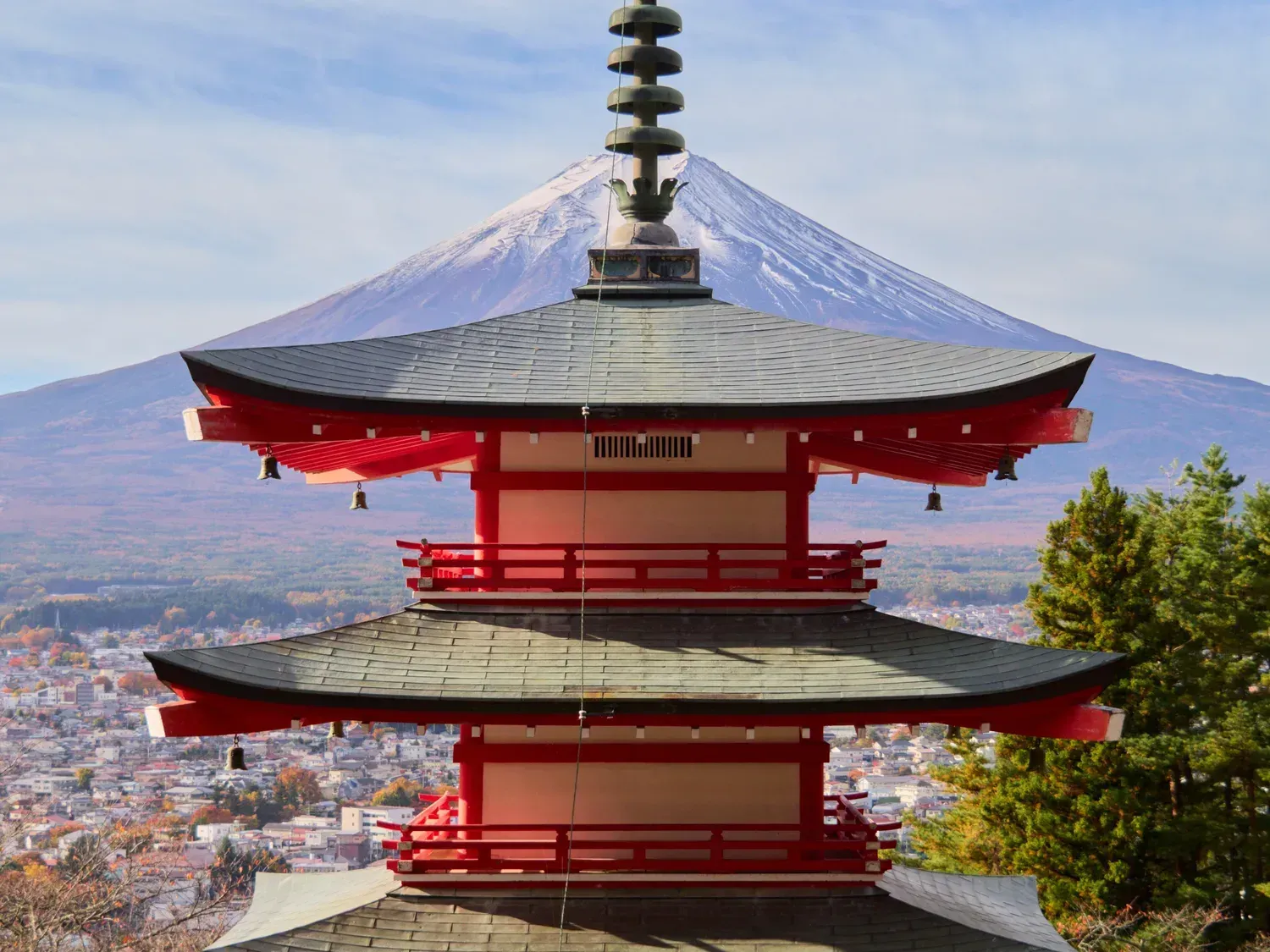
The view turns up, the city says, in textbooks abroad as a symbol of Japan: a vermilion five-storey pagoda in front, Mount Fuji rising behind it, a town spread out below. What changed the picture for me is what that tower actually is. It looks like a temple pagoda, but the city built it as its memorial to its war dead, and it holds the memorial tablets of 1,055 people from Fujiyoshida.
So when you reach the top of the 398 steps, stop at the pagoda itself and read the sign there, rather than walking straight past it to the viewing deck.
A memorial the town built
The tower’s full name is the Fujiyoshida City Memorial Tower for the War Dead, commonly known as Chureito. It remembers the people of Fujiyoshida who went to Japan’s wars from the Meiji era on and lost their lives, and it was built with money raised from the town’s people and others, taking three years to complete.
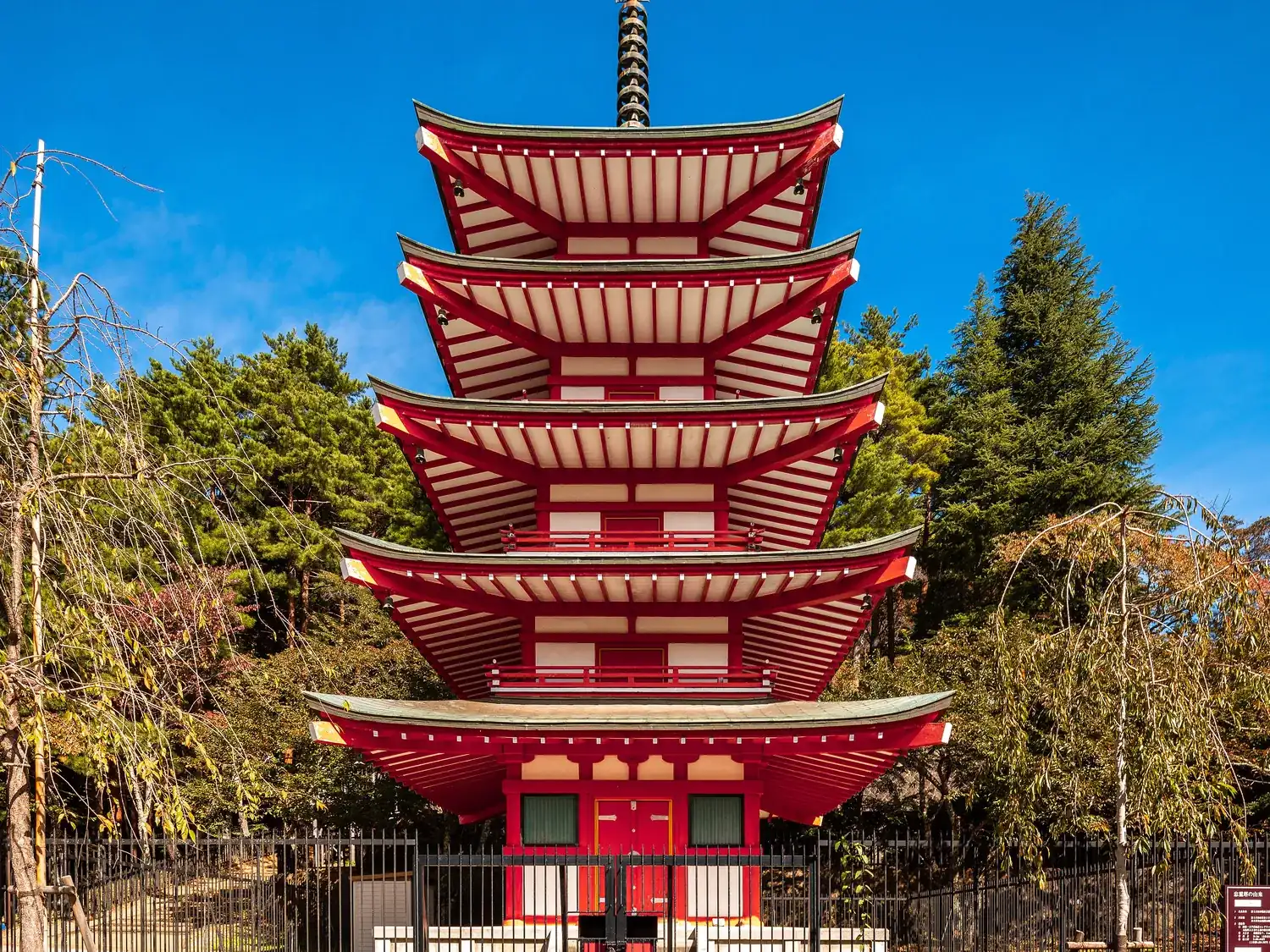
The city calls the tower a symbol for the people of Fujiyoshida. The sign at the tower, written by its supporters’ association and the city’s association of bereaved families, opens with this: “Behind this beautiful view of the five-storey pagoda and Mount Fuji are many precious lives lost to war.”
The line that stays with me comes later on the same sign. For families who lost someone to war, it says, the sight of so many people crossing borders from all over the world to gather here makes them feel the worth of peace all over again. I had assumed a memorial would rather be left in quiet. Here, the sign says, the bereaved families find the worth of peace in that very crowd, and they ask visitors to give a quiet thought to the misery of war, the worth of peace and the value of life.
Up the steps from the red torii
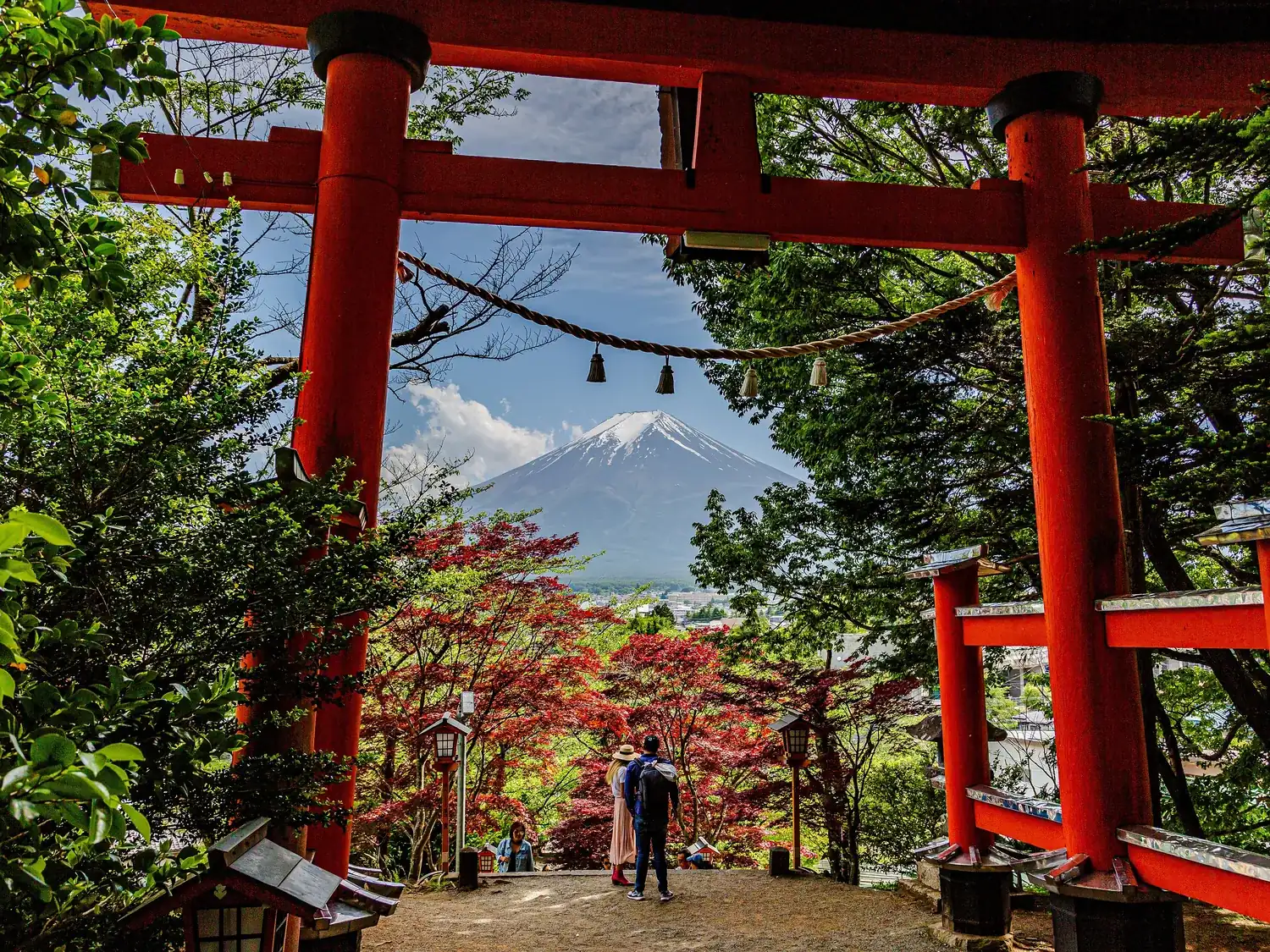
Start at Arakura Fuji Sengen Shrine, at the foot of Mount Arakura, under a big red torii gate. From there the Sakuya-hime stairway climbs through the park to the tower, about 20 minutes on foot from the shrine grounds.
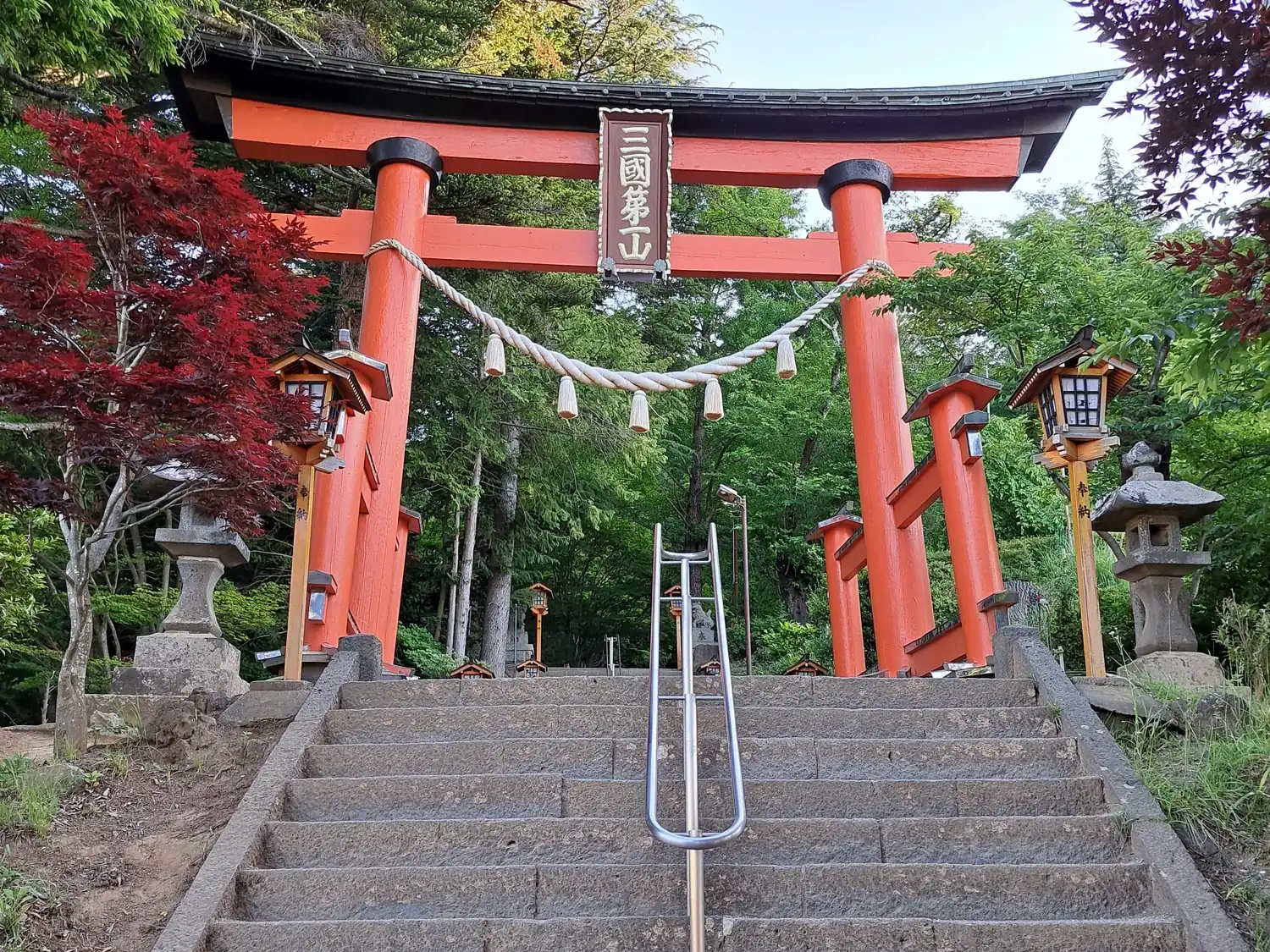
If you would rather not take the stairs, use the footpath; the city says the tower can be reached from the car park by either. Do not drive up to the plaza in front of the tower. The town’s tourism office asks visitors not to, because it is dangerous.
The view from the deck
Climb on past the tower to the viewing deck. From there you look down over the rooftops of Fujiyoshida to a Mount Fuji that spreads out evenly to the left and right, with the pagoda in front of it.
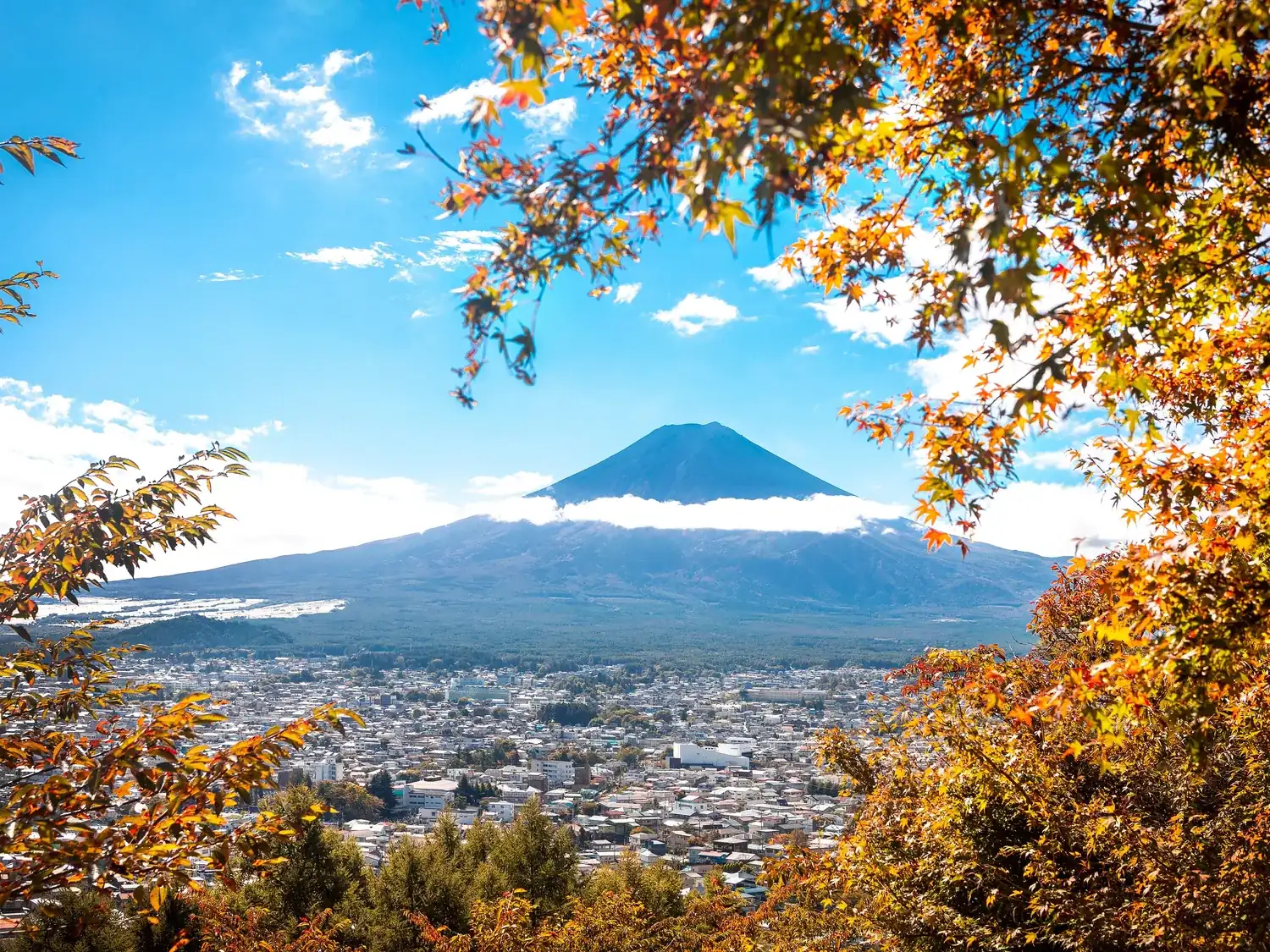
Come in the morning if you can, when the light falls on the mountain from the front. On a clear early morning in autumn or early winter, the colder air can bring the mountain into sharp view.
In photographs of this view, the part my eye goes back to is the town below the deck: Fujiyoshida, the hometown of the 1,055 people on the tablets.
Cherry blossom season
In spring the pagoda stands among the park’s cherry trees, and the crowds can be huge: the city says more than 10,000 people a day come at the peak of the blossom.
The crowds have cost the neighbourhood. The city called off its cherry blossom festival, citing overtourism: visitors opening the doors of private homes to look for a toilet, and school routes so crowded that children had to walk as if being pushed off the pavement. In blossom season the city has put the deck on timed turns, with long waits, so check its spring guidance before you go.
If you do come then, use public transport, stay out of residential areas and do not take photos there without permission; those are the city’s own requests. If you can choose, come in autumn instead, when maple and cherry leaves turn red around the tower while Fuji takes its first snow.
Before you go
| Arakurayama Sengen Park | Open 24 hours. The official pages give no information about an admission fee. Toilets on site |
| The tower | Completed in 1962, three years after work began |
| The steps | 398 steps on the Sakuya-hime stairway. About 20 minutes from the shrine grounds to the tower, says the prefecture’s tourism site. A footpath also leads up |
| Lights | The tower is lit from dusk. The town’s tourism site lists the lights ending at 21:50 and the start changing by month (16:00 in winter to 19:00 in summer); the city’s page says until 22:00. Times may change |
| Cherry blossom | Usually early to mid April. In spring 2026 the city ran the viewing deck on timed turns, warning of waits of about one to three hours in a typical year, and restricted parking and coaches. Check the latest arrangements before you travel |
| Autumn leaves | Usually late October to mid November |
| By train | Shimoyoshida Station on the Fujikyu Line. From Shinjuku, the Fuji Excursion limited express runs direct (about 105 minutes, four a day), or change at Otsuki. On foot from the station, the official pages give about 5 minutes to the shrine, about 10 minutes to the park or the start of the shrine approach, and 25 to 30 minutes to the tower |
| By car | Four city car parks, 1,000–1,500 yen per car for up to six hours. In blossom season the car park next to the park has been closed for traffic restrictions; check the city’s blossom-season page before driving. Coaches cannot drive up to the car parks and normally set down at Shimoyoshida Station, but in blossom season even the station has been closed to tourist coaches |
| Bears | The city reports bear sightings around the park. Take care early in the morning and after dusk, when few people are about |
Checked 7 October 2026.
What I would do
I would come by train on an autumn morning, climb from the red torii, and give the pagoda and its sign a few quiet minutes before going on to the deck.
We have not visited Arakurayama Sengen Park. The facts here come from the official sources below, checked on 7 October 2026. The quotations from the sign at the tower are our translation from the Japanese.
- Fujiyoshida City — the tower’s name, history and purpose, the text of its sign, the steps and footpath, the lights, bear sightings, car parks, and the decision not to hold the cherry blossom festival: city.fujiyoshida.yamanashi.jp
- Fujiyoshida tourism — the view from the deck, opening hours, lights, car parks, blossom-season operation, routes from Tokyo and walking times: fujiyoshida.net
- Yamanashi Tourism Organization — the walk from the shrine to the tower, the cherry and autumn seasons, and the best time of day: yamanashi-kankou.jp
- Fujikyu Railway — the walk from Shimoyoshida Station to the tower: fujikyu-railway.jp
- Photographs: the pagoda with Mount Fuji (lead image) by lumoplank (CC0); the red torii and steps by Gifu-sizu (CC0); Mount Fuji through the red torii by Otto Domes (CC BY-SA 4.0); the tower in autumn and the view over Fujiyoshida by Supanut Arunoprayote (CC BY 4.0). All from Wikimedia Commons.
More in Fuji Five Lakes
- Oshino Hakkai — For eight spring ponds, and Choshi-ike where the water lifts the sand
- Lake Kawaguchi (Oishi Park) — For Mount Fuji across the water, and the boat back
- Yoshida Udon — For a lunch of the town's hard noodles after a morning at the pagoda
- Where to Stay — For choosing where to sleep by which way the room faces: Kawaguchiko Station, across Lake Kawaguchi, Fujiyoshida or Lake Yamanaka
Explore other areas
- Hokkaido — Sapporo
- Kanto — Hakone
- Hokuriku — Kanazawa
- Koshin-Tokai — Fuji Five Lakes · You are here
- Kansai — Nara
- Chugoku — Hiroshima
- Kyushu — Fukuoka
- Okinawa — Naha
