Fuji Five Lakes / Stay
Where to Stay at the Fuji Five Lakes: Ask Which Way the Room Faces
Where to Stay富士五湖の宿
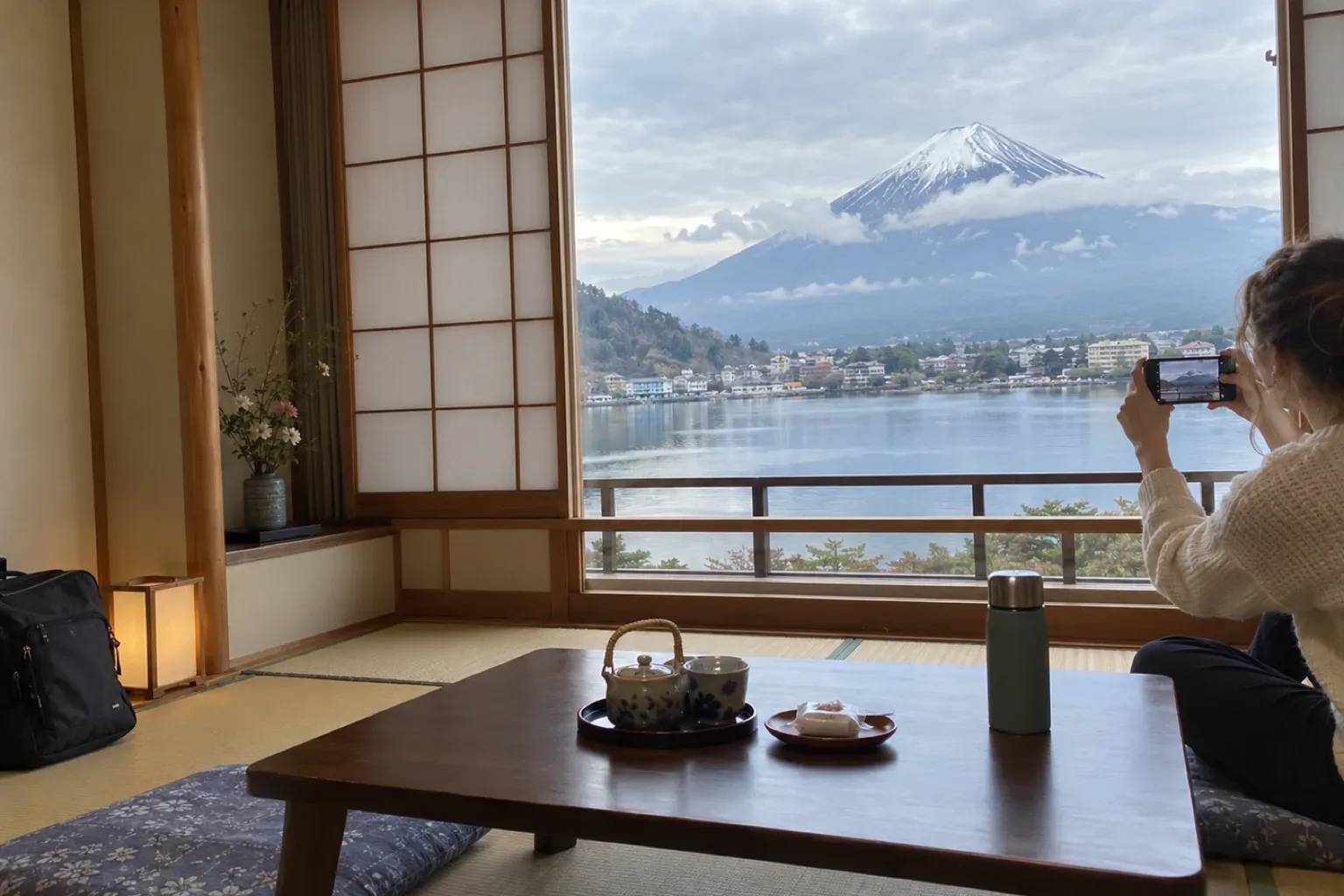
If you want Fuji over the water from your window, ask which way the room faces rather than assuming any lakeside hotel gives you both. At the 1932 hotel by Kawaguchiko Station, rooms are sold as lake view or Fuji view, and only the suite has both — the lake from the living room, Fuji from the bath, which I find oddly charming.
Fuji Lake Hotel puts one label on each room, Fuji view or lake view, and the suite is the single exception. Across the lake, Ubuya says every room looks at Fuji over the water. Stay by the station if your morning starts with a train; cross the lake if your morning starts at the window.
Elsewhere the question changes. In Fujiyoshida you sleep where pilgrims slept before they climbed the mountain, and at Lake Yamanaka you come for the evenings when the sun sets onto the summit. If I had a single night, I would choose the room by its view first and the shore second.
If your morning starts with a train, stay by Kawaguchiko Station
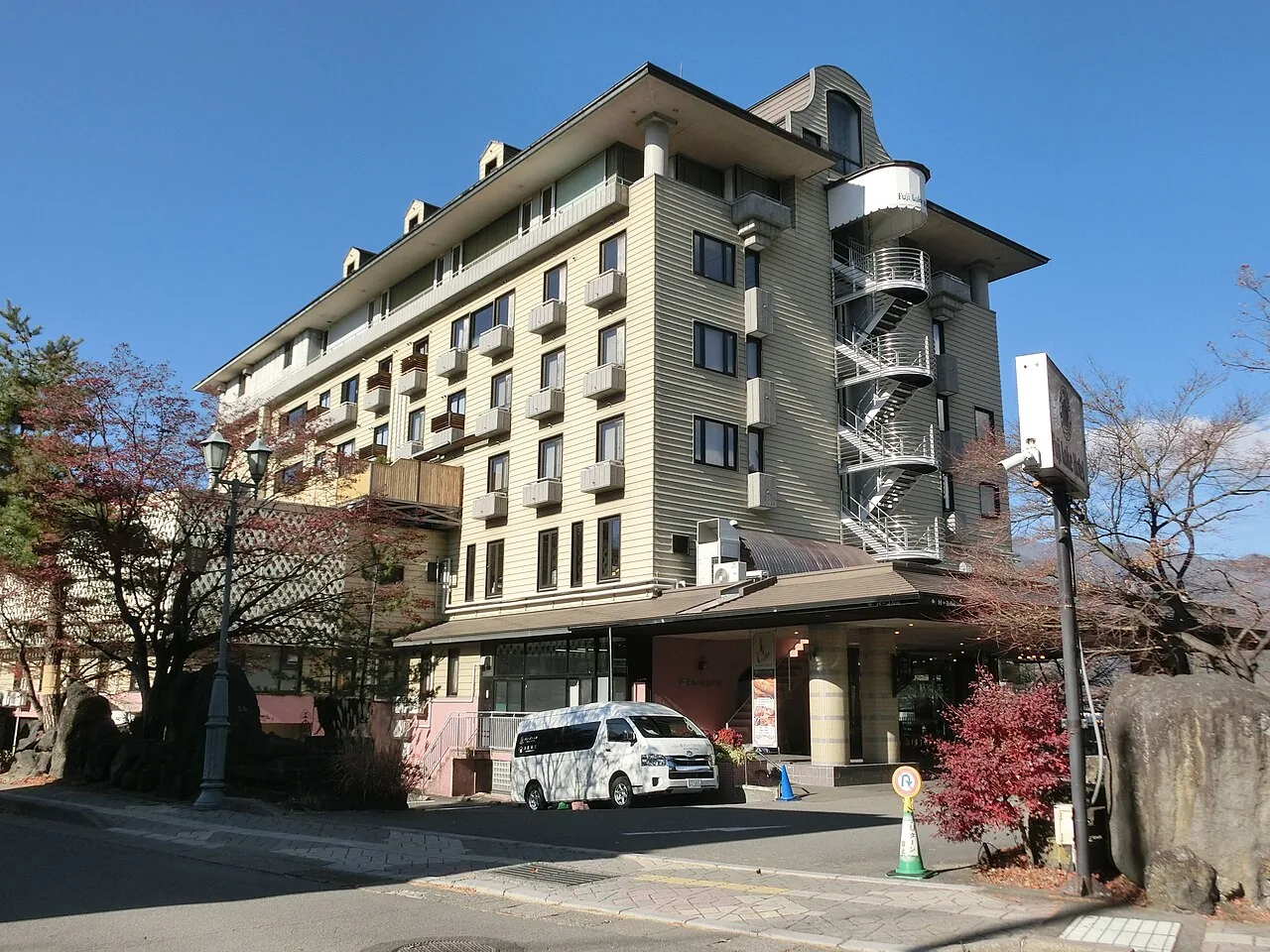
Fuji Lake Hotel is within walking distance of Kawaguchiko Station, and if your bags are heavy, it will send its free shuttle when you call from the station. The Red Line loop bus starts at the same station and has a stop named after the hotel, so you can be on the lake road the morning you check out without a taxi.
The hotel has been here since 1932, and in its first years, to my delight, it looked after the neighbourhood too. Its founder was a doctor who had learned hospitality in the United States, and the first building, wooden and in the modern style of the Taisho years, had a treatment room that served local people as well as guests. Lava from Fuji is still left in the building, inside and out.
One hotel we would look at: Fuji Lake Hotel. Read each room’s label rather than the hotel’s name. Every standard room, in both wings, is marked lake view, so if Fuji from the room is the point, look among the special rooms, which all have open-air baths filled with Kawaguchiko hot spring water. The suite is the only room marked with both, and its description puts them in different places: the lake from the living room, Fuji from the open-air bath.
None of that is a reason to skip it; just book the label you want.
If you want Fuji from every room, cross to Ubuya
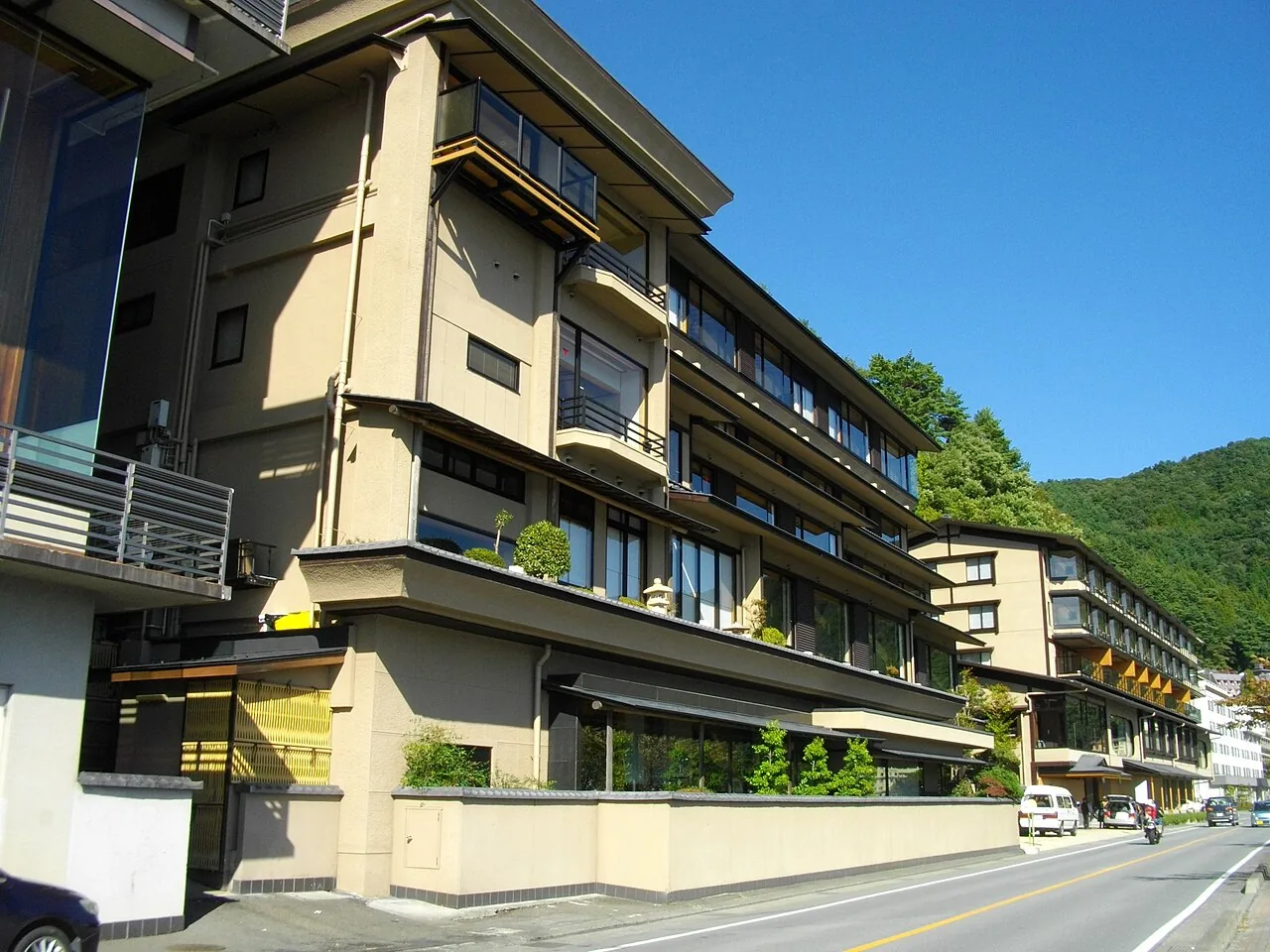
On the far shore, at Asakawa, Ubuya makes the promise the station hotel does not: every room, it says, looks at Fuji across Lake Kawaguchi. The prefecture’s tourism site files it the same way, as an inn where Fuji can be seen from all the rooms. Here you can stop worrying about labels.
One inn we would look at: Ubuya. The baths face the same view, and the one I would book for is a bath you lie down in, with the mountain in front of you. Besides a large bath and an open-air bath, there are baths to sit in and baths to lie in, and the inn says you can watch Fuji’s face change from morning to evening.
The business began as Ubuyagasaki Campsite and then became Ubuyagasaki Hotel. Ubuyagasaki is the cape where, the Kawaguchiko Museum of Art says, the photographer Okada Kōyō first photographed Fuji, at 19.
The far shore costs you the ride. Ubuya is a short taxi ride from Kawaguchiko Station, or the inn will come for you if you call from the station during its afternoon pick-up hours. The Red Line also stops right outside, at Ubuya-mae, and the same bus goes on to Oishi Park, where Fuji stands straight across the lake.
Sleep where the pilgrims slept, in Fujiyoshida
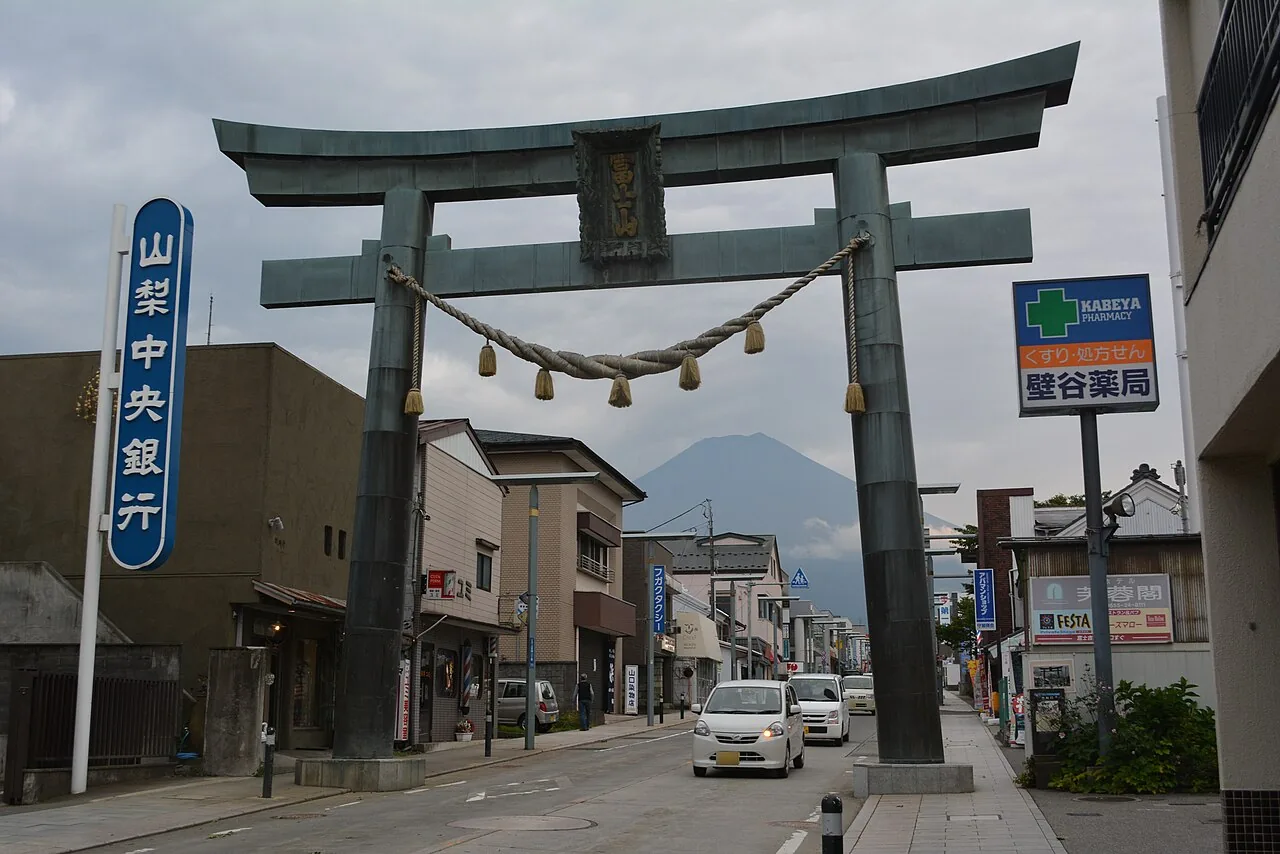
Fujiyoshida is the one place on this page where you sleep for the mountain rather than its reflection. Before the climb, Fuji pilgrims were looked after here by oshi, who gave them meals, guidance and prayers, and the town of Kamiyoshida filled with their houses. At its entrance stands the Kanadorii, a torii with Fuji beyond it.
At one time, says Japan’s tourism agency, as many as 86 oshi houses stood in Fujiyoshida, and only a very few can still be stayed in.
The houses stood on long, narrow plots along the main street, and the pilgrims stayed in the back rooms, enjoying a last comfortable night before the hard climb. In the busy summers, though, so many came that some had to sleep in the corridors, and, as the agency itself admits, the night was only relatively comfortable. That “relatively” is the most honest thing anyone says about a night’s sleep on this page, and it makes me want the back room.
One house to look at: Oshi no Ie Ōganmaru (hitsuki guesthouse & café). The city’s tourism site lists it in the Fujisan Station area. It opened as a guesthouse with a café to keep an old oshi house and its culture alive, and inside, the city says, votive tablets and robes from the pilgrim days tell the house’s history. The prefecture’s magazine calls it an oshi house with about 400 years of history.
It has no website of its own that we could find, so we cannot tell you its open days or how to book. Settle those before you plan a night around it.
Where in Fujiyoshida depends on your morning, the city says. If you are climbing, stay near Fujisan Station, where buses leave for the Fifth Station. If you would rather drink your way through the retro bars of Nishiura, stay near Gekkōji or Shimoyoshida. That is also the side of town for Chureito Pagoda in the morning and Yoshida udon at lunch.
If you come for the sunset on the summit, sleep at Lake Yamanaka
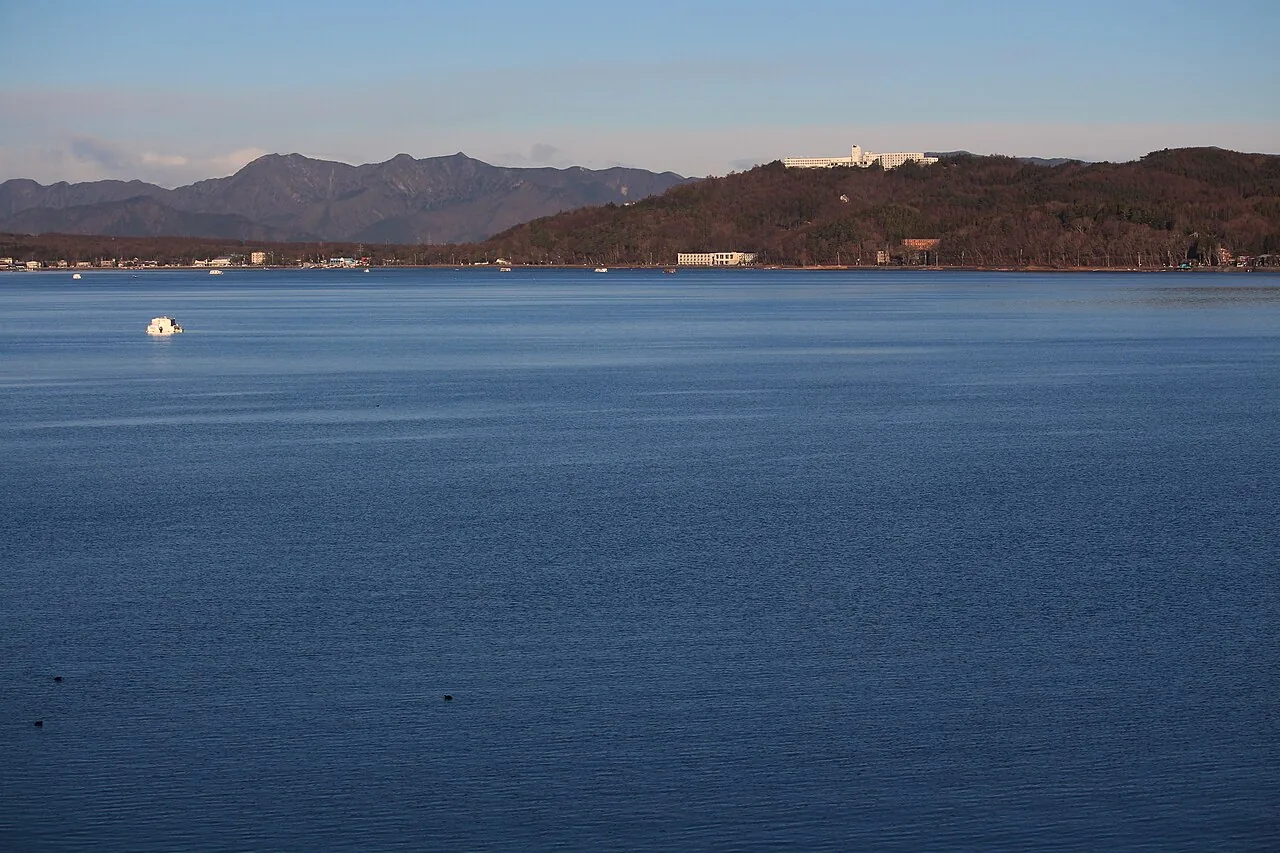
On clear evenings in the colder months, the sun at Lake Yamanaka goes down right onto Fuji’s summit, and people here call it Diamond Fuji. I love how proud the village is of it. The tourist association calls Yamanaka the sacred ground of Diamond Fuji, and because February’s weather tends to be steady, it gives most of that month a name of its own: the Diamond Fuji Weeks.
Which evening depends on where you stand. The prefecture’s list puts Panorama-dai and the Asahigaoka lakeside park in mid-to-late October, and Nagaike Park, where the lake lies between you and the mountain, in early November. It calls all its dates rough estimates only. If you want to stay on after the sun goes down, sleep by the lake rather than watch the clock for the last loop bus back to Kawaguchiko.
One hotel we would look at: Hotel Mount Fuji. The prefecture describes it as a resort hotel built to look at Fuji. It sits on high ground above the lake, and the hotel says its guest rooms look out on the lake and the mountain. Its detached open-air bath, Hanare no Yu, takes in both at once.
The hotel does not say you can see Diamond Fuji from your room, so for the sunset itself, plan to be down on the shore. You reach it by bus from Fujisan Station, then by the hotel’s shuttle from the stop below, if you call when you reach it. The Fujikko loop bus that serves the lake also passes through Oshino, for the spring ponds of Oshino Hakkai.
Saiko, Shoji and Motosu: easier with a car
The loop bus out to Shoji and Motosu runs only a handful of times a day, so these lakes are easier with a car; Saiko’s bus runs more often. If you are driving, look there. Japan’s tourism agency calls Shojiko by far the smallest of the Fuji Five Lakes, with no buildings spoiling its view, and bus stops along the way carry names like Saiko Minshuku and Shojiko Minshuku-mura, which point to places where minshuku guesthouses gather.
Before you go
| Fuji Lake Hotel | Since 1932. About 10 minutes on foot from Kawaguchiko Station; free shuttle if you call on arrival. Red Line stop: Fuji Lake Hotel / Fuji Museum. 12 room types (prefecture). Suite 70 m², up to 6 guests, the only room marked both lake view and Fuji view. All special rooms have open-air baths with Kawaguchiko hot spring water |
| Ubuya | About 10 minutes by taxi from Kawaguchiko Station. Pick-up if you call from the station, 15:00–18:00. Red Line stop: Ubuya-mae, about 16 minutes from the station. Ubuyagasaki campsite founded 1945; Ubuyagasaki Hotel 1948. Room count not found on the inn’s homepage, room page or company page |
| Oshi no Ie Ōganmaru (hitsuki) | Kamiyoshida, Fujisan Station area. Opened as a guesthouse and café in September 2016. Two 10-mat rooms, two 8-mat rooms and one 6-mat private room (prefecture magazine; issue date not shown). Open days and booking: no official site found |
| Oshi houses | As many as 86 in Fujiyoshida at one time (Japan Tourism Agency) |
| Hotel Mount Fuji | About 1,100 m above sea level. Fujisan Station bus to Hotel Mount Fuji Iriguchi, then the hotel’s shuttle, about 10 minutes; call on arrival (last pick-up 8 p.m.). Simple hot spring water from Benifuji no Yu. Fujikko stop: Fujisan Yamanakako (Hotel Mount Fuji Iriguchi) |
| Diamond Fuji at Lake Yamanaka | Diamond Fuji Weeks every year, 1–22 February (tourist association). Prefecture’s rough estimates, at sunset: Panorama-dai and Asahigaoka, mid-to-late October and mid-to-late February; Nagaike Park, early November and early February; Kirara, late October and mid-February; Hana no Miyako Park, mid-to-late December |
| Diamond Fuji in Fujiyoshida | Kanadorii crossing, early January, after sunset; 3 minutes on foot from Fujisan Station (prefecture’s rough estimate) |
| Yamanakako Ice Candle Festival | 13 February 2027; candles lit from about 16:30 |
| Red Line loop bus (Lake Kawaguchi) | From Kawaguchiko Station, 36 a day, first 9:00, last 17:45. No reservation needed |
| Green Line (Saiko) / Blue Line (Shoji, Motosu) | Departures from Kawaguchiko Station: Green Line 16 a day. Blue Line 5 a day, first 9:35, last 15:35 from Kawaguchiko Station; last bus back from Motosuko 16:45 |
| Loop bus passes | Kawaguchiko–Saiko–Shoji–Motosu buses: 1-day pass ¥1,500, 2-day ¥2,000 (adults). Fujikko (Fujiyoshida, Oshino, Yamanaka): 1-day ¥1,800, 2-day ¥2,200 (adults) |
| Fujikko loop bus | 11 a day from Kawaguchiko Station via Fujisan Station. Last bus back from Hirano 18:36, reaching Kawaguchiko Station 19:42 |
Checked 14 October 2026. We list no room rates. Special timetables can run at New Year and on other set days.
Where I would sleep
I would book the window before the town: a room at Ubuya with Fuji over the lake, and the station hotel’s suite only if I wanted to see the lake from the living room and the mountain from the open-air bath. Then, if I had a second night, I would give it to the back room of an oshi house in Fujiyoshida, for the mountain itself.
See hotels around Mount Fuji on Expedia. That is an affiliate link: if you book through it, we earn a commission.
We have not stayed at any of the places on this page or visited the areas described for this guide. The facts here come from the official sources below, checked on 14 October 2026.
- Fuji Lake Hotel — history, rooms and access: fujilake.co.jp
- Ubuya — rooms, baths, company history and access: ubuya.co.jp
- Yamanashi Tourism Organization — the oshi town of Kamiyoshida, Diamond Fuji viewing guide, and the inn pages for Ubuya, Fuji Lake Hotel and Hotel Mount Fuji: yamanashi-kankou.jp
- Japan Tourism Agency multilingual explanations — oshi houses (former Togawa family house) and Lake Shoji: mlit.go.jp
- Fujiyoshida city tourist guide — where to stay in Fujiyoshida and Oshi no Ie Ōganmaru: fujiyoshida.net
- Yamanashi Prefecture, Fureai vol. 57 — Oshi no Ie Ōganmaru: pref.yamanashi.jp
- Hotel Mount Fuji — views, baths and access: mtfuji-hotel.com
- Yamanakako tourist association — Diamond Fuji Weeks and the Ice Candle Festival: lake-yamanakako.com
- Fujikyu Bus — loop bus routes, timetables and passes: bus.fujikyu.co.jp
- Kawaguchiko Museum of Art — Okada Kōyō at Ubuyagasaki (checked 8 October 2026)
- Photographs: Fuji Lake Hotel and Ubuya by Abasaa (public domain); the Kanadorii by Katorisi (CC BY-SA 4.0); Hotel Mount Fuji and Lake Yamanaka by Alpsdake (CC BY-SA 4.0). All from Wikimedia Commons. The hero image is an AI-generated photo illustration, not a photograph of any place to stay on this page.
More in Fuji Five Lakes
- Chureito Pagoda (Arakurayama Sengen Park) — For the view of Mount Fuji, and for what the pagoda in front of it is
- Oshino Hakkai — For eight spring ponds, and Choshi-ike where the water lifts the sand
- Lake Kawaguchi (Oishi Park) — For Mount Fuji across the water, and the boat back
- Yoshida Udon — For a lunch of the town's hard noodles after a morning at the pagoda
Explore other areas
- Hokkaido — Sapporo
- Kanto — Hakone
- Hokuriku — Kanazawa
- Koshin-Tokai — Fuji Five Lakes · You are here
- Kansai — Nara
- Chugoku — Hiroshima
- Kyushu — Fukuoka
- Okinawa — Naha
