Fuji Five Lakes / Guide
Lake Kawaguchi: Skip the Convenience Store, Find Fuji at Oishi Park
Lake Kawaguchi (Oishi Park)河口湖・大石公園
The picture of Mount Fuji that took off on social media here is not of the lake at all. It is the mountain rising above a convenience store near Kawaguchiko Station, and so many people crowded the narrow pavement and stepped into the road to take it that the town hung a black screen in front of the shop, to keep residents and visitors safe from the traffic.
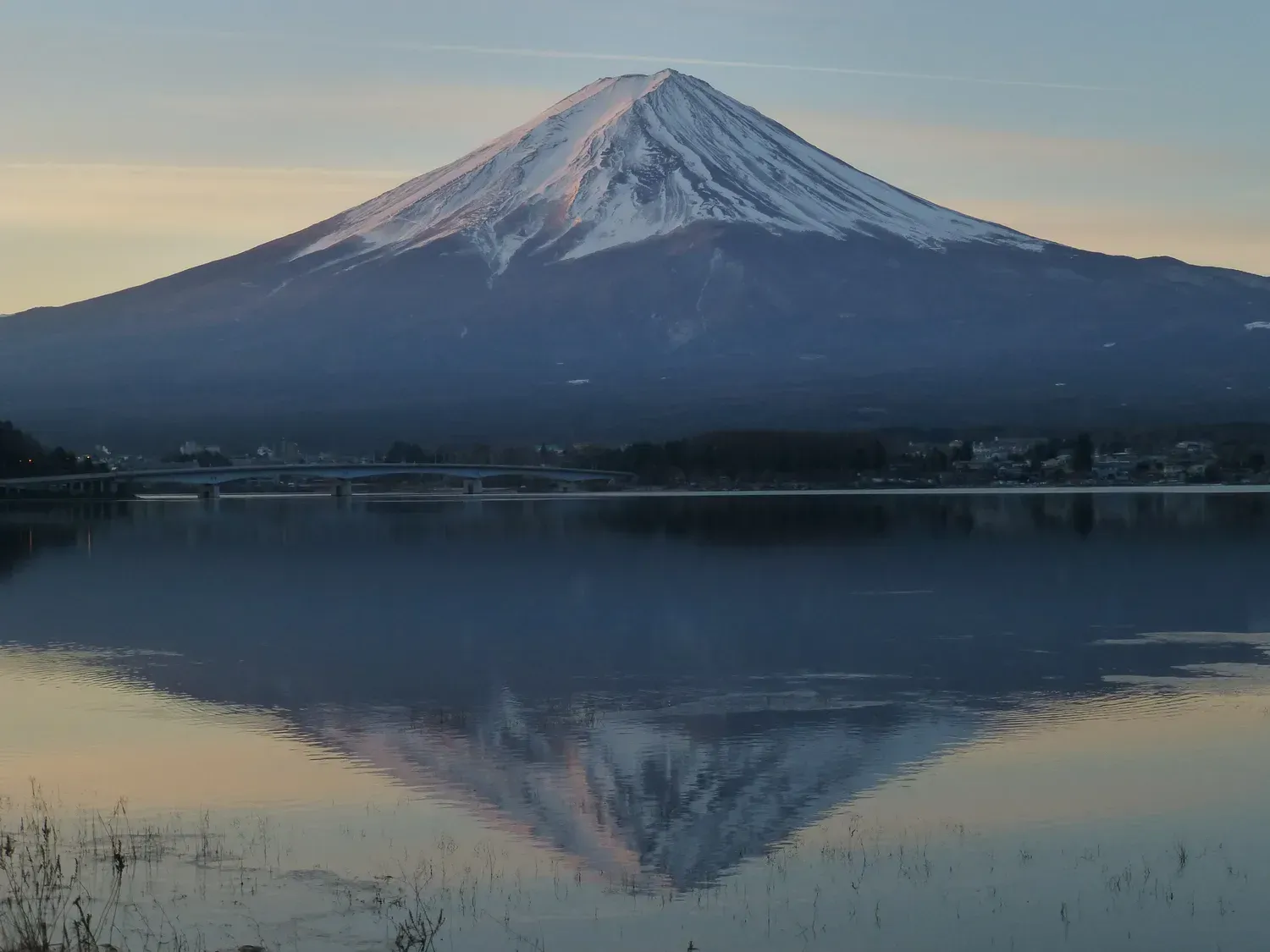
So skip it. Take the first loop bus of the morning to Oishi Park on the north shore instead, where Fuji stands straight across the water and, on a morning without wind, can appear upside down on the lake.
The local tourism federation says people start to gather from around ten, so an early bus gives you a good chance of having the park before the busiest part of the day.
Asked to take pictures quietly
What moved me most was how the town explained the screen. It calls the decision a painful one, made with great regret, and says it would like to take the screen down once visitors keep to the rules and stop crowding the pavement.
The local tourism federation, meanwhile, writes that taking a photograph quietly is a form of respect, for Mount Fuji and for the people who have looked after this landscape. Do not block the paths or walk onto private land, it asks, mind the people passing your tripod, and take your rubbish home.
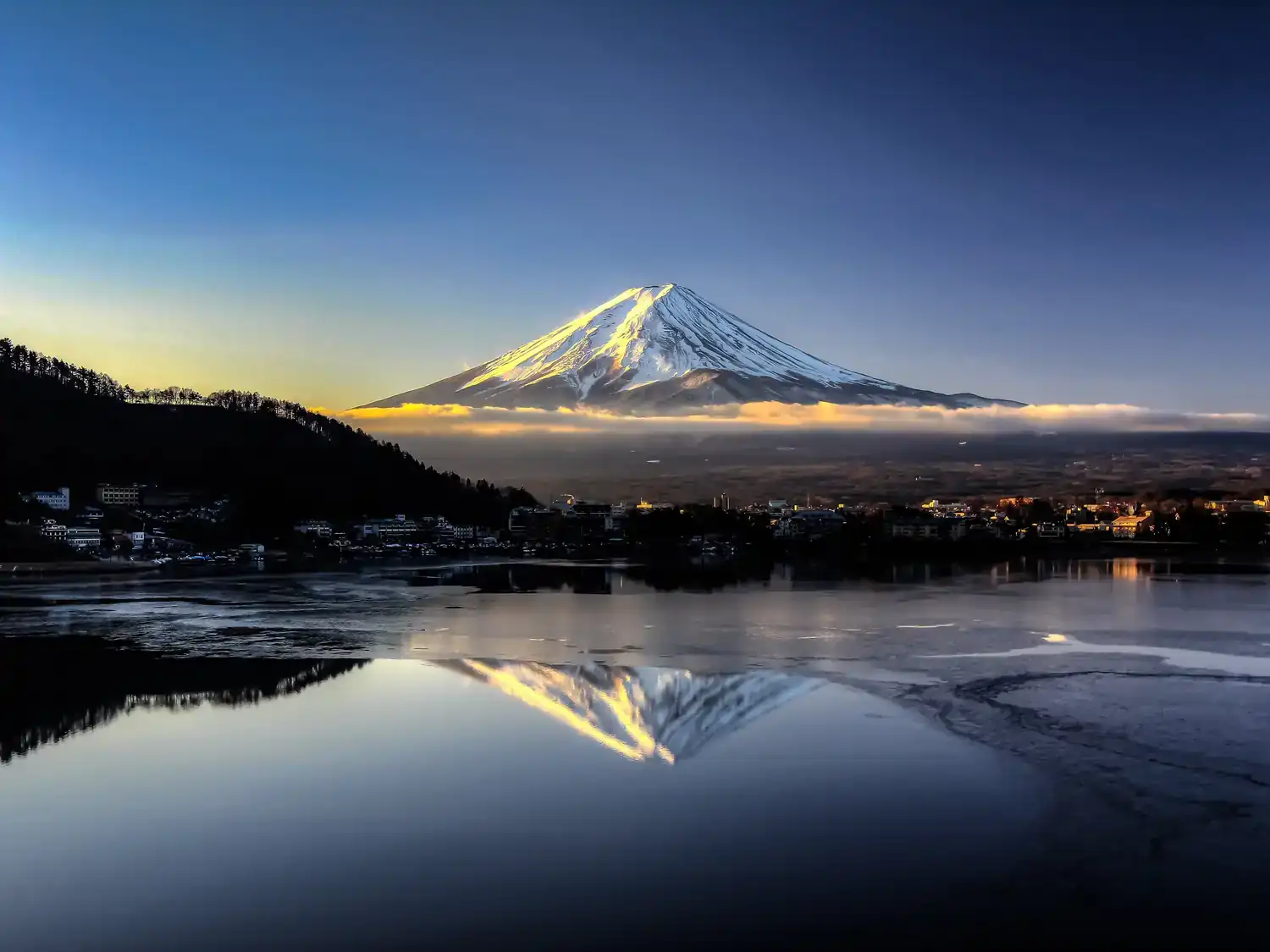
The federation’s advice for photographs is simple: come early, or on a weekday morning, when there are fewer visitors.
Where a life of photographing Fuji began
People have been taking pictures of Fuji from this lake for a long time. Okada Koyo, whose photographs of the mountain went onto an old banknote and onto stamps, took his first picture of it from Ubugasaki on Lake Kawaguchi at the age of 19, the lake’s art museum says, and went on to spend his life photographing it.
Knowing that a lifetime of pictures of Fuji began on this shore makes me want to take mine slowly, and early in the day.
Oishi Park, across the water from Fuji
Lake Kawaguchi, itself part of the Mount Fuji World Heritage Site, has the longest shoreline of the five lakes. Oishi Park sits on its north shore, and from it you look across the water to Mount Fuji with little in the way.
Walk the park’s flower road, a path of about 350 metres beside the lake, and stop on a bench to watch the mountain.
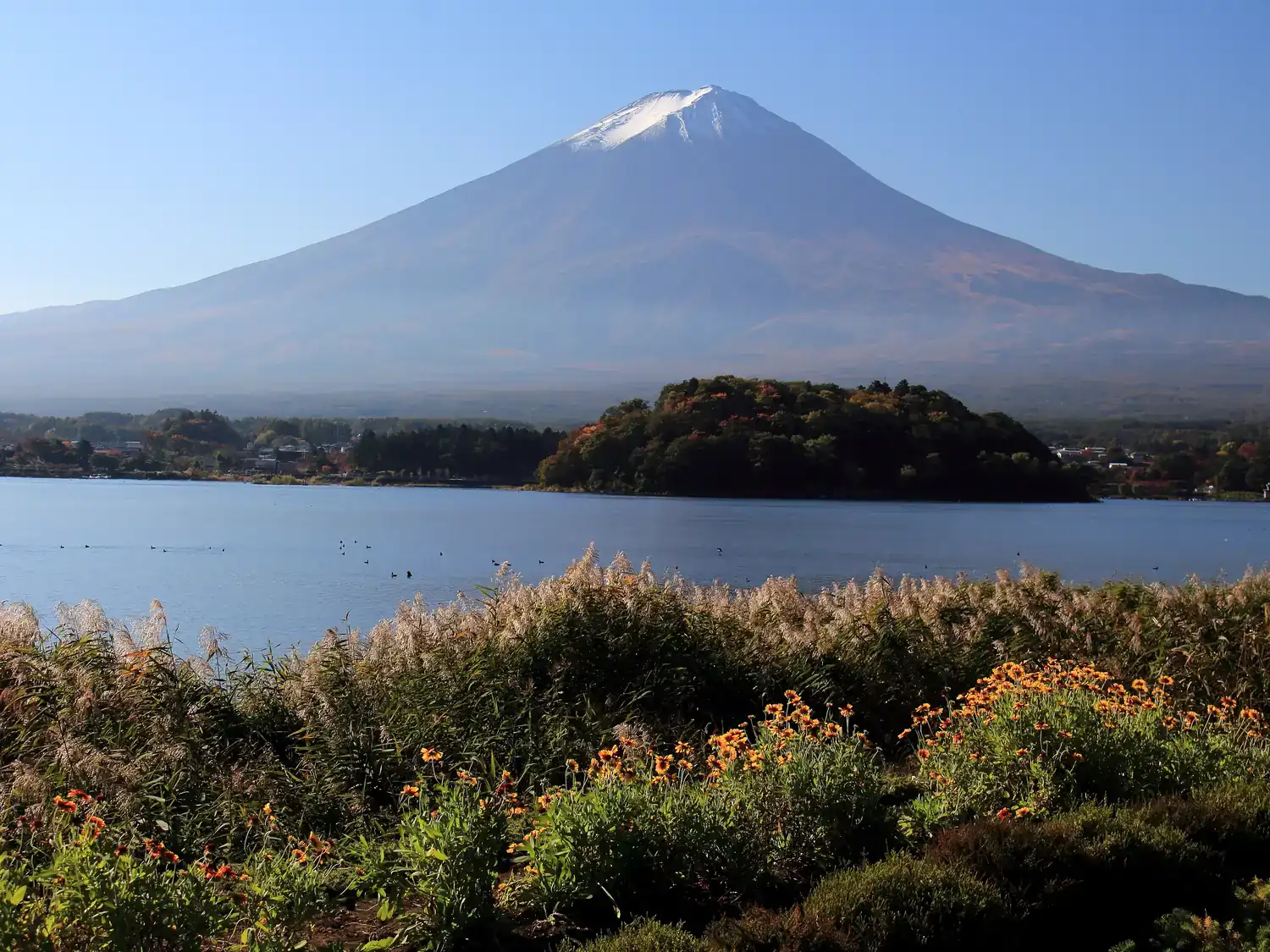
Come in early summer and Fuji rises behind purple lavender, whose sweet scent, the federation says, drifts along the path; come in autumn and the kochia bushes turn red. The park never closes, so if you are staying on this side of the lake, you can be there as early as you like.
Back across the lake by boat
For the crossing back across the lake, take the boat instead of the bus. The Oishi Park Line crosses to Funatsu pier in about a quarter of an hour, and on a clear day you watch Fuji from the lake as you go, with the shore you have just left falling behind you.
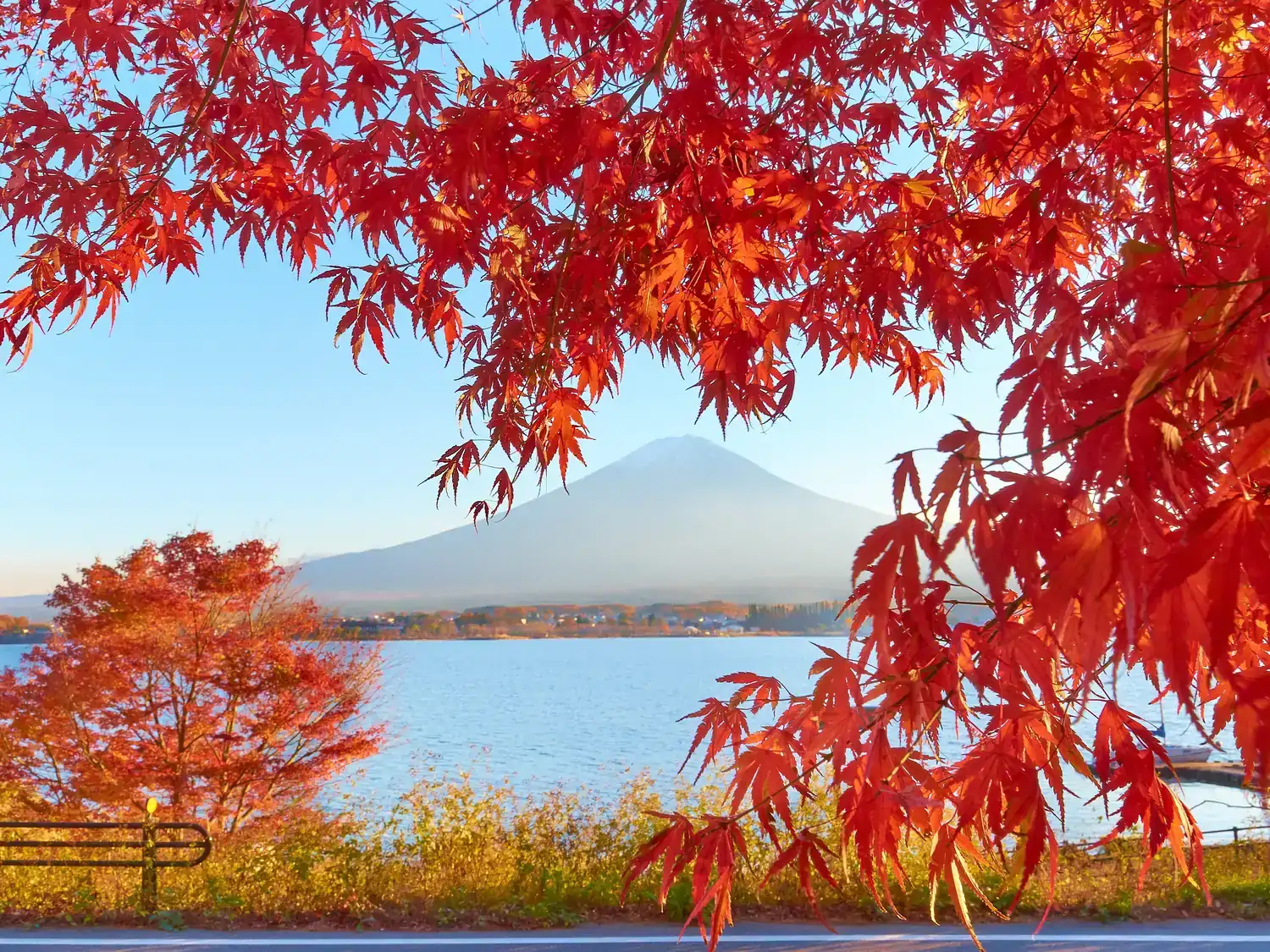
If you are here when the maples turn, stay for the evening: during the town’s autumn leaves festival, the maple corridor is lit up after dark.
Before you go
| Oishi Park | Open at all times; free to enter. On the north shore of Lake Kawaguchi. Flower road of about 350 m. Lavender from late June to mid July, says the local tourism federation; kochia turns red in autumn |
| Loop bus | Red Line from Kawaguchiko Station to Kawaguchiko Shizen Seikatsukan (Oishi Park), about 30 minutes. The timetable shows departures every 15 minutes from 9:00. Adult fares: single rides from 180 yen; 1-day pass 1,500 yen, 2-day pass 2,000 yen (also covers the Green and Blue Lines) |
| Oishi Park Line (boat) | Between Oishi pier and Funatsu pier, about 15 minutes one way. 1,000 yen one way for adults. Sailings roughly every hour from mid-morning; the timetable changes by season |
| Crowds | People gather most from around 10:00 to 16:00, says the local tourism federation. Heavy traffic is expected at weekends and on holidays in cherry blossom season, autumn leaves season and the summer holidays |
| Autumn leaves festival | 7 to 29 November (2026 dates). The maple corridor is lit from sunset to 21:00 |
| The convenience store | The town put up the black screen in front of the Lawson near Kawaguchiko Station in 2024, to protect residents and visitors from traffic accidents. The town asks visitors not to take photos from the road or cross it away from crossings, and says it hopes to remove the screen once the rules are kept |
Checked 8 October 2026.
What I would do
The chance of seeing Fuji reflected in the lake is what draws me to Oishi Park. I would catch an early bus there and sit on a lakeside bench, waiting for the water to go still.
We have not visited Lake Kawaguchi. The facts here come from the official sources below, checked on 8 October 2026.
- Fujikawaguchiko Town — the black screen, why it was put up and the hope to remove it, and the rules for visitors: town.fujikawaguchiko.lg.jp
- Fujikawaguchiko Tourism Federation (the local tourism federation) — quiet photography and manners, the best times to visit, crowds, Oishi Park, the upside-down Fuji, lavender, and the autumn leaves festival: fujisan.ne.jp
- Yamanashi Tourism Organization — the World Heritage listing and the shoreline: yamanashi-kankou.jp
- Kawaguchiko Museum of Art — Okada Koyo’s first photograph of Fuji: fkchannel.jp
- Fuji Goko Kisen — the Oishi Park Line: fujigokokisen.jp
- Fujikyu Bus — the Red Line loop bus and passes: bus.fujikyu.co.jp, fujikyubus.co.jp
- Photographs: Mount Fuji reflected in the lake (lead image) by Marion & Christoph Aistleitner (CC0); the winter morning by くろふね (CC BY-SA 4.0); the view from Oishi Park by Alpsdake (CC BY-SA 4.0); the lake in autumn by Moyan Brenn (CC BY 2.0). All from Wikimedia Commons.
More in Fuji Five Lakes
- Chureito Pagoda (Arakurayama Sengen Park) — For the view of Mount Fuji, and for what the pagoda in front of it is
- Oshino Hakkai — For eight spring ponds, and Choshi-ike where the water lifts the sand
- Yoshida Udon — For a lunch of the town's hard noodles after a morning at the pagoda
- Where to Stay — For choosing where to sleep by which way the room faces: Kawaguchiko Station, across Lake Kawaguchi, Fujiyoshida or Lake Yamanaka
Explore other areas
- Hokkaido — Sapporo
- Kanto — Hakone
- Hokuriku — Kanazawa
- Koshin-Tokai — Fuji Five Lakes · You are here
- Kansai — Nara
- Chugoku — Hiroshima
- Kyushu — Fukuoka
- Okinawa — Naha
