Kanazawa / Guide
Komatsu Udon Without a Booking: Get Under the Tracks Before Three
Komatsu Udon near Komatsu Station小松うどん(小松駅周辺)
If you step off the train in Komatsu without a reservation, aim for the udon counter under the station tracks before 3 p.m. instead of the town’s formal restaurants, because all four near the station serve lunch only as set courses booked two or three days ahead, while the counter lists no booking rule at all. I love the reversal in that: the udon a poet thanked a friend for as a rarity in 1689 has become the one meal here you can have without so much as a phone call.
You reach Komatsu on the Hokuriku Shinkansen; it is in Ishikawa, the same prefecture as Kanazawa. The town has made udon for more than three hundred years, and you will see the maroon banners of the local udon association outside around seventy shops.
A dried noodle a poet called rare
In 1689, on the journey that became The Narrow Road to the Deep North, the haiku poet Matsuo Basho received two boxes of dried udon from Jinsei, a poet in Komatsu. Basho’s reply survives, thanking him for dried udon that was “especially rare.”
Five years later the domain’s kitchen was sending detailed instructions for the udon, and you can walk to the maker’s street: a record from 1694 names him as Kameya Tokuemon of Yokaichi-machi, a street a short walk from today’s station. He used second-milled wheat flour, kneaded it by hand where the usual way was to tread it underfoot, and dried it over charcoal. Picture each bundle wrapped in paper stamped in indigo with the character for “turtle” and marked “dried udon” in ink.
That paper is the detail I keep returning to: a noodle packed like a signed letter, for a lord’s kitchen, from a street you can walk down before lunch. By 1755 a Kaga domain record set out which local products to name if shogunate inspectors asked, and Komatsu’s dried udon was one of them.
The station corner, 1897
If you want to know why the station is the place to eat it, look at the railway. In 1897, just before the line opened, a shop called Kadocho opened on a corner near Komatsu Station. It was so popular that branches spread across the prefecture under the same name.
If you have eaten in Kanazawa, you may have walked past a Kadocho without knowing any of this. The Komatsu udon association says those shops trace back to Komatsu, yet not one Kadocho is left in Komatsu itself. I found that the most surprising line in the whole story: the name travelled, and the town that started it kept the noodle instead.
Another family name runs through the town’s udon story. Nakasa opened in 1905 and grew to five shops; cooks trained there went on to open their own under names that begin with the same character, Nakaishi, Nakaoto, Nakasada, Nakayoshi.
What is in the bowl
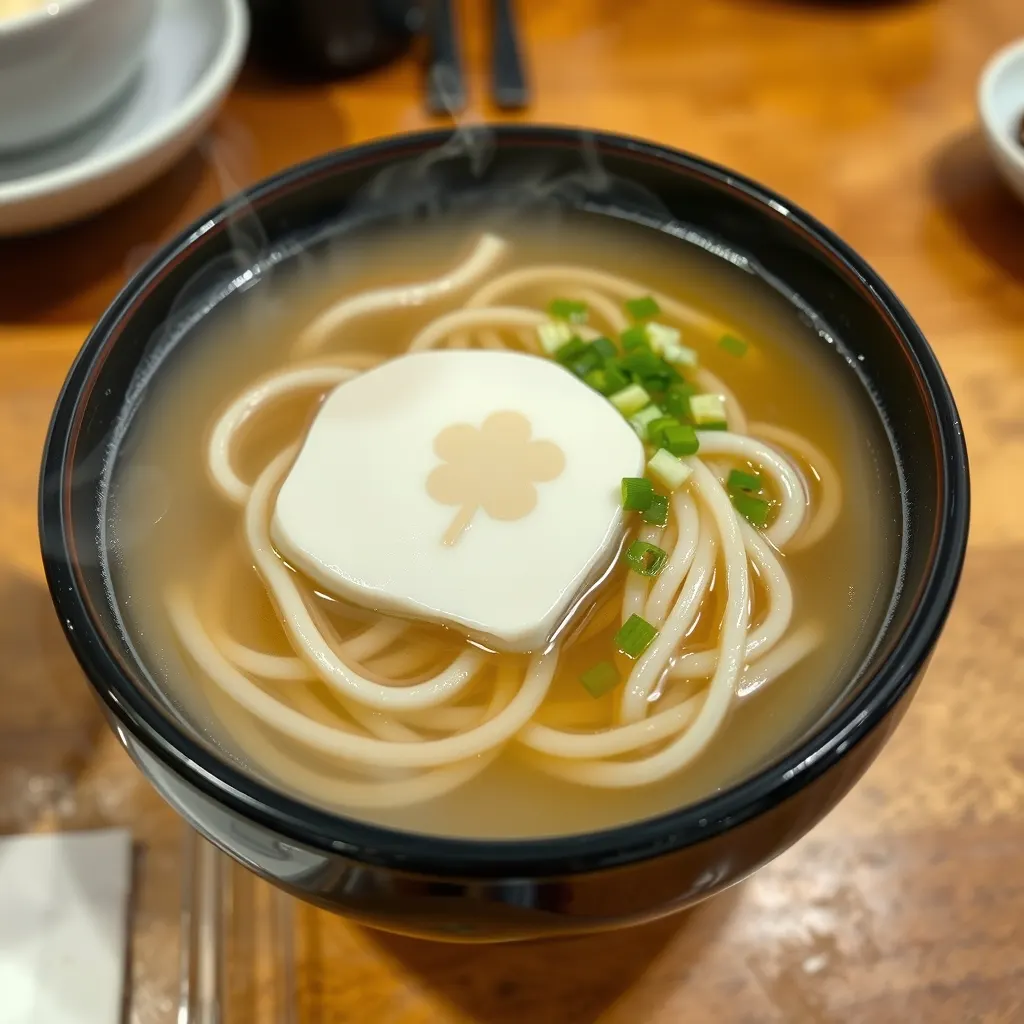
Expect thin noodles with a moderate bite that slip down easily. The broth is pale and clear: dashi from dried fish such as urume sardine, muroaji scad and mackerel, with plenty of kombu and local soy sauce, made with water from the Hakusan river system. The association sets out eight rules for its members, from using noodles made in Komatsu to using that water.
Imagine the broth clear enough to see the noodles through it, and the smell of dried fish and kombu rising with the steam. Watch for the small Kabukki fish cake on top, made by Ogi Kamaboko in the city; Komatsu’s tourism site calls it something the bowl cannot do without.
Before three: the counter under the tracks
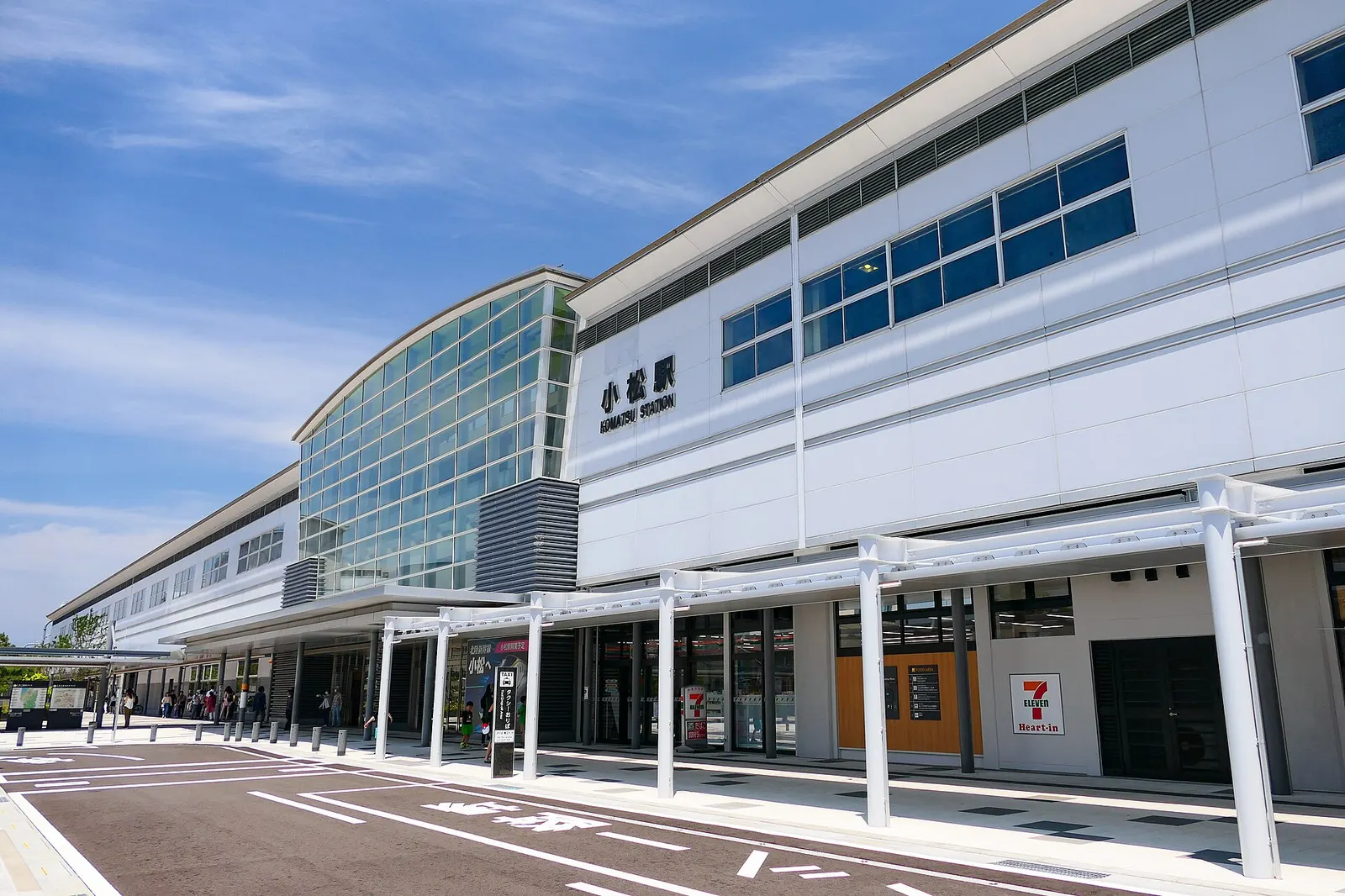
Komatsu Udon Dojo Tsurutto sits beneath the elevated tracks at Komatsu Station. The city’s tourism site describes it as busy every day with students, office workers and locals, and one of the town’s representative udon shops.
Come any time from 10:00; it closes at 15:00. Picture a bowl in front of you while trains run on the tracks above. Order the Kanjincho udon if you want the dish the tourism site singles out, topped with a fried cake of grated Kaga maruimo yam and vegetable tempura.
Miss 15:00 by half an hour and the counter is shut.
If it is Monday: Kappo Tsukasa
Tsurutto closes on Mondays (it opens when Monday is a public holiday). If your day in Komatsu is a Monday that is not a public holiday, walk a few minutes to Kappo Tsukasa instead, a Japanese restaurant in front of the station with Komatsu udon on its menu, hot and cold, and lunch from 11:30 to 14:00.
What makes me trust it for a first visit is that it has written for you already: its page for English-speaking guests lists counter seats on the ground floor, no dress code and no tipping. Book if you want a private room or the tatami room upstairs. On a Sunday, when Tsukasa is closed, go to the counter under the tracks instead.
If you can book three days ahead
If you can plan ahead, the four formal restaurants near the station are a different way to eat in Komatsu, and they want to know you are coming. All of them serve lunch as set courses only, and all ask for a booking:
- Ryotei Korokuan, which has been in business for 170 years, serves Kyoto-style kaiseki from local ingredients. Book three days ahead.
- Ryotei Ichinami asks for three days’ notice for lunch or dinner.
- Nihon Ryori Kajisuke serves its food on Kutani porcelain. Book two days ahead; it closes on Wednesdays.
- Nihon Ryori Nakano asks for two days’ notice.
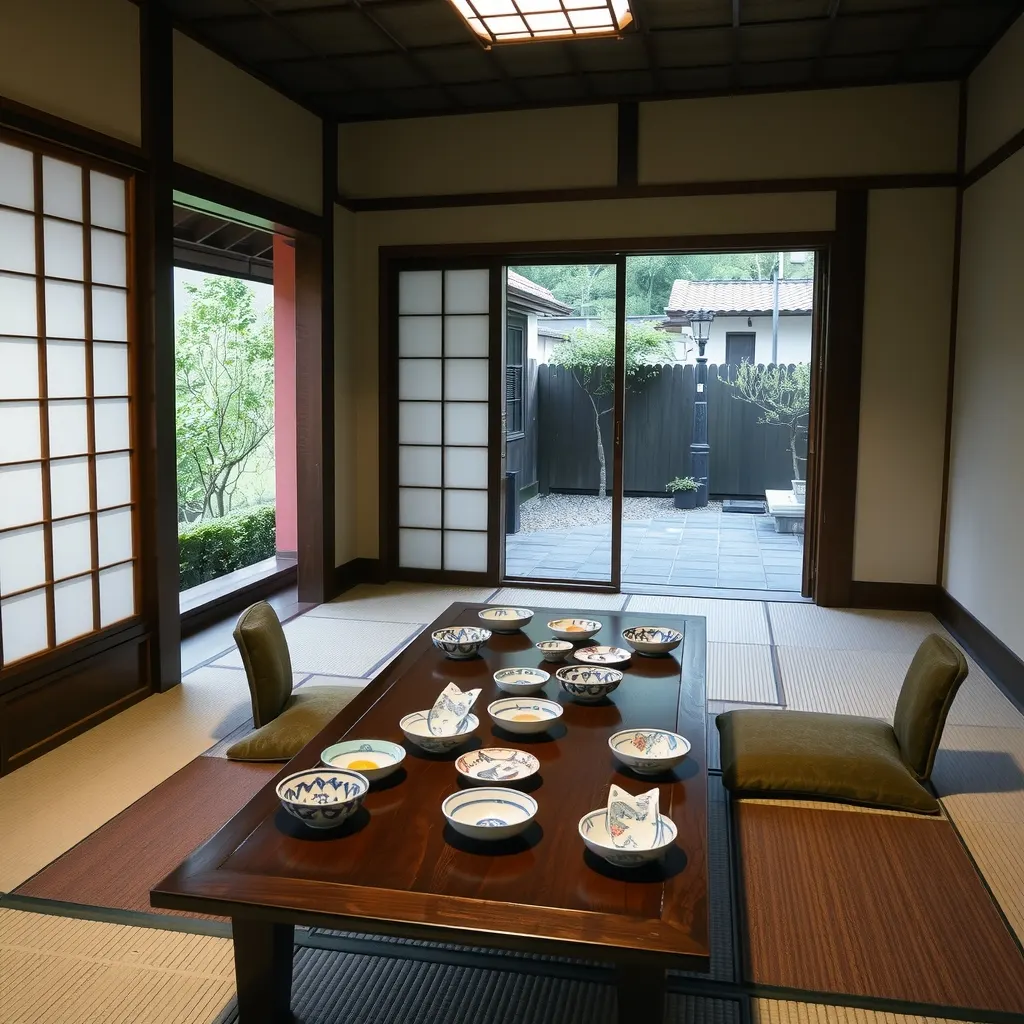
Their okami, the women who run the houses, joined a group formed for the Shinkansen’s arrival in Komatsu, to show visitors the town’s Kaga kaiseki cooking. If udon is what you came for, ask whether it is on the menu when you book.
Which day to come
Any day from Tuesday to Saturday gives you both lunches, Tsurutto from 10:00 and Tsukasa from 11:30, unless it is a public holiday, when Tsukasa is closed. On a Sunday, or a Monday that is a public holiday, only Tsurutto of the two is open; on any other Monday, only Tsukasa.
Before you go
| Getting there | Komatsu Station is on the Hokuriku Shinkansen, in Ishikawa, the same prefecture as Kanazawa. Tsurutto is under the station’s elevated tracks; Tsukasa is a short walk away |
| Komatsu Udon Dojo Tsurutto | 10:00–15:00, as listed on Komatsu’s tourism site. Closed Mondays (open on public holidays) |
| Kappo Tsukasa | Lunch 11:30–14:00, Monday to Saturday. Closed Sundays and public holidays. Book for private rooms |
| Ryotei Korokuan | Lunch 11:30–14:30. Set courses only, book three days ahead. Irregular days off |
| Ryotei Ichinami | Lunch 11:30–14:00. Set courses only, book three days ahead. Irregular days off |
| Nihon Ryori Kajisuke | Lunch 11:30–13:30 (last order). Set courses only, book two days ahead. Closed Wednesdays, with other irregular days off |
| Nihon Ryori Nakano | Lunch 11:30–14:30. Set courses only, book two days ahead. Irregular days off |
Checked 27 September 2026. Small restaurants change their hours; if one stop matters to you, check before you go.
What I would do in Komatsu
My Komatsu morning would begin on Yokaichi-machi, the street of the maker who dried the lord’s udon over charcoal, and I would be at the counter under the tracks by noon, hoping for a Kabukki fish cake on top.
If the trip lands on a Monday, I would sit at Tsukasa’s counter instead. And if I knew three days ahead, I would stay a second day: Korokuan for lunch on one, the counter under the tracks on the other.
We have not visited Komatsu or its restaurants for this guide. The facts here come from the official sources below, checked on 27 September 2026.
- Komatsu Udon Tsurutsuru Soken (the Komatsu udon association; its office is in Komatsu City Hall) — the history from Basho’s letter to Kadocho and Nakasa, the eight rules, around seventy member shops and the maroon banners: komatsu-udon.com
- Komatsu Tourism Navi (Komatsu City’s official tourism site) — Tsurutto’s location, hours and dishes, the Kabukki fish cake, and the four restaurants’ hours, booking rules and the okami group (information as of April 2026): komatsuguide.jp
- Kappo Tsukasa — lunch hours, days off, the menu and its page for English-speaking guests: komatsu-tsukasa.com
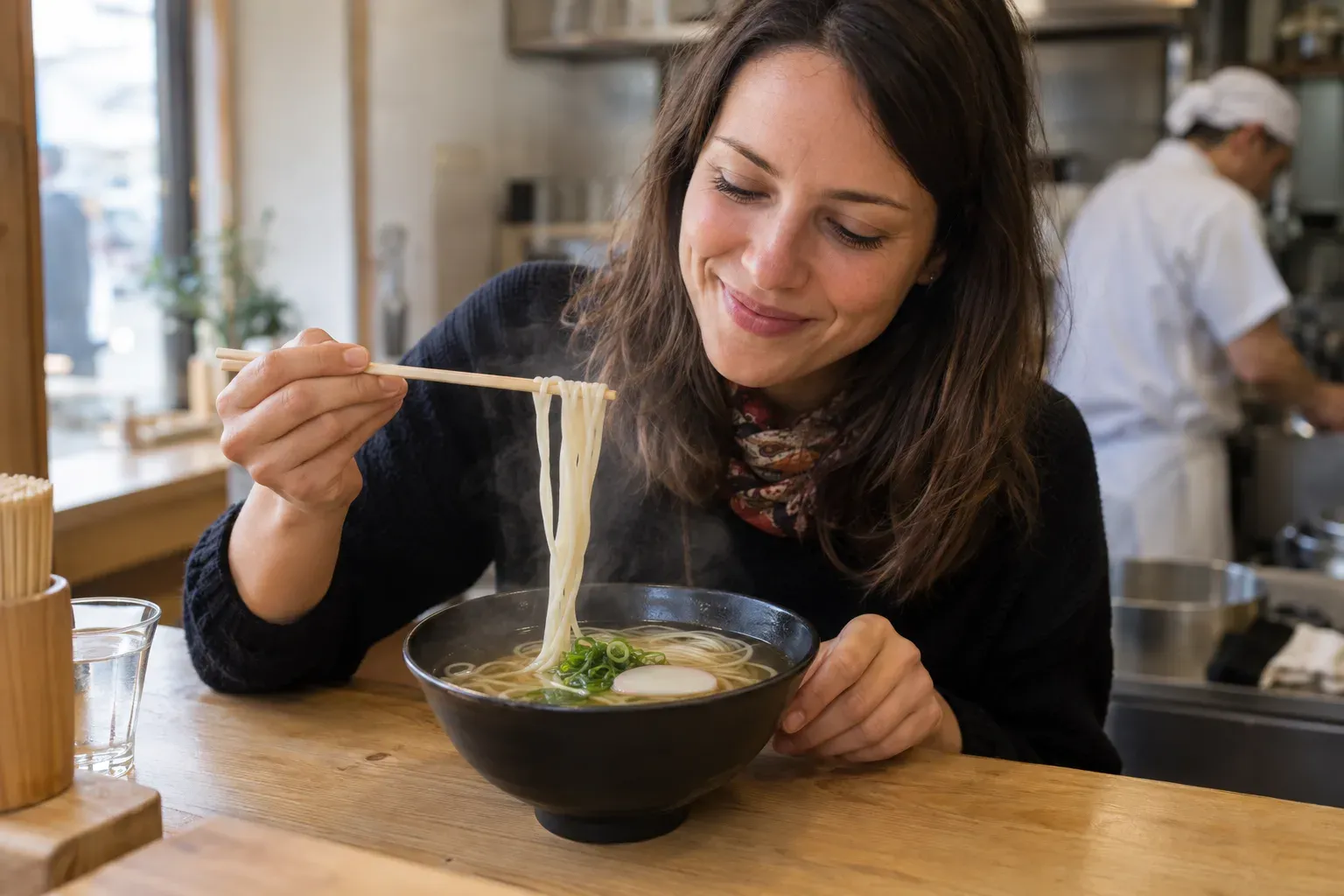
- Photographs: Komatsu Station’s west exit by MaedaAkihiko (CC BY-SA 4.0), from Wikimedia Commons. The traveler at the counter, the bowl of udon and the tatami room are AI-generated illustrations, not photographs of Komatsu or its restaurants
More in Kanazawa
- Kenrokuen — For a landscape garden, best early in the day
- Kanazawa Castle — For history, and three buildings that survive from the Edo period
- Omicho Market — For seafood, local produce and an early meal
- Higashi Chaya District — For old wooden streets, and teahouses you can step inside
- Where to Stay — For choosing where to sleep by your mornings: Korinbo for the free hours in Kenrokuen, the station for early trains, Higashi Chaya for the quiet street
Explore other areas
- Hokkaido — Sapporo
- Kanto — Hakone
- Hokuriku — Kanazawa · You are here
- Koshin-Tokai — Fuji Five Lakes
- Kansai — Nara
- Chugoku — Hiroshima
- Kyushu — Fukuoka
- Okinawa — Naha
