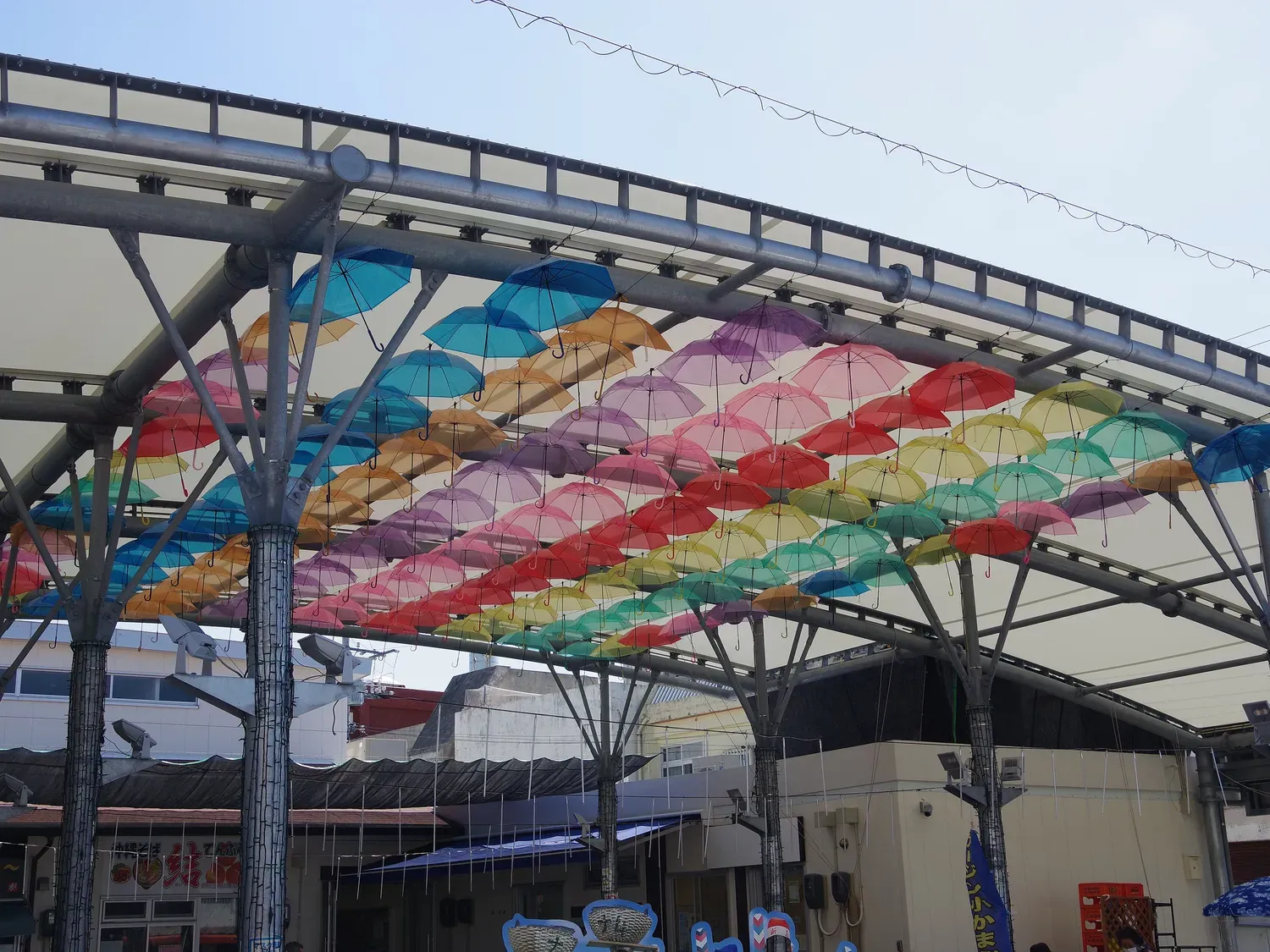
Naha / Guide
Itoman Market Before Nine: Island Vegetables at a Price You Agree Out Loud
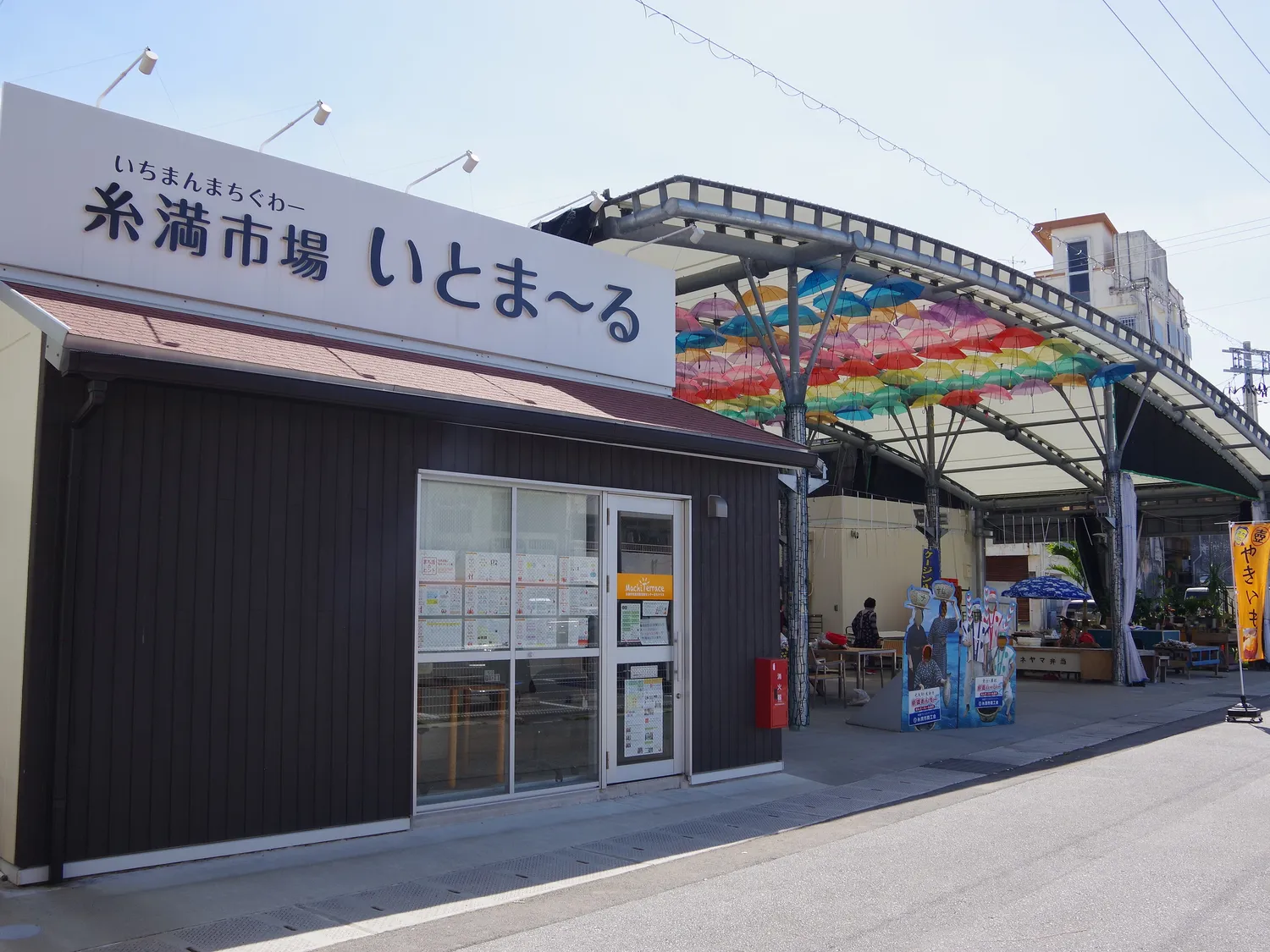
Itoman Market Itomaru糸満市場いとま〜る
If you go to Itoman’s market, go early, and on any morning but Sunday. From early morning its vegetable stalls fill with Itoman’s anmā, the town’s mothers, selling island greens and fruit at a price that is settled by talking with you, not read off a label. Nearby, a kamaboko maker from the Taisho era is already open by five, and on an ordinary Sunday every butcher in the building is shut. What draws me is that price agreed out loud.
Do not plan around the market’s posted opening time of nine. For its food counters, that is already mid-morning: the kamaboko maker and the corner shop open well before it, and so do the first of the butchers.
A market that feeds the town
Itoman is a fishing town, known as a town of uminchu, the people of the sea, and a bus ride south of Naha. Its public market, Itomaru, opened in new premises in 2020 on the site of the old market, and the market describes the place as the kitchen of Itoman and the south of the island since the old market opened.
You will find three butchers among its counters, along with a fishmonger, a corner shop selling daily goods and a kamaboko maker. Each keeps its own closing day, so the market looks a little different on every day of the week.
Where the price is talked out
Start at the aitai-uri zone. Aitai-uri is the old way of selling here: the grower or seller and the buyer agree the price between them. The market says the zone is lively from early morning with Itoman’s mothers, with island vegetables and fruit in season, and the Itoman dialect flying back and forth.
The market invites you to shop by talking with the sellers and agreeing the price between you, a way of selling far older than the building around it.
Before nine: fish cake and meat
Walk next to the kamaboko maker, listed by the market as 西南門小カマボコ屋, founded in the Taisho era and in business ever since. Its counter holds everything from big kamaboko for the family table to small ones you can eat as a snack, and the market suggests trying several side by side. It closes on Thursdays and shuts early on Mondays, so plan around it on both.
Uehara Shokuhin opens just as early. Think of it as the neighbourhood shop: side dishes, daily goods, and Hamakyo bread, a local brand the market says you will find only in and around Itoman.
The butchers open one after another in the early morning. Inamine Meat began, the market says, at an open-air market just after the war, and is now run by the fourth generation; its rule is to buy each day’s meat and sell it the same day. Like every butcher here, it normally closes on Sundays, though it opens before lunar Obon and the lunar New Year.
If you want beef, go to the butcher listed as 玉城精肉店, run by its second-generation proprietress and the only counter in the market that sells it; the market suggests picking some up on your way to the beach. For nakami, try Ōshiro Meat. People come there for this pork offal, which turns up across Okinawan home cooking, and some, the market says, drive down from the middle of the island to buy it.
The fish that came in this morning
Ask for the tuna at Matayoshi Fish. The owner bids for it at the fishing port in Nishizaki early that same morning, and sells it in slices too, so you can eat it straight away. The market describes a sign the shop has put up out front: the shiibun, the little extra a seller throws in, is a kachāshī, the Okinawan dance. In other words, the bonus is a dance, not a slice. Its hours move with its orders and it closes on no fixed day, so treat it as a lucky find rather than a plan.
On the last day of the lunar year
If your trip happens to fall on Tushinuyuru, New Year’s Eve by the lunar calendar, expect a crowd. From early morning, the market says, people come for New Year soba and for the food and decorations of the lunar New Year. The date moves every year, so look it up before you hope for it.
If you stay for lunch
Choose by the day. Minatomachi Parlor, the sister counter of a fishmonger, serves kaisendon from late morning and closes on Tuesdays. Gajimaruya fries half a chicken at a time, a Hokkaido dish made with Okinawan chicken, and closes on Mondays; it makes a limited number each day and stops when they are gone.
When you leave, walk down to the water. Itoman’s fishing port is about a minute’s walk from the market.
Before you go
| Itoman Market Itomaru | Market hours 9:00–18:30, but each shop keeps its own. The market’s pages give no closing day for the whole market |
| Aitai-uri zone | Lively from early morning, the market says. Its pages give no hours or closing days for it |
| Kamaboko maker (西南門小カマボコ屋) | 5:00–16:00 (Mondays to 12:00). Closed Thursdays |
| Uehara Shokuhin | 5:00–17:00 (may vary). Closed Sundays |
| 玉城精肉店 (butcher) | 7:00–18:00. Closed Sundays |
| Ōshiro Meat | 8:00–18:00. Closed Sundays |
| Inamine Meat | 6:00–18:00. Closed Sundays (open before lunar Obon and before the lunar New Year) |
| Matayoshi Fish | Hours vary with orders. Closed on no fixed day |
| Minatomachi Parlor | 11:00–15:00. Closed Tuesdays, plus occasional days announced on Instagram |
| Gajimaruya | 11:00–18:00, 50 a day, until sold out. Closed Mondays |
| Getting there | From Naha Bus Terminal, Okinawa Bus routes 34, 334, 35, 235 or 89 to Itoman Shijo Iriguchi. By car, the market issues a one-hour free parking ticket from a machine inside; many nearby roads are one-way |
Checked 6 October 2026.
What I would do
I would take an early bus south on a Friday or Saturday, when none of the shops here with a fixed closing day is shut, buy greens from the aitai-uri stalls while the morning is still young, pick a few kamaboko to try side by side, and stay for kaisendon at Minatomachi Parlor before the bus back to Naha, all for the sake of a price agreed out loud.
We have not visited Itoman Market. The facts here come from the official sources below, checked on 6 October 2026.
- Itoman Market Itomaru — the shops, their hours, closing days and what they sell, the aitai-uri zone, the market’s history, hours, parking and bus routes: itoman-itomaru.okinawa
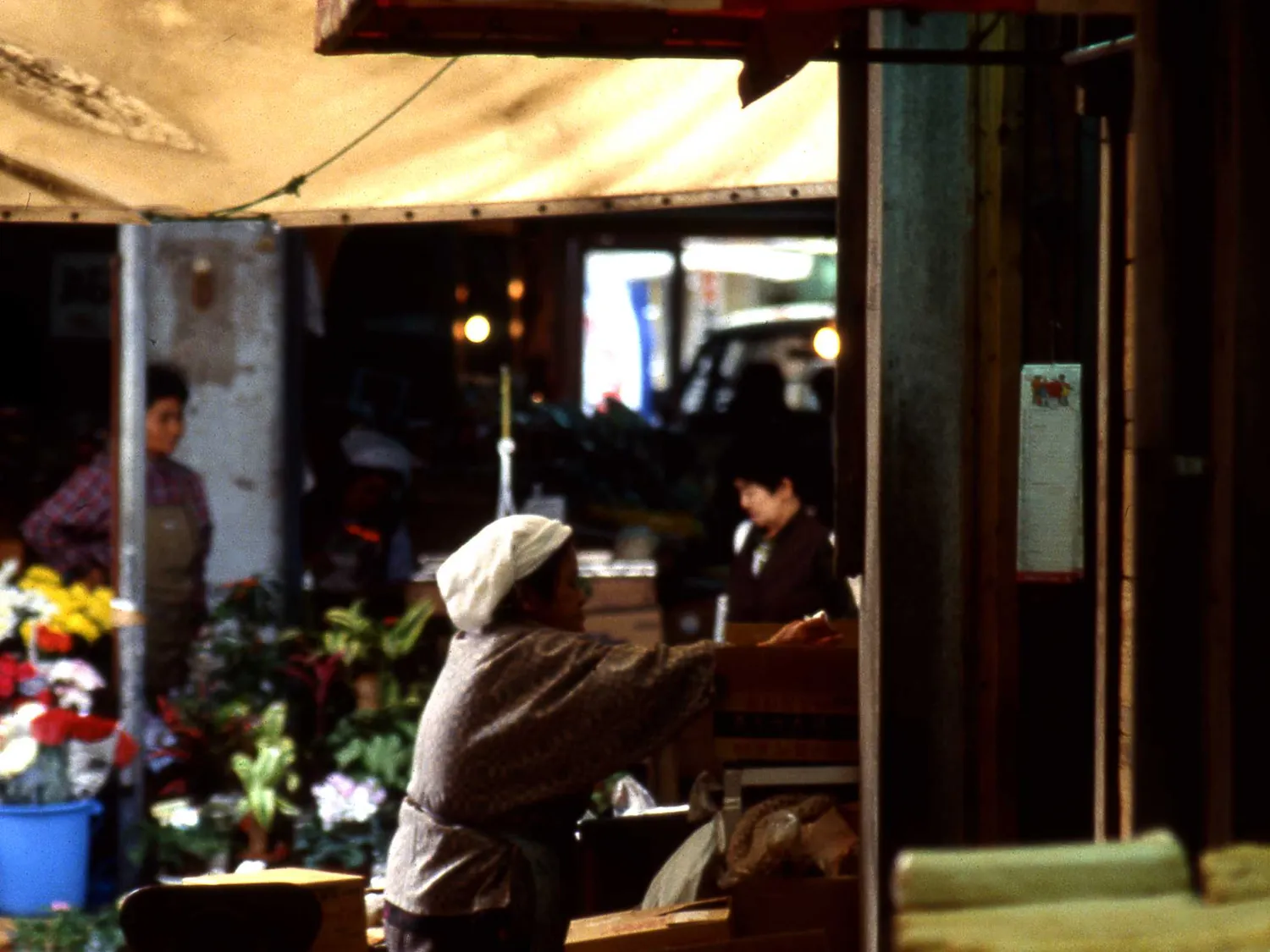
- Photographs: the umbrellas (lead image) and the market entrance by Kugel (CC BY-SA 4.0); the 1992 market by 倶楽部オータム (CC BY-SA 3.0). All from Wikimedia Commons.
More in Naha
- Kokusai Street and Makishi Market — For choosing a fish downstairs and having a diner cook it upstairs
- Shuri Castle and the Kinjo-cho Stone Path — For the castle, a royal tomb, and a stone path that came through the Battle of Okinawa
- Tsuboya Yachimun Street — For a potter’s house and its red-tiled kiln, on a Friday, weekend or holiday afternoon
- Where to Stay — For choosing where to sleep: near Kokusai Street, by the bus terminal at Asahibashi, or on the hill at Shuri
Explore other areas
- Hokkaido — Sapporo
- Kanto — Hakone
- Hokuriku — Kanazawa
- Koshin-Tokai — Fuji Five Lakes
- Kansai — Nara
- Chugoku — Hiroshima
- Kyushu — Fukuoka
- Okinawa — Naha · You are here
