Naha / Guide
Tsuboya Yachimun Street: Come When the Potter's House Is Open
Tsuboya Yachimun Street壺屋やちむん通り
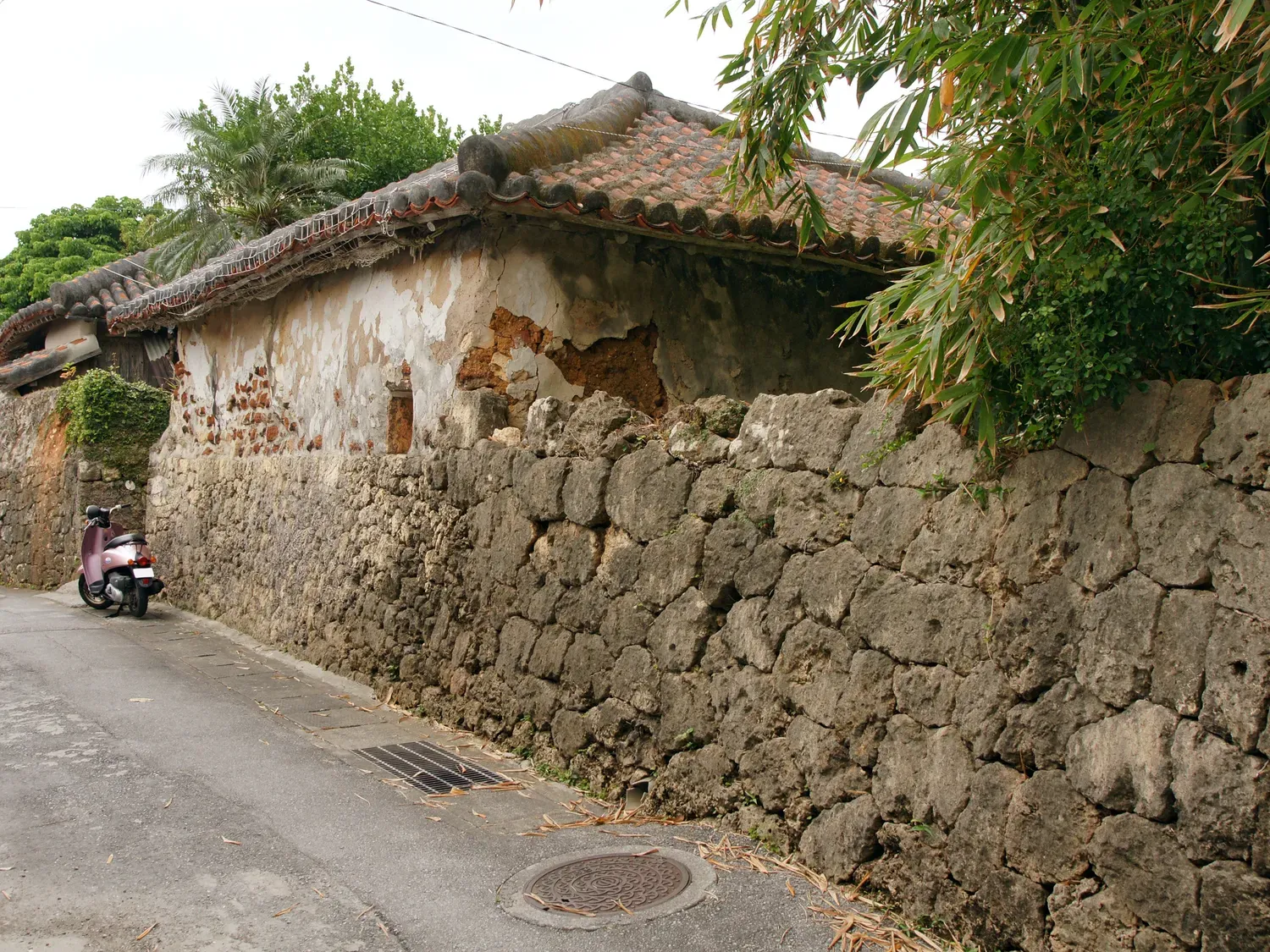
If you can, walk Yachimun Street on a Friday, a weekend or a holiday afternoon rather than a weekday morning. What draws me to Tsuboya is a family’s own kiln, not a museum piece: a climbing kiln about 23 metres long, roofed in red tiles, beside the house the Arakaki potters lived in. With the pottery museum shut for renovation, that house is where you can see a potter’s home and kiln together, and it opens its gate only on those afternoons.
Many of Shuri Castle’s gates up the hill were rebuilt after the war. Tsuboya, by contrast, came through the Battle of Okinawa with comparatively light damage. Its stone walls, red-tiled roofs and old kilns still carry the look of the town before the war, and the quarter is said to be where Naha’s recovery after the war began.
A town made for pots
Tsuboya began with a royal order. In 1682 the government brought the pottery sites of Chibana, Takaraguchi and Wakuta together south of Makishi, and the area became known as Tsuboya. You will hear pottery called yachimun here, and the street takes its name from the word.
Ask about two kinds of ware when you shop. Joyachi is glazed and fired hot; arayachi is left unglazed, and its kilns turned out jars for water and for liquor.
The town that was spared the worst of the war later lost its wood fires, sadly, to a city rule. Naha banned wood-fired kilns as a pollution measure, and the potters who stayed switched to gas and kerosene, while those who wanted to keep firing with wood moved north to Yomitan.
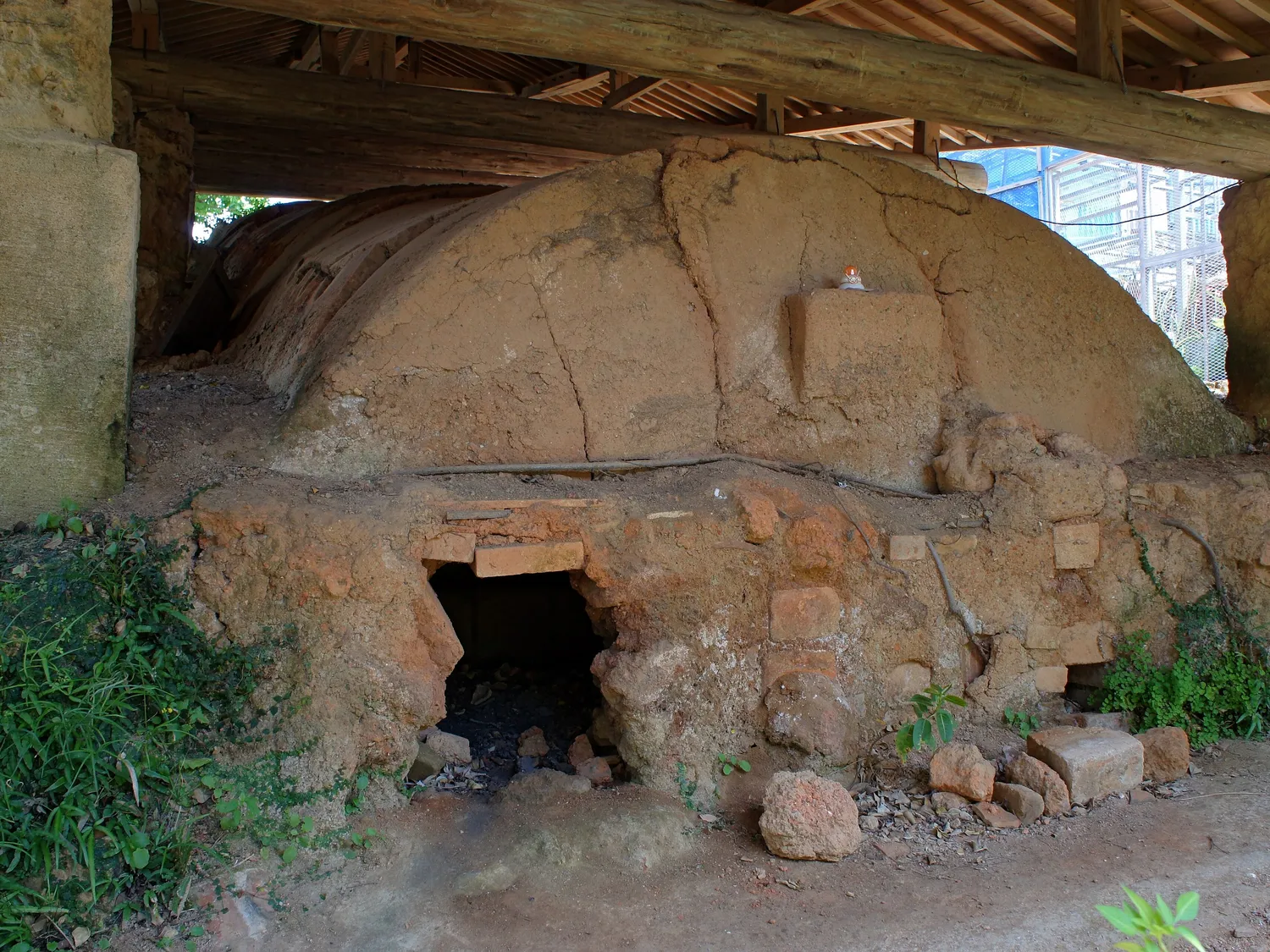
The potter’s house with the red-tiled kiln
Time your visit around the Arakaki house. A potter’s family worked here until 1974, and by family tradition they arrived from Yomitan around the time the kilns were brought together here. The house was designated an Important Cultural Property of Japan because it is the only one left that shows how a Tsuboya potter’s household was laid out.
Picture the plot from the gate. Stone walls face the two streets. To one side you have a workshop with a chiburu shisa, a shisa that is only a head, fixed on its roof; ahead, past a gentle stone slope, a hedge screen called a hinpun hides the main house from the street. Look behind it, on the east side, for the kiln known as Agari-nu-kama, the east kiln, climbing the slope under a red-tiled roof that covers everything except the smoke outlet at the top.
On the west side stands a stone fūru, a pigsty that doubled as a toilet. I like that it is still there. A house kept only for its beautiful kiln would tell you about pots; one that keeps the pig pen tells you how a potter’s family actually lived around them.
Remember that the owners live on part of the property. Keep out of the parts where they live, which are closed, and keep your camera away from them too. Watch your step on the stone steps, which can be slippery and uneven, and use a toilet before you come, because there is none on site. The house also closes while a storm warning is in force, so in typhoon season check the warnings before you plan the afternoon around it.
Walking the stone street
The street itself is there to walk on any day: about 400 metres of Ryukyu limestone paving between red-tiled old houses. Keep to the side, because it is one-way and residents drive through it.
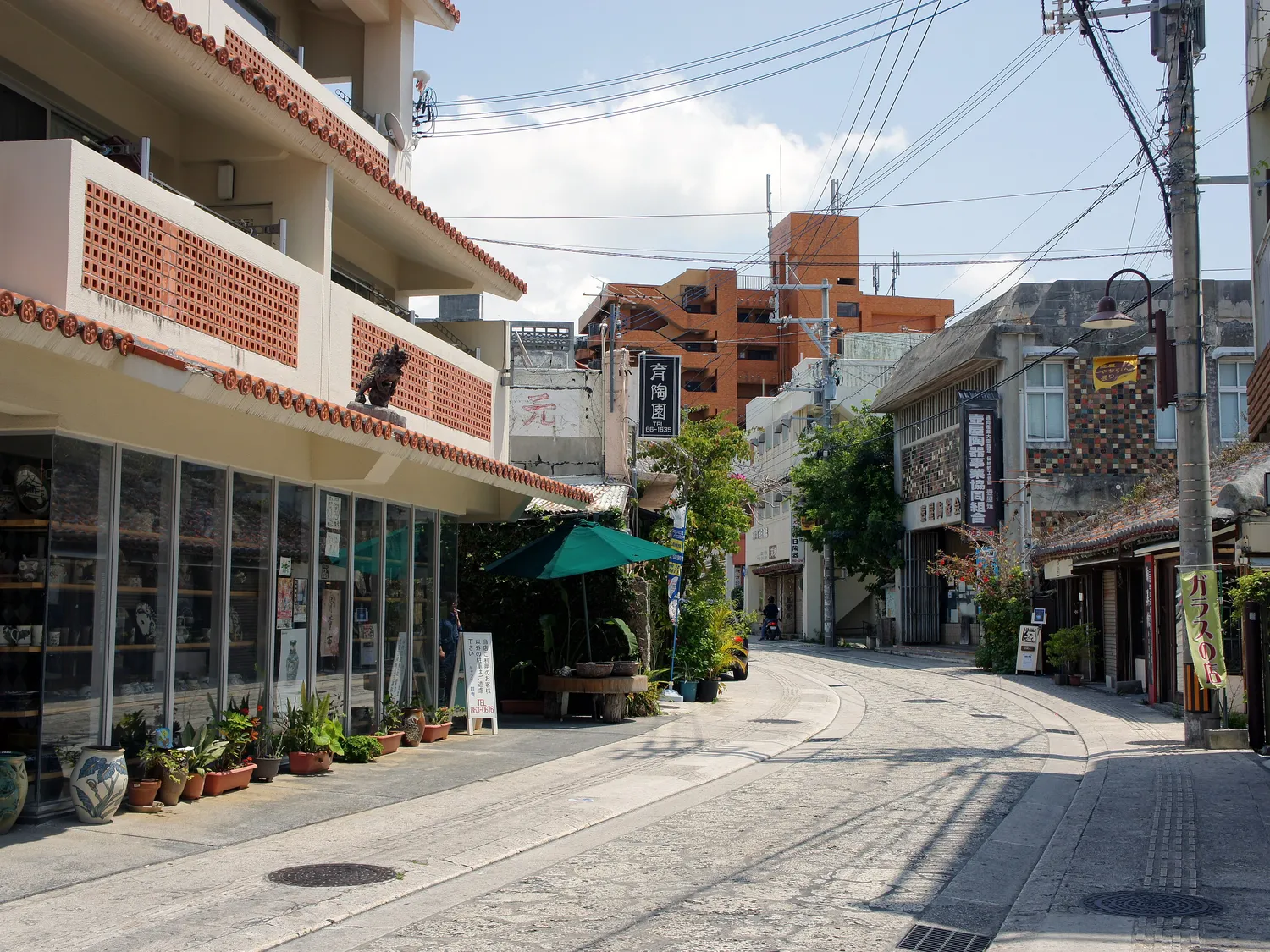
Each shop keeps its own hours and its own day off. Some close on a Sunday, others midweek, a few on no fixed day, so if there is one pottery you are coming for, look it up before you go rather than trusting the street to be open as a whole.
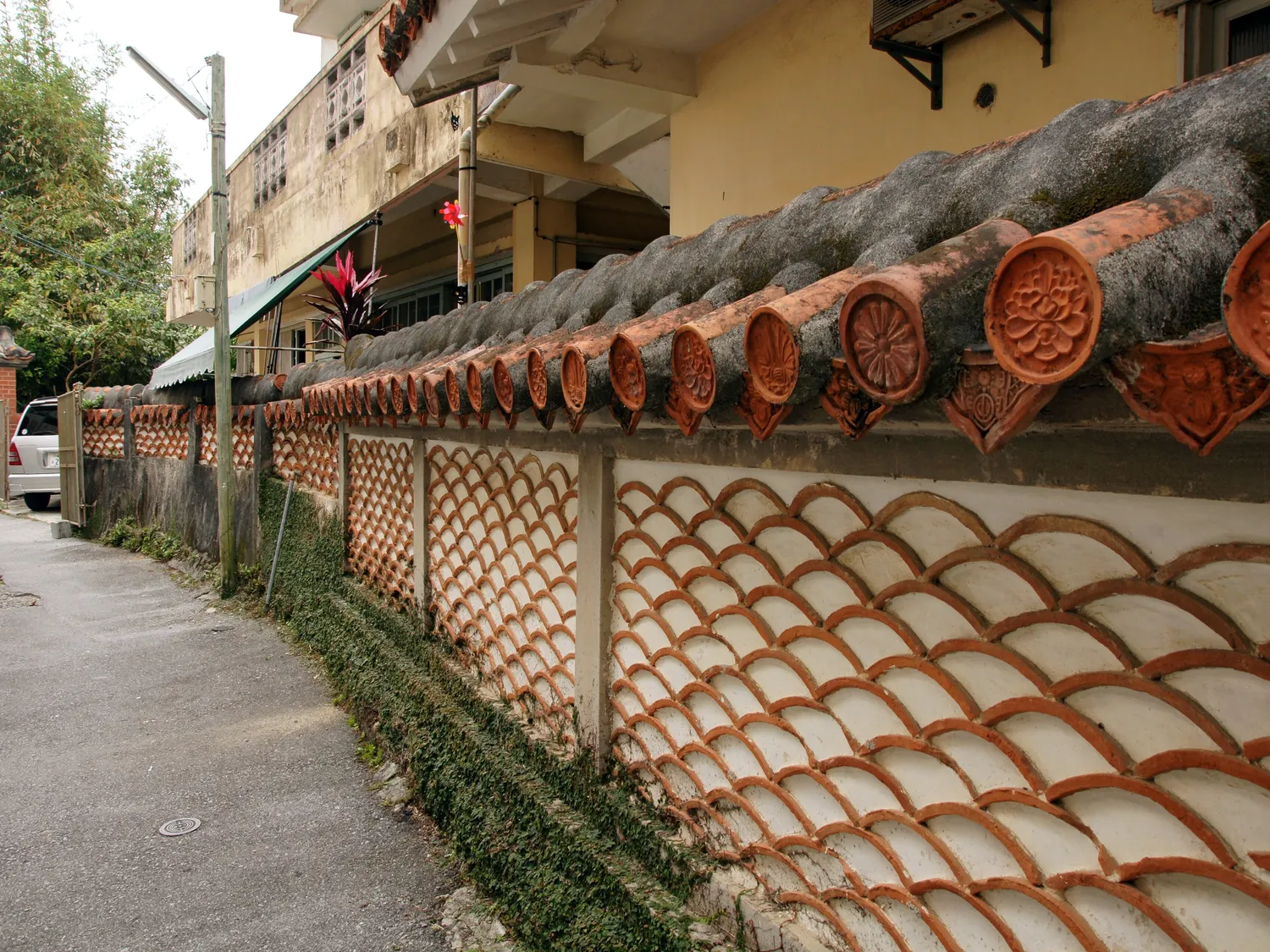
Step off the main street into the side alleys if you want the older Tsuboya: old stone walls, red-tiled roofs, a well still in use, and the prewar kilns. Besides the east kiln at the Arakaki house, look for Fē, the south kiln, an arch-roofed climbing kiln for unglazed ware and a cultural property of Okinawa Prefecture. No opening hours are published for it, so check before you count on seeing it.
If you want to make something yourself
If you would rather take a shisa home that you made yourself, book ahead. Ikutouen, one of the cooperative’s potteries, runs classes at its workshop in Tsuboya, on a lane too narrow for cars, in shisa-making, wheel throwing and painting, and asks you to phone first even if you hope to join the same day.
There is a catch. A shisa you make is fired after the class and posted to you weeks later, with a shipping charge on top, and the published rates are for addresses in Japan, so ask about overseas delivery when you phone. If you want a souvenir shaped by your own hands, it is worth the wait; if not, the wheel class also has a shaping-only option where nothing is fired or sent.
Before you go
| Arakaki house | Fridays, Saturdays, Sundays and public holidays (some excepted), 13:00–17:00. Free. Closed 28 December–4 January, on occasional other days, and while a storm warning is in force. No toilets or parking on site |
| Tsuboya Pottery Museum | Closed for exterior renovation from 1 September 2026 to 31 March 2027; reopening planned for 1 April 2027 |
| Shops on the street | Hours and closing days differ from shop to shop |
| Ikutouen classes | Shisa-making 4,400 yen per shisa (about 60–90 minutes); wheel throwing 4,950 yen (from about 30 minutes; shaping only, not fired, 2,530 yen, same-day only); painting from 4,400 yen (about 60 minutes). Tax included; shipping extra (rates published for addresses in Japan only). Finished shisa are posted about 1 to 2.5 months later. Phone ahead to book |
| Festivals in 2026 | Tsuboya Yachimun Street Festival, 31 October–1 November, 10:00–17:00, with free guided walks of the potteries and sites. Tsuboya Pottery Fair, 20–22 November, 10:00–17:00, at Tsuboya Elementary School, with a free wheel-throwing try (firing is extra) |
| Getting there | Yui Rail monorail to Makishi Station, then about 10–15 minutes on foot. From the First Makishi Public Market, about 5 minutes to the street; walk through Ichiba Hondori from Kokusai Street and it leads you there. The Arakaki house is about 10 minutes from the market, or about 10 minutes from Asato Station. Tsuboya bus stop is about a minute from the street. The street association recommends paid parking nearby |
Checked 5 October 2026.
What I would do
I would leave the market after lunch on a Saturday, walk down Ichiba Hondori into the stone street, spend the early afternoon in the potteries, and save the last hours for the Arakaki house, the one stop that opens only in the afternoon, for the family’s red-tiled kiln and the stone pig pen on the far side of the house.
We have not visited Tsuboya Yachimun Street or the Arakaki house. The facts here come from the official sources below, checked on 5 October 2026.
- Naha Municipal Tsuboya Pottery Museum (City of Naha) — the Arakaki house’s history, layout, opening days, rules and access, and the museum’s closure: edu.city.naha.okinawa.jp/tsuboya/
- City of Naha — the Arakaki house’s designation and the list of cultural properties: city.naha.okinawa.jp
- Agency for Cultural Affairs (Cultural Heritage Online) — the Arakaki house and Tsuboya’s unglazed ware: online.bunka.go.jp
- Tsuboya Pottery Cooperative — the history of Tsuboya ware, the war, the ban on wood-fired kilns and the Pottery Fair: tuboya.com
- Tsuboya Yachimun Street Association — the street, its paving, shops’ hours, access, parking and the Street Festival: tsuboya-yachimun.com
- Naha City Tourism Association — the side alleys, the well and the south kiln: naha-navi.or.jp
- Okinawa Prefecture — the south kiln’s listing: pref.okinawa.lg.jp
- Ikutouen — pottery classes, prices, booking and shipping: ikutouen.com
- Okinawa Story (Okinawa Convention & Visitors Bureau) — the south kiln and what unglazed ware was used for: okinawastory.jp
- Photographs: the Arakaki house (lead image), the old kiln, the street and the wall of roof tiles, all by 663highland (CC BY 2.5), from Wikimedia Commons.
More in Naha
- Kokusai Street and Makishi Market — For choosing a fish downstairs and having a diner cook it upstairs
- Shuri Castle and the Kinjo-cho Stone Path — For the castle, a royal tomb, and a stone path that came through the Battle of Okinawa
- Itoman Market Itomaru — For an early morning at a town market, where island vegetables are sold at a price you agree out loud
- Where to Stay — For choosing where to sleep: near Kokusai Street, by the bus terminal at Asahibashi, or on the hill at Shuri
Explore other areas
- Hokkaido — Sapporo
- Kanto — Hakone
- Hokuriku — Kanazawa
- Koshin-Tokai — Fuji Five Lakes
- Kansai — Nara
- Chugoku — Hiroshima
- Kyushu — Fukuoka
- Okinawa — Naha · You are here
