Naha / Guide
Kokusai Street and Makishi Market: Choose Your Fish First
Kokusai Street and Makishi Market国際通りと第一牧志公設市場
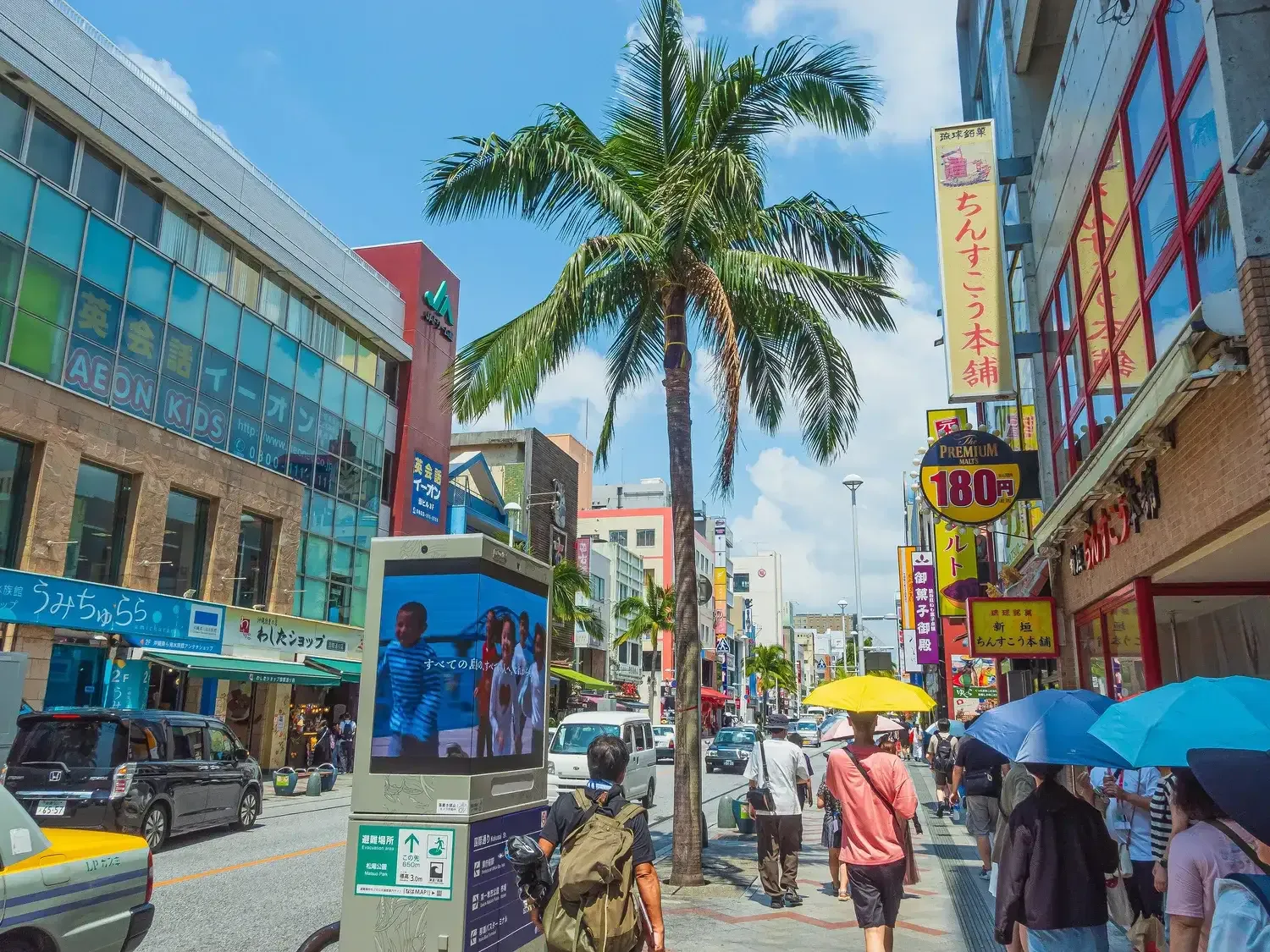
Kokusai Street is lined with shops for visitors; Naha’s kitchen is a short walk away, under an arcade roof. At the First Makishi Public Market, 75 ground-floor shops sell meat, fish and fresh food, and some of the fish you choose there can be cooked for you upstairs. So choose your fish before you choose a restaurant, not after. What makes the meal feel shared is the way you pay for it: the fish to the stall that sold it, the cooking to the diner that cooks it.
The city calls the market the kitchen of Naha’s residents and of the whole prefecture. Kokusai Street is a different kind of place, lined with department stores, restaurants, hotels and the souvenir shops that serve its visitors, about 600 shops and businesses in all.
It takes its name from a cinema. An Ernie Pyle International Theatre once stood near today’s Tembusu Naha, named for the American war correspondent who died in the Battle of Okinawa, and the street association says people came to call this “the street with the international theatre”, and then simply Kokusai, international, Street. Naha’s tourism association adds the other name it earned: the Miracle Mile, because this stretch was one of the fastest parts of the city to rebuild after the war.
Off the street, under the arcade roof
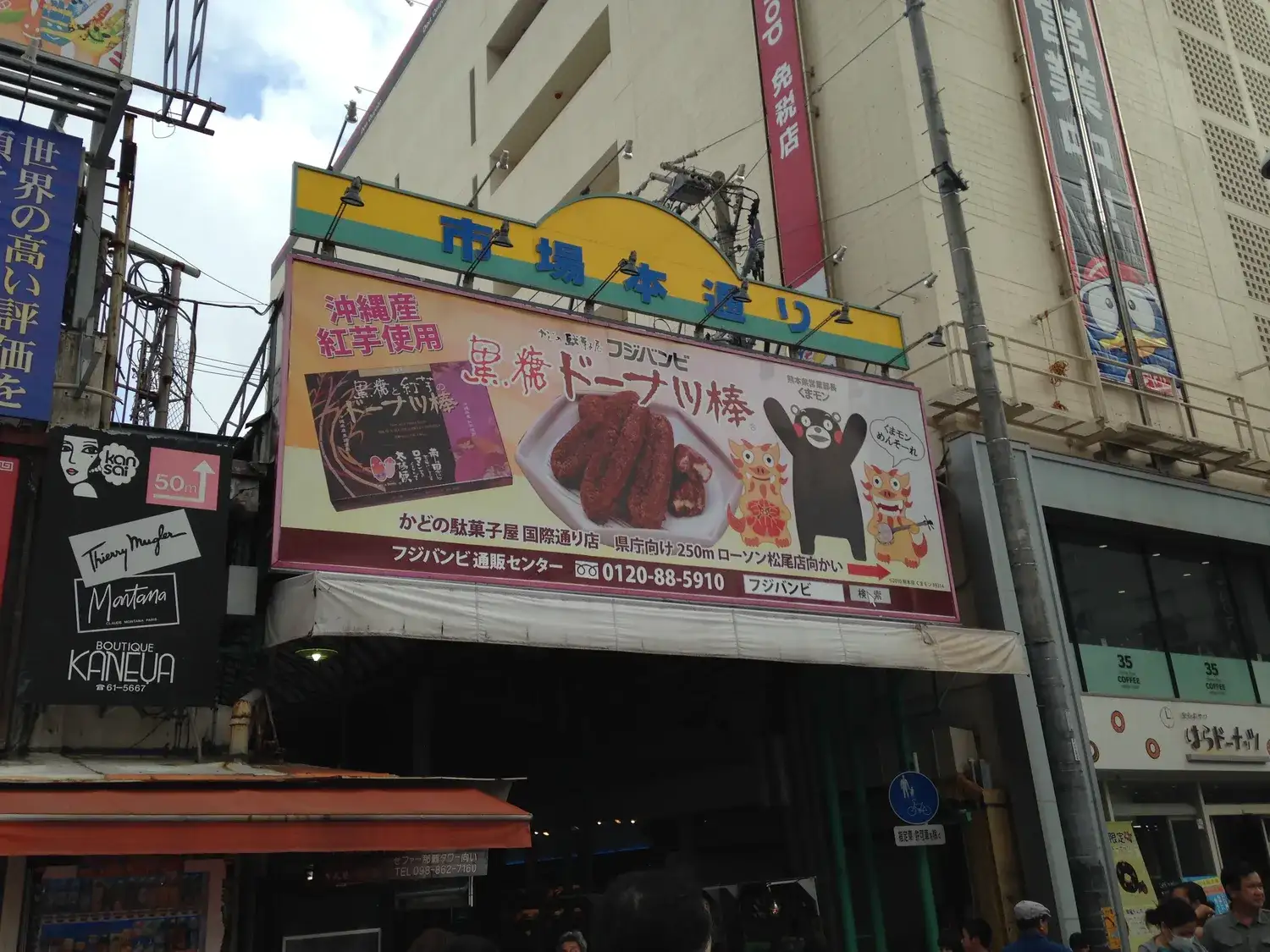
Leave Kokusai Street by the covered arcade beside the Don Quijote store. This is Ichiba Hondori, Market Main Street, and it runs from Kokusai Street almost to the market’s door, with about 60 shops along the way. Old jewellers and bag shops share it with souvenir shops and with shops selling the local sweets and rice cakes that New Year and Obon cannot do without.
What draws me to this arcade is its old nickname, earned by holiday food: there were once so many shops selling those sweets and rice cakes that people called it Okashi-dori, Sweets Street.
Beyond the market, Ichiba Chuo-dori runs on toward Ukishima-dori, and here some of the shops selling clothes, dried goods and souvenirs stand over the channel of the Gaabu River, which flows through the market area. Picture shop floors with a river channel running beneath them.
Downstairs, choose the fish first
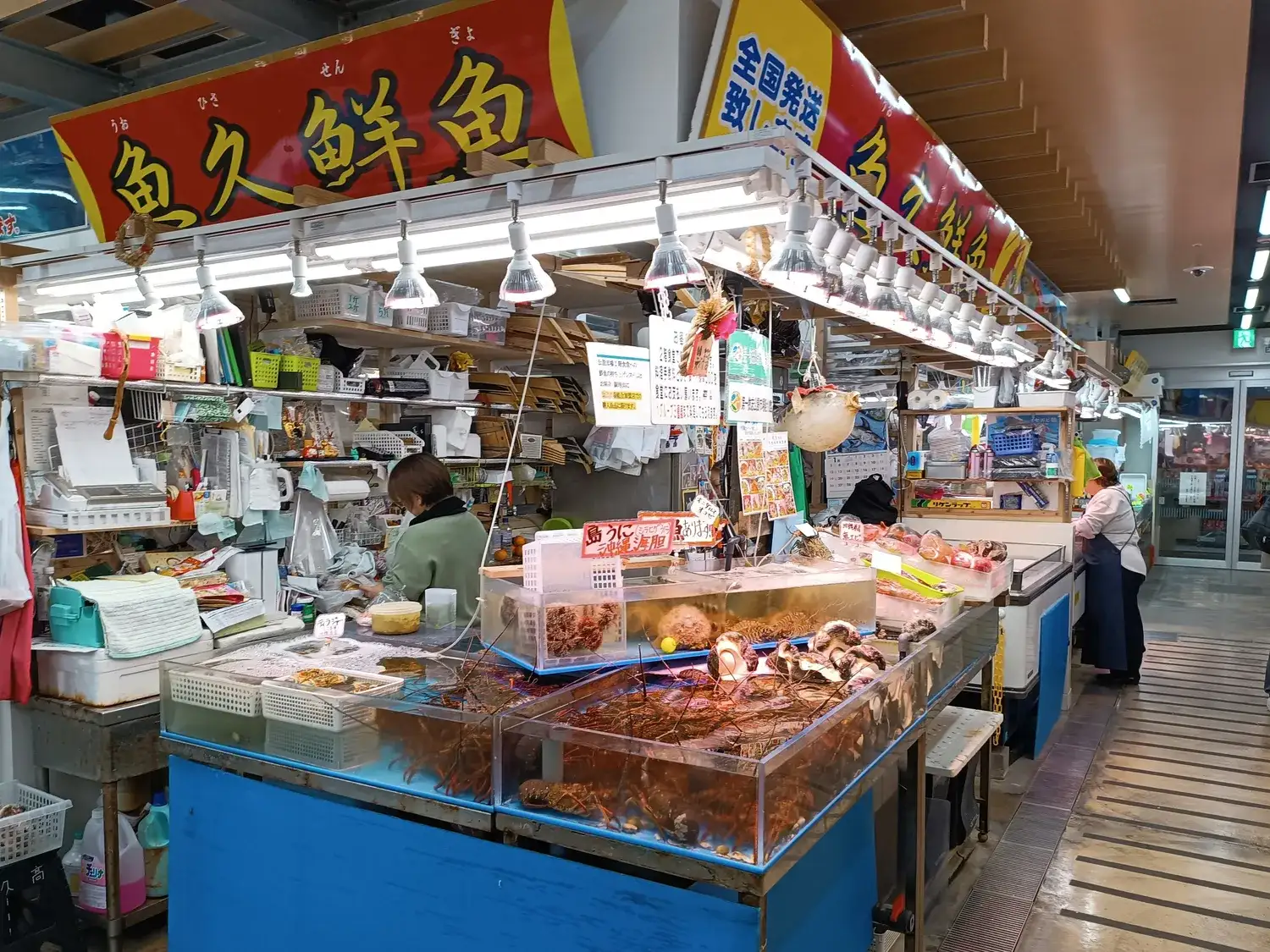
The market began after the war as a black market that grew up on its own near the Kainan bus stop, and the city gathered those stalls into a public market in 1950. The building you walk into now is new, opened after a few years in a temporary market.
Downstairs you are among meat, fish and fresh food. If you want to eat something you see at a fish or meat stall, ask there before you buy. The market’s own advice is to talk to the shop about what can be taken upstairs, and the city adds that only some items qualify. This is mochiage, carrying it up.
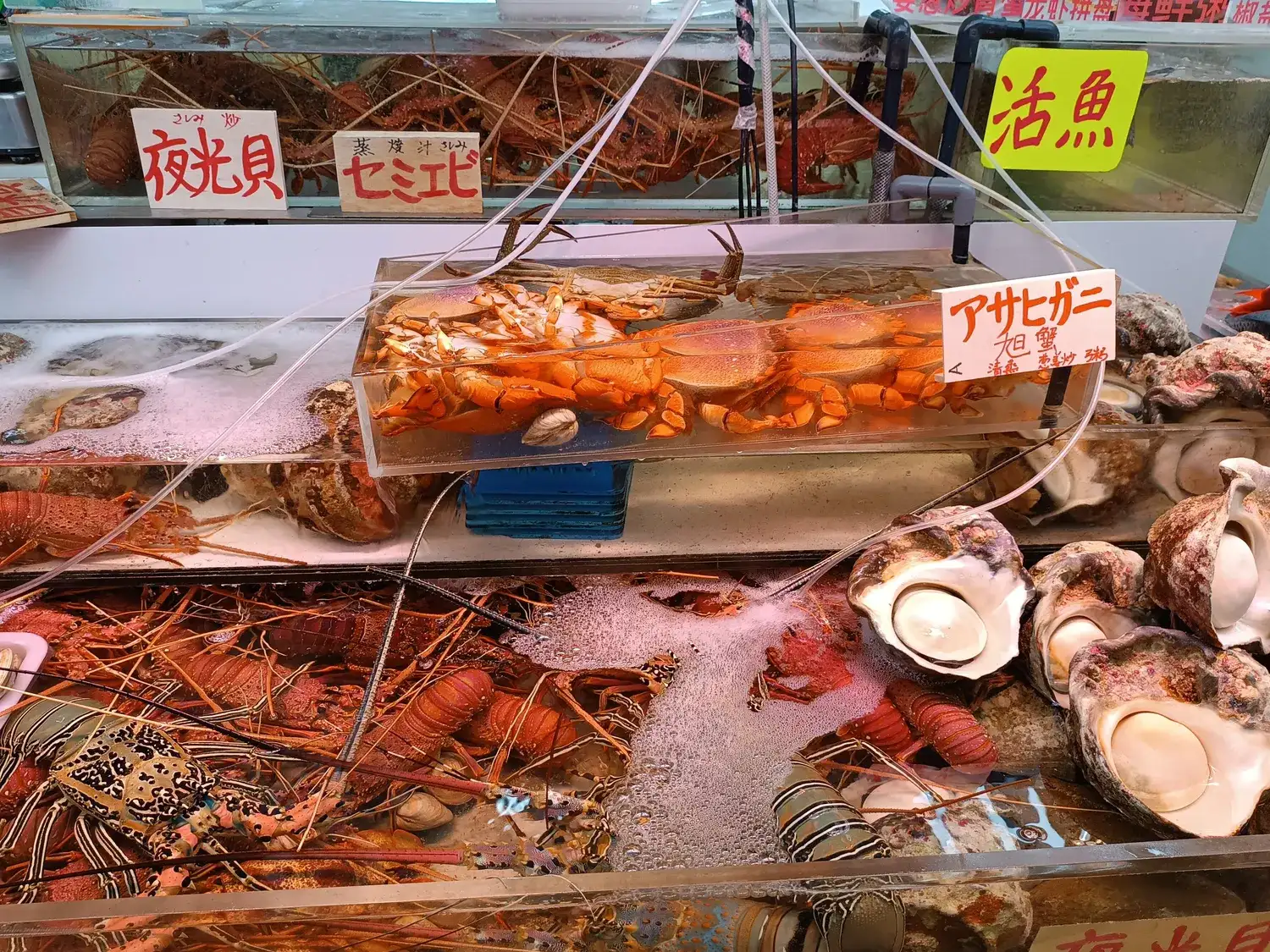
It pleases me that mochiage is a borrowed idea: the market says it began the service in 1990, modelled on eateries elsewhere in Asia, Singapore among them.
Upstairs, let the diner cook it
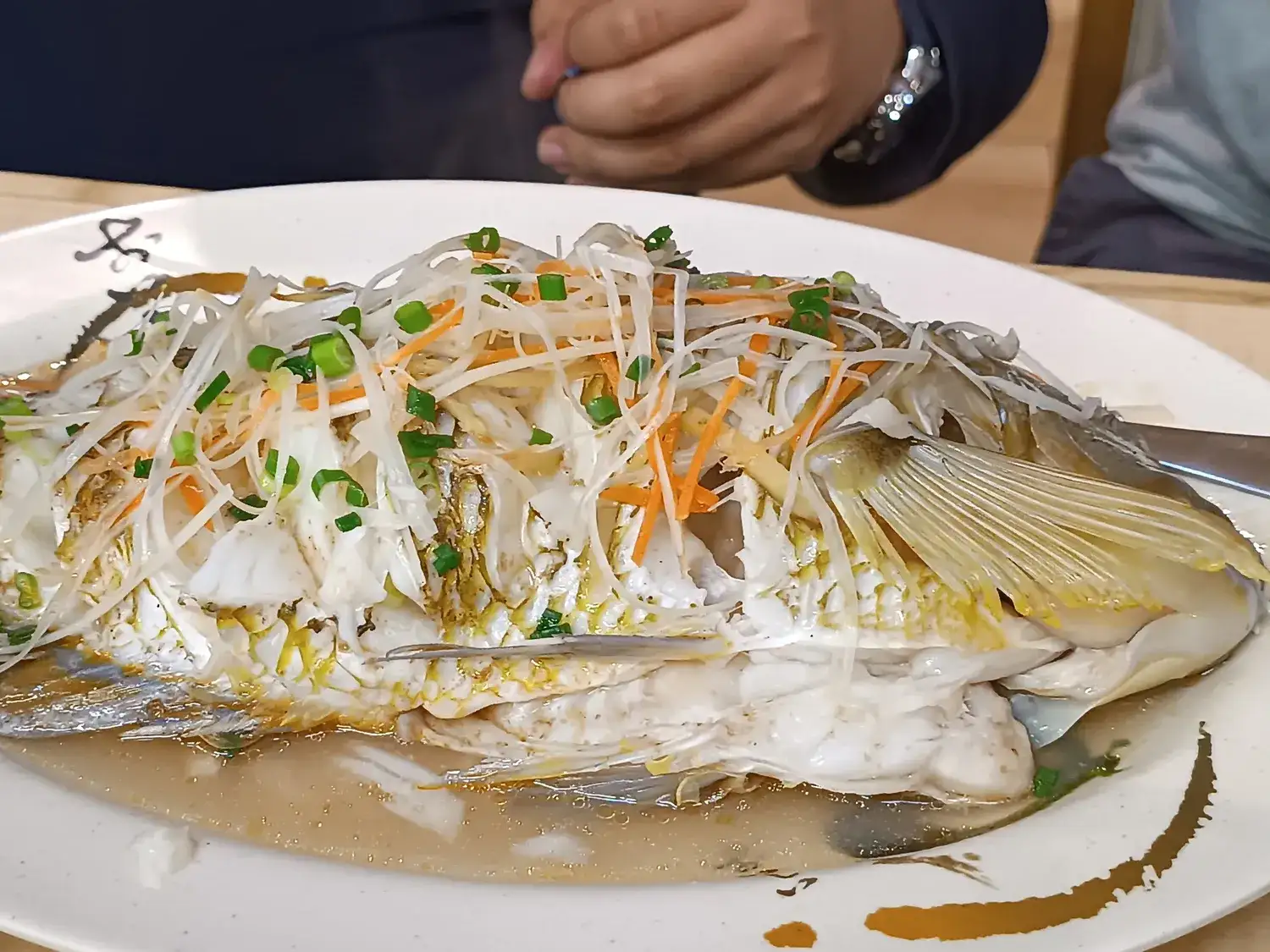
Carry your bag up to the diners on the second floor. The price of the cooking depends on what you ask them to make, so ask before they start. You pay the diner for the cooking and the stall for the fish.
Do not leave it late. The diners take their last orders for food from downstairs a little before eight in the evening, so buy your fish well before then.
Kokusai Street on a Sunday
If you are in Naha on a Sunday, give the afternoon to Kokusai Street. Private cars are kept off most of it through the afternoon, and the roadway fills with open-air cafés, street performers and the street’s own market. Rain calls it off, so check the street association’s news page before you set out.
On the fourth Sunday of the month, choose the street over the market. The market closes that day, except in December.
Before you go
| First Makishi Public Market | 8:00–22:00 (varies by shop). Closed the fourth Sunday of each month (open every day in December), 1–3 January, two days at Lunar New Year and the two days after Obon (both on the lunar calendar, so the dates change each year). Some shops keep their own days off |
| Mochiage (cooking what you buy) | Meat and fish, some items only; ask at the stall. You pay the stall for the food and the diner for the cooking, which is not free and depends on the dish. Last order for cooking food from downstairs 19:45; the diners’ own last order 20:00 |
| Getting there | About 10 minutes on foot from Makishi or Miebashi station on the Yui Rail monorail. No parking |
| Kokusai Street on Sundays | Every Sunday 12:00–18:00, about 1.3 km from the Prefectural Office North Entrance intersection to the Sai-on Bridge intersection. Private cars are not allowed. Cancelled in rain |
Checked 5 October 2026.
What I would do
I would come off Kokusai Street under the Ichiba Hondori roof in the late afternoon, choose a fish downstairs on the stallholder’s advice, and carry it up to a diner to cook, paying twice for one plate.
We have not visited the market or the streets described on this page. The facts here come from the official sources below, checked on 5 October 2026.
- First Makishi Public Market — mochiage, the cooking and how you pay, hours, closing days, access and the market’s history: makishi-public-market.jp
- City of Naha — the market as the city’s kitchen, its ground floor and diners, hours, closing days and access: city.naha.okinawa.jp
- Naha Kokusai-dori shopping street association — the shops on the street, where its name came from and the car-free Sundays: naha-kokusaidori.okinawa
- Naha City Tourism Association — the Miracle Mile: naha-navi.or.jp
- Ichiba Hondori shopping street — the arcade, its sweet shops and old name, Ichiba Chuo-dori and the Gaabu River: ichibahondori.com
- Photographs: Kokusai Street by Junyu-K (CC BY 4.0); the Ichiba Hondori arcade by Soramimi (CC BY-SA 4.0); the market’s counters and the steamed fish by Naha Mama Pavilionz (CC0). All from Wikimedia Commons.
More in Naha
- Shuri Castle and the Kinjo-cho Stone Path — For the castle, a royal tomb, and a stone path that came through the Battle of Okinawa
- Tsuboya Yachimun Street — For a potter’s house and its red-tiled kiln, on a Friday, weekend or holiday afternoon
- Itoman Market Itomaru — For an early morning at a town market, where island vegetables are sold at a price you agree out loud
- Where to Stay — For choosing where to sleep: near Kokusai Street, by the bus terminal at Asahibashi, or on the hill at Shuri
Explore other areas
- Hokkaido — Sapporo
- Kanto — Hakone
- Hokuriku — Kanazawa
- Koshin-Tokai — Fuji Five Lakes
- Kansai — Nara
- Chugoku — Hiroshima
- Kyushu — Fukuoka
- Okinawa — Naha · You are here
