Naha / Guide
Shuri Castle, Then the Stones That Survived: A Walk Down to Kinjo-cho
Shuri Castle and the Kinjo-cho Stone Path首里城と首里金城町石畳道
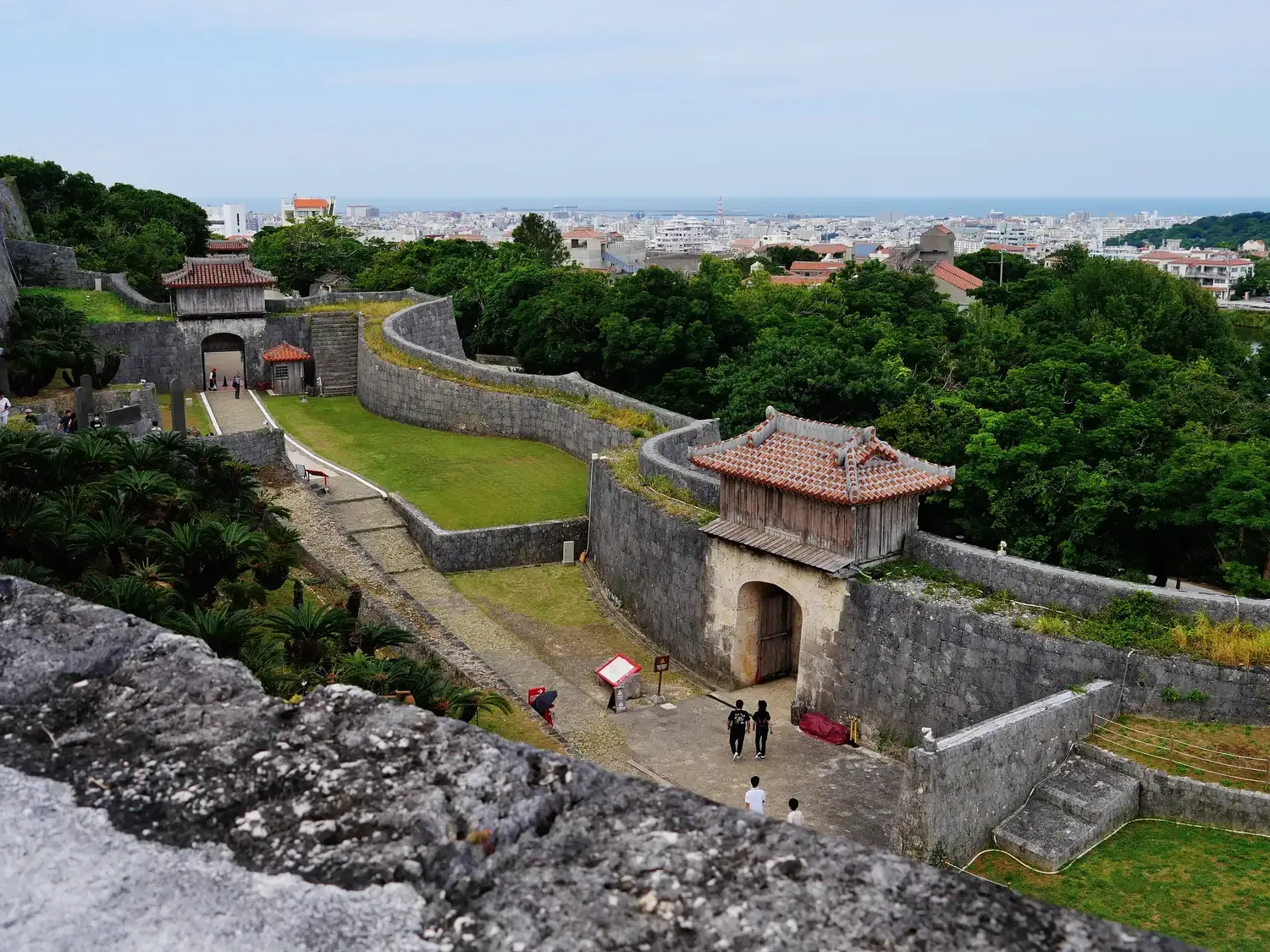
The part of Shuri I would least like you to miss is not inside the castle. Many of the gates you pass through up there have been rebuilt, but the Kinjo-cho stone path on the slope below came through the Battle of Okinawa, its limestone blocks, 20 to 30 centimetres across, still laid like a mosaic between the stone walls of old houses. So give the castle its time, then walk down to the path rather than ending the day at the main hall.
The main hall, whose exterior has been completed again since the fire of 2019, was the largest building of the Ryukyu Kingdom, and you will want to see it. Whether or not its interior is open on your day, a ticket without a reservation still takes you into the paid area and up to the high viewing deck, which looks across at the hall from above.
Up through the gates
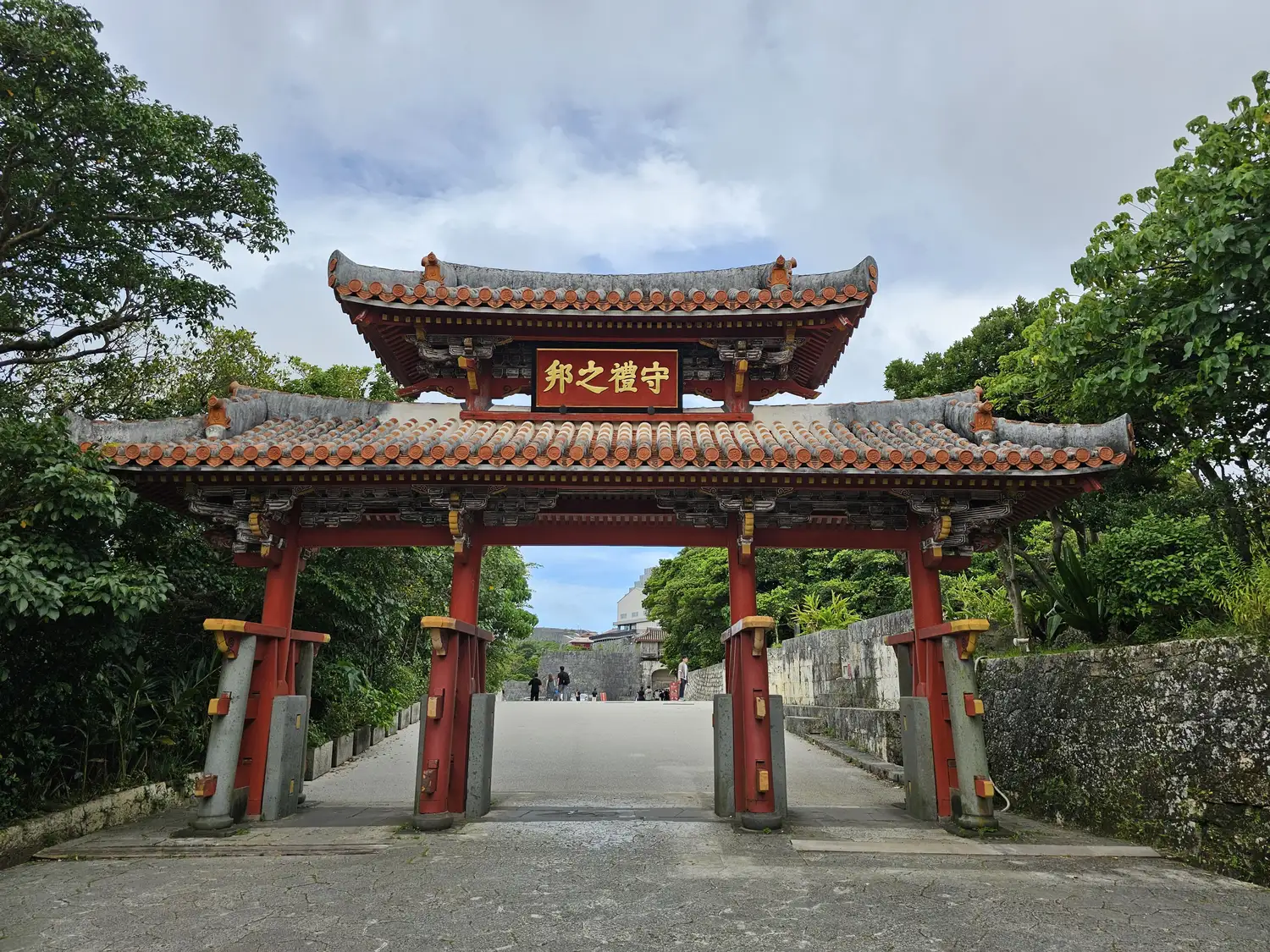
Begin at Shureimon. Its plaque reads Shurei no Kuni, a land that keeps to courtesy. The gate you see now was rebuilt in 1958, after the war destroyed it.
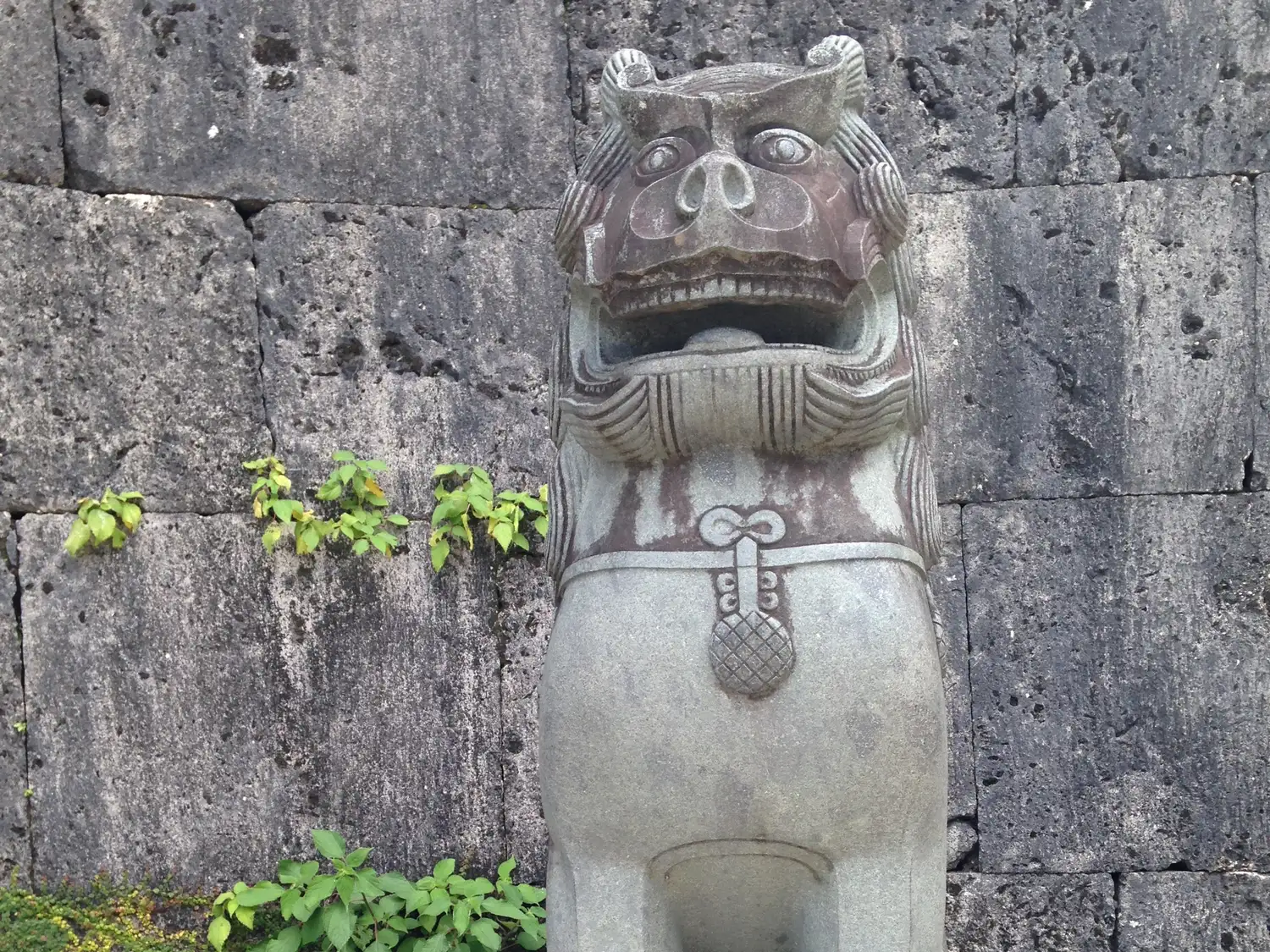
Walk on to Kankaimon, the first gate into the castle proper, named for the welcome given to envoys from China. You pass under a stone arch with a wooden tower set on top, between a pair of shisa, stone lions placed there to keep evil away.
Beyond it, look for Ryuhi, where spring water runs from the mouth of a carved dragon; this was once the palace’s drinking water. Of everything on the way up, the dragon is what I would stop for longest, because the park dates it to 1523, when it was brought from China.
The royal tomb with lions on the roof
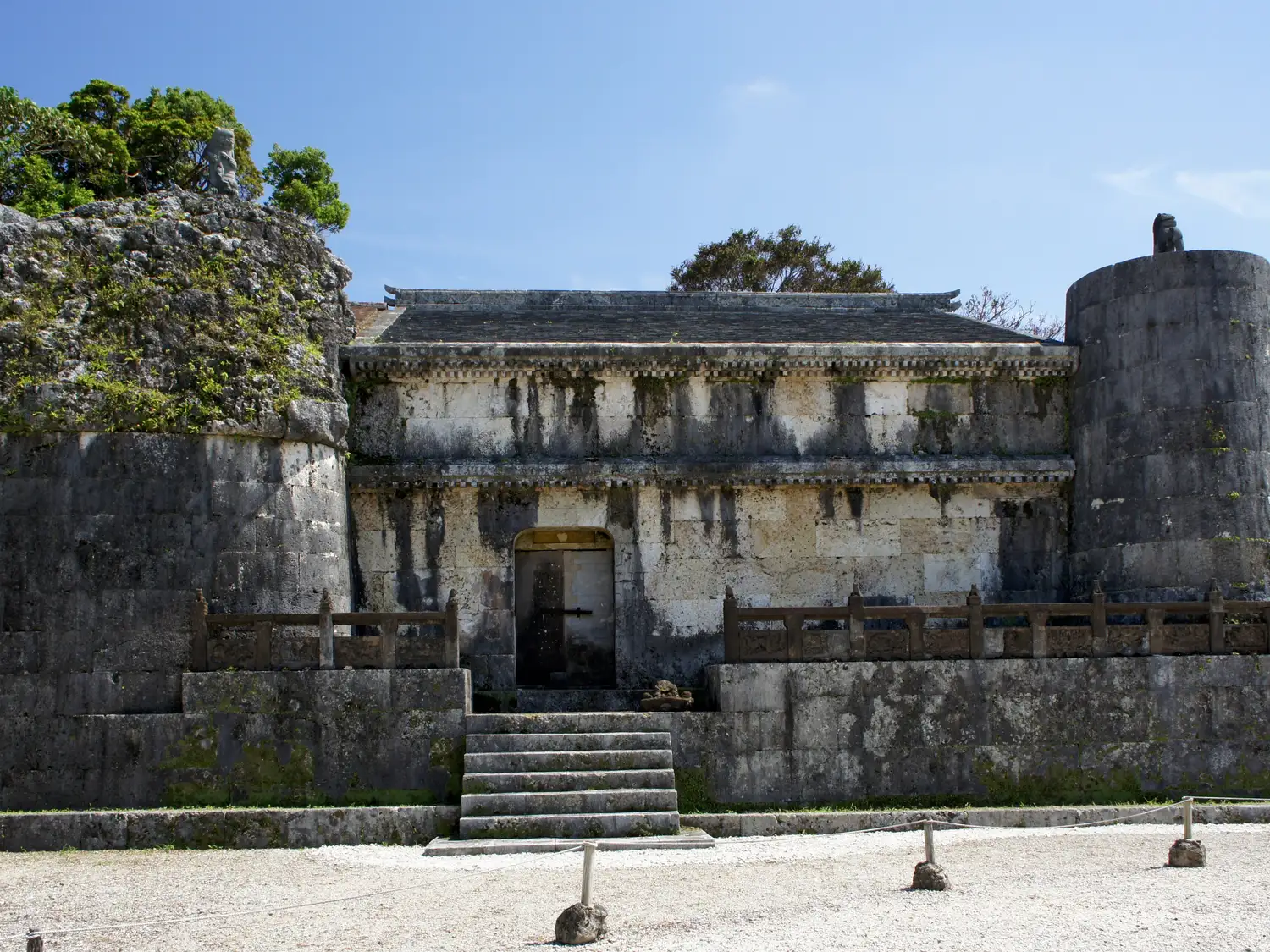
Before you go down, walk to Tamaudun, a few minutes from Shureimon on the castle’s west side. King Sho Shin built it in 1501 to rebury the remains of his father, and it became the tomb of the second Sho royal line; today it is a National Treasure and, with the castle site, part of a World Heritage listing. You will find its chambers cut into a natural cliff and faced with cut limestone, side by side behind a stone wall, with a wide forecourt in front for the rites.
Cross the courtyard, spread with coral sand for cleansing, and look up at the roofs, where stone lions guard the tomb: the one on the right plays with a ball on a cord, the one on the left holds a cub, and the one in the middle roars at the sky.
What I keep thinking about is the waiting. According to the park, when a king died, his body was left in the central chamber for some years, and once only the bones remained they were washed and laid in the east chamber with the queens and heirs, while the rest of the family went to the west. The tomb was badly damaged in the Battle of Okinawa and has since been restored.
Down the stone path
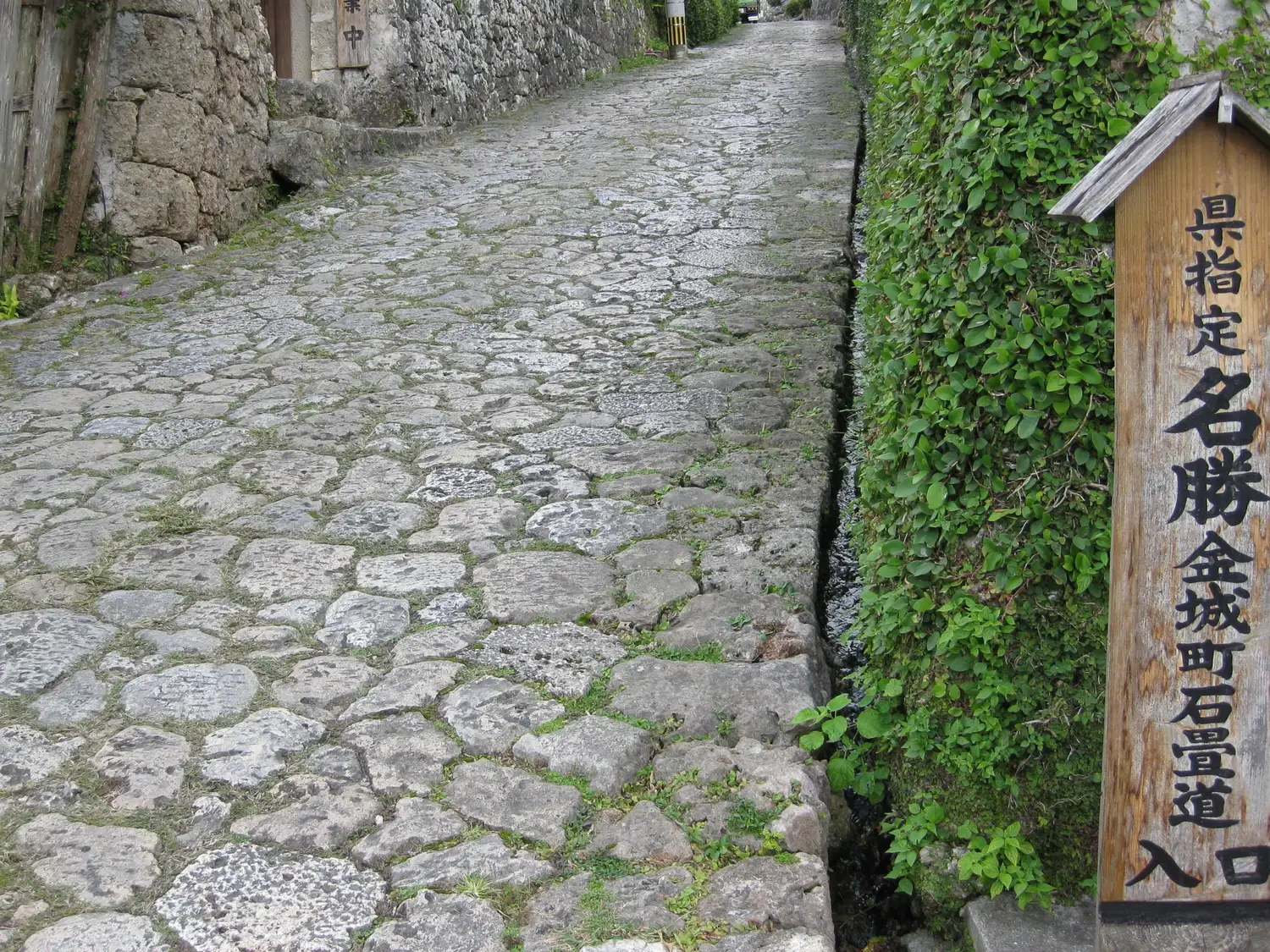
Back at Shureimon, follow the park’s own suggested way down: the Shimashibira slope, then across Kinjo-cho’s main road, where the stone path comes into view.
Underfoot are blocks of Ryukyu limestone, their faces finely dressed and laid at random rather than in rows. Where the slope turns steep the path becomes steps, and grooves are cut into stones that would otherwise be slippery.
If it has rained, slow down or keep the path for another day. The park warns that the wet stones are very slippery, and Naha’s tourism association suggests sports shoes.
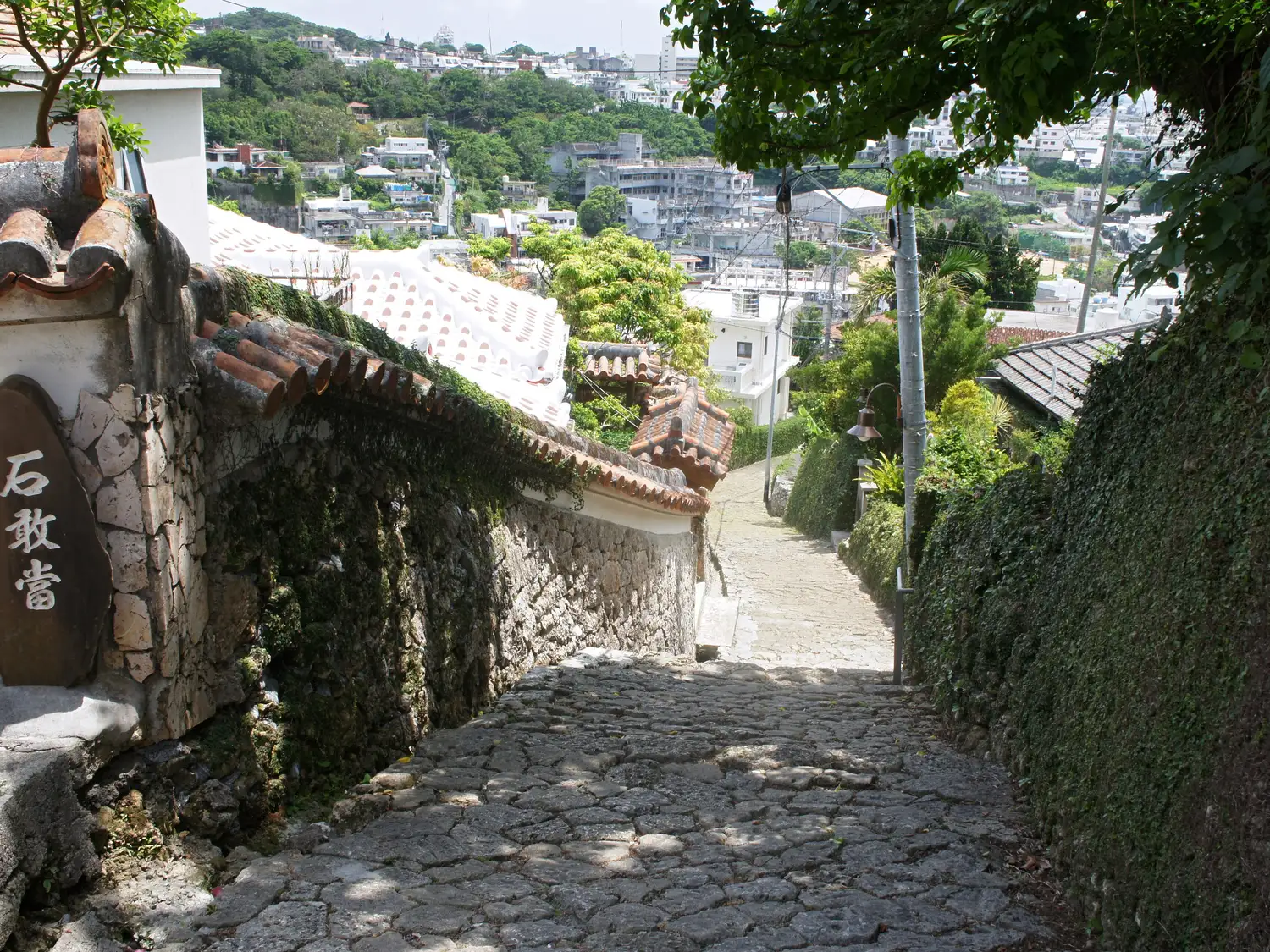
Look to either side: the stone walls of the old house plots survived with the path, and red-tiled houses line it, the scene that the Okinawan song Bashofu sings of.
Stop near the path at Uchikanagusuku Utaki, a traditional Okinawan sacred site, where a group of old akagi trees grows, said to be more than two centuries old. The park notes plants such as bird’s-nest ferns and giant taro growing on them.
Before you go
| Shuri Castle Park | Free area 8:00–19:30 (April–November), 8:00–18:30 (December–March). Paid area 8:30–19:00, last entry 18:30 (April–November); 8:30–18:00, last entry 17:30 (December–March) |
| Paid area ticket | Adults 400 yen up to 21 November 2026; 1,000 yen from 23 November 2026, the same with or without the main hall interior |
| Main hall interior | Opens to the public at noon on 23 November 2026, by timed reservation in 30-minute slots (no extra charge; if same-day slots remain, they are sold online up to 15 minutes before the slot and at the Kofukumon ticket office). Without a reservation you can still see the rest of the paid area, including the high viewing deck. Reservations are first come, first served and sold online; for dates from January 2027 they go on sale at 13:00 Japan time on the 1st of the month two months before your visit. The park is closed all day on 22 November 2026; on 23 November the free area opens at 11:15 and the paid area at 12:00 |
| Tamaudun | 9:00–18:00, last entry 17:30. Open every day. Adults 300 yen, junior high school age and under 150 yen, preschool children with a guardian free |
| Kinjo-cho stone path | Very slippery when wet; wear shoes with grip |
| Getting there | Yui Rail monorail to Shuri Station, then about 15 minutes on foot to Shureimon. Naha Bus 7 or 8 from Shuri Station to Shuri-jo-mae, 1 minute from Shureimon. The car parks can fill up, especially in the morning, so the park recommends public transport |
Checked 5 October 2026.
What I would do
I would reach Shureimon early, give the dragon at Ryuhi a long look, see the hall from the deck, then walk to Tamaudun and down the Shimashibira slope, and end the day on the stone path, on the stones that survived the Battle of Okinawa, not at the hall.
We have not visited Shuri Castle, Tamaudun or the stone path. The facts here come from the official sources below, checked on 5 October 2026.
- Shuri Castle Park — the gates, Ryuhi, the main hall and viewing deck, reservations, hours, ticket prices, access, Tamaudun’s chambers and lions, the stone path, the akagi trees and the fire of 2019: oki-park.jp/shurijo/
- City of Naha — Tamaudun’s history, hours and prices; the stone path and red-tiled houses: city.naha.okinawa.jp
- Agency for Cultural Affairs (Cultural Heritage Online) — Tamaudun as a National Treasure and the layout of its chambers: bunka.nii.ac.jp
- Naha City Tourism Association — walking between Tamaudun and Shureimon, and shoes for the stone path: naha-navi.or.jp
- Photographs: Shuri Castle’s walls and gates (lead image) by Zairon (CC BY 4.0); the stone path’s houses and Tamaudun by 663highland (CC BY 2.5); Shureimon by Renate Hano (CC BY-SA 4.0); the shisa at Kankaimon by Soramimi (CC BY-SA 4.0); the stone path’s paving by Ray_go (CC BY-SA 3.0). All from Wikimedia Commons.
More in Naha
- Kokusai Street and Makishi Market — For choosing a fish downstairs and having a diner cook it upstairs
- Tsuboya Yachimun Street — For a potter’s house and its red-tiled kiln, on a Friday, weekend or holiday afternoon
- Itoman Market Itomaru — For an early morning at a town market, where island vegetables are sold at a price you agree out loud
- Where to Stay — For choosing where to sleep: near Kokusai Street, by the bus terminal at Asahibashi, or on the hill at Shuri
Explore other areas
- Hokkaido — Sapporo
- Kanto — Hakone
- Hokuriku — Kanazawa
- Koshin-Tokai — Fuji Five Lakes
- Kansai — Nara
- Chugoku — Hiroshima
- Kyushu — Fukuoka
- Okinawa — Naha · You are here
