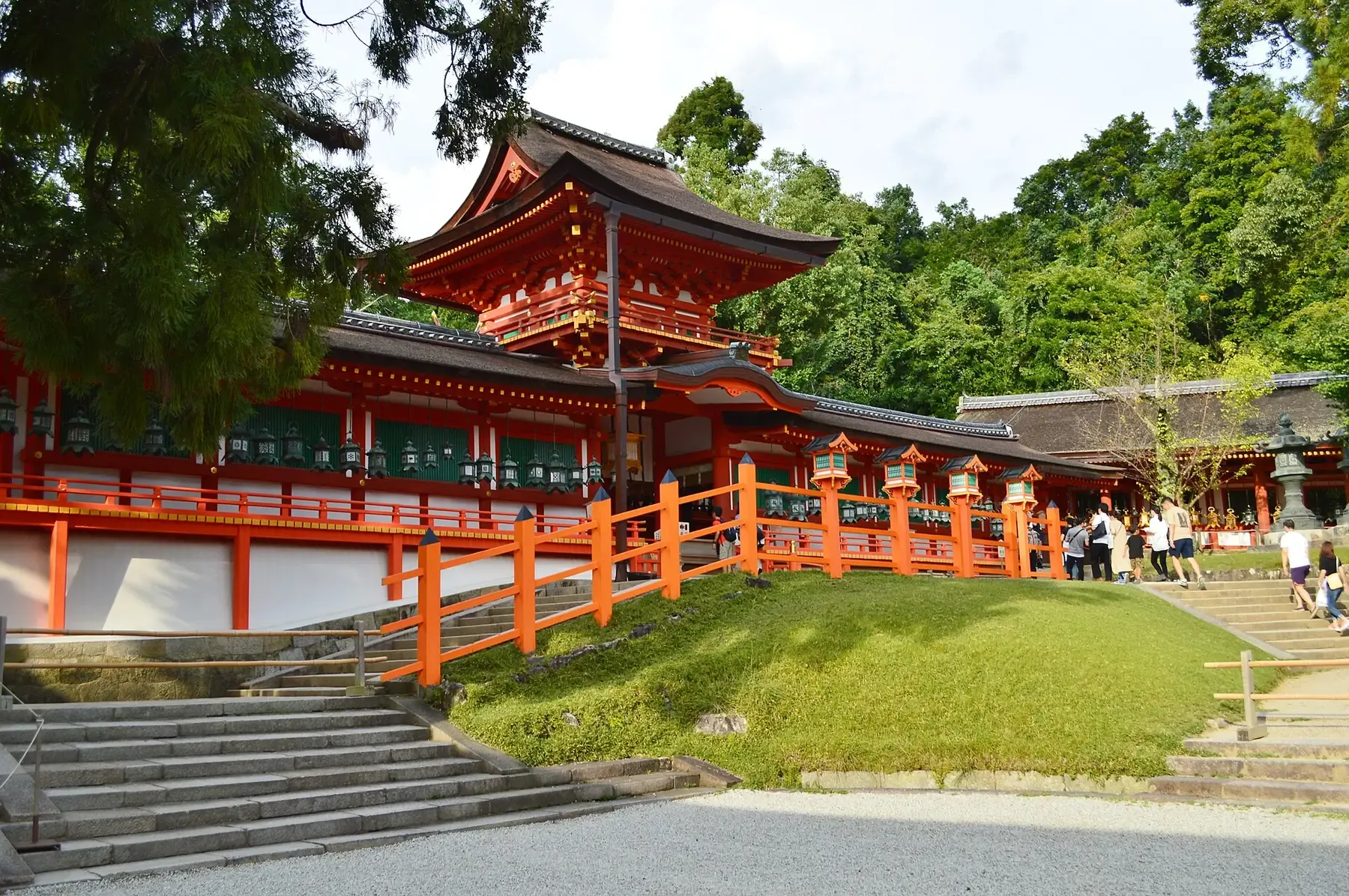
Nara / Guide
Kasuga Taisha, Nara: Three Nights of Lanterns, and the Room That Keeps Them
Kasuga Taisha春日大社
The photograph is three nights a year
Kasuga Taisha has about three thousand lanterns, and the shrine lights all of them together on three nights a year: Setsubun in February, and the nights of 14 and 15 August. The photographs of every lantern burning at once — stone lanterns flickering up the approach, hanging lanterns glowing in the corridors — are, as far as the shrine’s calendar tells you, pictures of those three nights.
I was a little deflated when that sank in. Then I found the room.
If your trip misses those nights, don’t plan an evening here. Come between 9:00 and 16:00 instead, pay 700 yen, and walk the corridor to the Fujinami-no-ya — a building the shrine opened, in its own words, so that visitors could sense what the lantern night feels like. It is a room the shrine opened so you could sense that night on an ordinary day.
Why an evening visit will not do it
You may be tempted to simply come back after dark. The calendar works against you twice.
Remember first that the gates close early: 17:30 from March to October, 17:00 from November to February. On the lantern nights the lighting starts at about 18:00 or 19:00 — later than an ordinary day’s closing time.
Second, the shrine writes about the nightly flame in the past tense. When people gave a lantern, they once gave oil with it, and the lantern burned every night for as long as that oil lasted. Then, in the Meiji era, the separation of Shinto from Buddhism and the reform of shrine administration broke the practice off. What came back came back in pieces: the Setsubun night in 1888, the August night in 1929.
So the flame you have seen in pictures is not the everyday state of this place. It is a revival, held on Setsubun and on 14 and 15 August.
I found that more moving than disappointing, in the end. The lanterns are not a light show. Each one was given with a wish — a safe household, a good trade, fortune in war, peace for the dead — and donors once gave the oil too, so the wish kept burning.
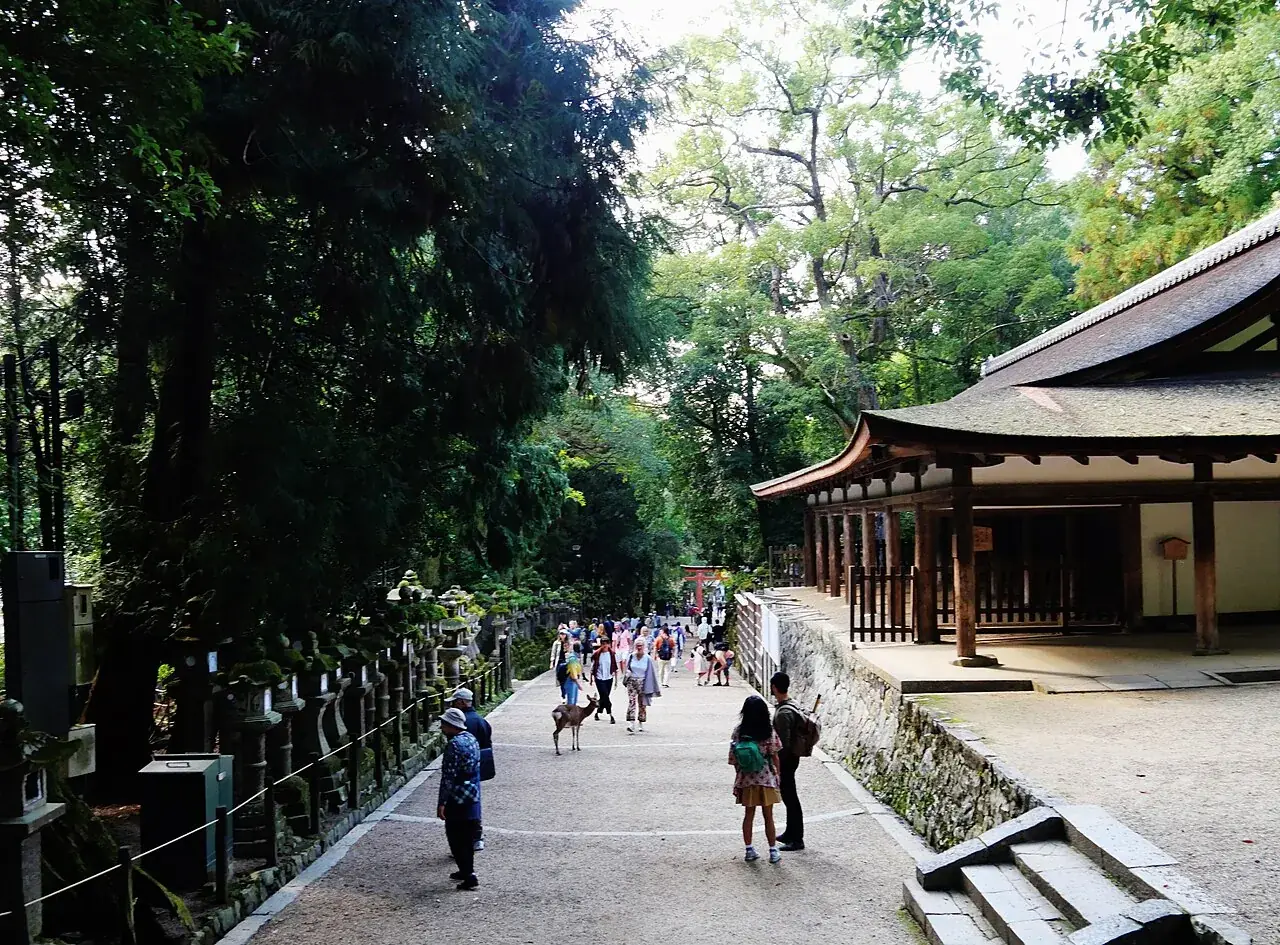
6:30 — the lanterns that cost nothing
Come early: the shrine’s gates open at 6:30 from March to October and at 7:00 in winter, and there is no charge to walk in and pray at the main worship point, so the first hours of the day cost you nothing.
That matters here: the shrine has about two thousand stone lanterns, the custom of lining an approach with lanterns is said to have started here, and walking in to the main worship point is free. Picture the approach early in the day: moss on the lantern roofs, deer drifting between them, the stone darker where the morning damp has not yet dried off. You do not need a ticket for any of it.
If you are up early, the shrine also holds a short morning prayer every day except days when ceremonies are held. People gather at about 8:50 beside the worship point, at the Naorai-den, and it lasts about twenty minutes. It costs nothing, and a priest leads it, so you do not need to know what to do.
9:00 — the corridor and the room
Plan the paid part for after 9:00. Special worship opens then and stops taking visitors at 16:00, so a late-afternoon arrival leaves you outside the corridor. The fee is 700 yen.
You walk along a corridor lined with hanging lanterns — the shrine has roughly a thousand hanging lanterns in all, the other third of the total — up to the area in front of the middle gate, to a point facing Mount Mikasa, and into the Fujinami-no-ya.
The Fujinami-no-ya is an Important Cultural Property. Until the Edo period it was where the shrine’s priests were stationed. The shrine now calls it a recreation of the lantern night, and asks you to experience, inside a building with that history, the quiet, other-worldly beauty of the mantōrō.
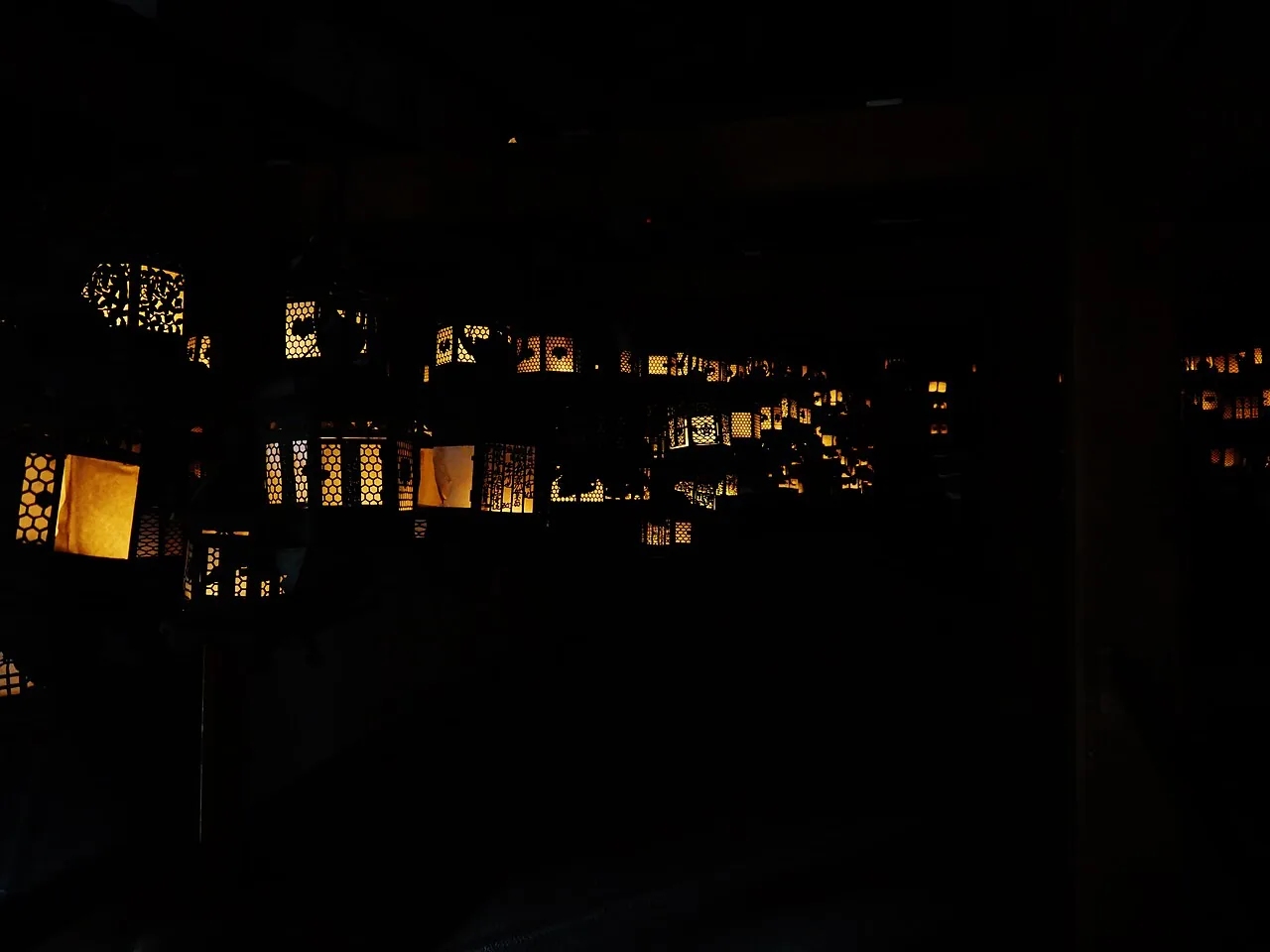
Imagine stepping out of a bright morning into that room: the lanterns hanging in rows in the dark, each small light repeated down the length of the space. It is a smaller thing than three thousand lanterns across a hillside. It is also a version you can walk into on an ordinary morning, on any day special worship is open.
That is where I would spend the 700 yen. Not on the gate, which you can see from outside, but on the corridor and the room at the end of it.
Check one thing before you plan around it. Special worship is closed on quite a few mornings, including the 1st, 11th and 21st of every month, so hold your date against the full list at the bottom of this page before you build a morning here.
If you can be here on one of the three nights
If you are here on Setsubun, arrive before about 18:00, when the lanterns are lit; the gates are due to close at 20:30. If you are here on 14 or 15 August, arrive before about 19:00; the gates are due to close at 21:30.
Bring 700 yen for special worship inside the corridor, the same as by day. You can also make an offering of 3,000 yen or more to dedicate a lantern light.
Keep in mind that the idea is older than its current dates. The shrine points to a diary entry from 1475, in which people from the town of Nara hung lanterns all the way from the front of Kasuga to Kofuku-ji to pray for rain. The shrine thinks those were temporary and handmade — wooden posts with crossbars, with lights something like andon or chōchin hung from them. I liked that detail more than any figure on the page. Before it was a famous night, it was a town that needed rain.
If your dates land on one of those three nights, I would plan the whole evening around it. If they do not, I would not try to recreate it after dark. I would take the morning, and the room.
Before you go
Hours, prices and the days special worship closes
| Grounds and main worship point | 6:30–17:30 (March–October) / 7:00–17:00 (November–February), free |
| Special worship (corridor, middle gate area, Fujinami-no-ya) | 9:00–16:00, 700 yen |
| Treasure hall | 10:00–17:00 (last entry 16:30), 700 yen |
| Manyo botanical garden | 9:00–16:30 (last entry 16:00), 700 yen; closed Tuesdays from June to March unless a public holiday, open daily in April and May |
| Morning prayer | about 8:50 at the Naorai-den, about 20 minutes, free; not held on ceremony days |
| Special worship closed all day | around 8–13 March; 20 December – 7 January; Coming of Age Day |
| Special worship closed in the morning | the 1st, 11th and 21st of each month; Setsubun; 17 and 23 February; 14 and 15 March; the spring equinox; 3 April; the third Friday of May; 5 and 10 May; 7 and 15 August; the autumn equinox; 9 October; 3 and 23 November; 17 December |
| Special worship closed in the afternoon | 16 December |
The shrine adds that times can shift for ceremonies, and that other festivals can close special worship at short notice.
The deer you pass on the way up have their own rules, and their own unsettled numbers — that is our piece on the deer of Nara Park. The great hall to the north has a different puzzle about what is old and what was rebuilt, in the Todai-ji page.
What I would do with one day
I would walk up through the stone lanterns early, when the main worship point is open and free, and I would stay for the morning prayer if the day allowed it.
Then I would buy the special worship ticket as soon as it went on sale and go straight down the corridor to the Fujinami-no-ya. The three nights are the famous version. The room is the version you can have. On an ordinary day, that is where I would go to feel the lantern night.
Sources and images
We have not visited Kasuga Taisha for this guide. It is written from the shrine’s own official pages; where you are asked to picture a scene, that is what it is.
- Kasuga Taisha official site, basic information page — opening hours, fees and the special worship closure dates. Checked 23 September 2026.
- Kasuga Taisha official site, precinct guide — what special worship includes, the Fujinami-no-ya and why it was opened. Checked 23 September 2026.
- Kasuga Taisha official site, February and August calendar pages — the lantern nights, their times, the offering, the number of stone and hanging lanterns, the Meiji-era break and the 1888 and 1929 revivals, and the 1475 diary entry. Checked 23 September 2026.
- Kasuga Taisha official site, about page — the nightly flame described in the past tense. Checked 23 September 2026.
- Kasuga Taisha official site, morning prayer page — time, place, length and cost. Checked 23 September 2026.
- Photographs: stone lanterns and the Fujinami-no-ya by Zairon (CC BY 4.0, Wikimedia Commons).
More in Nara
- Nara Park — For the deer, and open ground with no gate
- Todai-ji — For the Great Buddha, and a temple that says which parts are old
- Yanagimachi Goldfish Street — For goldfish at the shopfronts, and a sake bar where you bring the food
- Where to Stay — For choosing where to sleep around the deer: inside the park, on its edge or in Naramachi
Explore other areas
- Hokkaido — Sapporo
- Kanto — Hakone, Tokyo
- Hokuriku — Kanazawa
- Koshin-Tokai — Fuji Five Lakes
- Kansai — Nara · You are here
- Chugoku — Hiroshima
- Kyushu — Fukuoka
- Okinawa — Naha
