Nara / Stay
Where to Stay in Nara: Sleep Where the Deer Can Be Heard
Where to Stay奈良の宿
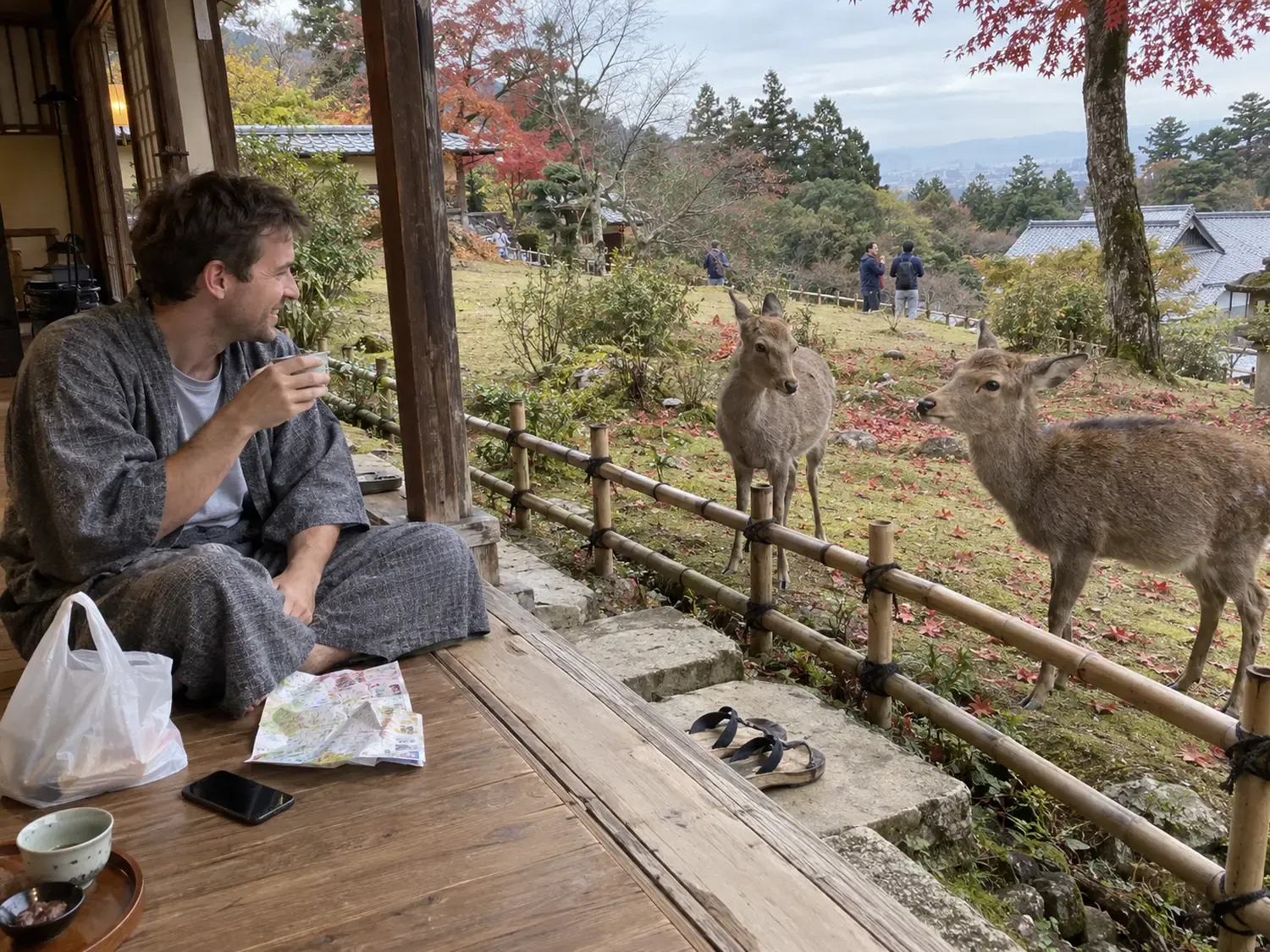
If you want to fall asleep within earshot of Nara’s deer, stay inside Nara Park instead of by the station. The deer spend the day grazing the park’s lawns and, toward evening, move off to their resting places, which are sometimes in the woods. Edosan, an inn founded in 1907 whose cottages are scattered through its grounds in the park, makes a small claim on its front page that won me over: deer, it says, sometimes drop by its cottages.
Kyoto and Osaka are both under an hour away by train, close enough to make Nara a day trip. Even so, the city’s tourism association suggests staying the night, so that you can walk around in the early morning while the park is still relatively quiet.
The park after the day visitors go
Night in the park has few lights, unlike the day, the tourism association says, and staying is the only way to be inside that dark instead of leaving it behind on an evening train.
By sunrise the deer are on the move again. Walk out onto Kasugano, the park’s largest open square, and you have Mount Wakakusa to the east, the roof of Todaiji’s Great Buddha Hall to the north-west and its Great South Gate to the west, all at once. Read why Nara’s deer belong to no one before you go, and which of Todaiji’s halls opens first.
If you want the deer as neighbours, sleep in the park
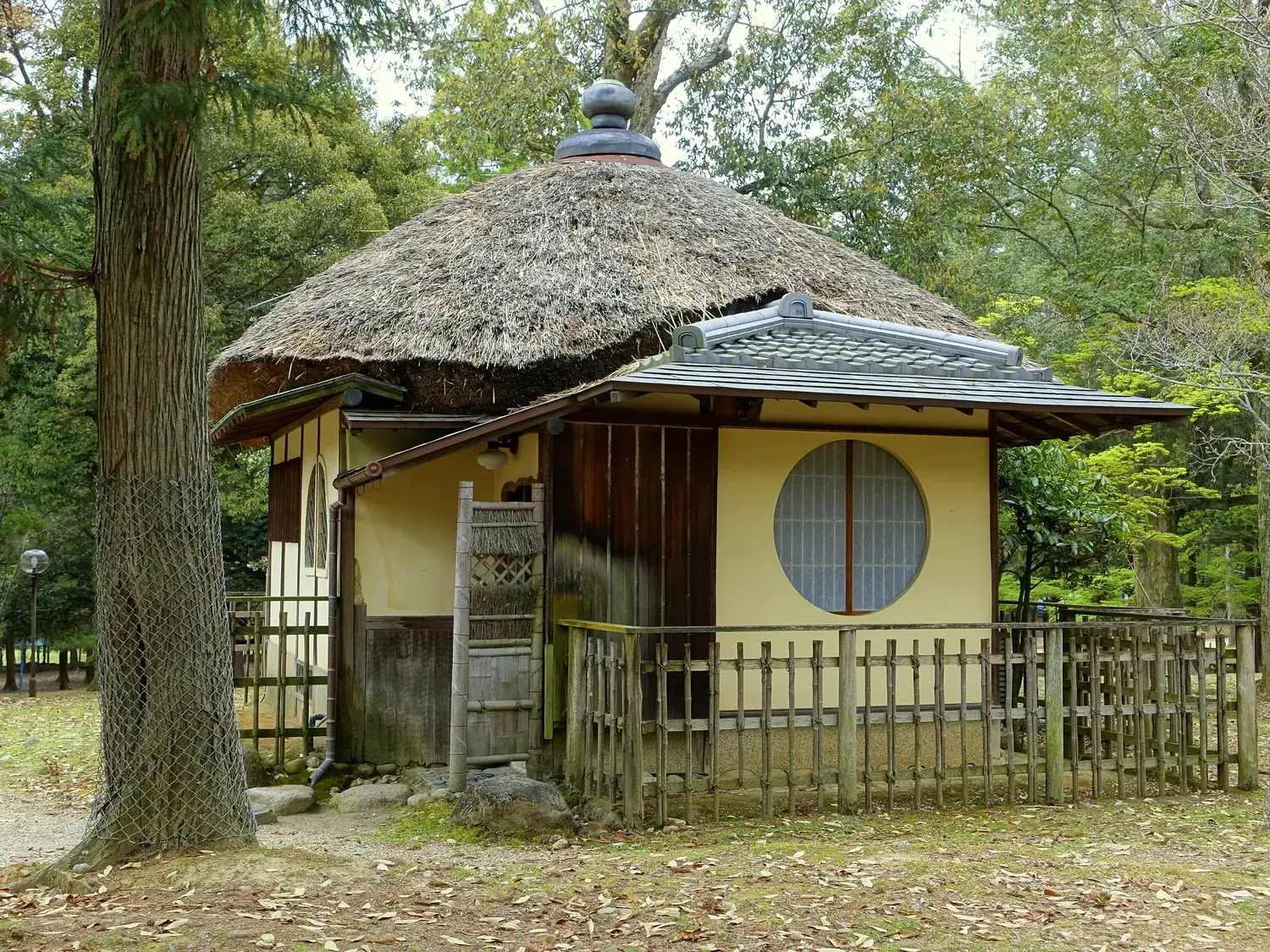
One inn we would look at: Edosan. Its guests sleep in separate cottages in the sukiya style, dotted about its grounds rather than gathered under one roof. If I could pick one sound to fall asleep to in Nara, it would be the one the inn saves for autumn: when the leaves turn, it says, the deer’s calls carry from somewhere far off.
Stays come with dinner, and the inn asks you to arrive by around six for it, so I would plan the evening around the inn’s table and its small family baths rather than around the town.
If you cannot choose, sleep on the park’s edge
If you cannot choose between the park and the old town, stay where one gives way to the other.
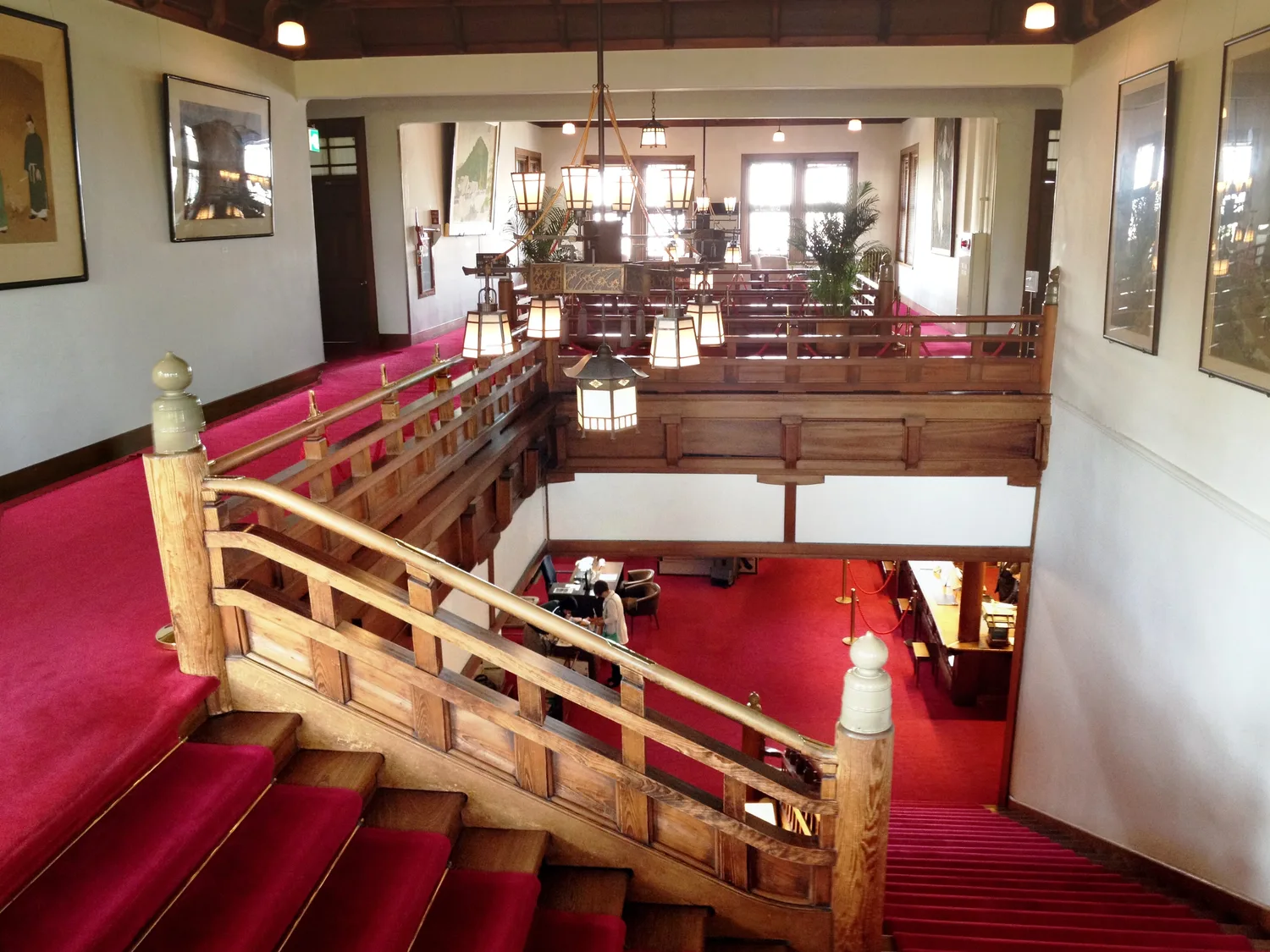
One hotel we would look at: Nara Hotel. Its main building, designed by the architect Tatsuno Kingo and built of cypress in the manner of a Momoyama-period palace, went up in 1909. I like that even its rooms are named for the two directions: a Park Side, and a Town Side facing Naramachi. Many of the rooms still have a mantelpiece. The hotel no longer lets in visitors who come only to look around, so to see that staircase, come as a guest, or for a meal or tea.
Naramachi, if you would rather sleep in a sake brewer’s house
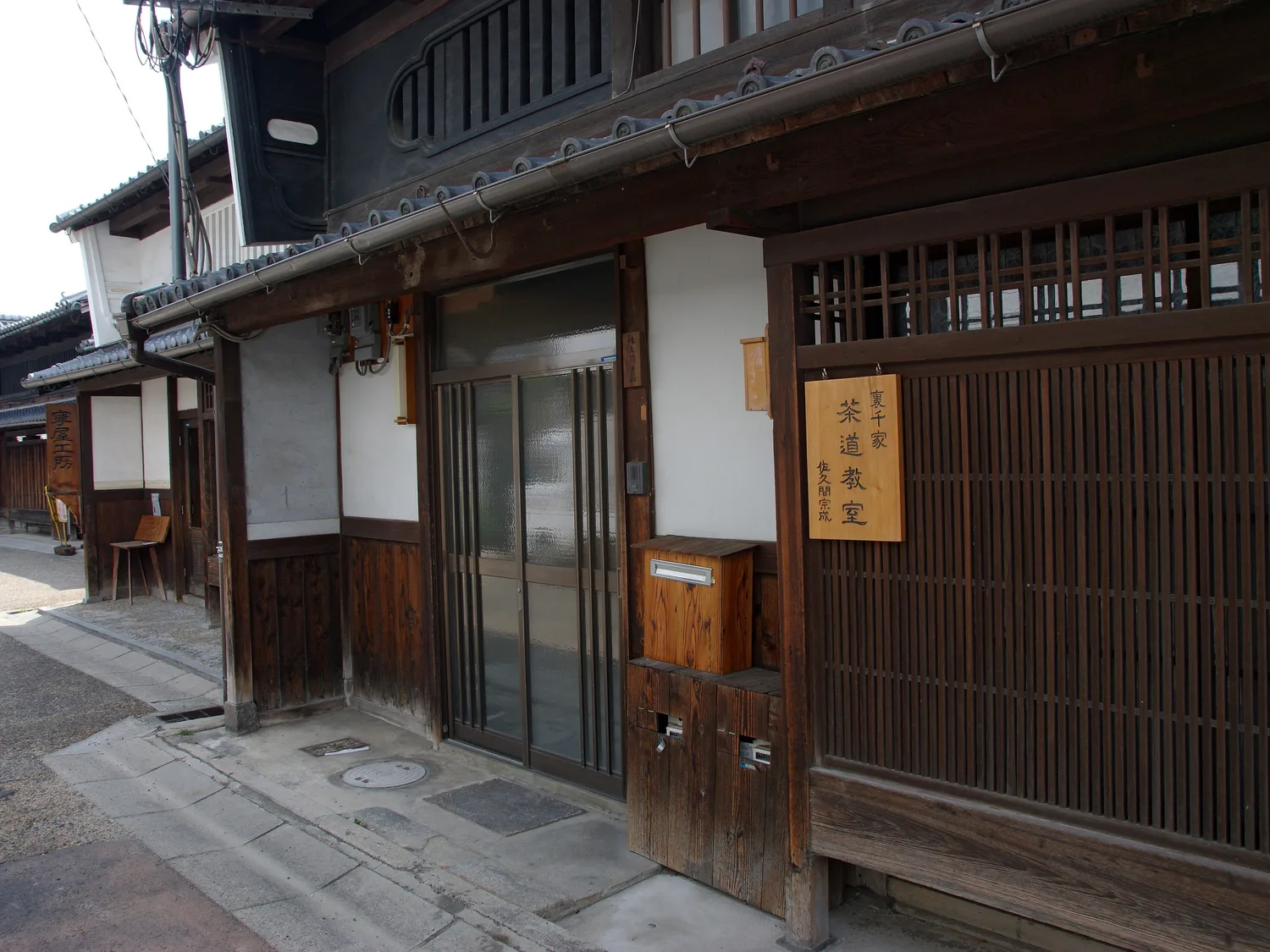
Naramachi grew up on the former grounds of Gangoji temple, and its lanes are still lined with townhouses in the style of the Edo and Meiji periods. Look up as you walk and you can see small red figures hanging from the eaves.
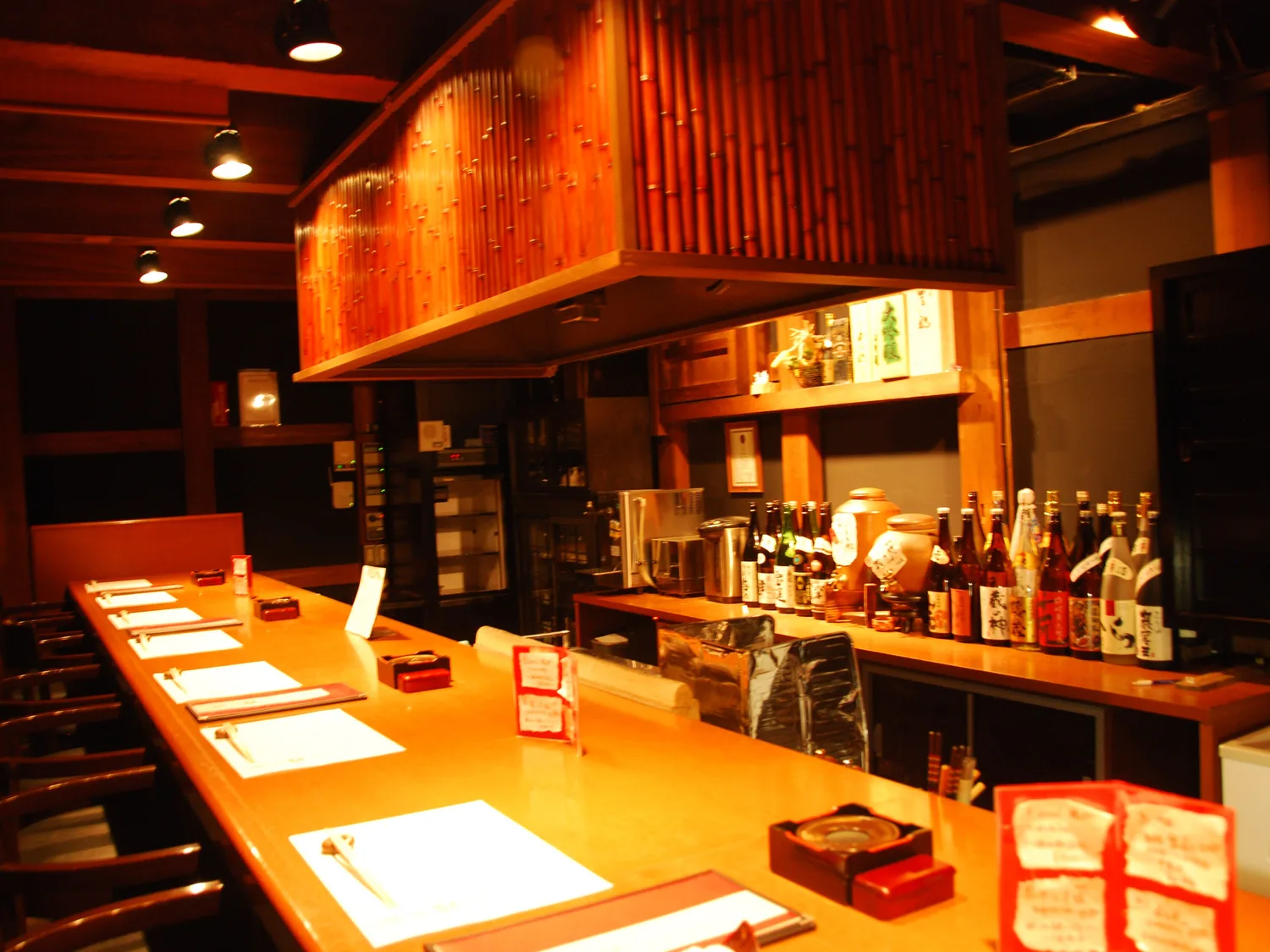
One inn we would look at: Kaze no Naramachi. It is the old family home of Nara Toyosawa Shuzo, a sake brewery founded in the Meiji period, made over into a hotel of only eight rooms, with its high ceilings and bare beams left in sight. Best of all, to my mind, the brewery’s own sake is now poured at a counter restaurant in what was once the house’s earthen-floored hall, inside the brewer’s former home. It is also the shortest walk on this page from Kintetsu Nara Station, which helps if Nara is one stop on a longer trip.
Before you go
| Kintetsu Nara Station ↔ Nara Park | About 8 minutes on foot to the edge of the park. Todaiji about 20 minutes, Kasuga Taisha about 25 minutes |
| JR Nara Station ↔ Nara Park | About 20 minutes on foot (about 10 minutes by bus) |
| From Kyoto and Osaka | JR Kyoto about 45 minutes (Miyakoji Rapid). Kintetsu Kyoto 35 minutes (limited express, surcharge). Osaka Namba about 40 minutes (Kintetsu). No direct bus |
| Kofukuji five-storied pagoda | Under a temporary repair cover; the pagoda itself cannot be seen from outside |
| Edosan | Inside Nara Park. About 15 minutes on foot from Kintetsu Nara (5 by taxi), 25 from JR Nara (10 by taxi). There are no signposts to it inside the park, so bring the inn’s map. Dinner included (breakfast depends on the plan); arrive by about 18:00. Check-in 15:00, check-out 10:00. Closed on some dates, listed on its news page |
| Nara Hotel | Next to Nara Park. About 15 minutes on foot from Kintetsu Nara, 25 from JR Nara. Free shuttle bus to and from both stations (check the timetable). Check-in 15:00, check-out 11:00. No entry for sightseeing only |
| Kaze no Naramachi | Naramachi. 8 rooms. About 8 minutes on foot from Kintetsu Nara, about 12 from JR Nara. Counter restaurant. No pick-up. Check-in 15:00, check-out 11:00. Formerly NIPPONIA HOTEL Nara Naramachi |
Checked 4 October 2026. We list no room rates.
Where I would sleep
I would take one of Edosan’s cottages in autumn, stay in after dinner, and listen for the deer somewhere out in the dark between the cottages and the trees.
For every area on this page, see hotels in Nara on Expedia. That is an affiliate link: if you book through it, we earn a commission.
We have not stayed at any of the places on this page or visited the areas described. The facts here come from the official sources below, checked on 4 October 2026.
- Nara Prefecture, Nara Park — the deer’s day, Kasugano and the walking times to Todaiji and Kasuga Taisha: pref.nara.lg.jp/site/park/
- Nara City Tourism Association — walking times to the park, staying overnight for the early morning, Nara at night, Naramachi, train times from Kyoto and Osaka: narashikanko.or.jp
- Kofukuji / Nara Prefecture — the repair cover on the five-storied pagoda
- Edosan — its founding, the cottages and the deer, the seasons, baths, meals, access and times: edosan.jp
- Nara Hotel (JR West Hotels) — the main building, Park Side and Town Side rooms, access, shuttle bus and the end of sightseeing-only visits: jrwest-hotels.jp/narahotel/
- Kaze no Naramachi (Kaze Heritage) — the brewer’s house, rooms, restaurant, access, times and the change of name: kazenoheritage.jp/hotels/naramachi/
- Photographs: Edosan by Daderot (CC0); Nara Hotel by Gryffindor (CC BY-SA 4.0); the Naramachi townhouse by 663highland (CC BY 2.5); the counter restaurant by Maarten Heerlien (CC BY 2.0). All from Wikimedia Commons. The hero image is an AI-generated photo illustration, not a photograph of any inn on this page.
More in Nara
- Nara Park — For the deer, and open ground with no gate
- Todai-ji — For the Great Buddha, and a temple that says which parts are old
- Kasuga Taisha — For the shrine of 3,000 lanterns, and its free early grounds
- Yanagimachi Goldfish Street — For goldfish at the shopfronts, and a sake bar where you bring the food
Explore other areas
- Hokkaido — Sapporo
- Kanto — Hakone
- Hokuriku — Kanazawa
- Koshin-Tokai — Fuji Five Lakes
- Kansai — Nara · You are here
- Chugoku — Hiroshima
- Kyushu — Fukuoka
- Okinawa — Naha
