Nara / Guide
Walk Koriyama's Goldfish Street on a Friday, and Carry Your Snacks into the Sake Brewery
Yanagimachi Goldfish Street柳町商店街(金魚ストリート)
If you only have one day for Koriyama’s goldfish street, walk it on a Friday rather than a Sunday. On a Sunday the little sake brewery is open, but it serves no food, and the fishmonger that grills what you would carry in is shut; Friday is the only day all seven stops below are open, from a sweets shop said to date from 1585 to that brewery, and the brewery is the stop I would build the whole day around.
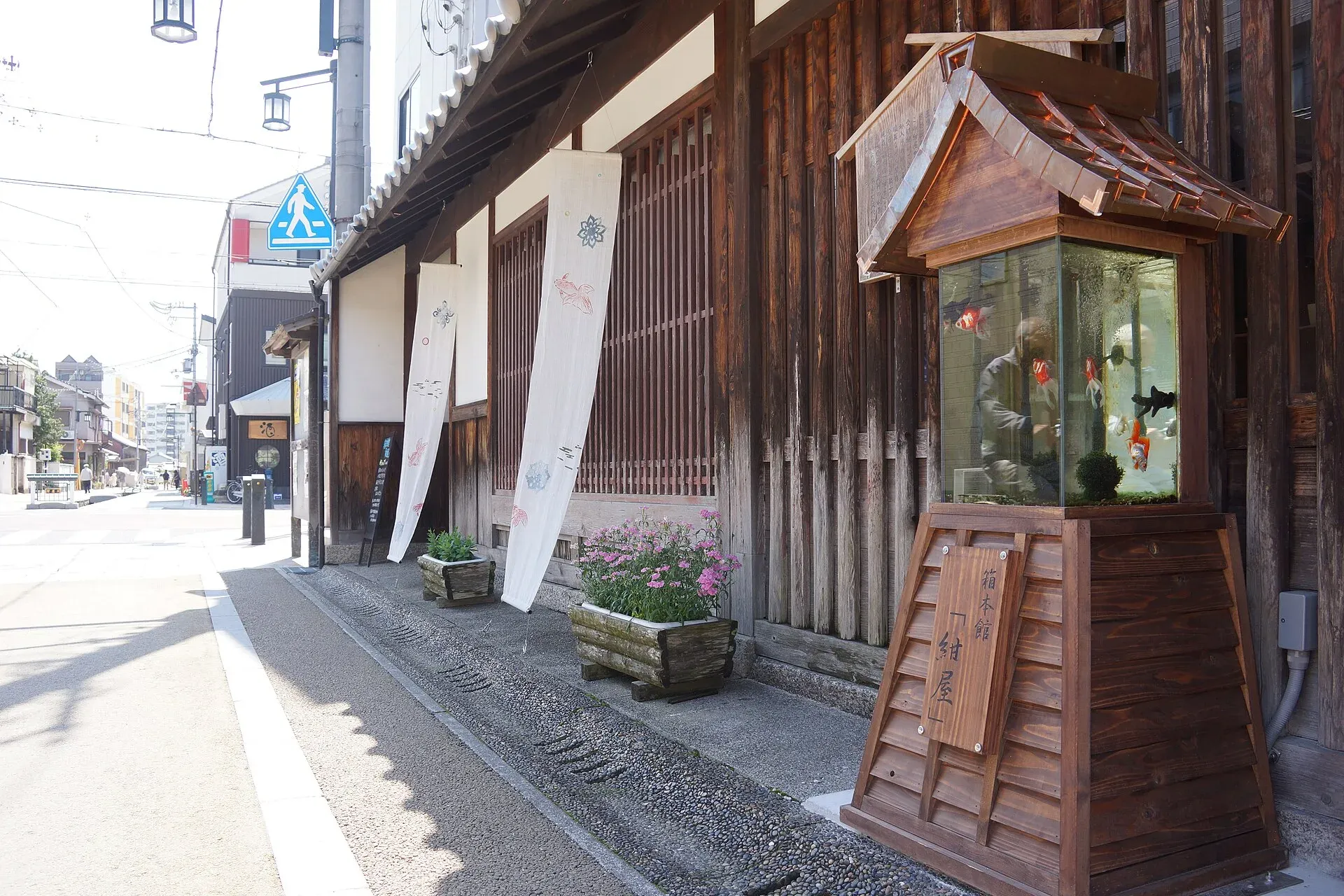
Yanagimachi is Yamatokoriyama’s everyday shopping street, with kimono shops, a watchmaker, a bank and a fishmonger among its members. Along its shopfronts it keeps more than 200 goldfish in tanks for anyone walking past, and a stamp book that can only be stamped while each shop is open.
Goldfish at the shopfronts
Yamatokoriyama has been known for raising goldfish since the Edo period, and the street has put that where you can see it from the pavement. You will find tanks at the fronts of the shops, around twenty varieties in all, and each tank holds a different kind. The street is one straight road from north to south, and it calls itself a “town aquarium”: walk it and you meet the tanks one after another.
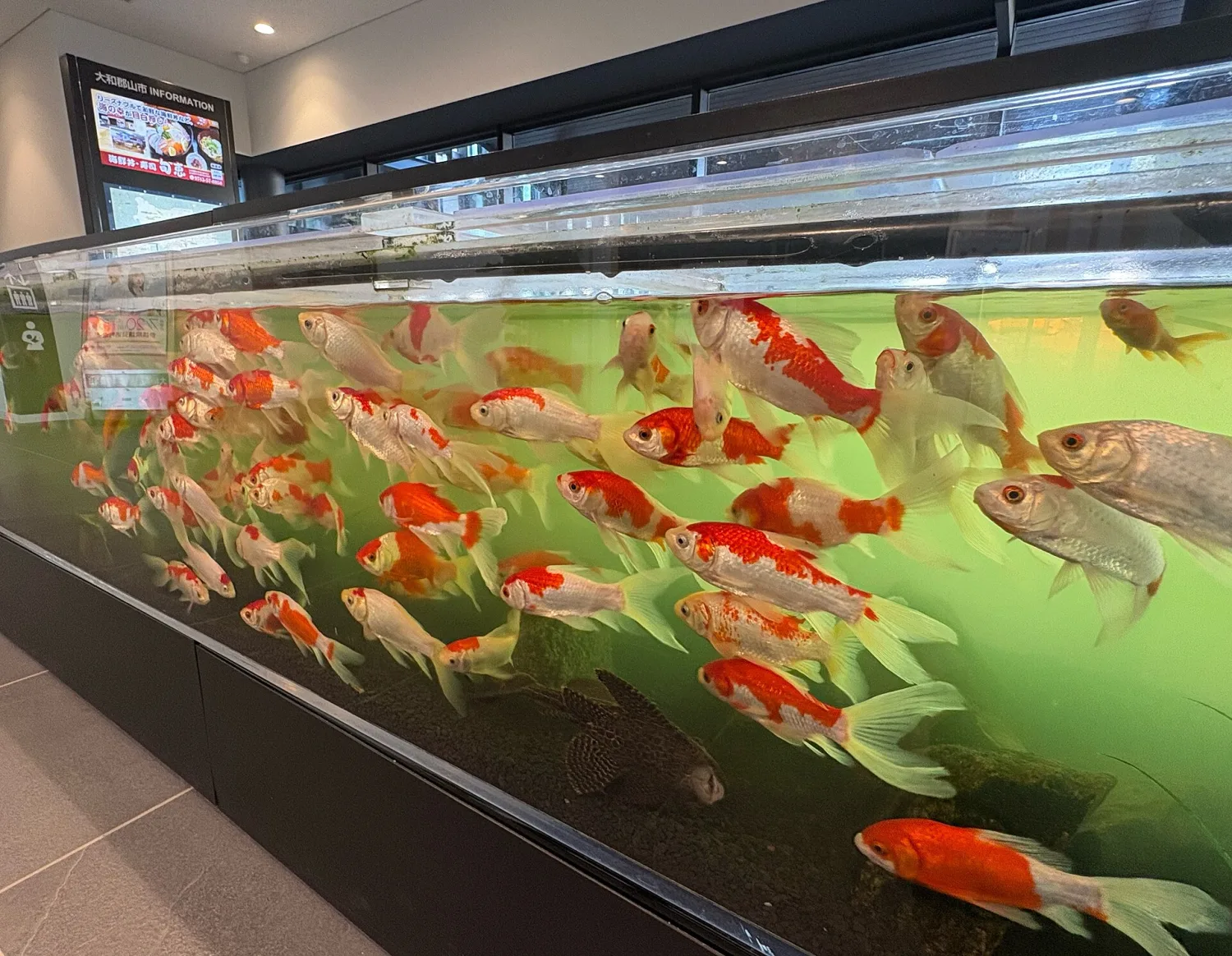
If you want a reason to walk the whole street, buy the stamp book, Gokingyo-chō, a play on the books of temple seals that visitors carry around Japan. Fifteen illustrators drew the stamps, one for each shop, and every design is a goldfish tied to that shop’s trade. The book costs 500 yen (600 yen for the two editions themed on Hidenaga), and the stamps themselves are free. Every shop in the street’s cooperative takes part, so a closed shutter becomes a blank page, and I love how plainly the street owns up to that: every shop keeps its own hours and days off, so it hopes you will come back more than once. Collect your stamps while the doors are open.
A sweets shop said to date from 1585
Begin at Honke Kikuya, in the first block of the street, across from City Hall. The shop is said to have been founded in 1585, at the same time that Toyotomi Hidenaga was building Koriyama Castle, and it still makes its best-known sweet, oshiro-no-kuchimochi, the “castle-gate rice cake,” the same way. There is a goldfish tank at its door.
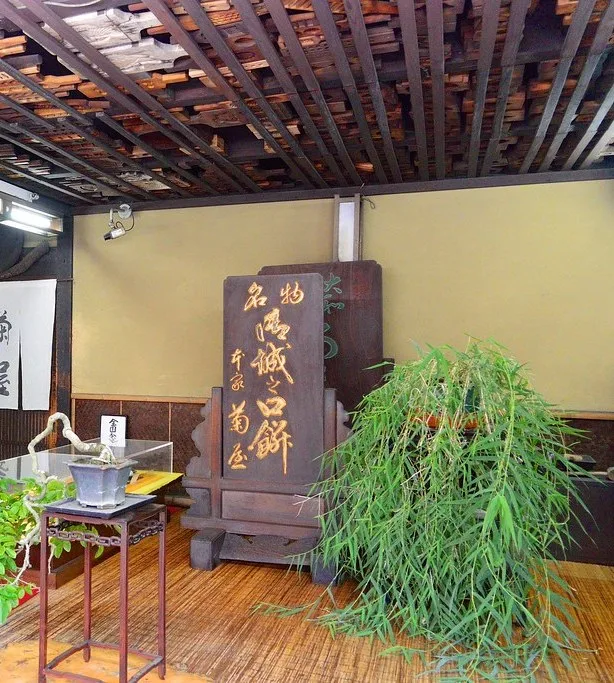
I find it touching that a shop said to go back to 1585 is also the one the street lists as open every day, 9:00 to 18:30; whatever else is shut, you can start here.
Coffee first, or the goldfish café
If you want coffee first, walk to K COFFEE in the fourth block, which roasts its own beans around a simple idea: coffee you can drink without sugar or milk. It is open 10:00 to 17:00, and closed on Wednesday and Thursday.
If you would rather sit among goldfish, choose Kingyo Café Hidamari instead, an old house turned café and designed so that there are goldfish wherever you look. It is known for its goldfish soda, and it serves lunch, tea and sweets as well, from 12:00 with last orders at 15:15. My own order of the day would be the roaster in the morning and the café in the middle of the afternoon, once the udon is behind you.
Lunch at the kelp shop
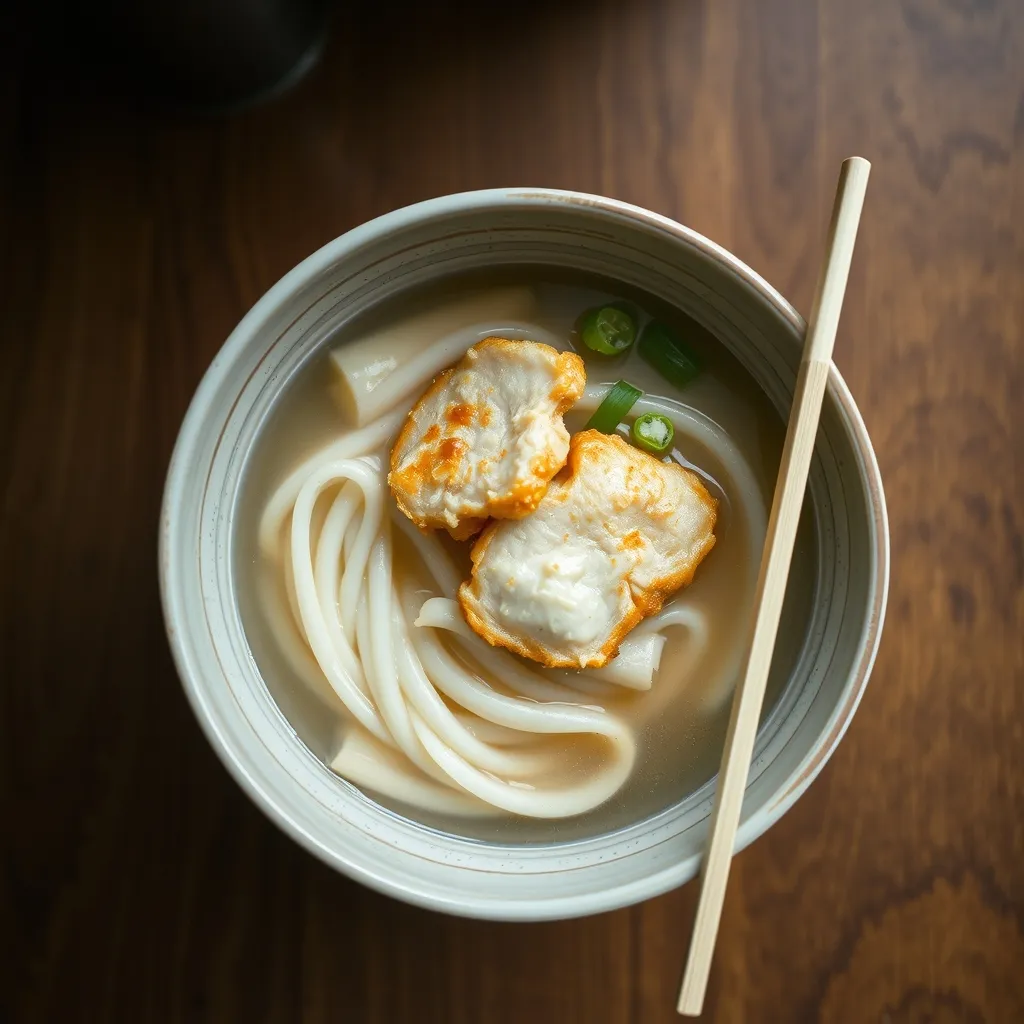
Get to Tsuruta Kombu-ten before 14:30: it is a kelp shop that serves udon, open only from 11:00. The udon comes hot or cold, and the shop’s own recommendation is the hot kake udon, in a broth made the way you would hope a kelp shop makes it. If you are hungry, add chicken tempura; the owner adds that the kombu udon with toasty burdock tempura is a popular bowl. It is closed on Wednesday, Thursday and Sunday.
Fill a bag for the brewery
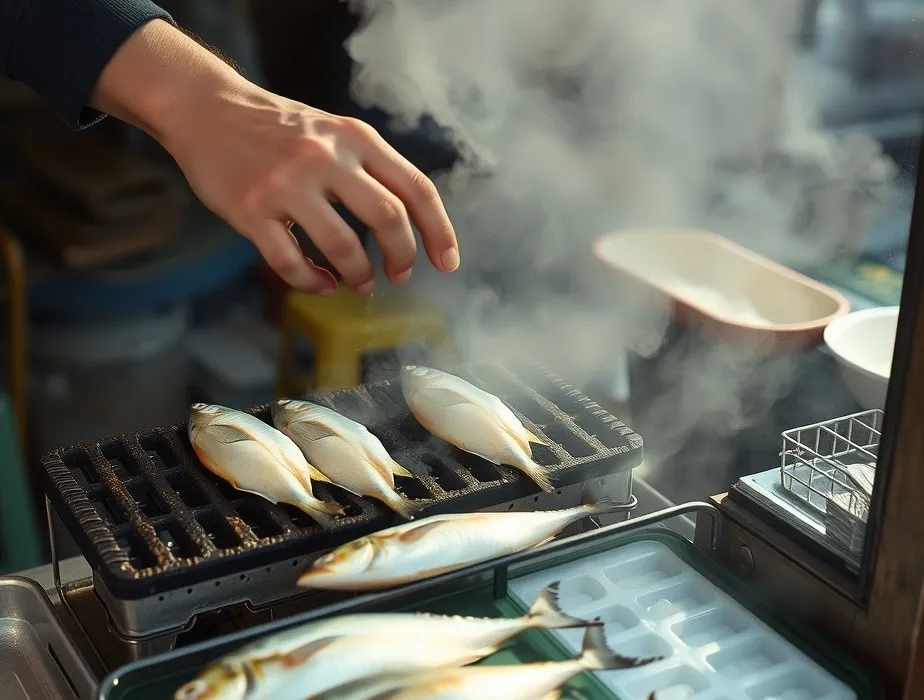
Narikoma, in the second block, has an open shopfront on the street and grills fish there every day. Its history is the part that stays with me: it began around 1887 as a sushi shop and became a fishmonger and caterer when the war left no rice for sushi, and its name is borrowed from the kabuki actor Nakamura Ganjirō I, whose house name was Narikoma-ya, because the founder loved kabuki. Ask for something that goes well with sake; the shop invites exactly that question, and it cuts sashimi to order. It is open 9:30 to 18:30 and closed on Sundays and holidays.
Sakura Club, back in the first block, sells fresh vegetables and foods its staff pick, on weekdays only, 10:00 to 16:00. Buy there before you sit down to drink, because the 16:00 close is the one to watch.
The sake bar that serves no food
The sake itself is what I would come back for. Nakatani Shuzo’s Yanagimachi brewery opened in 2022 in the second block, brewing in vessels of under 100 liters and pressing almost every day, so new sake keeps arriving. The sake it pours is fresh enough to hold some of the gas from fermentation. The building was made to feel like an old brewery, with a ceiling open to the roof, old brewing tools, display panels like a small museum’s, and a garden.
It serves no food, on purpose. The brewery wants you to buy your snacks from the shops around it, or have them delivered, and bring them in, and it shows the nearby shops on a map inside. Of everything on this street, this is the rule I like best, because it makes a glass of sake the reason to go back out and buy grilled fish. You pay your way in with one glass of sake or one soft drink, 300 yen either way, and after that you can eat what you bought nearby. Downstairs are the counter, seats and the brewing area; upstairs there are tables and a large tatami room.
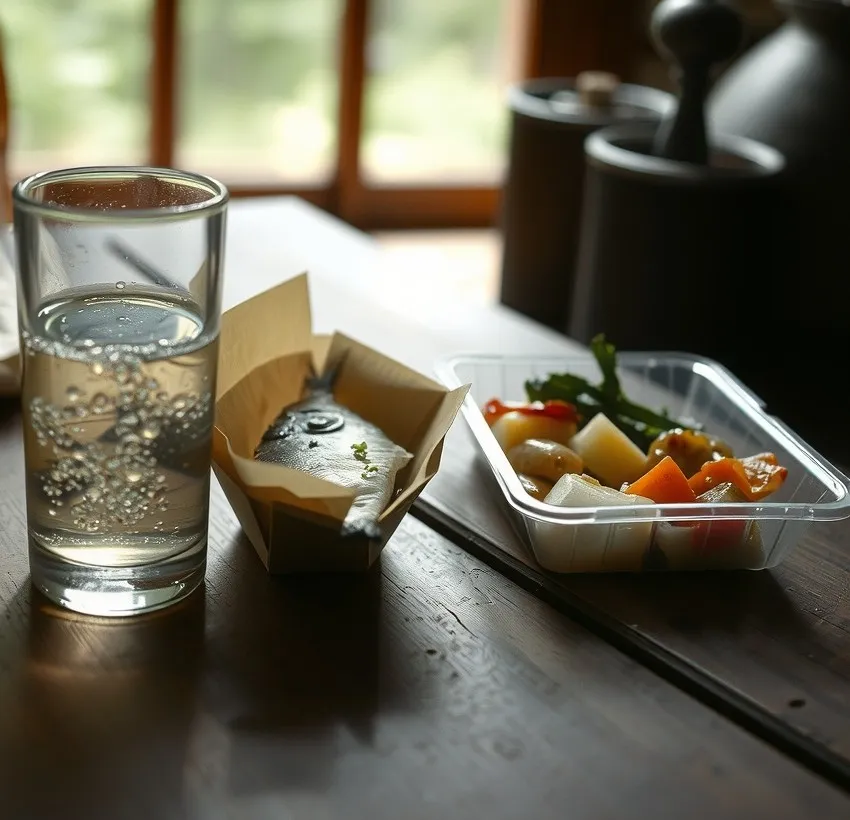
The bar is open Wednesday to Sunday, 13:30 to 19:00, with last entry at 18:30. The brewery could open here because Yamatokoriyama was named a special zone for sake-brewing experiences, and it also runs a brewing experience of its own. If you would rather brew than drink, book it in advance through the brewery’s online shop.
Why Friday, and not the weekend
Only Kikuya is open every day. Of the other six, the brewery bar is closed on Monday and Tuesday, the udon shop and the roaster on Wednesday and Thursday, the vegetable shop on Saturday, and on Sunday the fishmonger, the vegetable shop and the udon shop are all closed. That leaves Friday as the one day of the week when the bag, the bowl and the glass all line up.
On a public holiday both the fishmonger and the vegetable shop close, so a holiday Friday loses two of the seven.
Before you go
| Getting there | Kintetsu Koriyama Station. The street’s map puts it 2–3 minutes’ walk from the station; the brewery says it is 5 minutes |
| Honke Kikuya | 9:00–18:30, open every day (street directory; the shop’s own website gives the same hours) |
| K COFFEE | 10:00–17:00, closed Wednesday and Thursday |
| Tsuruta Kombu-ten | 11:00–14:30, closed Wednesday, Thursday and Sunday |
| Kingyo Café Hidamari | 12:00–16:00 (last order 15:15), closed Monday and Tuesday |
| Narikoma | 9:30–18:30, closed Sundays and public holidays |
| Sakura Club | Weekdays 10:00–16:00, closed Saturday, Sunday and public holidays |
| Nakatani Shuzo Yanagimachi Brewery | Wednesday–Sunday 13:30–19:00, last entry 18:30. Admission is one glass of sake or a soft drink, 300 yen. No food is served; bring snacks bought nearby |
| Gokingyo-chō stamp book | 500 yen; Hidenaga editions 600 yen. Stamps are free and can be collected only during each shop’s hours |
Checked 26 September 2026. Small shops change their hours; if one stop matters to you, check that shop before you go.
What I would do on a Friday in Koriyama
I would buy a castle-gate rice cake at Kikuya when it opens, drink the roaster’s coffee without sugar or milk, which is what it is roasted for, and be at the kelp shop well before it closes at 14:30.
Then I would stop at the fishmonger for whatever was on the grill, pick something up at Sakura Club before four, and carry the bag to the brewery, where 300 yen buys a glass of sake pressed in the same building and a table for the fish from the shop down the street.
We have not visited Yanagimachi or its shops for this guide. The facts here come from the official sources below, checked on 26 September 2026.
- Koriyama Yanagimachi Shopping Street Cooperative — each shop’s hours, days off and description, the goldfish tanks and the Edo-period goldfish farming, the stamp book and its prices: yanagimachi-st.jp/shops/, yanagimachi-st.jp/kingyo-street/, yanagimachi-st.jp/gokingyo/
- Honke Kikuya — the main shop’s hours and its location across from City Hall: kikuya.co.jp
- K COFFEE — hours and days off: kcoffee.jp
- Nakatani Shuzo — the Yanagimachi brewery, its sake and building, the no-food rule and admission, the floors, hours, the special zone and the brewing experience: sake-asaka.co.jp/campany-profile/nakatani-yanagimachibrewery
- Photographs: the lantern-shaped goldfish tank by Yamato Koriyama City Office (CC BY-SA 4.0) and goldfish at Yamatokoriyama City Hall by Popbeans (CC BY-SA 4.0), from Wikimedia Commons; inside Honke Kikuya by hayano (CC BY 2.0, cropped), from Flickr. The coffee, udon, grill and sake pictures are AI-generated illustrations, not photographs of these shops
More in Nara
- Nara Park — For the deer, and open ground with no gate
- Todai-ji — For the Great Buddha, and a temple that says which parts are old
- Kasuga Taisha — For the shrine of 3,000 lanterns, and its free early grounds
- Where to Stay — For choosing where to sleep around the deer: inside the park, on its edge or in Naramachi
Explore other areas
- Hokkaido — Sapporo
- Kanto — Hakone
- Hokuriku — Kanazawa
- Koshin-Tokai — Fuji Five Lakes
- Kansai — Nara · You are here
- Chugoku — Hiroshima
- Kyushu — Fukuoka
- Okinawa — Naha
