Nara / Guide
Todai-ji Temple, Nara: Which Parts Are Actually from the Nara Period
Todai-ji東大寺
Five numbers for one statue
The Great Buddha at Todai-ji stands 14.98 metres tall.
It also stands 15 metres tall. And 16. And 18. One article gives 21.9 metres near the top of the page and 15 further down the same page.
I wanted one number. I read fifteen English guides and the temple’s own pages, and came away with five.
The temple publishes two figures and stops there: 14.98 metres for the seated figure, 3.05 for the lotus pedestal beneath it. Add them and you get 18.03. Round the first and you get 15. Both of those turn up in the list above, which means most of the disagreement comes down to where a writer decided to stop measuring.
That much is harmless. A rounding difference does not change what you are standing in front of.
Then I got to the head.
One statue, five heights
What the temple publishes, and what fifteen English-language guides do with it.
| Where it appears | The height | What is being measured |
|---|---|---|
| Todai-ji, official | 14.98 m | the seated figure |
| Todai-ji, official | 3.05 m | the lotus pedestal |
| Most English guides | 15 m | the figure, rounded |
| One English guide | 18 m | figure and pedestal added together |
| One English guide | 16 m | not stated |
| One English guide | 21.9 m | not stated — the same article also gives 15 m |
One of the fifteen guides says which part of the statue it is measuring.
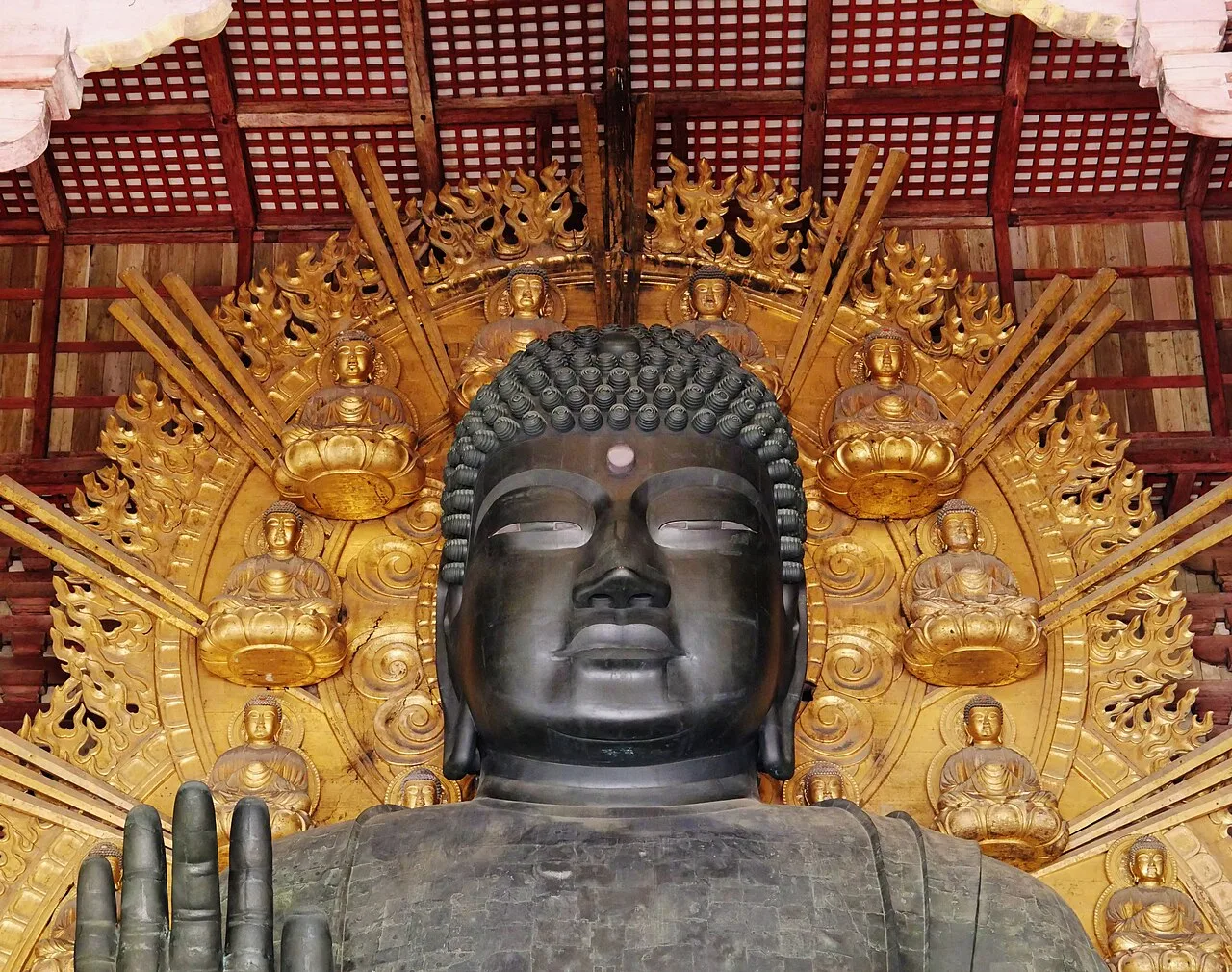
An old temple record counts 966 curls of hair on the Great Buddha. A laser survey run by the University of Tokyo counts 492.
Rounding will not close that. Nothing about it looks like arithmetic.
The temple’s own FAQ prints both numbers, then explains them in a single line — and the line rearranged what I thought I had been looking at.
The head is not the Nara-period head. Someone made it again in the Edo period.
Two counts, two heads
| The count | Where it comes from | Which head |
|---|---|---|
| 966 | an old temple record, the Todaiji Yoroku | the Nara-period head |
| 492 | a laser survey by the Institute of Industrial Science, University of Tokyo | the head standing now — 483 in place, 9 fallen |
None of the fifteen English guides gives either number.
Which left me with a question I could not shake. If the most photographed head in Japan turns out to be eleven centuries younger than the temple around it, what else on these grounds carries a date nobody mentions?
Quite a lot. And the order that shows it to you has nothing to do with walking.
It runs on the clock.
7:30 — the newest thing opens first
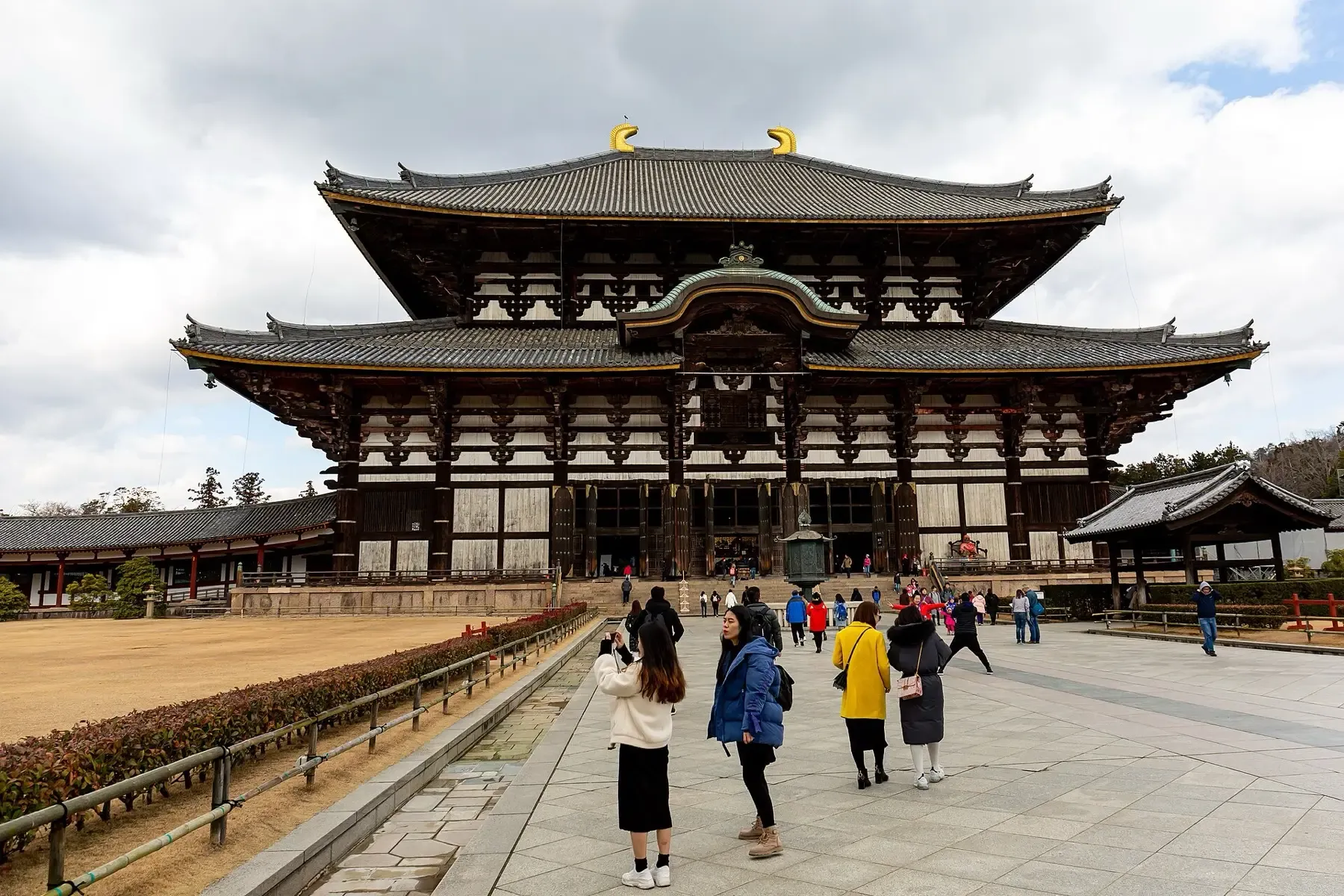
The Great Buddha Hall opens at half past seven from April to October, an hour later in winter, and takes no day off except for special events and emergencies.
It opens first. It also went up later than the gate, later than the older half of Hokke-do, and later than the platform inside Kaidan-in.
Fire took the hall twice, and the one standing now went up in the early eighteenth century — third in the line, and still among the largest wooden buildings anywhere, which is the half of the story that travels. The half that stays home sits in the same official paragraph: the rebuilding ran short of money, eleven bays became seven, and the hall came back narrower than the one it replaced. Height and depth kept the old dimensions. The width did not.
So the building people call the largest lost about four-tenths of its width on the way to becoming it.
Eleven of the fifteen English guides mention that rebuilding. It travels well — a clean fact, easy to repeat. What none of them does is carry it indoors, where the same thing happened to the statue.
The Great Buddha counts as a National Treasure of the Nara period. Its head came out of an Edo workshop. That one sentence settles the argument between 966 and 492: one count belongs to the head that burned, the other to the head that replaced it. Neither counter slipped.
The great south gate moves the date a third time. Its builders finished it at the start of the thirteenth century, and a team under Unkei and Kaikei carved its two guardian figures in sixty-nine days. A storm had already taken the gate that stood there when the temple was founded, four centuries earlier.
Kamakura, Edo, Edo. Three of the first things anyone meets on these grounds, and the eighth century built none of them.
8:30 — the hall that changes period halfway
Hokke-do opens an hour after the Great Buddha Hall and keeps those hours all year.
I had it filed as one more hall until I read the temple’s page on it twice.
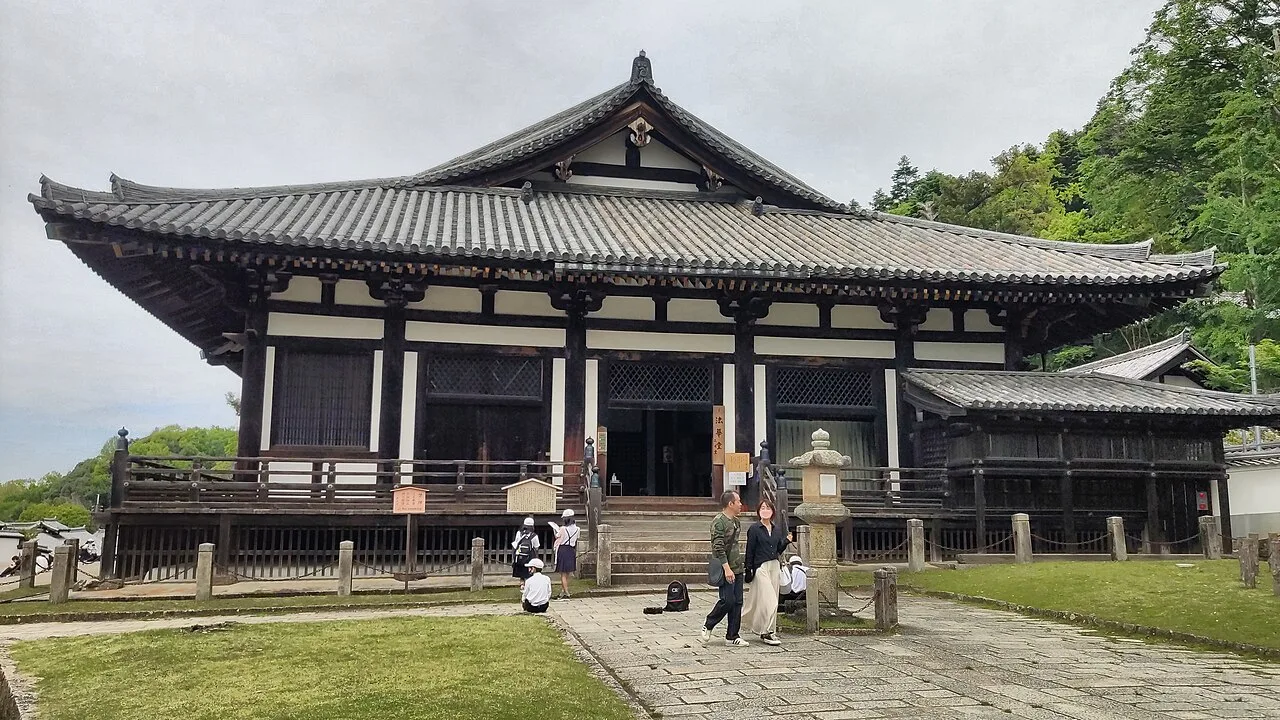
Two buildings stand here. They became one.
The rear section dates, the temple thinks, from the Tenpyo era — which makes it the oldest building at Todai-ji. The monk Chogen put up the front section in 1199, during the Kamakura rebuilding. Someone then joined the two together.
So the seam I had been tracing between buildings runs straight through the middle of this one. Walk in, and you cross from the twelfth century into the eighth without leaving the room.
Twelve of the fifteen English guides name this hall. Three mention the Nara-period sculpture inside. None mentions that the hall arrived in two pieces.
Some of that sculpture has left the building, and you would rather learn that now than at the door.
What remains counts as Nara-period National Treasures — the Fukukenjaku Kannon at the centre, the four guardian kings, the two Kongo Rikishi, Bonten and Taishakuten — and every one of them has occupied this hall since before the front half of it existed, which reads like a mistake and happens to be accurate. Two of the most reproduced figures, though, no longer belong on that list. The Shukongojin waits behind a screen and comes out one day a year, in December. The Nikko and Gakko bodhisattvas left the building altogether for earthquake protection, and now stand on permanent display in the Todai-ji Museum.
If those two brought you here, go there instead.
8:30 — new box, old contents
Kaidan-in opens at the same hour and repeats the pattern in miniature. An Edo rebuilding on the outside. Four Nara-period National Treasures, the guardian kings, at the corners of the platform within.
Then the oldest thing in the room turns out to be the floor.
That ordination platform travelled here from a spot in front of the Great Buddha Hall, where the Chinese monk Ganjin conducted the first ordination in Japan in the middle of the eighth century. Fire has taken the hall built over it twice since. The platform stayed.
The one with no opening time
By now I had stopped expecting to find anything that outlived its own building.
Then I looked up the gate.
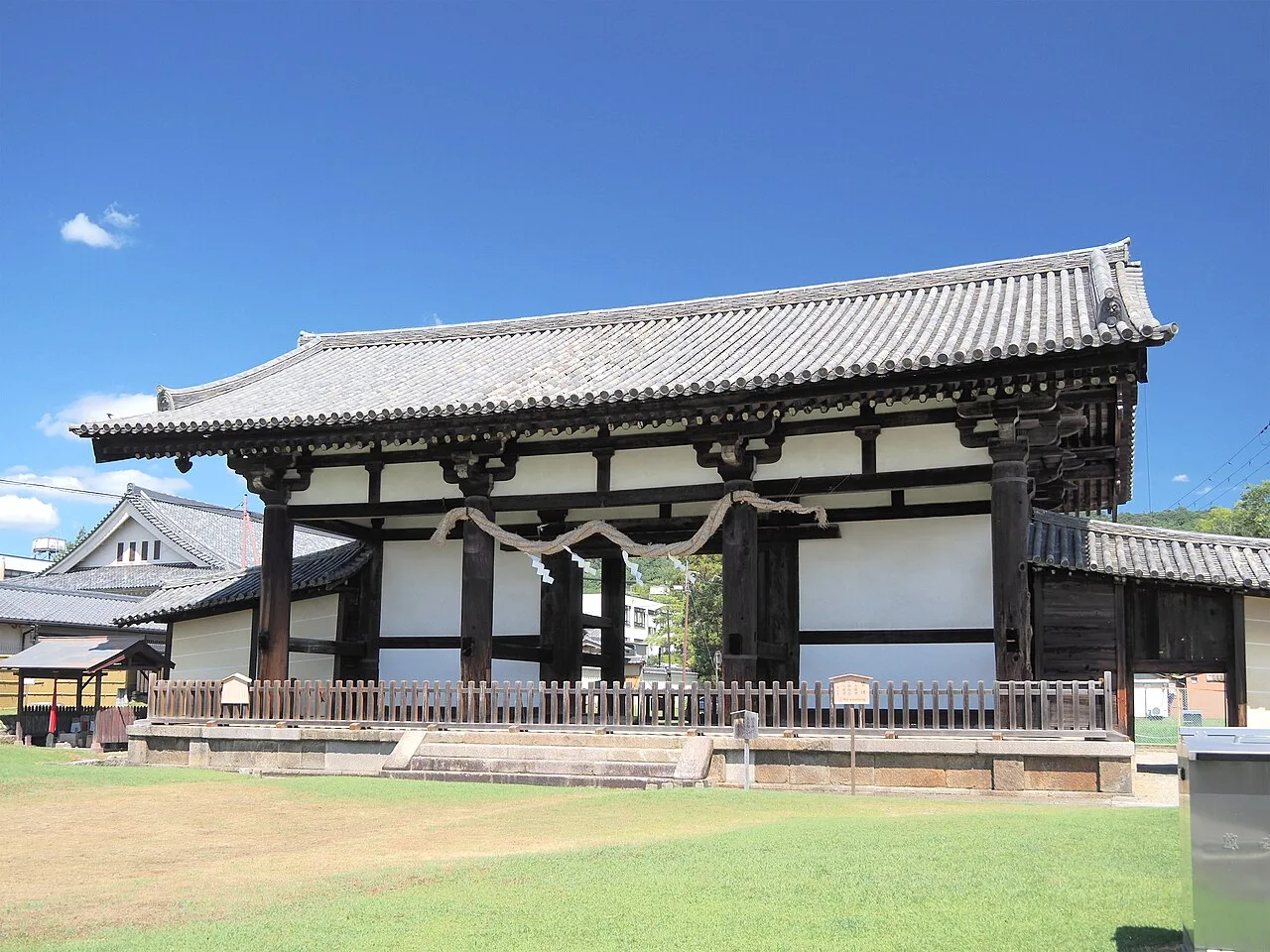
Tegaimon remains the only structure from which the Tenpyo-era buildings of Todai-ji can be imagined. Not one of a handful of survivors. The only one.
It charges nothing, closes for no season, and keeps no hours.
The wording tightens here, and that turns out to matter. The oldest hall is “thought” to date from the Tenpyo era. The curls come in “estimated” at 492. The gate gets no such cushion.
Fifteen English guides. Not one names it.
The clock runs forward. The buildings run backward.
| Opens | What opens | When it was built |
|---|---|---|
| 7:30 (8:00 in winter) | Great Buddha Hall | early 18th century — the third hall on the site |
| — | └ the Great Buddha’s head | Edo period |
| — | └ the Great Buddha | Nara period — National Treasure |
| 8:30 | Hokke-do, front section | 1199 |
| 8:30 | Hokke-do, rear section | thought to be Tenpyo era — the oldest building here |
| 8:30 | Kaidan-in | Edo rebuilding, with Nara-period guardian kings inside |
| no hours | Tegaimon | Tenpyo era — the only structure left from it |
The first hall to open holds the newest thing on the grounds. The one thing with no opening time holds the oldest.
What I would do with one morning
Add one hall to a morning that already includes the Great Buddha, and I would take Hokke-do. Kaidan-in can wait.
Both hold Nara-period sculpture, so the sculpture cannot decide it. The buildings can. Kaidan-in repeats what you have already seen in the Great Buddha Hall — old figures, newer box — at a smaller scale. Hokke-do does something no other building here does, and holds two periods at once.
I would also stop planning the morning around the Great Buddha Hall. It earns the early hour, and it shows the scale of the original project better than anything else still standing. But an Edo hall holding an Edo head answers a question about the eighteenth century at least as often as one about the eighth.
Before you go
Two ways in from the stations, and no car park inside the grounds.
Getting there, and when things open
| On foot | about twenty minutes east from Kintetsu Nara station, along Noborioji-cho |
| By bus | city loop from JR Nara or Kintetsu Nara, off at Todaiji Daibutsuden / Kasuga Taisha-mae, then five minutes |
| Car park | none inside the grounds; the temple points to paid car parks nearby |
| Great Buddha Hall | 7:30 (April–October) / 8:00 (November–March) |
| Hokke-do, Kaidan-in | 8:30, all year |
| Todai-ji Museum | 9:30, closing 17:30 in summer and 17:00 in winter |
Apart from special events and emergencies, none of these close for the year.
One thing the temple withholds: how long to stay. I went looking for an official route of so many hours, or a suggested half-day, and found none. The hours go up on the page. The rest it leaves to you.
The deer outside run on their own set of official numbers, which disagree with each other too, and their own rule about what you may hand them. We went through both in our guide to the deer of Nara Park.
What the numbers are for
Every figure here that refuses to settle turns out to describe a different object.
The height runs 14.98 or 18.03, depending on whether the pedestal counts. The curls run 966 or 492, depending on which head. The hall ranks among the largest wooden buildings in the world and lost four-tenths of its width, both at once.
None of that amounts to an error, and the temple prints most of it itself. The answers differ because the questions do, and the questions differ because the objects do.
Give me one stop beyond the Great Buddha Hall and I would spend it at the gate. Tegaimon carries the one claim on these grounds that the temple makes without softening it, and you can reach it without waiting for anything to open.