Fukuoka / Guide
Missed Yamakasa? One Float Stays Up Most of the Year at Kushida Shrine. Start Your Hakata Walk There
Hakata Old Town博多旧市街
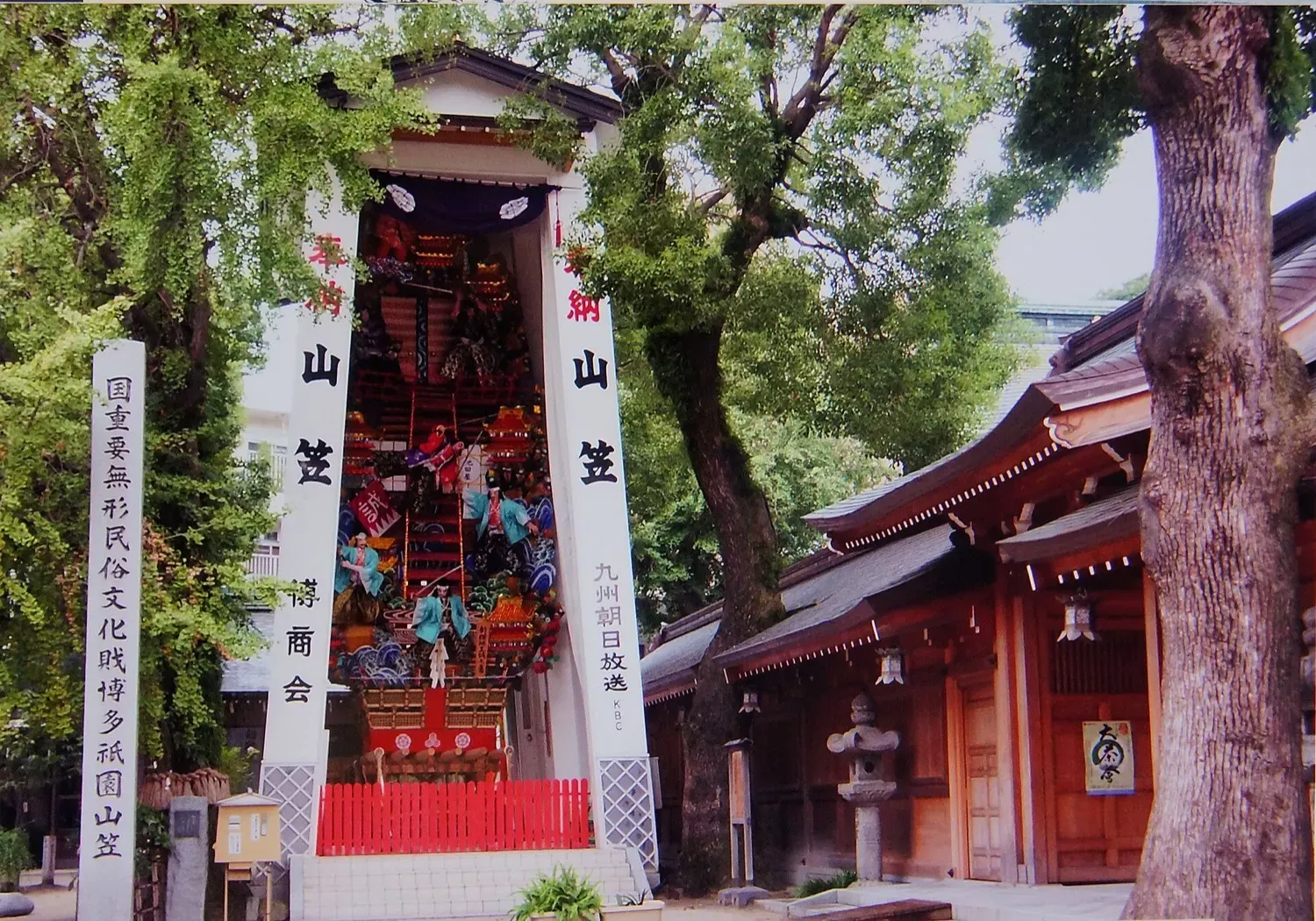
If you cannot be in Fukuoka for Hakata Gion Yamakasa in July, go to Kushida Shrine: one of its decorated floats stands in the shrine grounds through most of the year. The rule is that the floats are taken apart when the festival ends, and this one is the exception, kept up, in the festival association’s words, for visitors who come outside the festival. That reason is what won me over: the one float left standing is there for people whose trip falls in another month.
From there, the old town of Hakata is a short walk of shrines and temples, and I would end it at Joten-ji, the temple where a stone marks the place the festival is said to have begun.
Start under the float at Kushida Shrine
The display float, a kazariyama, is a tableau built to be looked at rather than carried, and the ones made today stand more than ten meters tall. The festival association says this one draws people taking souvenir photos every day, so picture yourself among them, phone in hand, looking up at a float that rises well above the shrine path.
Come in June and you will miss it: the city tourism site says it is on display all year except that month.
Under your feet runs the seido, the course the carried floats take through the shrine during the festival, and you are free to walk it. Think of the race morning in July, the shrine packed and the floats coming through at a run, and then walk the same line at your own pace.
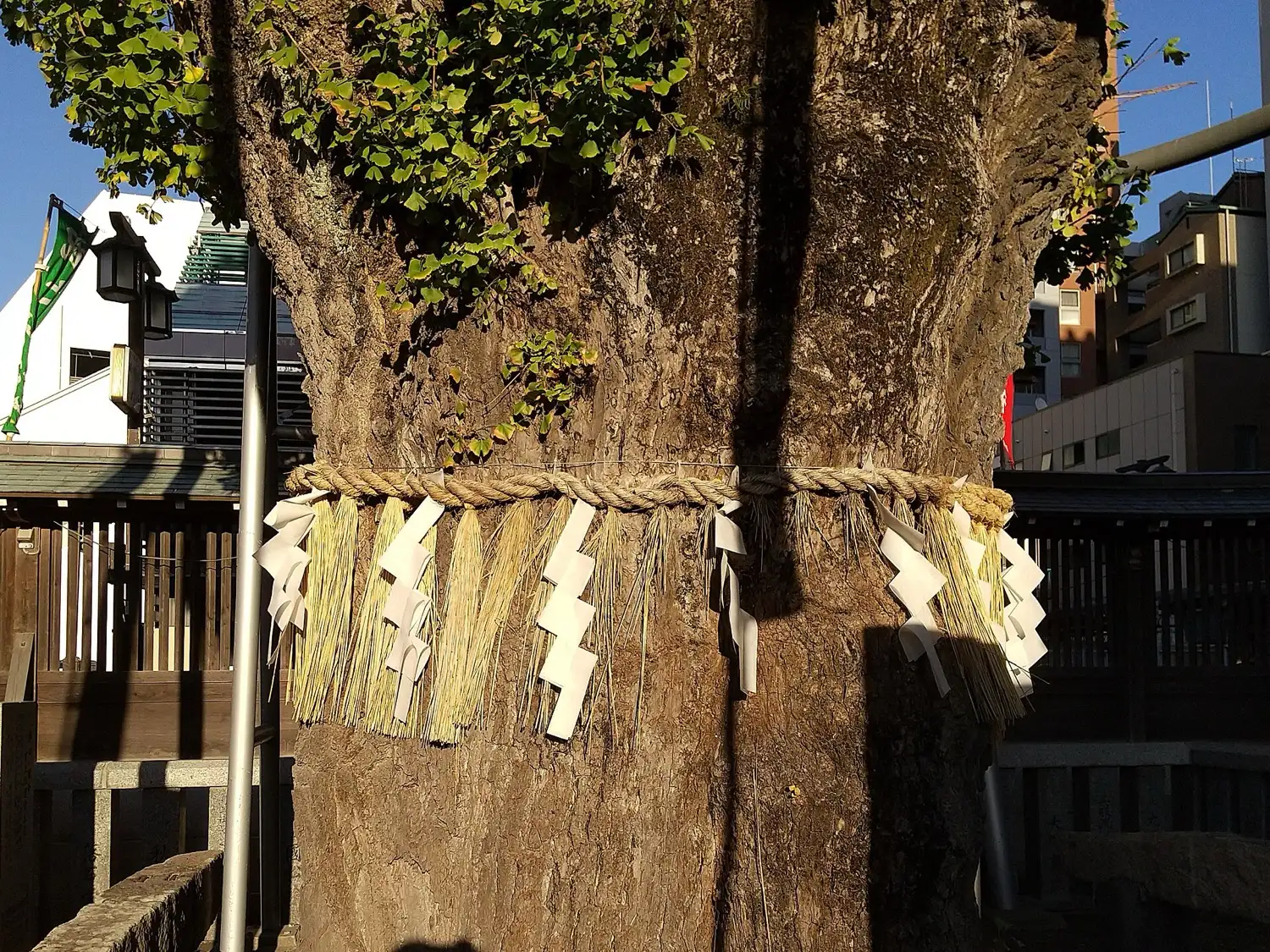
Before you leave, find the sacred ginkgo, said to be a thousand years old, with old anchor stones, known as Mongol anchor stones, at its foot. The shrine’s small Hakata History Museum shows folding screens and a large votive painting of the race, but you cannot take photos inside, and it closes on Mondays, or the next day when Monday is a holiday.
Cross the street for the festival on film
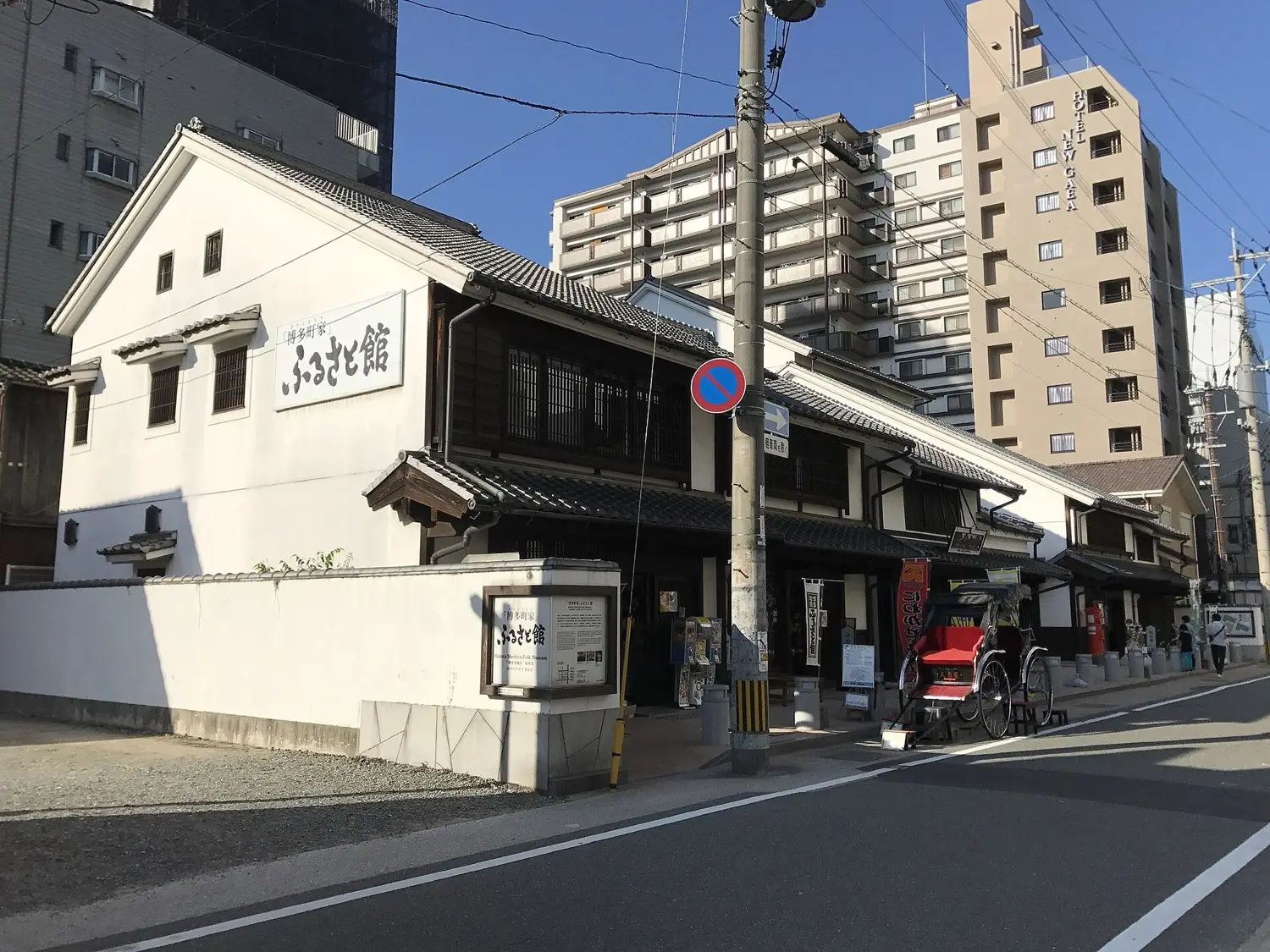
If June has taken the float away, or you simply want to see the race in motion, cross to the Hakata Machiya Folk Museum, opposite the shrine. Its exhibition hall runs a film of Yamakasa and has local crafts made in front of you upstairs, and the main house, the home and workshop of a Hakata textile maker from the Meiji era, was moved here and rebuilt. An English walking tour leaves from here in the late morning; it costs money and has only a few places, so check the museum’s page.
Walk to the Buddha at Tocho-ji
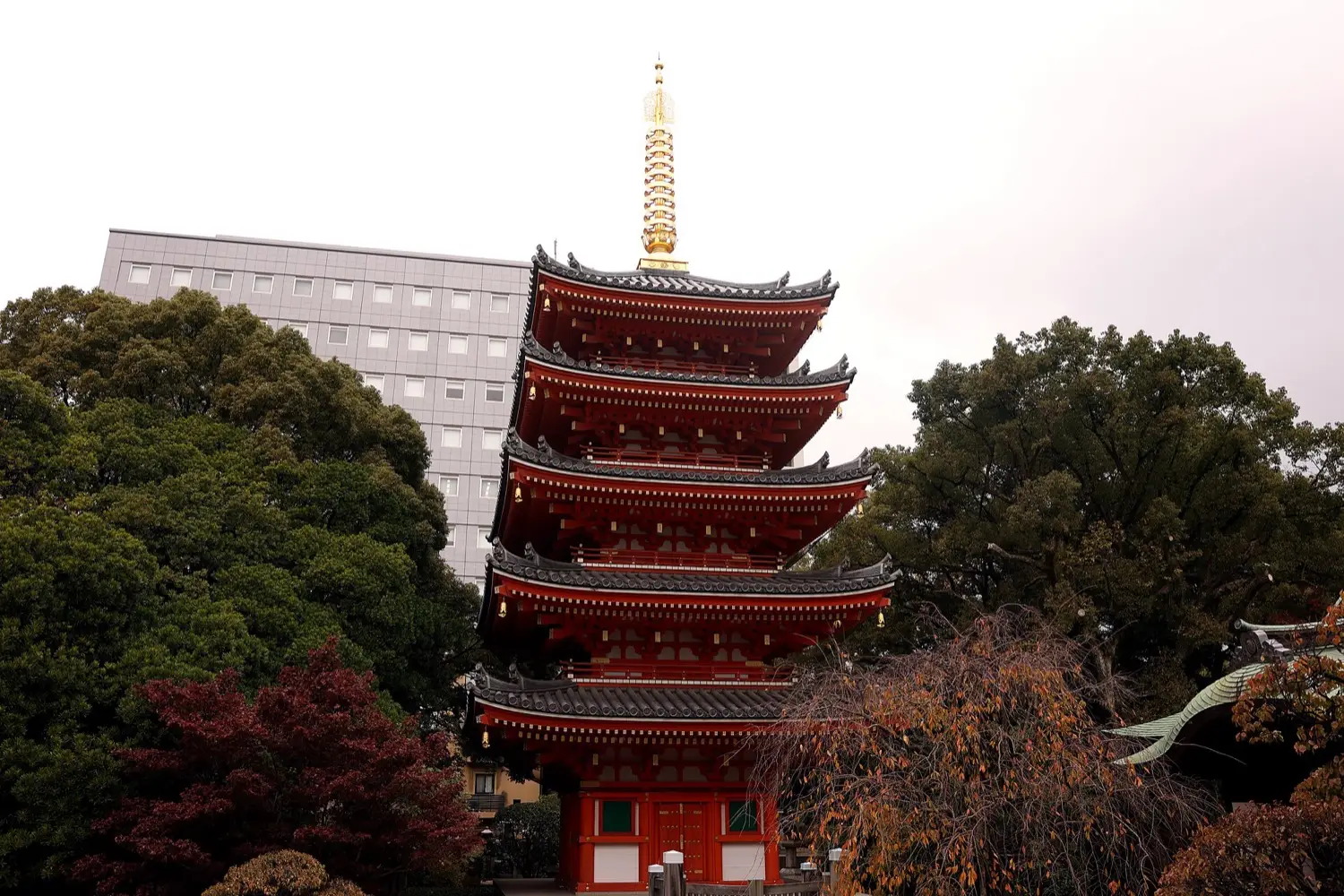
Walk on toward Gion Station and you reach Tocho-ji, home of the Fukuoka Daibutsu. The city tourism site describes it as the largest seated wooden Buddha in Japan, carved from Japanese cypress and over ten meters tall, with rows of small Buddhas on the wall behind it. I had pictured a bronze giant sitting out in the weather, and learning that this one is wood, sitting under a roof, made it the one stop I would not cut. If you only have time for one temple on the way, make it this one instead of Shofuku-ji.
Walk Shofuku-ji’s grounds, but don’t expect to go inside
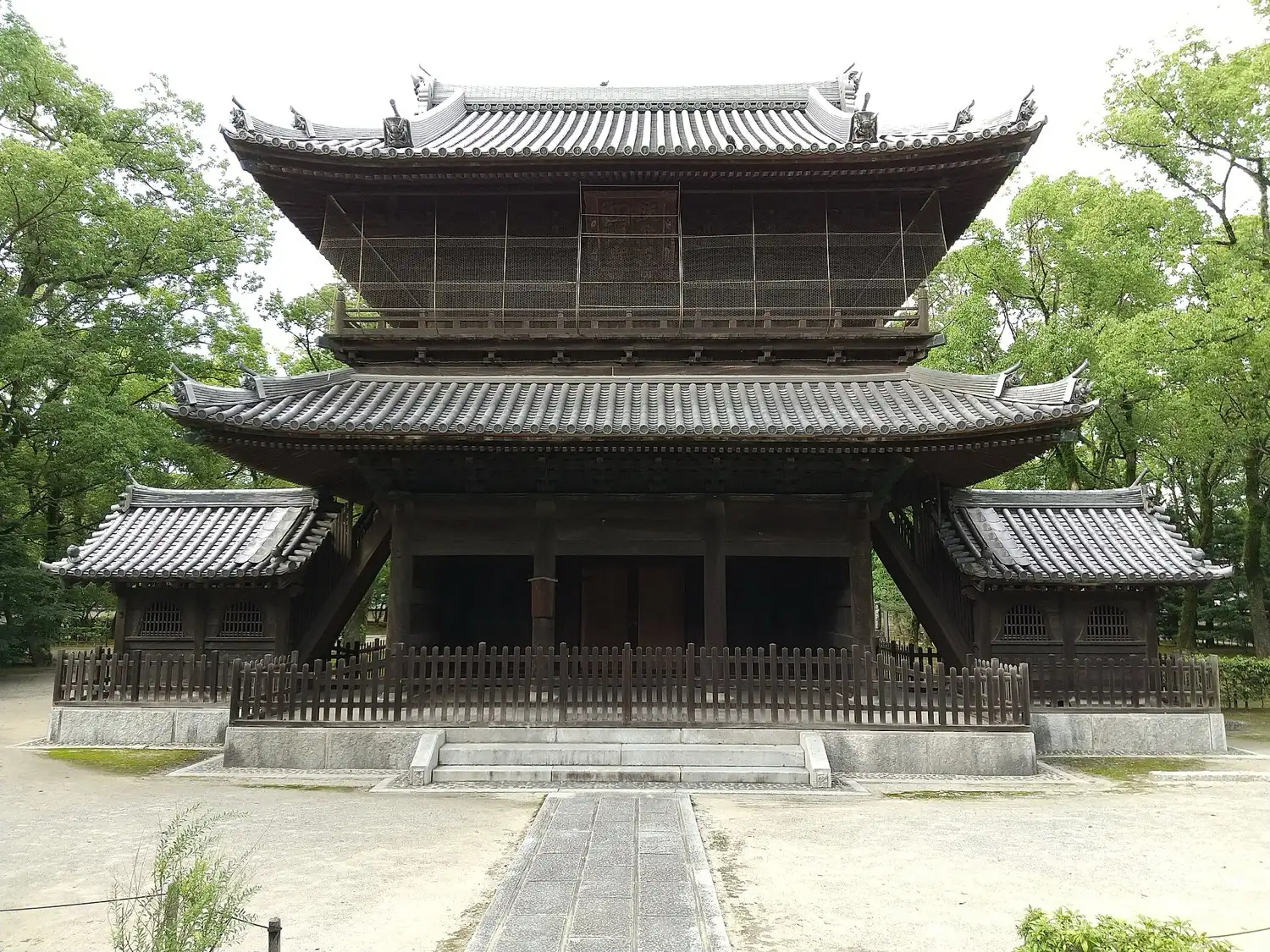
A few minutes away on foot stands Shofuku-ji, called Japan’s first Zen temple, and the temple itself says it generally does not open for visits. Rather than looking for a way inside, walk its grounds quietly and look for the Hakata-bei, an earthen wall with stones and roof tiles from the ruins of a burned Hakata pressed into it. Of everything on this walk, a wall made from the town’s own rubble is the detail I most want to see.
End where the festival is said to have begun: Joten-ji
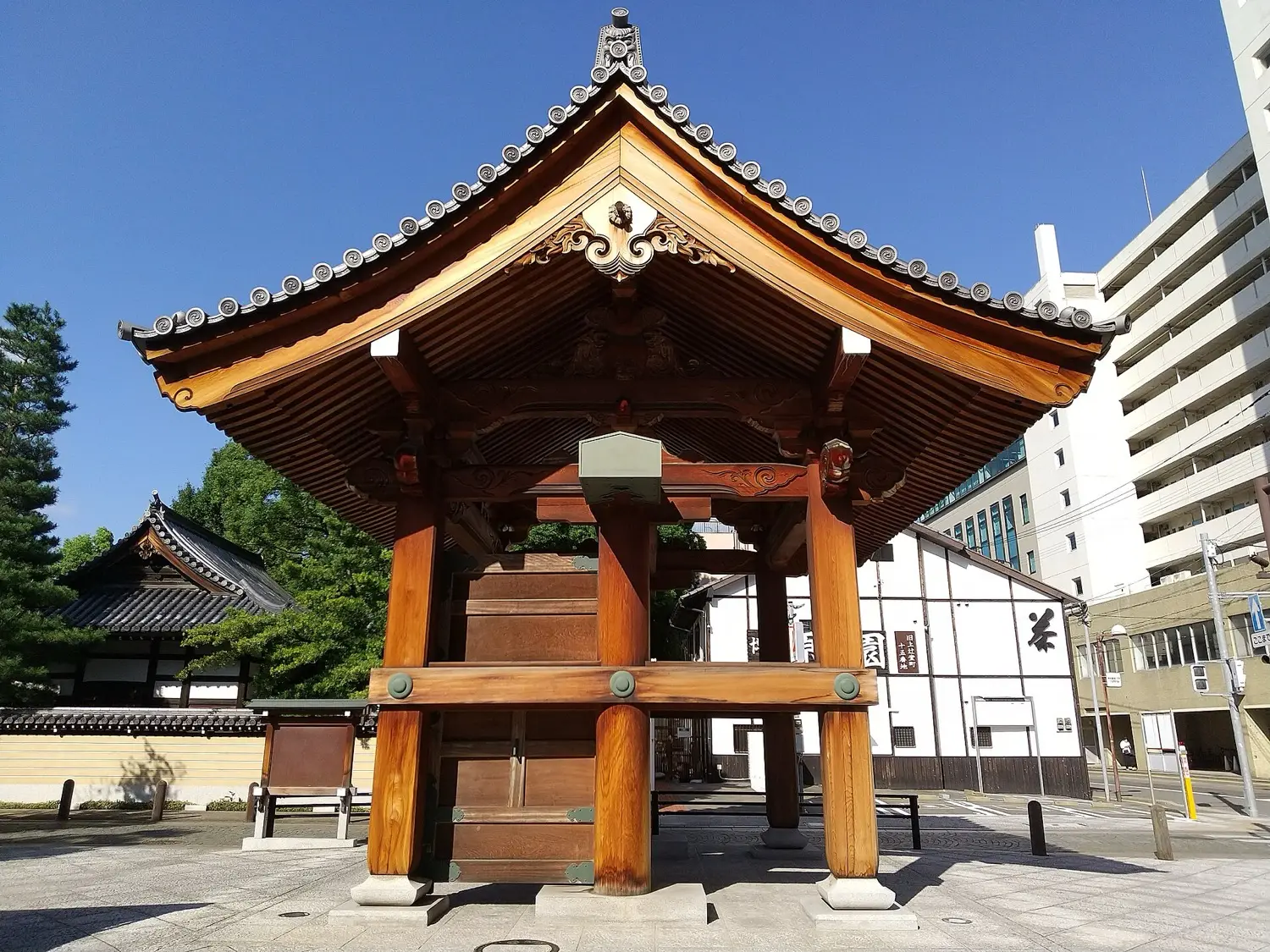
On the way to Joten-ji, pass under the Hakata Sennen-mon, a new wooden gate built to welcome visitors into the temple quarter. Its doors are made from a camphor tree said to be a thousand years old, given by Dazaifu Tenmangu. Look up as you go through: the carved panel above the doors is cut in the pattern of Hakata weaving.
Inside Joten-ji are two stones I would not leave without seeing. One marks the place where udon and soba are said to have begun in Japan: the temple’s founding monk, Shoichi Kokushi, came back from Song China with ways of making noodles and sweets. The other marks the birthplace of Hakata Yamakasa. One account traces Yamakasa to a plague in Hakata, when the monk was carried through the streets on a platform, praying. The floats still pass in front of the temple gate, and that legend is said to be the reason.
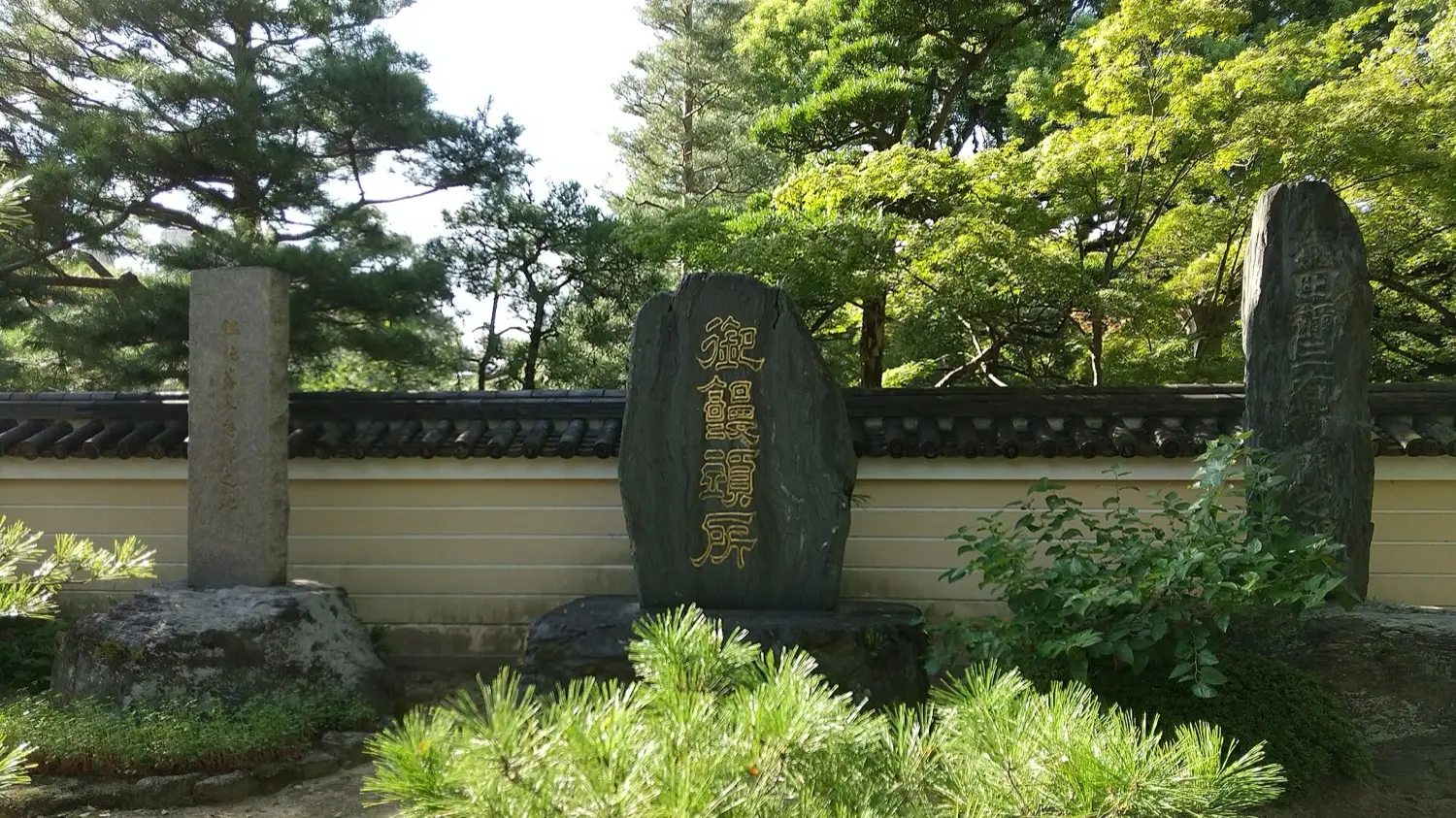
That second stone is why I would end the walk here. You start under a float that stays up for visitors who missed July, and you finish at the spot where, the story goes, the first one was carried.
Before you go
| Kushida Shrine | Main hall 4:00–22:00. No regular closing days. 2 minutes from Kushida Jinja-mae Station; 6 minutes from Gion or Nakasu-Kawabata Station. The display float is up all year except June |
| Hakata History Museum (inside Kushida Shrine) | 10:00–16:30 on the city’s Japanese tourism page; its English page says 17:00. Neither says which is the last entry, so aim to arrive before 16:00. Closed Monday (the next day if Monday is a holiday). Adults 300 yen. No photos inside. No cards |
| Hakata Machiya Folk Museum | 10:00–18:00 (last entry 17:30); July to September, 9:30–17:30 (last entry 17:00), per the museum’s own notice and the city tourism site. Closed the fourth Monday of the month (the next weekday if that is a holiday); the city tourism site also lists 29–31 December. Adults 200 yen; elementary and junior high school children free. English walking tour 11:00–12:00, 2,200 yen per person, booking required, six places |
| Tocho-ji | 1 minute from Gion Station. Opening hours and fees are not listed on the city’s tourism pages |
| Shofuku-ji | About 5 minutes from Gion Station. Generally not open for visits; walk the grounds quietly |
| Joten-ji and Hakata Sennen-mon | About 5 minutes from Gion Station. Opening hours and fees for Joten-ji are not listed on the city’s tourism pages |
| Hakata Gion Yamakasa | 1–15 July. The final race runs early on the morning of 15 July |
Checked 11 October 2026.
What I would do
I would come in the morning, stand under the float at Kushida, cross the street for the film, and then walk past the Daibutsu and Shofuku-ji’s gate to Joten-ji. I would finish at the Yamakasa stone, and, since udon is said to have started a few steps away, go and find a bowl.
We have not visited Hakata’s old town for this guide. The facts here come from the official sources below, checked on 11 October 2026.
- Hakata Gion Yamakasa Promotion Association — the Kushida Shrine float kept up all year for visitors, its height, the festival dates and the final race: hakatayamakasa.com/62547.html, hakatayamakasa.com/179090.html, hakatayamakasa.com/162358.html
- Yokanavi, Fukuoka City’s official tourism site — Kushida Shrine hours, the float on display except in June, the seido, the ginkgo and anchor stones; the Hakata History Museum; Tocho-ji and the Fukuoka Daibutsu; Shofuku-ji; Joten-ji and its two stones; the Hakata Sennen-mon; the Hakata Machiya Folk Museum’s July–September hours and year-end closing: yokanavi.com/hakataoldtown/, yokanavi.com/spots/26812, yokanavi.com/spots/26906, yokanavi.com/spots/26813, yokanavi.com/spots/26928, yokanavi.com/spots/26916, yokanavi.com/spots/26915, yokanavi.com/spots/64988
- Fukuoka City (Hakata Ward) — the ginkgo said to be a thousand years old: city.fukuoka.lg.jp/hakataku/t-shinko/luw/kushida.html
- Go Fukuoka (Fukuoka City’s English tourism site) — the Hakata History Museum’s hours in English: gofukuoka.jp/spots/detail/26813
- Shofuku-ji — not generally open for visits: shofukuji.or.jp
- Hakata Machiya Folk Museum — hours, fees, the film and the tours: hakatamachiya.com
- Photographs: the lead image of the Kushida Shrine float by lienyuan lee, July 2014 (CC BY 3.0); the ginkgo, the Sennen-mon, Shofuku-ji’s gate and the Joten-ji monuments by Hirho (CC BY-SA 4.0); the Hakata Machiya Folk Museum by そらみみ (Soramimi) (CC BY-SA 4.0); Tocho-ji’s pagoda by Gage Skidmore (CC BY-SA 4.0). All from Wikimedia Commons.
More in Fukuoka
- Yatai food stalls — For a night at the counter, and a reason to try Tenjin on a Sunday
- Dazaifu Tenmangu — For the old main hall, now open for prayer at the front again
- Yanagawa canal boats — For an hour on the moats under low bridges, and steamed eel at the end
- Kurume ramen and yakitori — For the bowl said to have started tonkotsu ramen at lunch, then yakitori after dark
Explore other areas
- Hokkaido — Sapporo
- Kanto — Hakone
- Hokuriku — Kanazawa
- Koshin-Tokai — Fuji Five Lakes
- Kansai — Nara
- Chugoku — Hiroshima
- Kyushu — Fukuoka · You are here
- Okinawa — Naha
