Fukuoka / Guide
A Yanagawa Boat Company Asks You Not to Open an Umbrella Under the Bridges. Choose Your Landing First
Yanagawa柳川
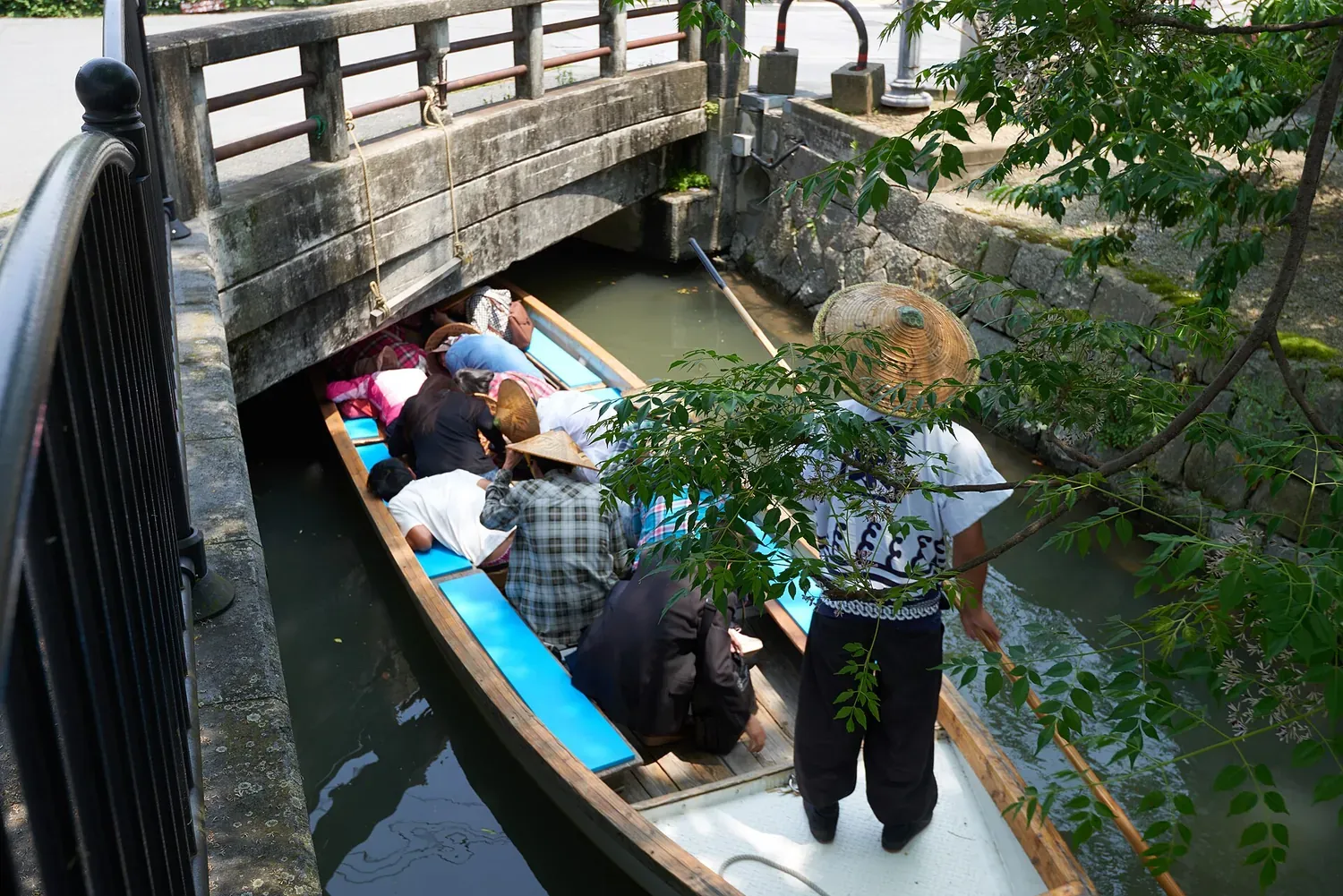
Yanagawa’s boats slide under bridges so low that one boat company asks you to keep your umbrella closed, because it would hit them. But there is no single boat ride here: seven companies push off from different landings, and one of them is a taxi ride from the station. So choose your landing before your boat, rather than booking the first ride you find. That one rule put the ride in front of me more clearly than any canal photo: an umbrella folded on your lap, and bridges passing overhead close enough to have hit it.
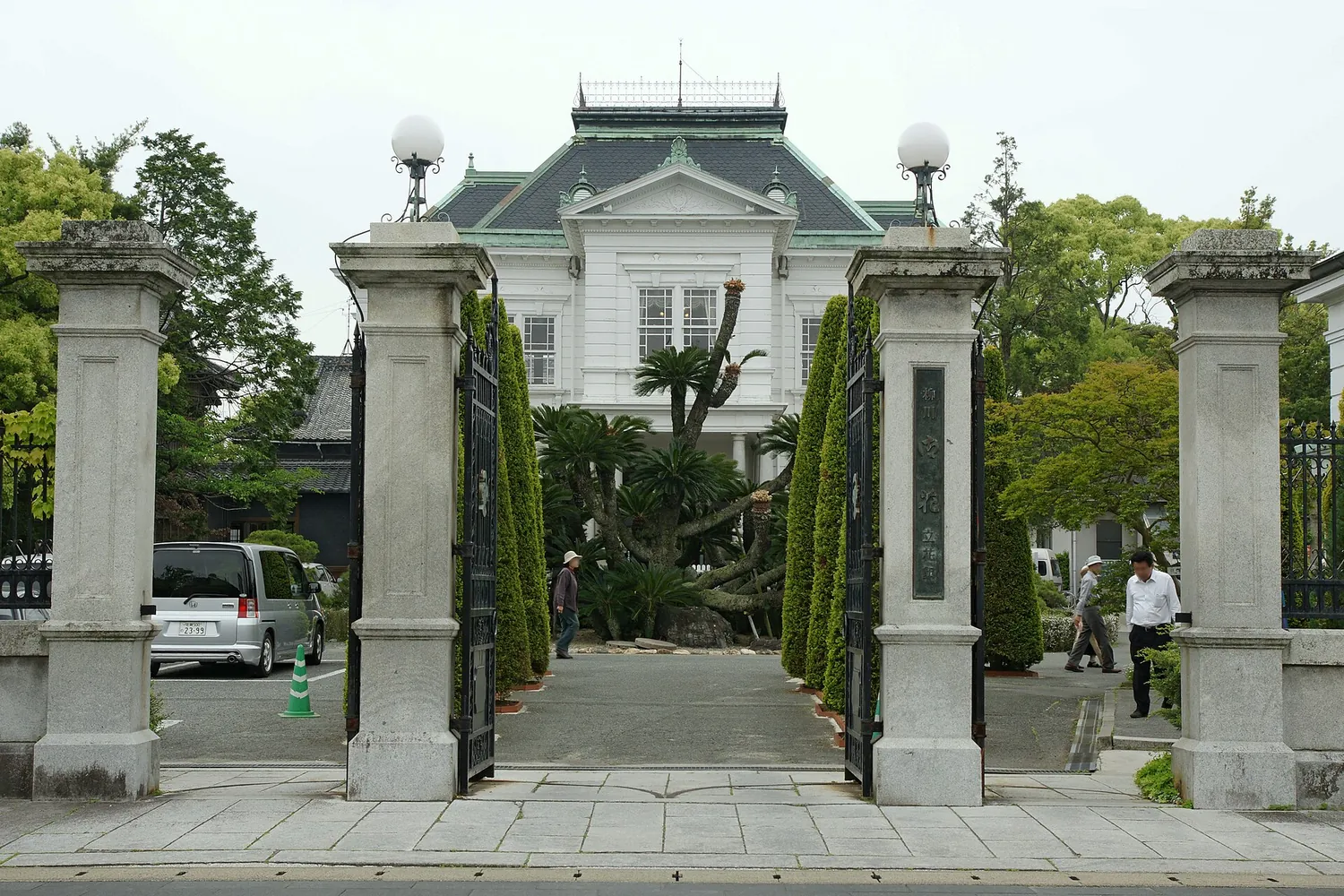
Yanagawa is an express train ride from Tenjin, and the classic ride ends at Ohana, the old residence of the Tachibana lords.
Pick a landing near the station
If you come by train, start from a landing a short walk from Nishitetsu Yanagawa Station. Several are, and two of the companies there run the classic one-way ride. Yanagawa Kanko Kaihatsu leaves from the Shogetsu landing, at the foot of the arched bridge of Mihashira Shrine, and Suigo Yanagawa Kanko leaves from the Shimohyakucho landing nearby. Both take you one way down to Ohana, and the ride is about an hour.
Hakushu Kanko’s landing, behind the Kamenoi Hotel Yanagawa, is the far one. The company itself says walking there from the station takes over forty minutes and suggests a taxi or bus instead. Its boats bring you back to where you started, and passengers can use the hotel’s free car park.
The other companies’ landings and courses differ again. Whichever you choose, check its own page for where to board; one company says people often turn up at another company’s landing by mistake.
Fold the umbrella and look up
The photo at the top of this page shows what the umbrella rule is about: passengers lying almost flat in a boat as it passes under a stone bridge.
You ride a donko-bune, pushed along by a boatman with a pole. The town’s tourism association talks about the boatman’s skill with the pole and the stories and songs on the way, and on some boats the songs are those of Kitahara Hakushu, the poet born in Yanagawa.
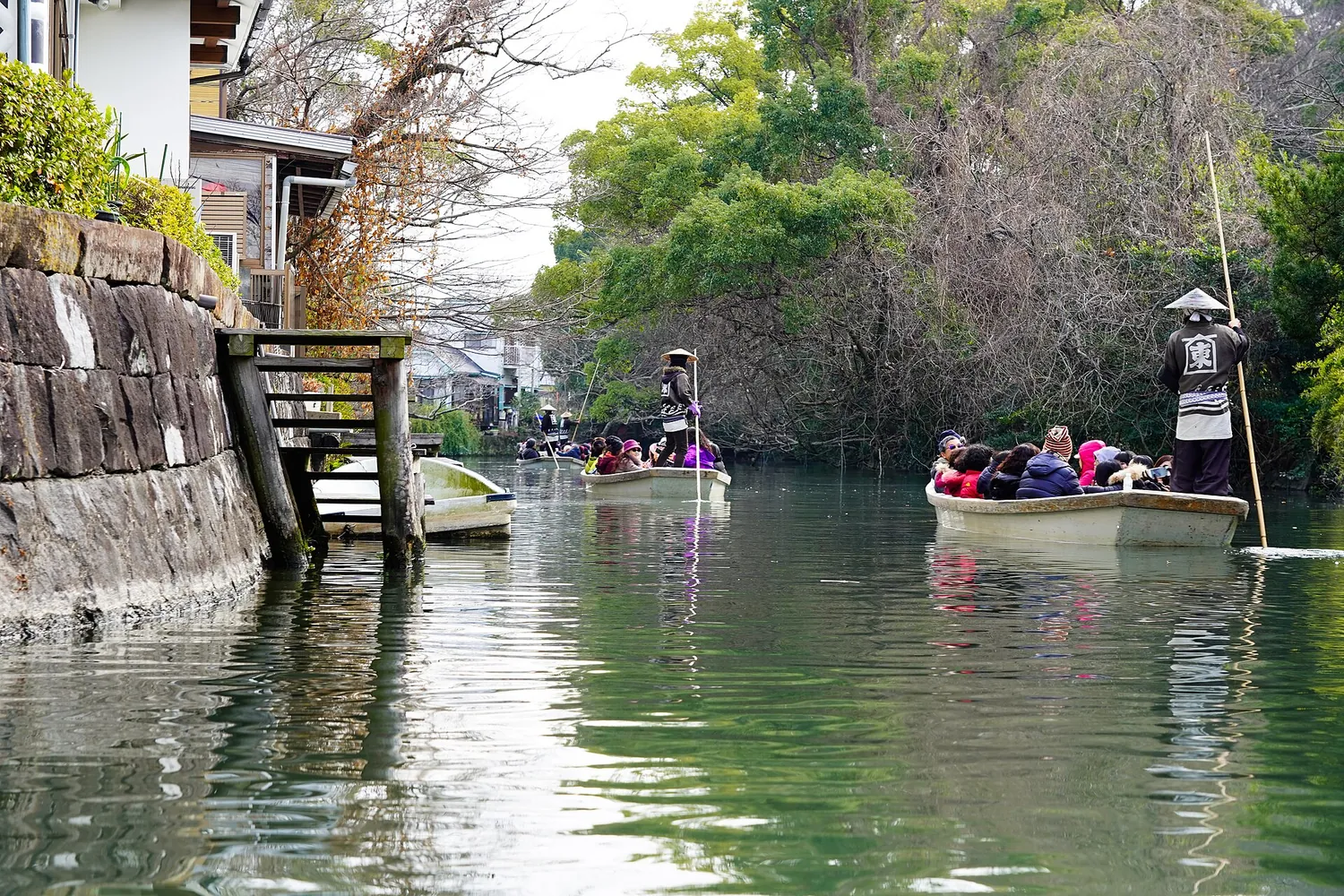
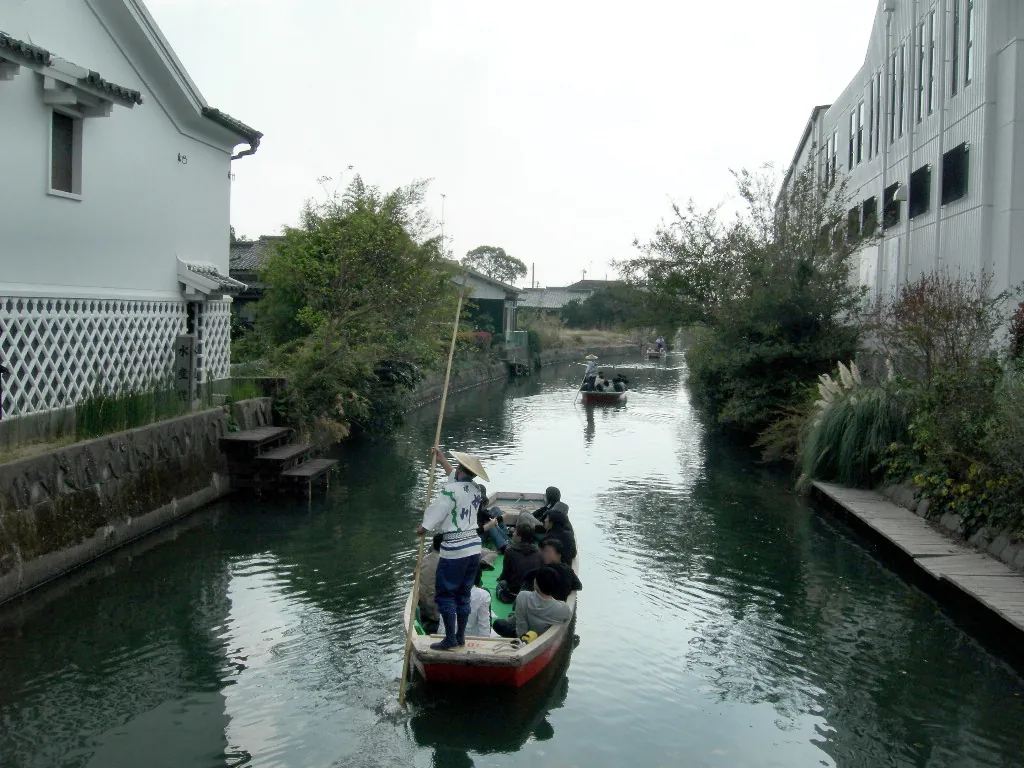
You pass red-brick storehouses and white namako walls as the boat follows the winding moat. Down at the water, below the street, you see the town from an angle you cannot get from the ground.
On a sunny day, wear a hat rather than holding up a parasol; some landings rent woven hats.
In winter, ride a kotatsu boat
Ride between December and February and your boat carries a kotatsu, a low table covered with a quilt and warmed from underneath, by a brazier on some boats and electrically on others. Ducks and other water birds come to the moat in winter. On a rainy day, though, one company says you may be put on a boat with ordinary seats instead, and heavy rain or a storm can stop the boats altogether, so check with your company that morning.
Avoid the middle of February if the full ride matters to you. For about ten days the water is let out of the moats, and instead of the one-way ride to Ohana the boats run short loops that bring you back where you started. Next year’s dates had not been posted when we checked.
Get off at Ohana and eat steamed eel
You get off the one-way boats near Ohana, where the Tachibana family’s gardens, including one called Shotoen, a Western-style house and a great hall all stand within an estate designated a national Place of Scenic Beauty. One ticket covers the garden, the great hall and the family’s museum, though on some days the great hall is closed to visitors for private use.
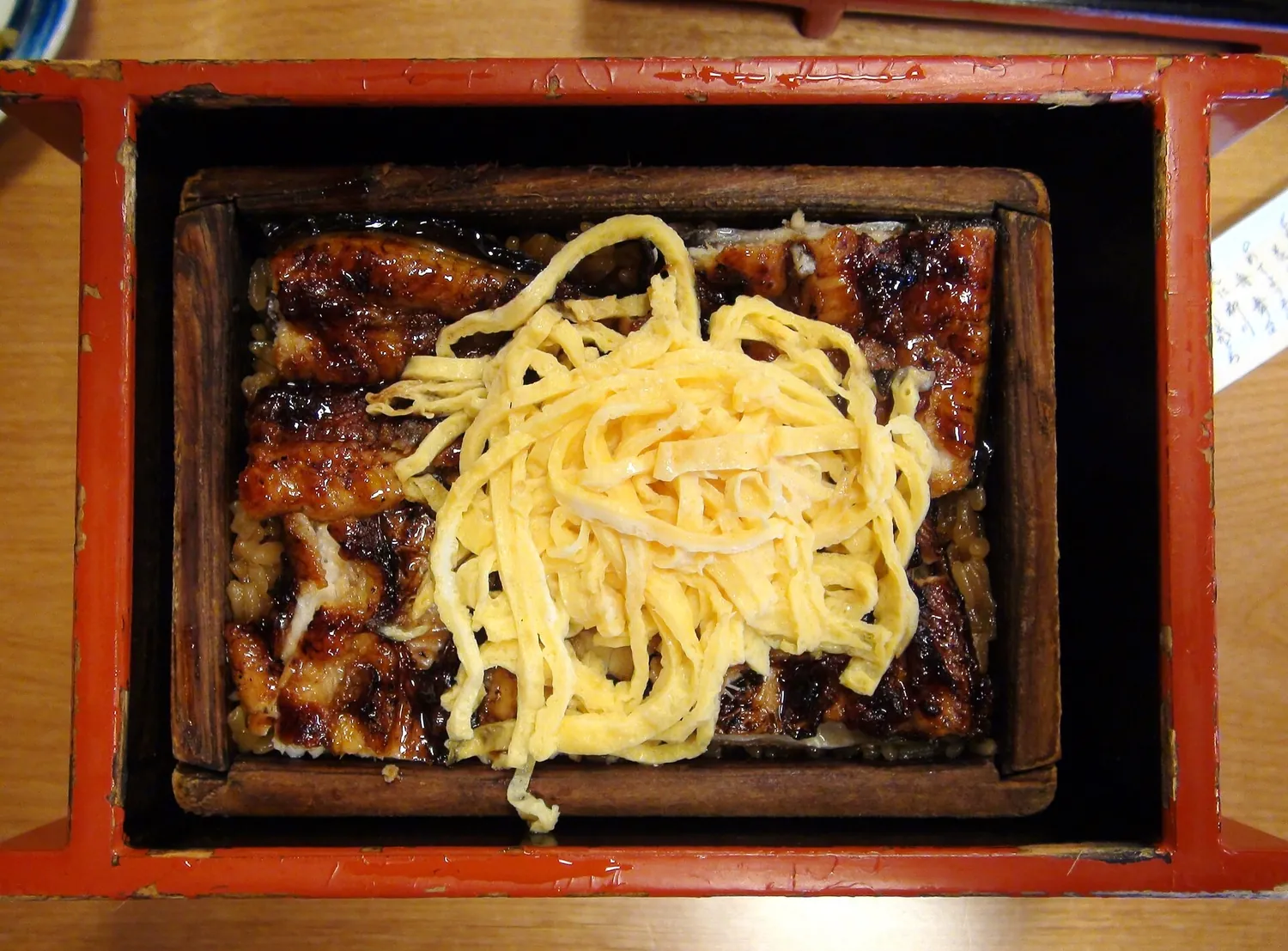
Then eat unagi no seiro-mushi, the dish Yanagawa is known for. Rice tossed in sauce is steamed, topped with grilled eel, steamed again and scattered with thin strips of egg. Japan’s Agency for Cultural Affairs recognizes it as a “100-year food”, a local dish that goes back to the Edo period. Eat it in town after the ride, so the meal gets its own time.
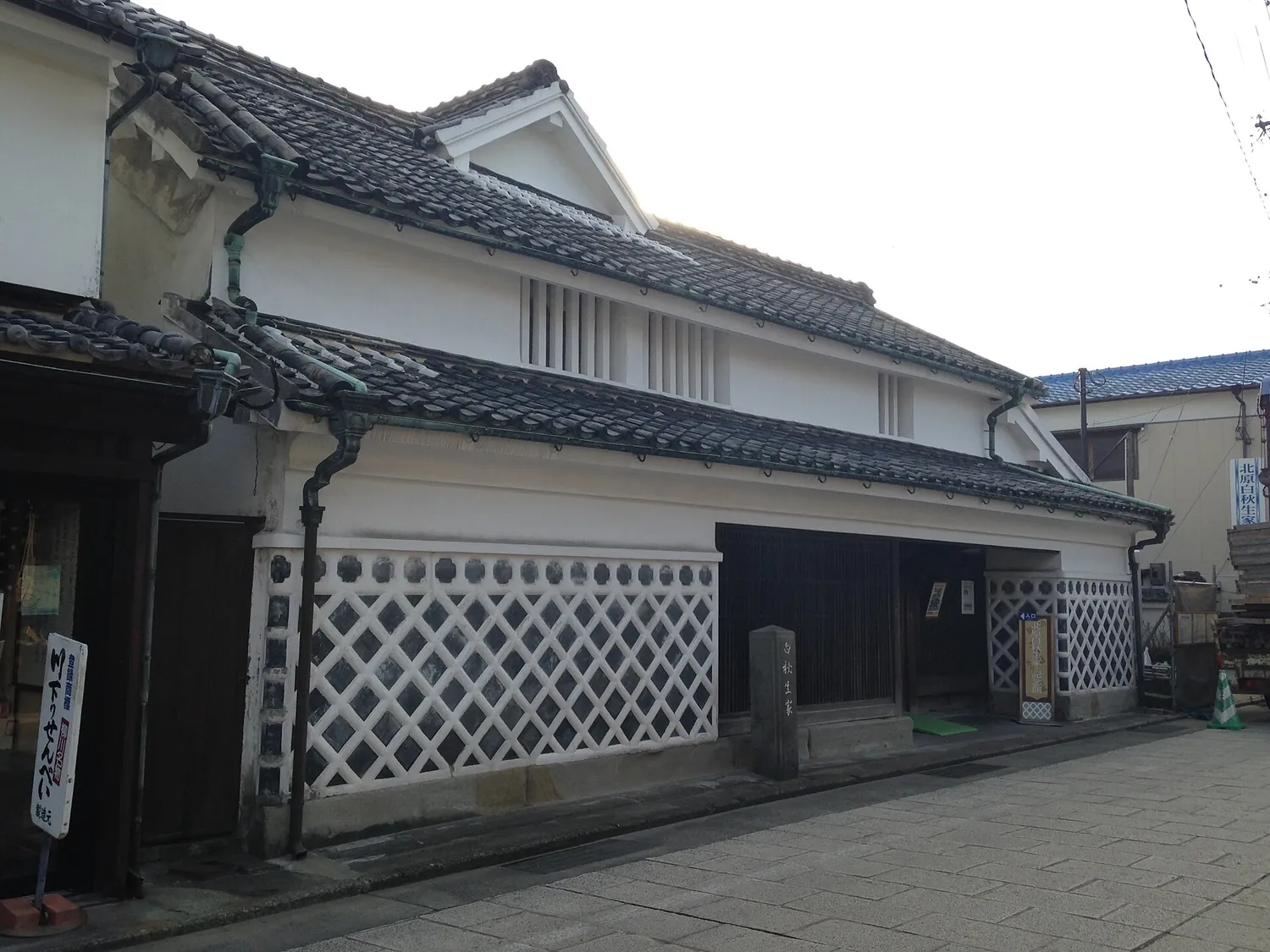
If you have time, Kitahara Hakushu’s birthplace, a seafood merchant’s house, is open as a museum. If your boatman sings one of his songs on the way down, the house makes a good last stop before the train back.
Before you go
| Yanagawa Kanko Kaihatsu | Shogetsu landing, about 5 minutes’ walk from Nishitetsu Yanagawa Station. One way to Ohana, about 60 minutes. Adults 2,200 yen; prices can change in busy seasons. Reception 9:30–15:00, every day; summer timetables differ. Hat rental 100 yen. Shared boats can be boarded without a booking, though booking is recommended. Kotatsu boats December–February |
| Suigo Yanagawa Kanko | Shimohyakucho landing, about 3 minutes’ walk from the station. One way to Ohana, about 1 hour. Adults 2,000 yen. Shared-boat reception 9:10–15:30, every day; it may close earlier from 30 December to 3 January. Free shuttle bus between Ohana and the landing 11:30–15:00; later, take a local bus or taxi. Kotatsu boats 1 December–end of February. No umbrellas on board. Hat rental 100 yen |
| Daito Enterprise | Landing in Shirosumi-machi; check the tourism association’s landing map for where to board. Standard course about 70 minutes, adults 2,000 yen; short course 30 minutes, adults 1,000 yen. March–November 10:00–17:00 (last reception 16:00); December–February 10:00–16:00 (last reception 15:30) |
| Hakushu Kanko | Meet in the lobby of the Kamenoi Hotel Yanagawa. Loop of about 40 minutes, back to the start. Adults 2,200 yen. Booking recommended at weekends, in busy seasons and in the evening. From the station, taxi about 15 minutes or bus about 20 minutes; walking takes over 40 minutes |
| Ohana | 10:00–16:00. Adults 1,200 yen (garden, great hall and museum). Closing days, and days the great hall is closed for private use, are posted month by month |
| Kitahara Hakushu Birthplace and Museum | 9:00–17:00 (last entry 16:30). Closed 29 December–3 January and occasionally at other times. Adults 1,000 yen |
| Getting there | Nishitetsu limited express from Tenjin to Nishitetsu Yanagawa, about 50 minutes. The Dazaifu-Yanagawa sightseeing ticket from Tenjin (digital, adults 3,620 yen) covers the return train and a boat ride, but the boat part is valid only with Yanagawa Kanko Kaihatsu |
| Seasons and weather | Summer and New Year schedules differ from company to company; check each company’s notices. Heavy rain or a storm can stop the boats |
| Drained moats | For about ten days in mid-February, boats run short loops back to their landing instead of the one-way ride to Ohana |
Checked 15 October 2026.
What I would do
I would ride it the classic way, on a morning boat from a landing near the station, one way down to Ohana. That leaves time for eel and for Ohana’s garden before it closes in the afternoon, with the poet’s house as the extra stop if the day allows.
We have not visited Yanagawa for this guide. The facts here come from the official sources below, checked on 15 October 2026.
- Yanagawa City Tourism Association — the seven boat companies and their landings, the boatmen, winter on the moats, the drained-moat period, Kitahara Hakushu’s museum: yanagawa-net.com/ohori/
- Yanagawa Kanko Kaihatsu — Shogetsu landing, course, fares, hours, kotatsu boats, rain, the people who go to the wrong landing, the sightseeing ticket: yanagawakk.co.jp
- Suigo Yanagawa Kanko — Shimohyakucho landing, fares, hours, no umbrellas on board, shuttle bus: kawakudari.com
- Daito Enterprise — courses, fares, hours, kotatsu boats, the red-brick storehouses and white walls
- Hakushu Kanko — the landing at the Kamenoi Hotel Yanagawa and how to get there: hakusyukankou.com
- Ohana (Tachibana residence) — hours, admission, the Place of Scenic Beauty: ohana.co.jp
- Kitahara Hakushu Birthplace and Museum — hours, closing days, admission
- Fukuoka Prefecture tourism — the train time and unagi no seiro-mushi
- Nishitetsu — the Dazaifu-Yanagawa sightseeing ticket
- Photographs: the lead image of passengers ducking under a bridge by Thomas Au, May 2015 (CC BY 2.0); the boats on the moat by Rick888chen (CC BY-SA 4.0); the namako wall by みんと at Japanese Wikipedia (public domain); Ohana by 663highland (CC BY 2.5); unagi no seiro-mushi by Sakaori (CC BY 3.0); Kitahara Hakushu’s birthplace by そらみみ (Soramimi) (CC BY-SA 4.0). All from Wikimedia Commons.
More in Fukuoka
- Yatai food stalls — For a night at the counter, and a reason to try Tenjin on a Sunday
- Hakata Old Town (Kushida Shrine to Joten-ji) — For the Yamakasa float that stays up, and the walk to where the festival began
- Dazaifu Tenmangu — For the old main hall, now open for prayer at the front again
- Kurume ramen and yakitori — For the bowl said to have started tonkotsu ramen at lunch, then yakitori after dark
Explore other areas
- Hokkaido — Sapporo
- Kanto — Hakone
- Hokuriku — Kanazawa
- Koshin-Tokai — Fuji Five Lakes
- Kansai — Nara
- Chugoku — Hiroshima
- Kyushu — Fukuoka · You are here
- Okinawa — Naha
