Fukuoka / Guide
Tonkotsu Ramen at Lunch, Yakitori After Dark: Give Kurume the Whole Day
Kurume久留米
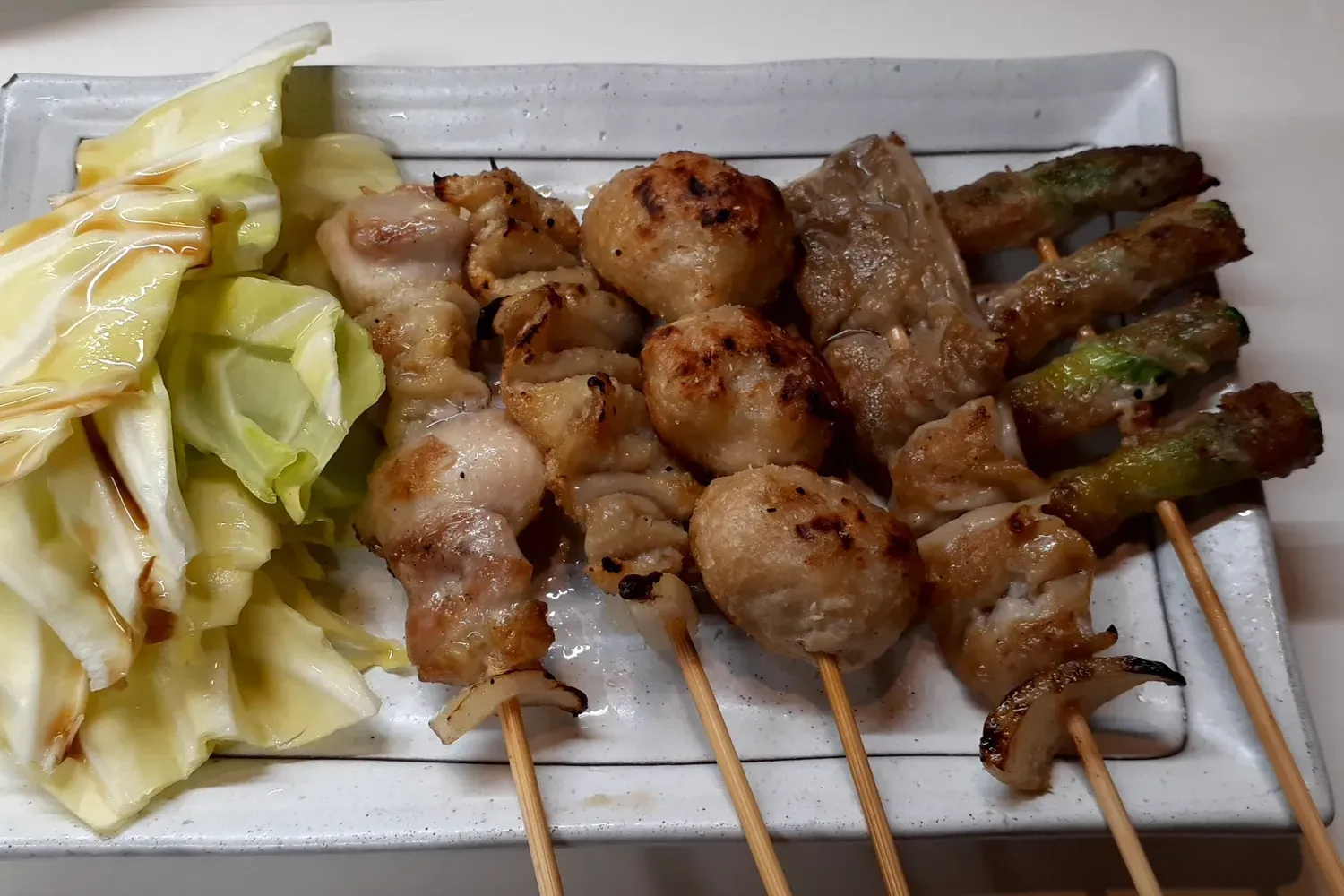
Kurume runs on two clocks. The ramen said to have started tonkotsu ramen, first served from a street stall here in 1937, is now sold at the Nankin Senryo Honke shop only around lunchtime, while all but two of the yakitori places on the city’s lists open only in the evening. So if you come from Fukuoka, stay past dark instead of heading back after lunch. Picture that hand-over at dusk, one kind of shop closing for the day as the other opens.
Lunch: the bowl said to have started it
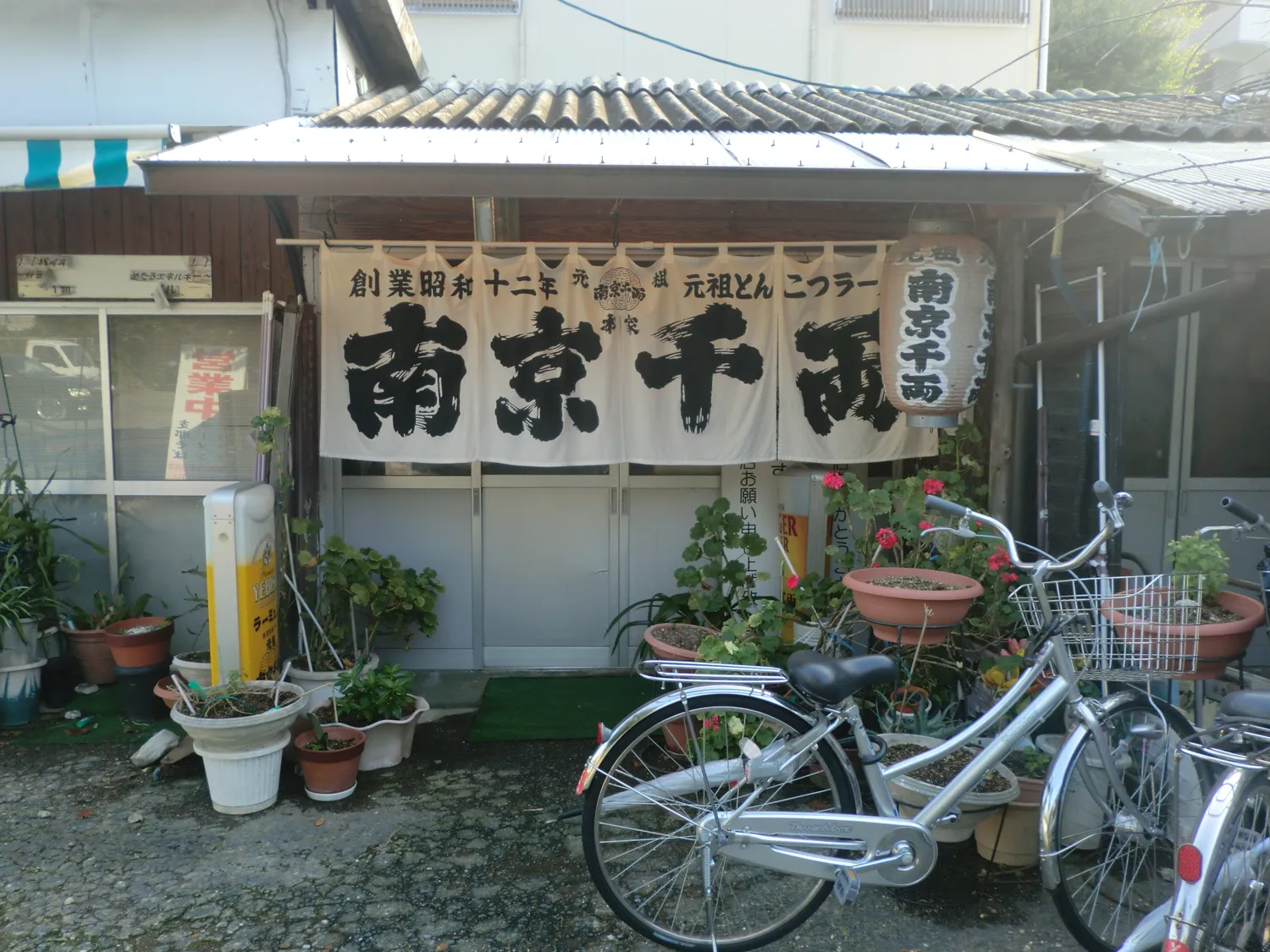
The Kurume Chamber of Commerce tells the story this way: in 1937, a street stall called Nankin Senryo lit its lamp on Meiji-dori and began selling what was then called shina soba. It is said to be the first place in Kyushu to serve ramen, which is why Kurume calls itself the birthplace of tonkotsu ramen.
You can eat it today at Ganso Nankin Senryo Honke’s Kokubu shop in Nonaka-machi, but only for a few hours around midday. The tourism site lists the Kurume velodrome and Yunosaka onsen as its neighbours, so check the map and allow time to get there. It is also closed on Wednesdays and Thursdays, so if the first bowl is the reason you came, keep those days free of Kurume.
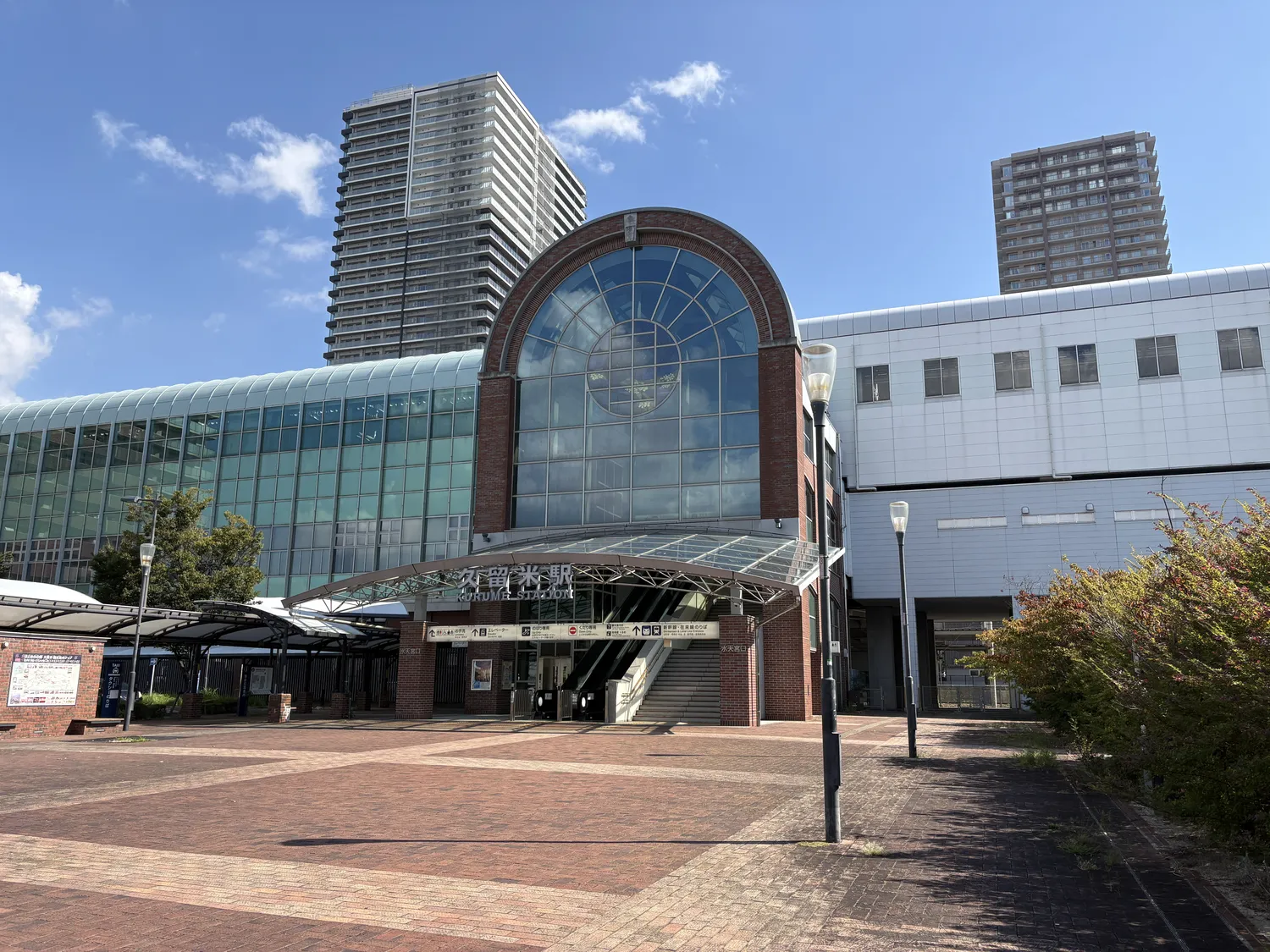
If you arrive at JR Kurume Station, Raifukuken is right in front of it. If I had one lunch at the station, it would be here: the tourism site calls its soup light yet deep, topped up since the shop opened. It closes on Sundays, and when the noodles run out, it stops for the day.
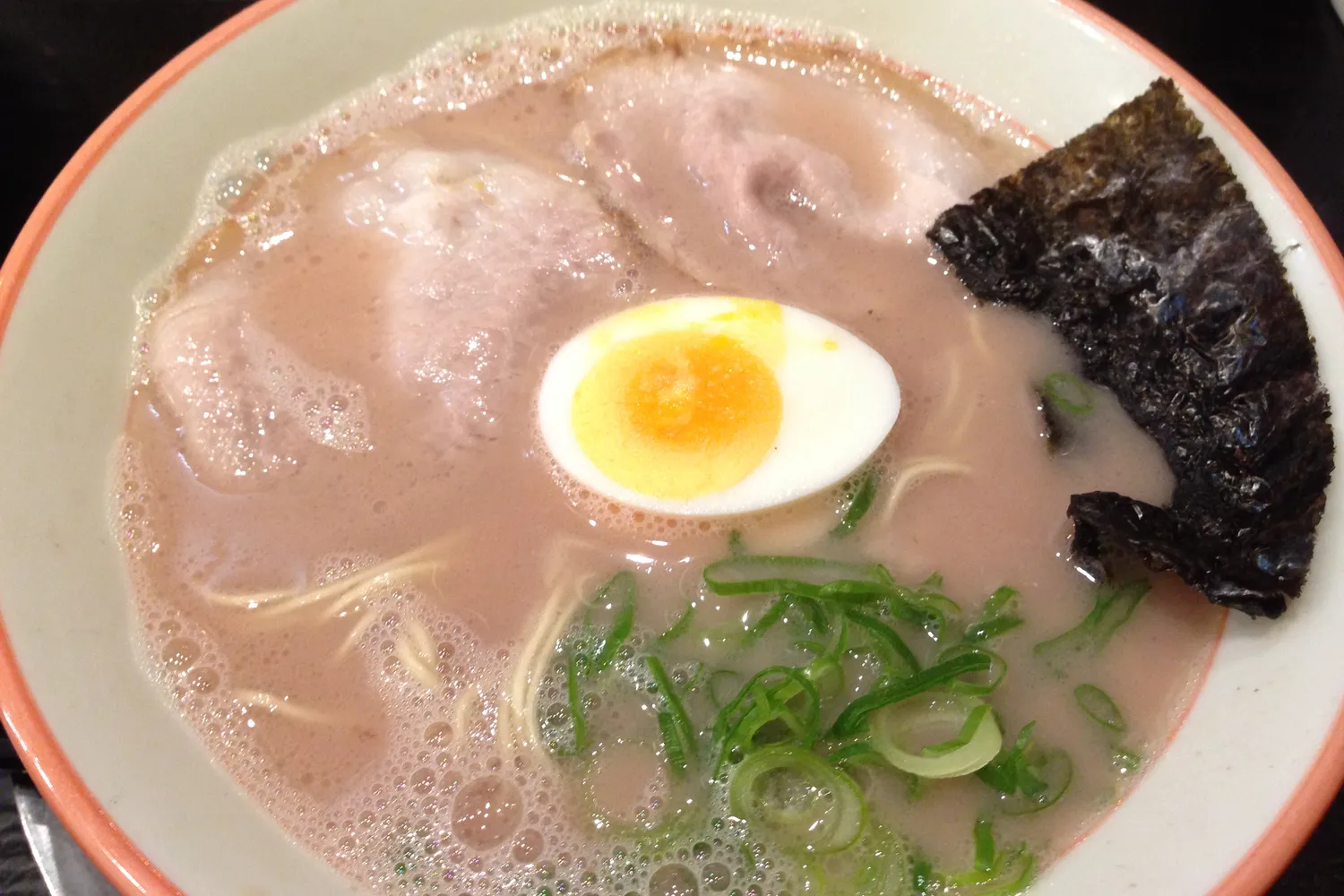
Try two more in town. Daiei Ramen’s main shop, whose 100% pork-bone soup has also been topped up since it opened, opens in the morning, skips its afternoon break on Fridays and Saturdays, and closes early if the soup runs out. The tourism site describes Taiho Ramen’s old-style bowl as a rich, matured soup with pork belly.
Between the two: yakitori inside the station
You will find one of only two yakitori places on the lists that open at lunch upstairs in JR Kurume Station. Rokkakudo is run by a farm that raises Kurume Sazanamidori, a local chicken, and it serves lunch as well as dinner. It is the easy choice if your train home leaves before dark. It closes on Mondays.
After dark: the yakitori places open
Stay into the evening for the rest. Yakitori Teppo’s main shop, in Hiyoshi-machi, is described by the city tourism site as the birthplace of makimono-kushi, rolled skewers, and it stays open past midnight with no fixed day off.
Toriki, in Ichibangai, Higashi-machi, puts fish from the Ariake Sea and dishes of the Chikugo region alongside its yakitori. Shinkichi, in Mutsumon-machi, has morning-fresh chicken and herb skewers, and then, to my delight, names its dandan noodles as the dish it is proudest of, with French toast as a popular dessert.
Pick a Friday or a Saturday
Here is how the days off fall. On a Wednesday you lose both Nankin Senryo and Shinkichi; on a Sunday, Raifukuken and Toriki, and Shinkichi too on the third Sunday; on a Monday, Rokkakudo, and Raifukuken too on the third Monday. On a Friday or a Saturday none of them has its weekly day off, and Daiei serves straight through the afternoon, though holidays and sold-out soup can still close a door.
Before you go
| Ganso Nankin Senryo Honke, Kokubu shop (ramen) | Nonaka-machi. 11:00–14:30. Closed Wednesday and Thursday. Founded 1937. Nankin Senryo Marine, in Hotarugawa-machi, lists 18:00–1:00 and irregular days off; call to check |
| Raifukuken (ramen) | In front of JR Kurume Station. 11:00–15:00 and 17:30–21:00, until the noodles run out. Closed Sunday and the third Monday (may change) |
| Daiei Ramen main shop | Higashi-machi. 10:00–15:00 (last order 14:45) and 17:00–24:00 (last order 23:45); no break on Friday and Saturday; closes early if the soup runs out. No regular days off |
| Taiho Ramen main shop | Togai-machi. 10:30–21:00. Closed New Year’s Day |
| Yakitori Rokkakudo | JR Kurume Station, 2nd floor. Lunch 11:00–14:00, dinner 17:00–23:00. Closed Monday |
| Yakitori Teppo main shop | Hiyoshi-machi. 17:00–1:00. No regular days off |
| Toriki (yakitori, Ariake Sea and Chikugo dishes) | Ichibangai, Higashi-machi. 17:30–23:00 (last order 22:30). Closed Sunday; holidays vary |
| Shinkichi (yakitori) | Mutsumon-machi. Weekdays 18:00–2:00; Sundays and holidays 18:00–24:00. Closed Wednesday and the third Sunday |
| The lists | Of the 27 yakitori places on the city tourism site and the yakitori association’s member list, 25 open only in the evening |
Checked 16 October 2026.
What I would do
I would come on a Friday, eat the first bowl at Nankin Senryo before it closes for the day, and then wait in Hiyoshi-machi for Teppo to open; the rolled skewers would be my first order, since this is where they are said to have started. Shinkichi’s French toast would be the excuse for a second stop.
We have not visited Kurume for this guide. The facts here come from the official sources below, checked on 16 October 2026.
- Kurume Chamber of Commerce — Nankin Senryo’s street stall on Meiji-dori in 1937 and Kurume as the birthplace of tonkotsu ramen: kurume.or.jp/tonkotsu/
- Hotomeki no Machi, the official tourism site of Kurume City and its convention and visitors association — hours, days off, locations and descriptions for Nankin Senryo, Raifukuken, Daiei Ramen, Taiho Ramen, Teppo and Toriki; the ramen and yakitori lists we counted: welcome-kurume.com
- Kurume Yakitori Culture Promotion Association — the member list, Rokkakudo and Shinkichi: kurumeyakitori.or.jp
- Taiho Ramen — the main shop’s hours: taiho.net
- The count: on 16 October 2026 we counted every yakitori place in Kurume City on the two lists (27 after removing those listed twice and those outside the city); 25 give opening times from the evening only
- Photographs: the lead image of yakitori in Kurume by Asturio Cantabrio, March 2022 (CC BY-SA 4.0); the Nankin Senryo shop by Nissy-KITAQ (CC BY-SA 3.0); JR Kurume Station by あじさか (Ajisaka) (CC BY-SA 4.0); the Taiho Ramen bowl, taken at a branch in Fukuoka City, by Totti (CC BY-SA 4.0). All from Wikimedia Commons.
More in Fukuoka
- Yatai food stalls — For a night at the counter, and a reason to try Tenjin on a Sunday
- Hakata Old Town (Kushida Shrine to Joten-ji) — For the Yamakasa float that stays up, and the walk to where the festival began
- Dazaifu Tenmangu — For the old main hall, now open for prayer at the front again
- Yanagawa canal boats — For an hour on the moats under low bridges, and steamed eel at the end
Explore other areas
- Hokkaido — Sapporo
- Kanto — Hakone
- Hokuriku — Kanazawa
- Koshin-Tokai — Fuji Five Lakes
- Kansai — Nara
- Chugoku — Hiroshima
- Kyushu — Fukuoka · You are here
- Okinawa — Naha
