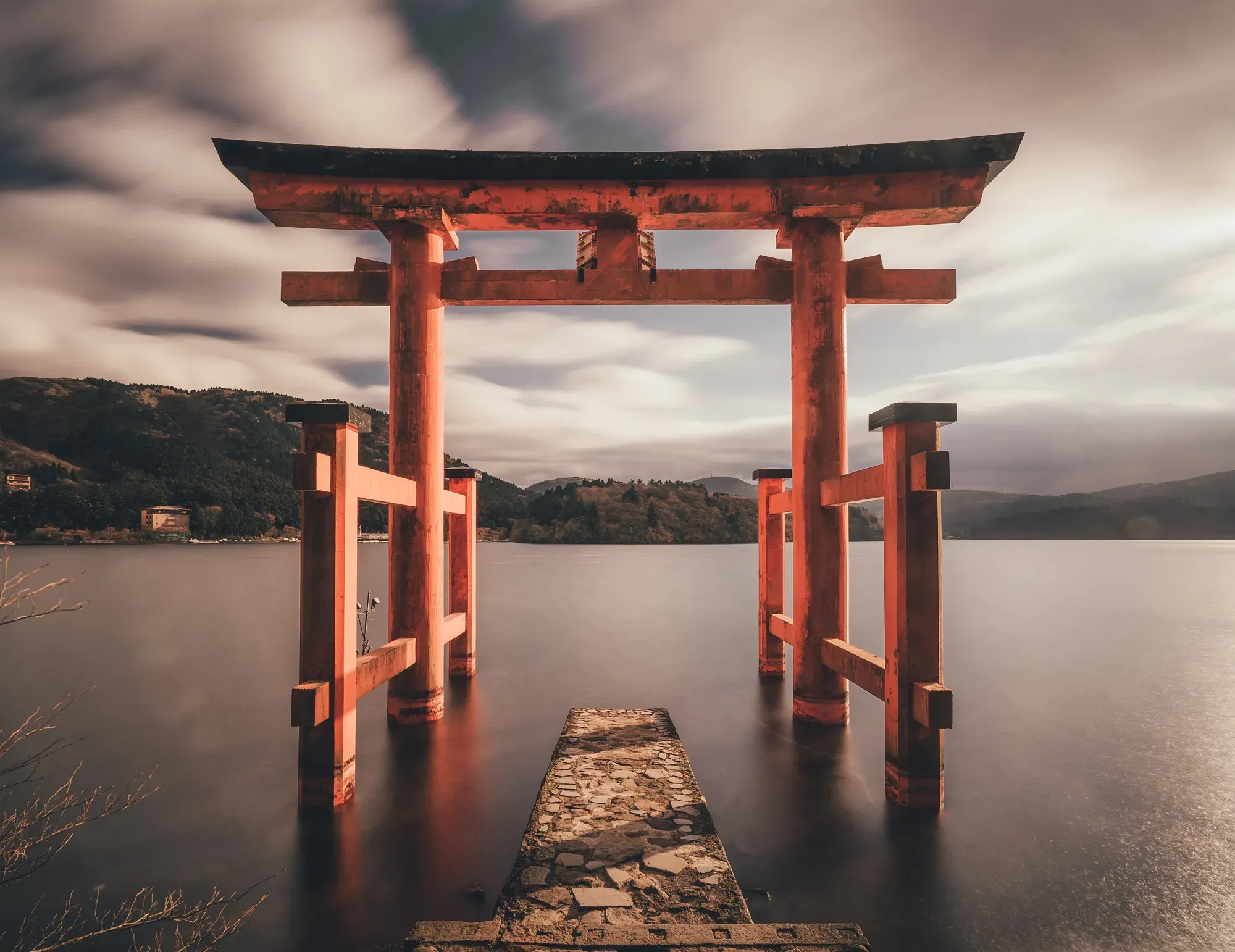
Hakone / Guide
Hakone Shrine's Dragon Was Born Across the Lake: Go on the 13th
Hakone Shrine箱根神社
The small dragon shrine to the right of Hakone Shrine’s main hall is not where the dragon was born. That place, the shrine says, is across the water, where Kuzuryu Shrine Honmiya stands in a lakeside forest whose gate is a slow 30-minute walk along the shore from Hakone-en.
If your trip lands on the 13th, take the 9:20 boat from Moto-Hakone instead of walking. That morning the forest gate is free for worshippers, and you arrive the way I had hoped a lake god’s shrine could be reached, on the shrine’s own boat, across the water.
You could photograph the vermilion gate in the lake, bow at the small dragon shrine by the main hall and head back to the bus, and you would have seen half of it.
One dragon, two shrines
Hakone Shrine enshrines three deities, together called Hakone Ōkami, and its roots are in the worship of the mountain. The dragon is the lake’s own god, and the shrine’s history calls Lake Ashi the washing pool of Hakone Gongen and names Kuzuryu Ōkami, the nine-headed dragon, as its guardian.
I had been happily assuming, from photographs of the little vermilion Shingu, that it was the dragon’s shrine and that was that. In fact you can pray to the dragon in two places. The Honmiya, the “main shrine”, stands on the lakeshore, on what the shrine calls the sacred ground where the dragon god was born, while the Shingu, the “new shrine”, was built later, a few steps from Hakone Shrine’s main hall, on the ground where the lake festival is held.
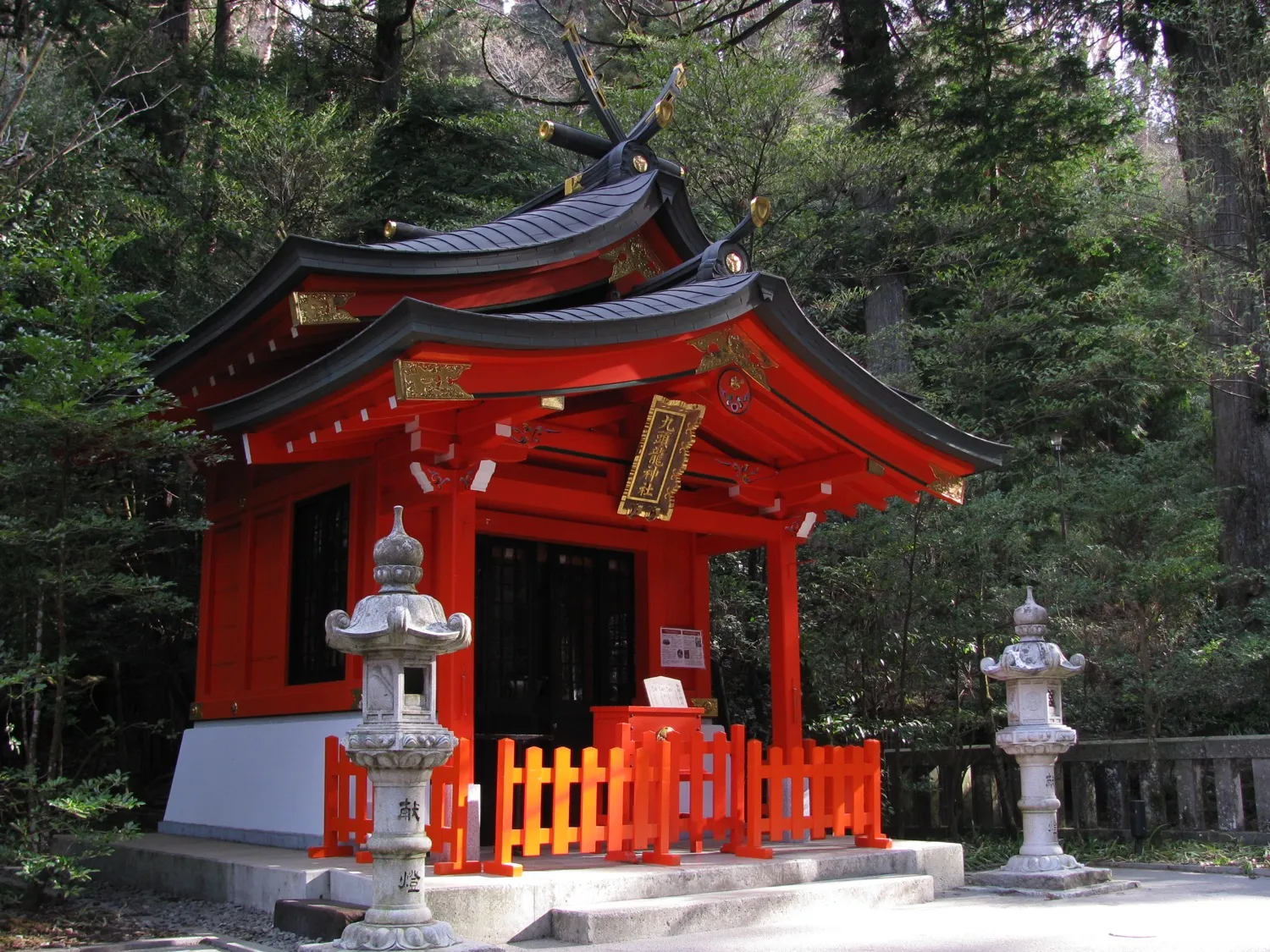
The shrine tells the dragon’s story straight from its old founding record, poison and all. The monk Mangan came to the lake, built a stone platform at the edge of the deep water and prayed, and a poisonous dragon changed its form, a dragon, the record says, with nine heads.
If you are in Hakone on the 13th
On the 13th of each month the Honmiya holds a rite at 10:00 (in June, the 13th is its annual festival), and you can ride the shrine’s worshippers’ boat to it without booking a prayer. You do not have to be a regular, either, since the shrine says plainly that you can come just to pay your respects, and that asking for a prayer is not compulsory.
- 8:00–9:05: a priest takes names outside the Moto-Hakone office of the Lake Ashi sightseeing boats. Finish registering at least 15 minutes before the boat leaves.
- Ticket: buy it at the Lake Ashi sightseeing boat landing, 2,000 yen per person.
- 9:20: the boat leaves Moto-Hakone pier.
- 9:45: it reaches Kamiyama pier; you are at the Honmiya by 9:50.
- 10:00: the rite begins.
- Back: two boats return from Kamiyama pier, at 11:25 and 12:45.
You pay nothing at the forest gate that morning if you have come for the rite, since the usual 600 yen is waived. Keep an eye on the weather as well, though the shrine has thought of that too: if it turns bad or the boat is not running, the rite moves to the Shingu beside the main hall, and whoever reached Moto-Hakone that morning can still be there for it.
Counting the small offerings made every morning and evening, the shrine holds roughly 800 rites a year, more than two a day, so the 13th is one day in a very full calendar.
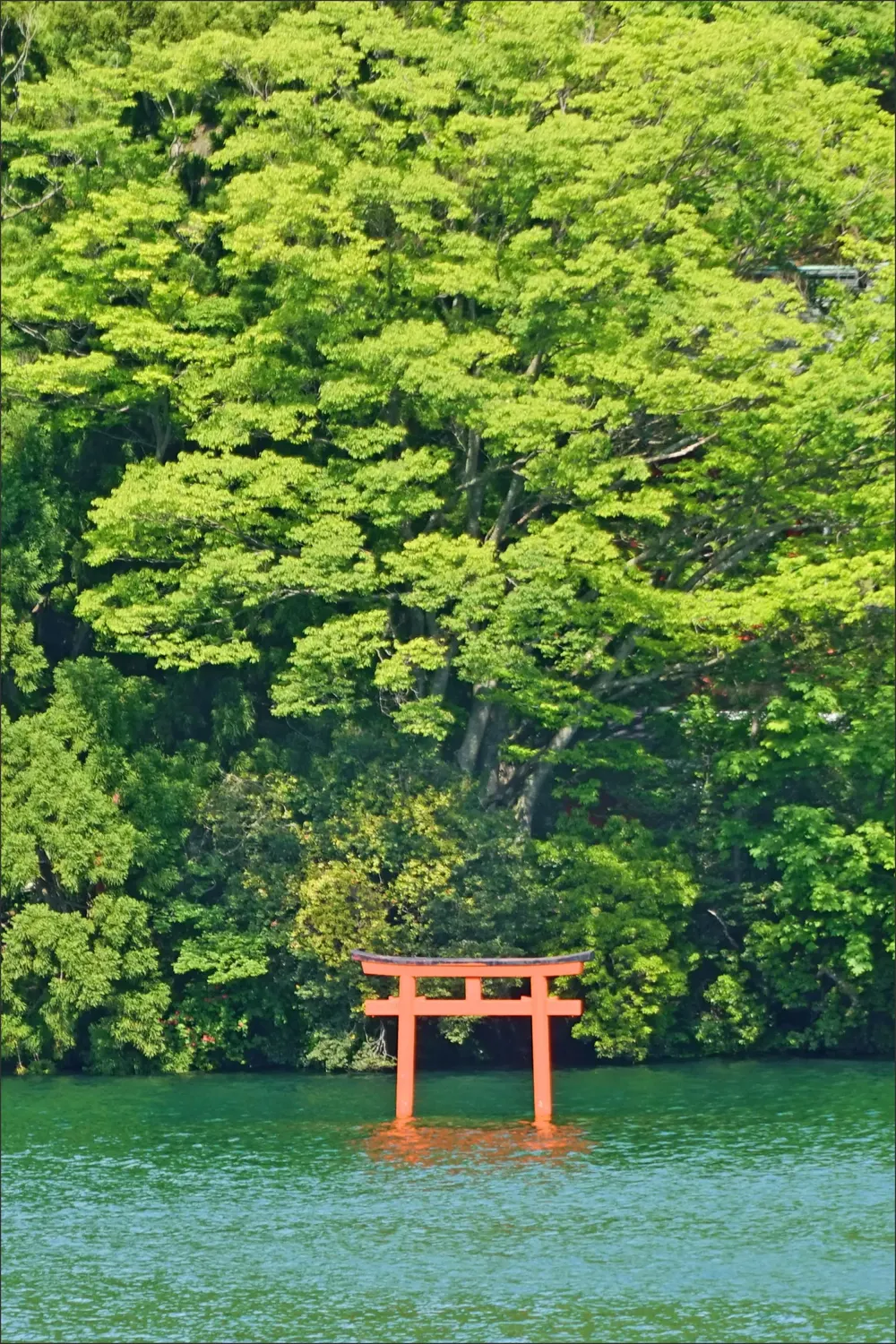
Picture stepping off at Kamiyama pier with the lake at your back, the Honmiya five minutes ahead through the trees and the rite still a quarter of an hour away, enough time to stand still for a moment before it begins.
Any other day
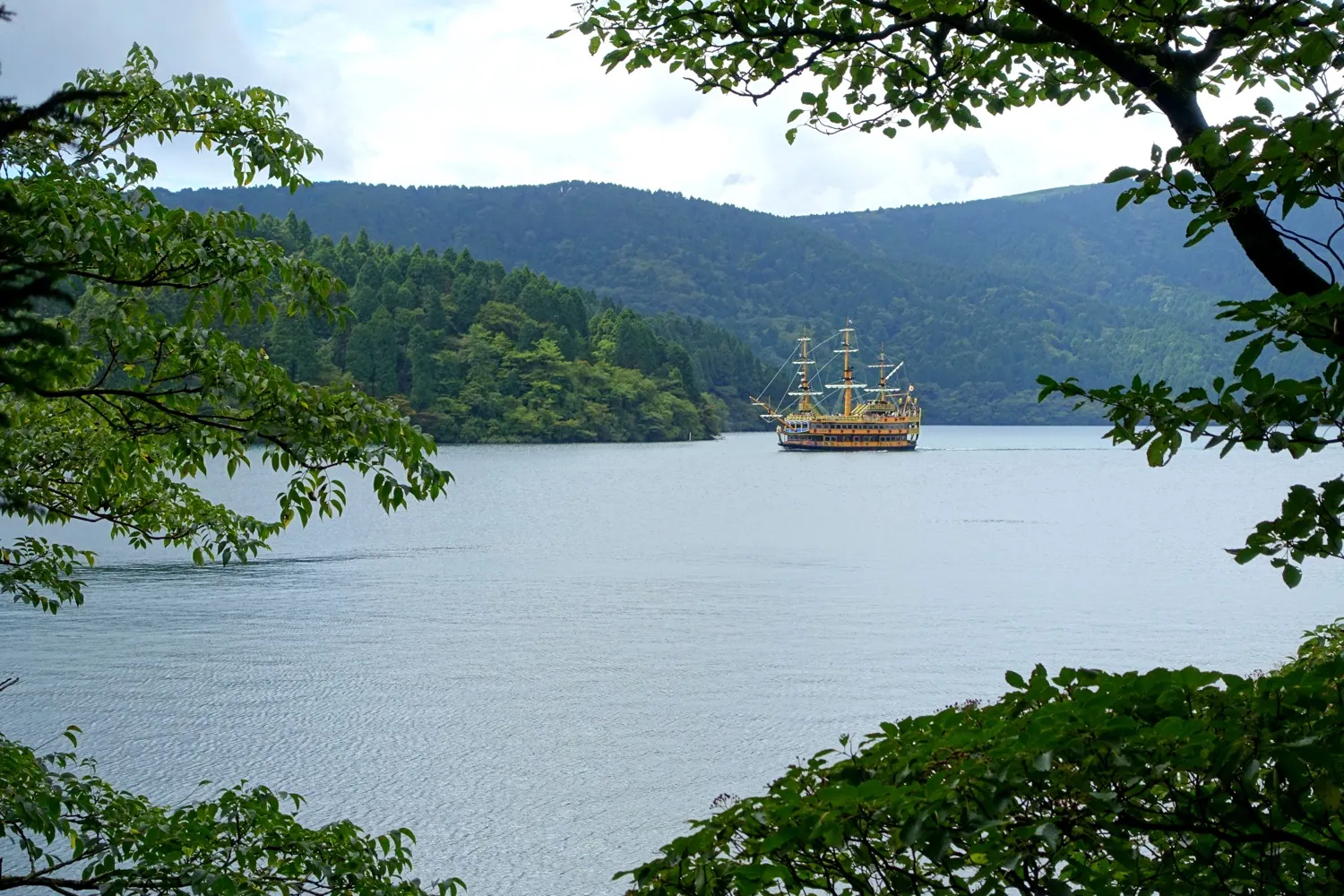
You can walk. The lakeside path runs between Hakone-en and the Kojiri terminal of the Lake Ashi boats, and the entrance to the Kuzuryu forest sits right in the middle, a slow 30 minutes from either end; if you would rather ride, paid electric-assist bicycles can be rented at Hakone-en.
You can also go by motorboat, from the Hakone Hotel pier or the Hakone-en pier to the Honmiya’s own pier, and, by a rule I rather like, anyone who arrives that way enters the forest free on any day, while walkers pay at the gate.
If you walk, arrive before 16:30, because the forest is open 9:00 to 17:00, last entry is at 16:30, and entry costs 600 yen.
On an ordinary day, then, take the motorboat if you want to arrive over the water, as worshippers do on the 13th, or walk if you would rather have the shore beside you for half an hour, allowing a slow 30 minutes from Hakone-en to the forest entrance.
The gate in the lake
I had always filed the gate in the lake under photo backdrops, which made what the shrine says about it all the more of a surprise. The shrine lists five numbered gates on land, but this is the famous one, built in 1952 to celebrate the investiture of the then crown prince, today’s Emperor Emeritus, and Japan’s independence under the peace treaty. In 1964, for the shrine’s 1,200th year and the Tokyo Olympics, a plaque reading “Heiwa”, peace, was added. The brush writing is by Yoshida Shigeru, the former prime minister who had signed that treaty as Japan’s plenipotentiary.
The shrine also notes that its gates are in the Myōjin style, all except this one, which is in the Ryōbu style. I would look up at the plaque now before taking the picture, and think for a second about the year it went up.
The main hall and the treasure house
The same monk turns up again later in the story. The shrine dates its present site to 757, when, it says, Mangan received an oracle from the god of Hakone and built the shrine hall here. For centuries it was Hakone Gongen, where the mountain god was worshipped together with Buddhism and the ascetic practice of Shugendō. In the early Meiji years, when Shinto and Buddhism were separated, it took the name Hakone Shrine.
If you have an hour left, spend it in the treasure house, which opened in 1907 as a museum for the shrine’s collection and moved into a new building in 2007. The permanent display is on the second floor, with special exhibitions on the third. It is open 9:00 to 16:30, with entry until 16:00, and closes only now and then to change displays; entry is 500 yen for adults (junior high school age and up) and 300 yen for elementary-school children.
Before you go
| Kuzuryu Shrine Honmiya, rite on the 13th | The 13th of every month, 10:00 (in June, the annual festival). Worshippers’ boat: register 8:00–9:05 outside the Moto-Hakone office of the Lake Ashi sightseeing boats, finishing at least 15 minutes before departure; ticket 2,000 yen at the boat landing; leaves Moto-Hakone 9:20, arrives Kamiyama pier 9:45; returns 11:25 and 12:45. A prayer is not required. In bad weather or if the boat does not run, the rite is held at the Shingu instead |
| Kuzuryu forest (to reach the Honmiya) | 600 yen, free for worshippers on the morning of the 13th and other festival days, and free at any time if you arrive by motorboat. On other days 9:00–17:00, last entry 16:30. On foot: a slow 30 minutes along the lakeside path from Hakone-en or from the Kojiri boat terminal to the forest entrance |
| Hakone Shrine counters | Amulets and shrine stamps 8:15–17:00; prayer requests 8:30–16:00 |
| Treasure house | 9:00–16:30, entry until 16:00; open every day, with occasional closures to change displays. Adults 500 yen, elementary-school children 300 yen |
| Getting there | From Hakone-Yumoto, the bus for Hakone-machi / Moto-Hakone takes about 60 minutes. The shrine notes that the Hakone Tozan bus does not stop at “Hakone-jinja-iriguchi” between 10:00 and 16:00; use “Moto-Hakone-kō” instead. From Moto-Hakone port, the shrine is a 10-minute walk |
Checked 26 September 2026.
What I would do at Hakone Shrine
I would plan the Hakone days around the 13th if I could, and be outside the boat office at Moto-Hakone well before 9:05, so that registering, buying the ticket and boarding all happen without a rush.
After the rite, I would take the 11:25 boat back and spend the afternoon at the main hall and the gate in the lake, stopping at the Shingu on the way out.
If the 13th did not fit, I would still go to the Honmiya, walking from Hakone-en, and save the boat for a trip that does land on the 13th.
We have not visited Hakone Shrine for this guide. The facts here come from Hakone Shrine’s official website, checked on 26 September 2026.
- Hakone Shrine — history, the Kuzuryu Honmiya and Shingu, the founding record, the treasure house and its hours and fees: hakonejinja.or.jp/hakone/; the gate in the lake and its plaque: hakonejinja.or.jp/hakone/keidai.html; the monthly rite, the worshippers’ boat and forest hours: hakonejinja.or.jp/hakone/celebration.html; access, the forest entry fee, the walking path, motorboats and the bus stop: hakonejinja.or.jp/access/
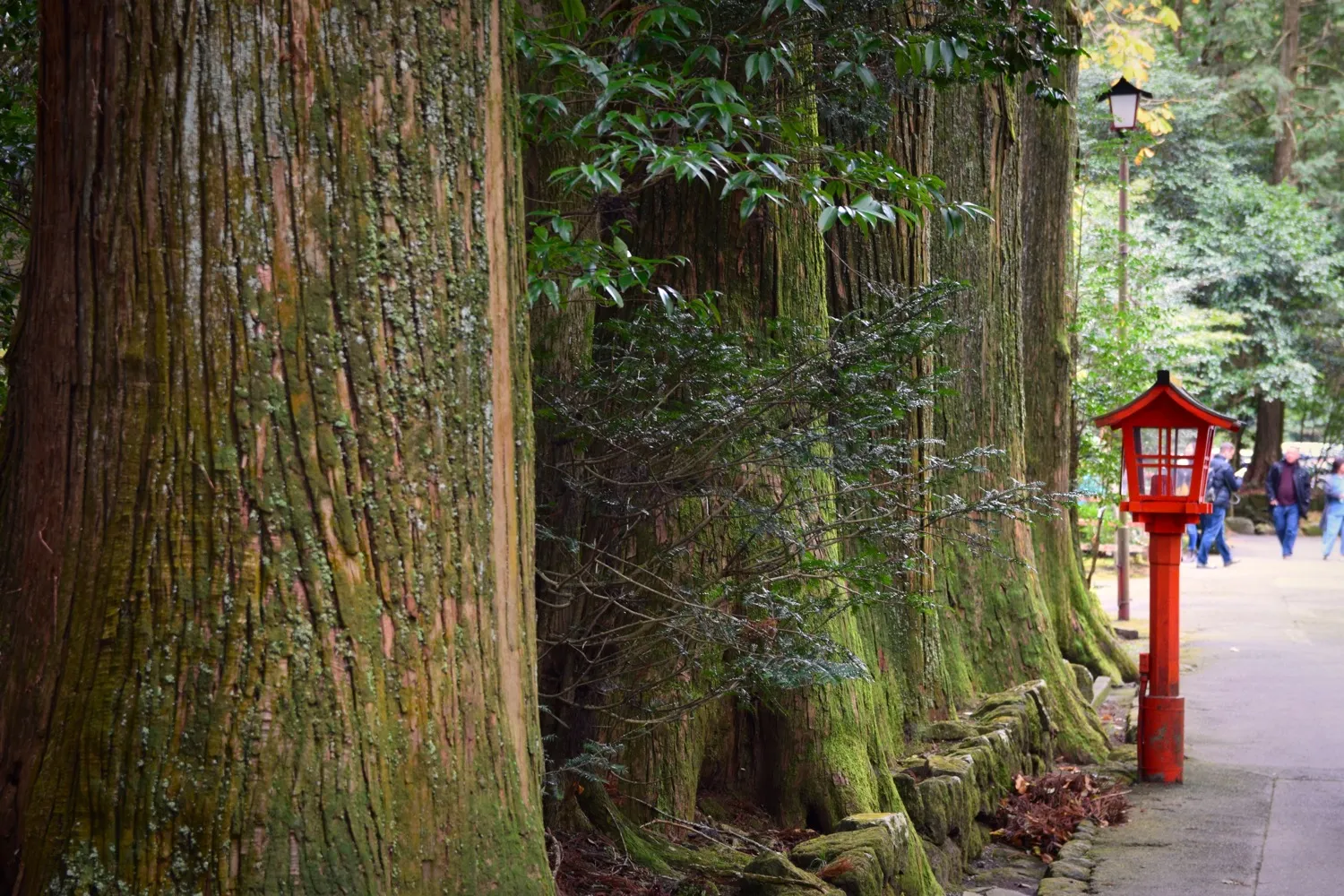
- Photographs: the hero image by Tianshu Liu (CC0); Kuzuryu Shrine Shingu by Aimaimyi (CC BY-SA 3.0); the Honmiya gate by Jean-Pierre Dalbéra (CC BY 2.0); the cedars by Raita Futo (CC BY 2.0); Lake Ashi by Daderot (CC0) — all from Wikimedia Commons
More in Hakone
- Owakudani — For the steaming ground itself, on one of four guided walks a day
- Lake Ashi — For a one-way crossing between a caldera wall and old lava, and a walk under the cedars
- Amazake-chaya — For a walk on the Edo stone road and a cup of sugar-free amazake at a thatched teahouse
- Where to Stay — For choosing where to sleep by the water you end the day in: Gora, Sengokuhara, Lake Ashi or Miyanoshita
Explore other areas
- Hokkaido — Sapporo
- Kanto — Hakone · You are here
- Hokuriku — Kanazawa
- Koshin-Tokai — Fuji Five Lakes
- Kansai — Nara
- Chugoku — Hiroshima
- Kyushu — Fukuoka
- Okinawa — Naha
