Hiroshima / Guide
Hiroshima Peace Memorial Park: Walk In Along the Line, Not From the Tram Stop
Peace Memorial Park平和記念公園
Walk into the Peace Park from Peace Boulevard, instead of stepping off at the tram stop beside the Dome.
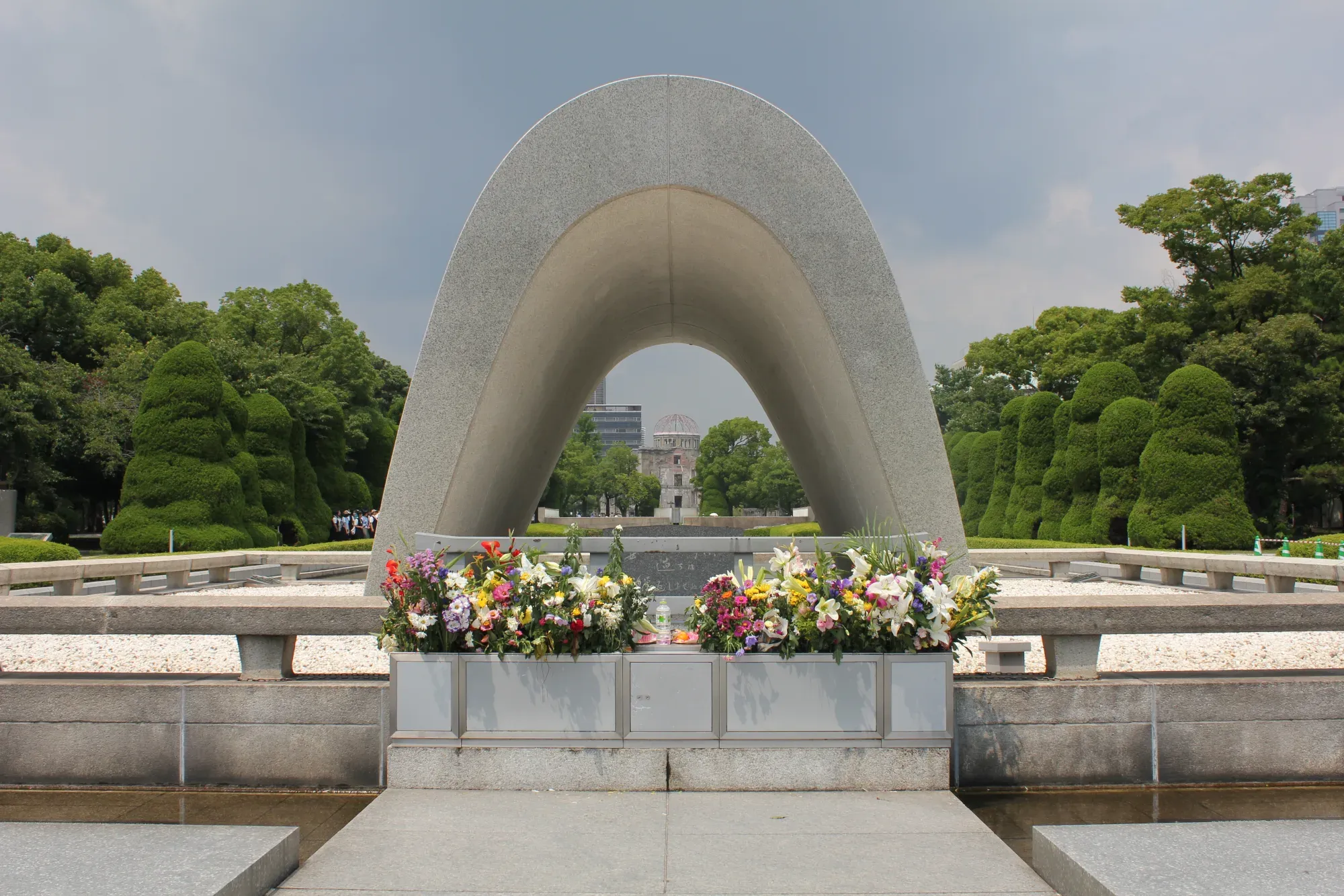
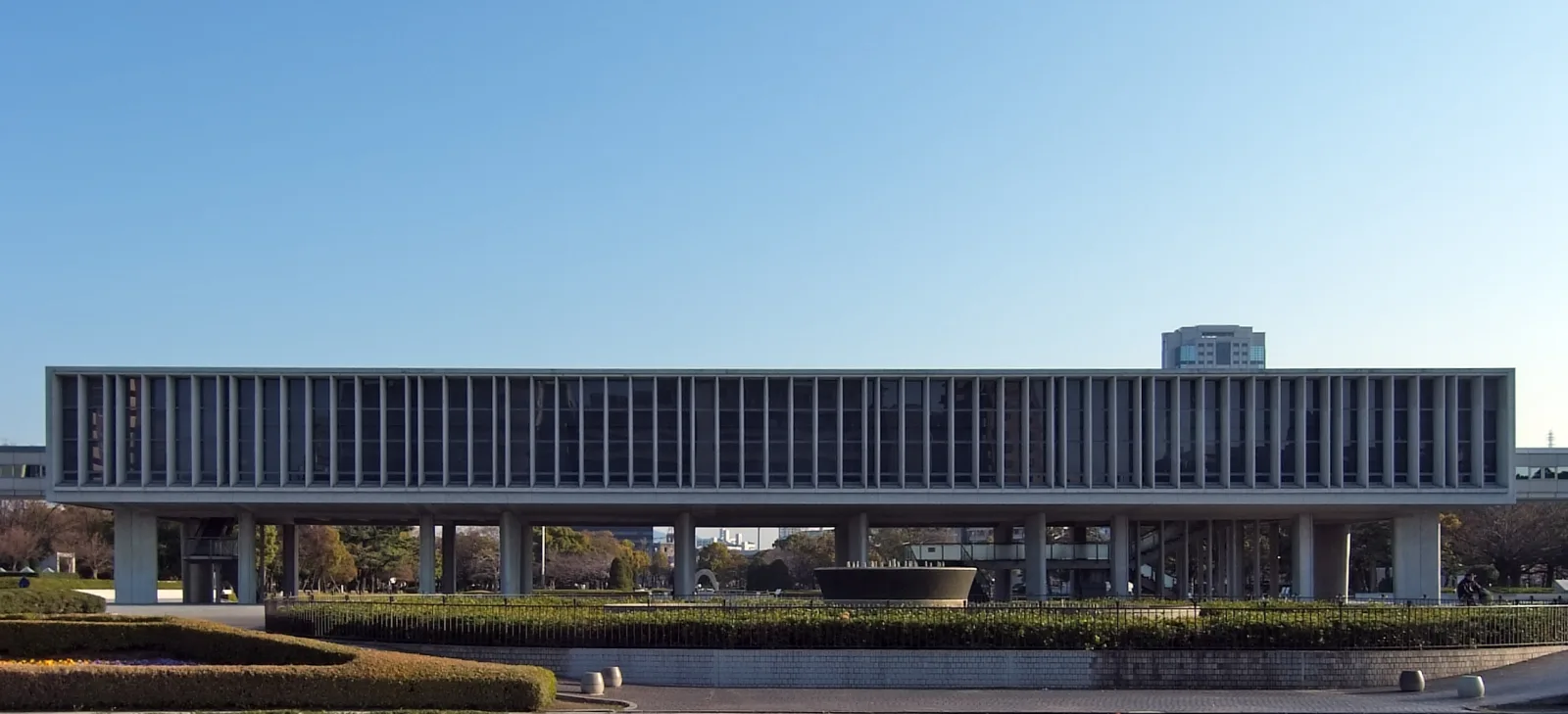
The park was laid out so that from the boulevard you see the A-Bomb Dome through the raised columns of the museum, at the far end of one straight line. Come in that way and the ruin reaches you slowly, from a distance, framed — the way the park was drawn to show it.
The nearest tram stop is named after the Dome, Genbaku Dome-mae, and it sits a minute’s walk from it. Many people arrive that way. Start there and you reach the ruin before you ever stand on the line the whole park was built around.
One line, drawn on purpose
The city of Hiroshima describes the plan plainly. The park’s design, by Kenzo Tange and three colleagues, put three things on a single straight line: the A-Bomb Dome, an arch, and the exhibition hall that is now the Peace Memorial Museum. Stand on the hundred-metre road — Peace Boulevard — and you look through the ground floor of the museum, raised on columns, to the Dome beyond.
One thing changed. In place of the arch, the Cenotaph for the A-bomb Victims stands on the line. Apart from that, the city says, the layout still follows the plan.
That was the most affecting thing I learned about the park. The plan was worked out so that the Dome could be seen as a distant outline, through a building, at the end of a long straight line — not only as broken walls, close up, as you step off a tram.
The bridges into the park
If you come across the river to the park, look at the railings.
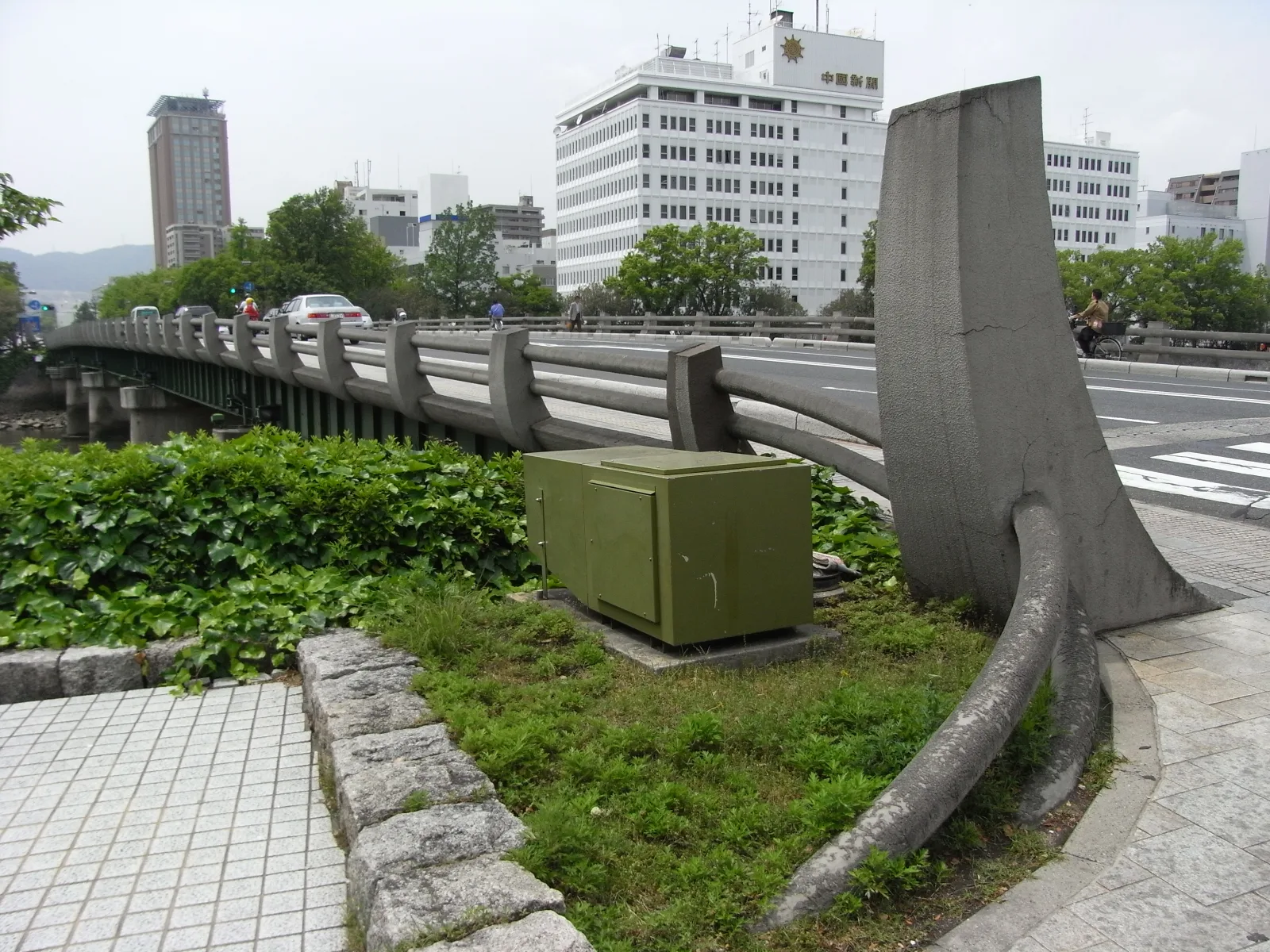
The two bridges into the park, Peace Bridge over the Motoyasu River and West Peace Bridge over the Honkawa, were finished in 1952. On Tange’s recommendation, the mayor asked the American sculptor Isamu Noguchi to design their railings. In his autobiography, the city notes, Noguchi wrote that Peace Bridge expresses “to build” and West Peace Bridge “to go”. Two plain verbs, chosen for the way into this park, have stayed with me longer than any of the numbers here.
It is easy to cross them without looking down. Knowing what Noguchi meant by them, you may want to slow down.
Under the museum, past the cenotaph
Walk the line towards the Dome. You pass under the museum, then the cenotaph, and the Dome is ahead of you the whole way.
If you plan to go into the museum, the regular ticket is 200 yen. The Hiroshima Tourism Association says it is generally less crowded early in the morning and in the evening. We could not check its hours or closing days, so look at the museum’s own website before you go.
The city gives one number for what happened, and says in the same breath that it cannot be exact. By the end of December 1945, it estimates, about 140,000 people had died. It adds that, even now, the true figure is not known. I noticed that I trusted the number more because the sentence admits its limit.
The Dome, from outside
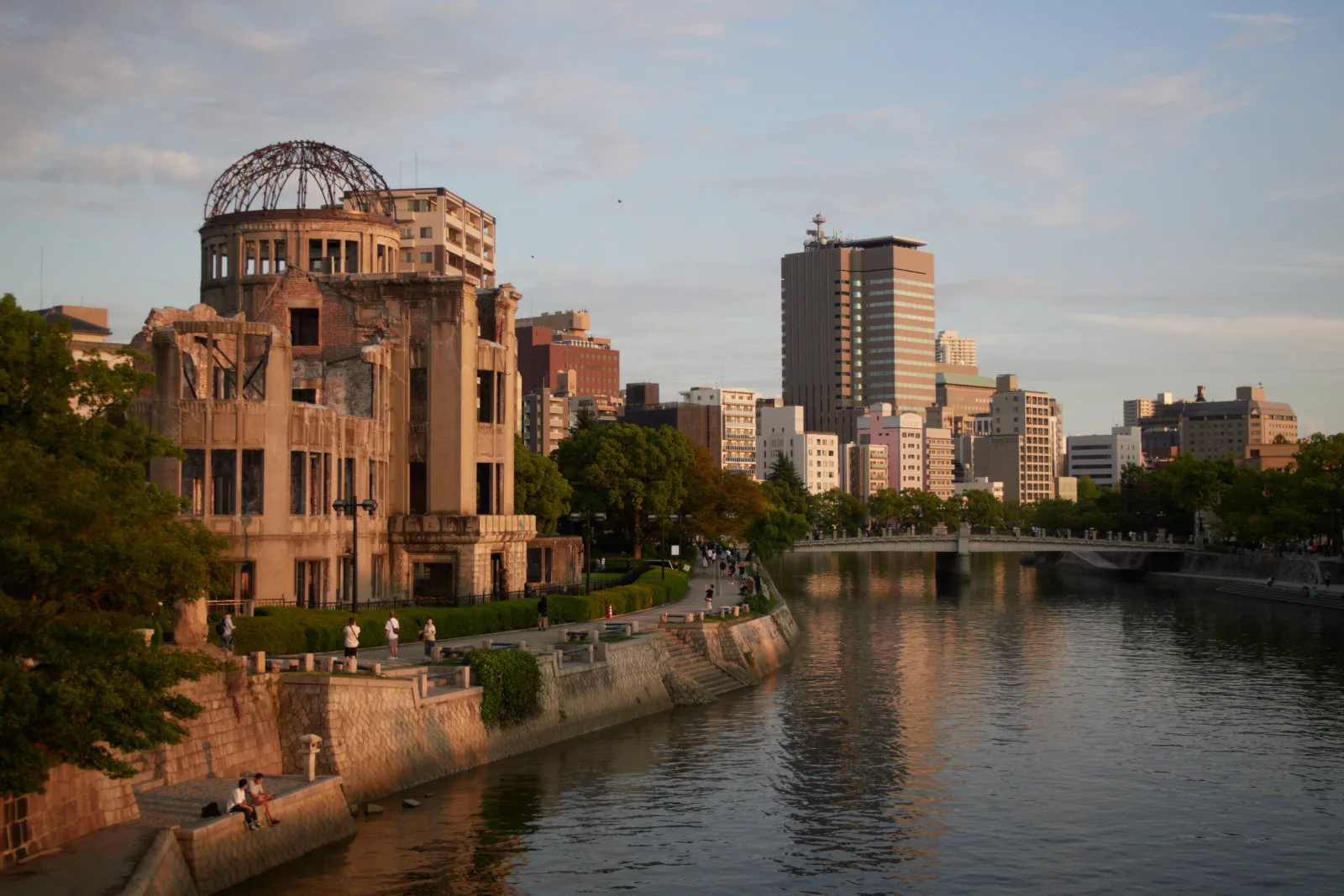
You cannot go into the A-Bomb Dome. It is not a building you enter; it is seen from outside.
That is part of why the approach matters. There is no door and no inside to save for later. What you have is the walk towards it and the time you spend looking.
Something you can do with your hands
Two things in the park ask you to take part rather than look.
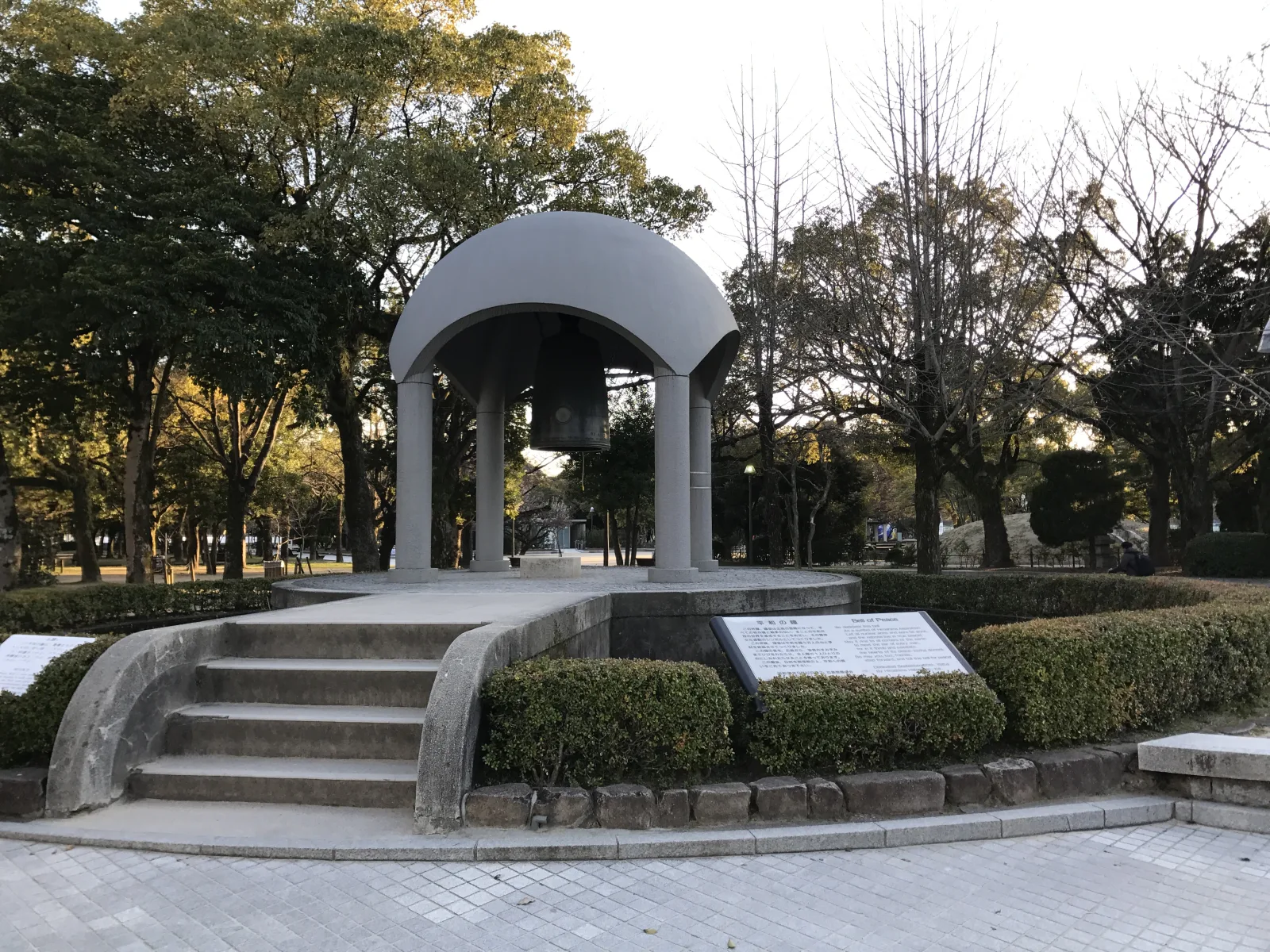
The Peace Bell can be rung by anyone who visits. Its surface carries a world map drawn without borders.
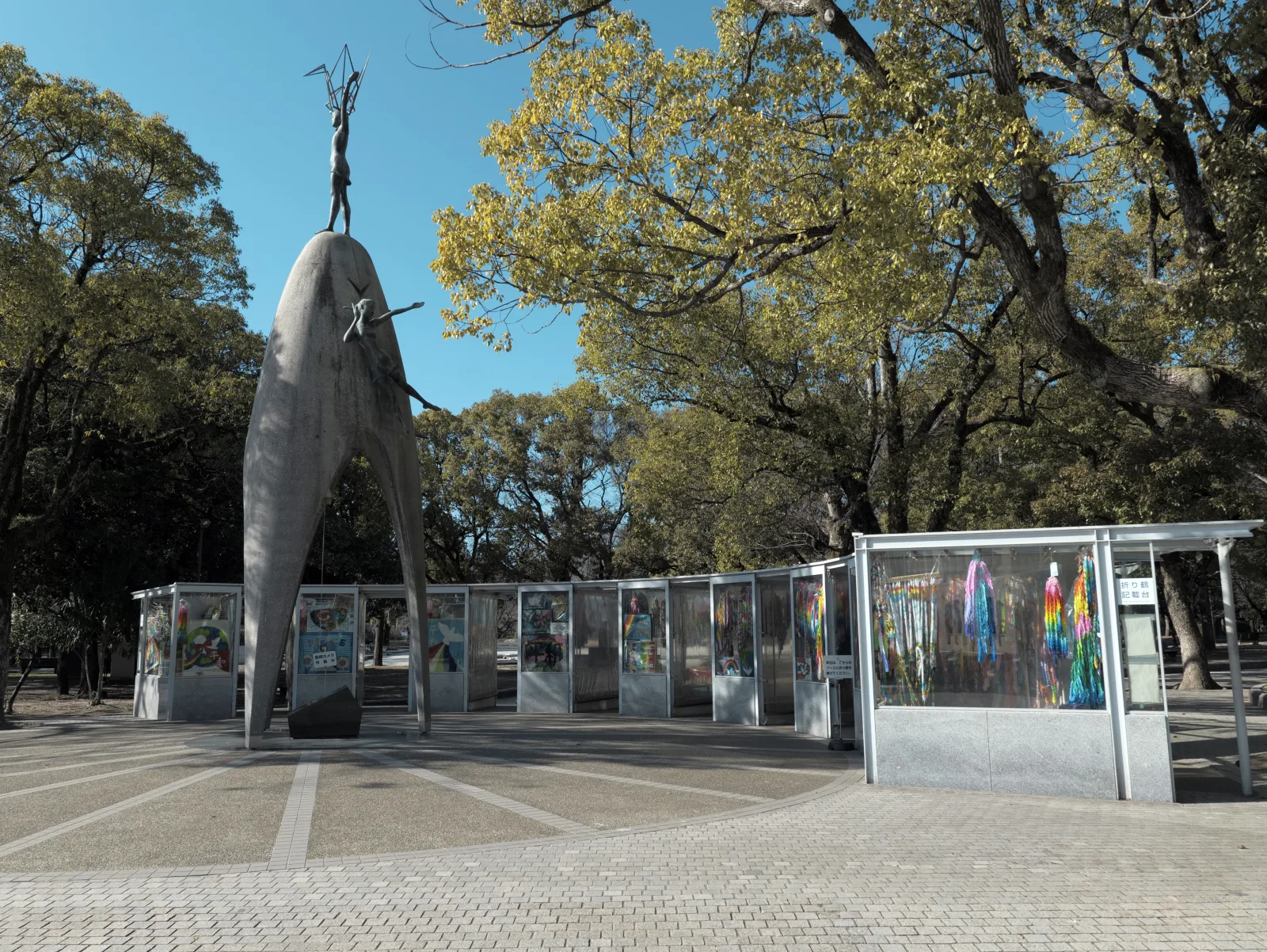
At the Children’s Peace Monument, built to console the children who died in the bombing, paper cranes arrive from all over the world. They are not thrown away: the Hiroshima Tourism Association says they are recycled into origami paper and memo pads, sold at the Rest House and Orizuru Tower. Cranes folded far away end up here among many others, and in time become paper again. That moved me more than I expected: nothing folded for these children is simply thrown away.
If you come on 6 August
The Peace Memorial Ceremony is held in the park every year on 6 August, from 8:00 to 8:50 a.m. The date and time do not change. Anyone may attend, but the city says the general seats are usually full soon after 7:00, and traffic restrictions apply on the roads around the park, so come by public transport.
At 8:15, the time the bomb fell, the Peace Bell and sirens sound, and the city observes a minute of silence — at the ceremony, and in homes and workplaces.
That evening, lanterns are floated on the Motoyasu River across from the Dome. The tourism association says anyone can take part once they have registered.
Before you go
| Peace Memorial Museum | regular admission 200 yen. Hours and closing days: check the museum’s own website (we could not). Generally less crowded early in the morning and in the evening |
| A-Bomb Dome | seen from outside only; it cannot be entered |
| Peace Bell | anyone may ring it |
| From Hiroshima Station | tram lines 2 or 6 to Genbaku Dome-mae, about 20 minutes; the stop is a minute from the Dome. Pay when you get off: cash or transport IC cards |
| 6 August | ceremony 8:00–8:50 a.m., open to anyone; general seats usually full soon after 7:00; traffic restrictions around the park |
Checked 24 September 2026.
How I would walk in
I would make my way to Peace Boulevard first, rather than getting off at the Dome’s stop, so that my first look at the Dome came through the columns of the museum, down the line.
I would walk that line slowly: under the museum, past the cenotaph, to the Dome, and stay there longer than felt necessary.
Last, the bell. I would ring it once, for no longer than the sound lasts.
We have not visited Hiroshima Peace Memorial Park for this guide. Everything here comes from the City of Hiroshima and the Hiroshima Tourism Association, checked on 24 September 2026. The museum’s own website does not allow automated tools like ours to read it, so we have not taken its hours from there.
- City of Hiroshima — the park’s design, the line from Peace Boulevard, the arch and the cenotaph, and the two bridges: city.hiroshima.lg.jp (Peace Memorial Facilities Preservation and Improvement Policy, part 3); the estimate of deaths: city.hiroshima.lg.jp (number of deaths); the ceremony and the 8:15 silence: city.hiroshima.lg.jp (Peace Memorial Ceremony outline); attending the ceremony: city.hiroshima.lg.jp (FAQ)
- Photographs: the hero image by TimMilesWright (CC0); the museum by Wiiii (CC BY-SA 3.0); West Peace Bridge by Taisyo (CC BY 3.0); the A-Bomb Dome by lumoplank (CC0); the Children’s Peace Monument by Hyppolyte de Saint-Rambert (CC BY 4.0); the Peace Bell by そらみみ (CC BY-SA 4.0) — all from Wikimedia Commons
- Hiroshima Tourism Association (Dive! Hiroshima) — museum admission and quieter times: dive-hiroshima.com/en/news/news-45728/; the Dome, the tram stop, the Peace Bell, the paper cranes and the lantern floating: dive-hiroshima.com/en/feature/feature-38357/ and dive-hiroshima.com/en/explore/2687/; the tram from Hiroshima Station: dive-hiroshima.com/en/information/access-peacememorialpark/
More in Hiroshima
- Hiroshima Castle — For the free, wooden Ninomaru and three trees that survived the atomic bomb
- Itsukushima Shrine — For the great torii in the sea, and the walk out to it when the tide allows
- Saijo Station Street — For brick-chimneyed breweries by day, and the station street's izakaya from five
- Where to Stay — For choosing where to sleep: Miyajima after dark and at dawn, the Peace Park, or the station
Explore other areas
- Hokkaido — Sapporo
- Kanto — Hakone
- Hokuriku — Kanazawa
- Koshin-Tokai — Fuji Five Lakes
- Kansai — Nara
- Chugoku — Hiroshima · You are here
- Kyushu — Fukuoka
- Okinawa — Naha
