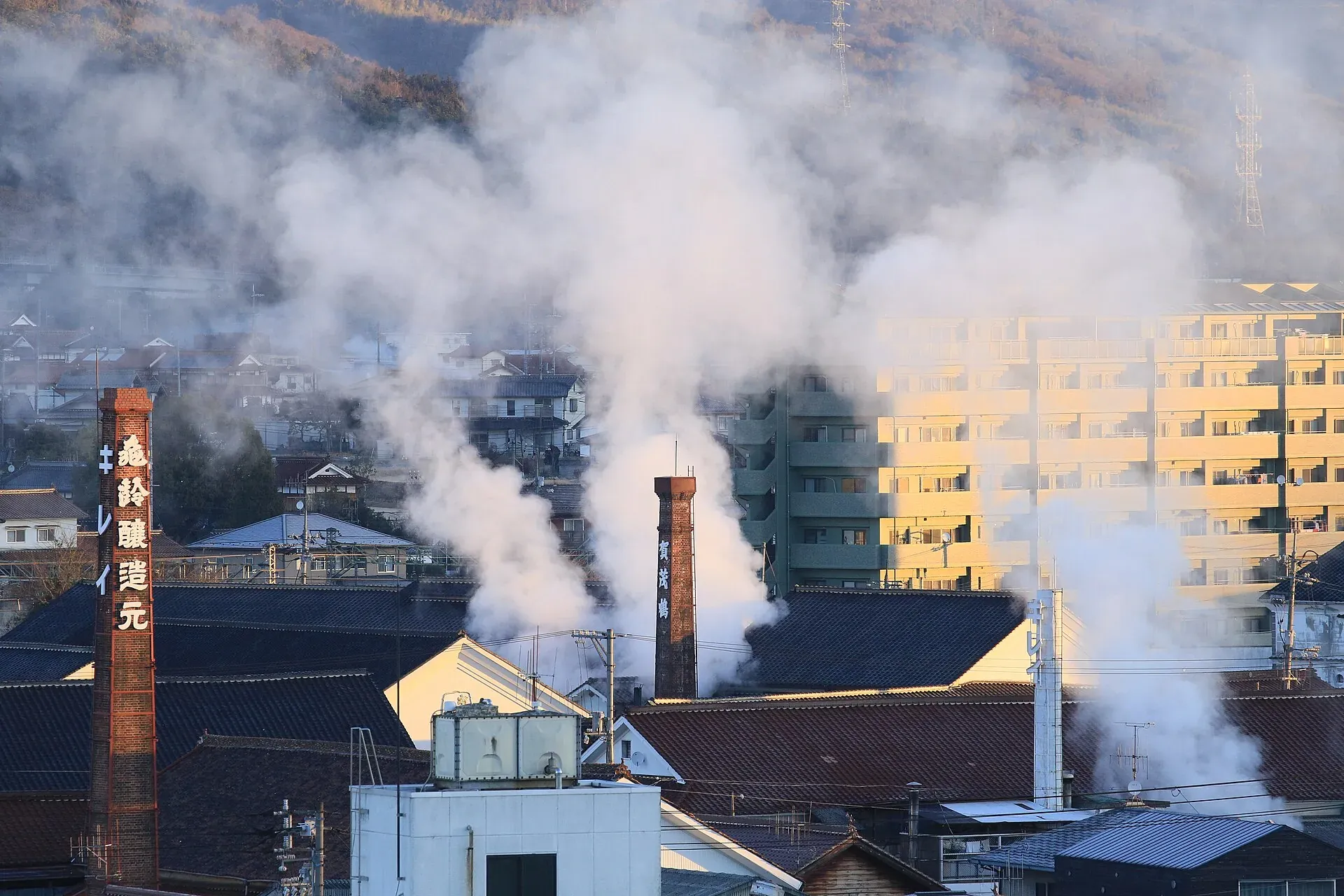
Hiroshima / Guide
Walk Saijo's Sake Breweries by Day, Then Stay: the Station Street Opens at Five
Saijo Station Street西条駅前商店街(岡町)
Saijo is famous for brewery walks by day, but its station-front street is built for the night: only 7 of its 36 places to eat and drink list hours before 5 p.m. So if you come for the red-brick chimneys, stay for dinner instead of taking the afternoon train back to Hiroshima — the Saijo I most want you to see starts where the brewery walk ends.
Saijo is in Higashi-Hiroshima, reached from Hiroshima Station on the JR Sanyo Line. Seven sake breweries stand within walking distance of its station, and a brewery walk is what the town is known for: taste, buy a bottle, head back. The streets in front of the station keep different hours, and they are why I would stay.
A street that sleeps until five
You can count it in the membership of the Saijo Station Front Shopping Street Association: 50 businesses, 36 of them listed as places to eat or to drink at night. Twenty of those 36 are in its nightlife category, the snack bars, stand bars, bars and lounges of the town’s own evenings, and the ones that list their hours open between 18:00 and 20:00.
That leaves sixteen restaurants and izakaya, and more than half of them list no hours before five either. Picture these blocks at three in the afternoon, most kitchens between lunch and dinner, while the brewery shops up the road are still pouring tastings. Two hours later the order flips.
Twenty nightlife venues against seven breweries is the number that made Saijo interesting to me: the storehouses are what the town shows you, the counters are where it spends its own evenings, and several of the izakaya on the street put Saijo sake at the centre of what they serve.
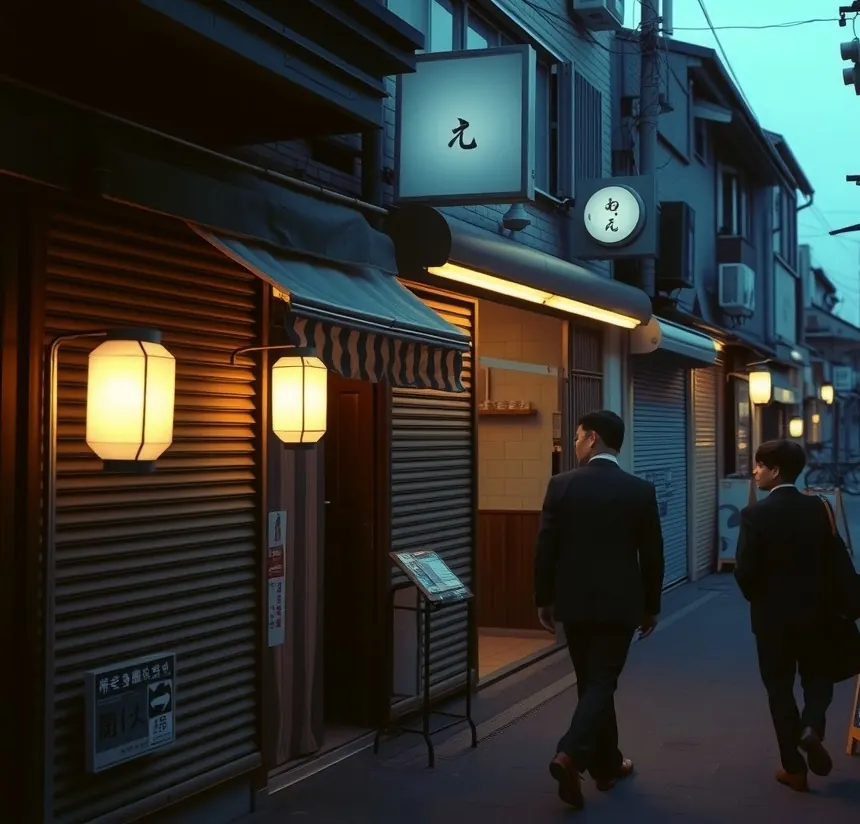
So plan your day in two halves: the breweries while their shops are open, then the station side from five.
Lunch inside a brewery
If you arrive before noon, eat first, and eat at Kappo Shinsuke. You eat inside the Sanyotsuru brewery here, in a Japanese restaurant built into part of the brewery itself. You can sit at a counter made from the lids used on sake-brewing tanks, and the dashi is drawn with Sanyotsuru’s own brewing water from its Kuromatsu well, with dried tuna flakes from Makurazaki and kombu from Rishiri.
Come between 11:00 and 14:00 for lunch. If you want the town’s signature dish, bishonabe, as the centre of a set meal, you need to book two days ahead and come as at least two people.
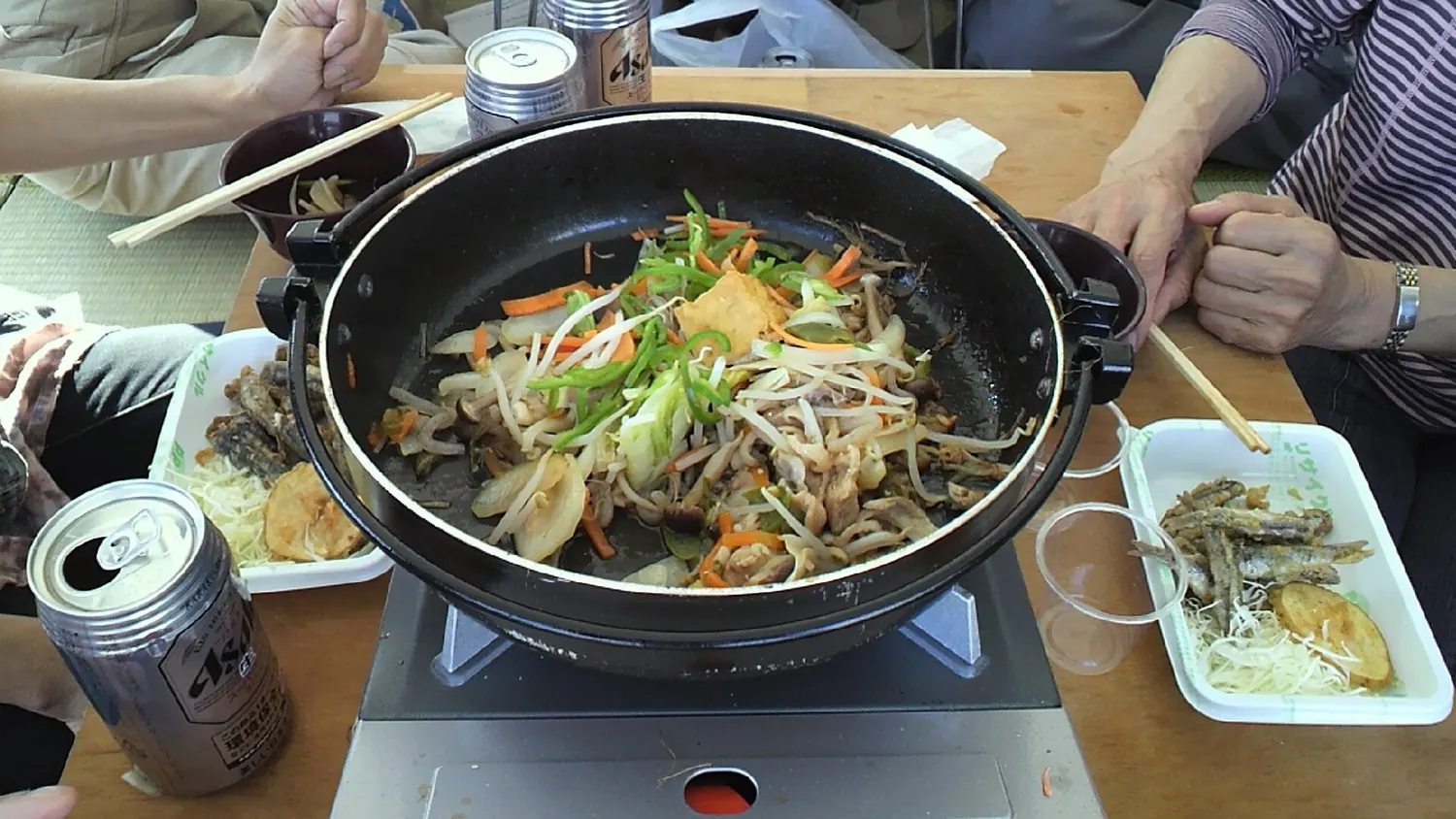
The dish that interests me most in Saijo was never meant for guests. Bishonabe began as the meal cooked for the brewery workers during the brewing season, each brewery with its own ingredients and its own way of making it. The base is simple: garlic fried in the pot, then chicken, gizzards, konnyaku, Chinese cabbage, onion, carrot, leek and green pepper, seasoned with sake, salt and pepper. The alcohol cooks off, so you can order it even if you do not drink.
From two to five, the breweries are the town
The street’s lunch services end between 14:00 and 14:30, and that is when you walk the breweries. There are seven, and you can pick them out before you read a sign: the tourist association describes them as breweries that use their red-brick chimneys as signboards, alongside storehouses of white plaster with black lattice-tiled walls.
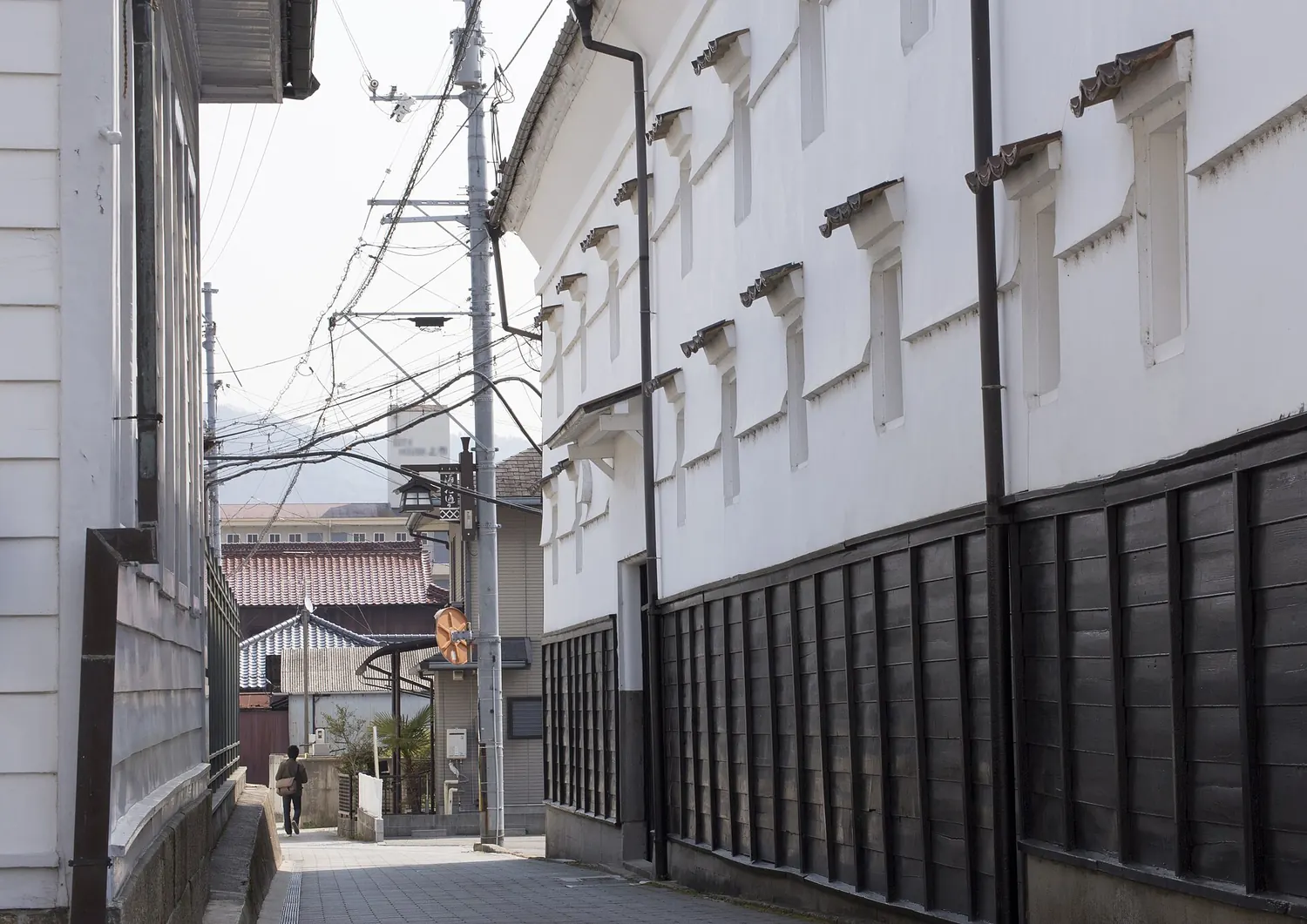
Check the hours before you set your route, because the shops keep short ones and each brewery differs. On the tourism association’s table when we checked:
- Kamotsuru is the late one, open until 18:00 with last entry at 17:45.
- Kamoizumi opens its Shusenkan tasting house until 17:00 on weekends and holidays.
- Fukubijin, Kirei and Saijotsuru close at 16:00, and the first two shut for lunch from 12:00 to 13:00.
- Sanyotsuru opens its shop from 10:00 to 15:00 on weekdays and from 13:00 to 17:00 on Saturdays.
- Hakubotan is the one to check first: it was listed as closed on that week’s Saturday and public holiday, and on weekdays it asks you to phone ahead or use the intercom.
If you only have the afternoon, start at the brewery that closes earliest on the day you visit and finish at Kamotsuru, the last to close.
For a break between tastings, try Kugurimon Coffee, which roasts its own beans inside Kugurimon, a landmark on the brewery street, and brews its coffee with the water Saijo uses to make sake. You can buy beans and local specialities such as sake buns downstairs; the café upstairs serves until 16:30.
Five o’clock: where the town’s sake is poured
This is the half of Saijo to build your trip around. You will not have to guess where to find local sake: several of the street’s izakaya put it in their names or descriptions.
I would start the evening at Chabudai Ozashiki Shonosuke, a minute from the station on the ground floor of the Kamoizumi-kan building, for its tasting set and its sake from eleven Saijo and Higashi-Hiroshima breweries, poured after most of the brewery shops have shut. It calls itself a local-produce izakaya. Dinner starts at 17:00, running until 23:30 from Monday to Thursday, midnight on Friday and Saturday, and 21:30 on Sunday.
If you did not book Shinsuke’s bishonabe two days ahead, try Kuradokoro TARU, which lists the dish among its local cooking (ask whether it is available that night). It calls itself a sake festival that runs all year, with more than thirty labels from ten Higashi-Hiroshima breweries. Imagine a pot of it, garlic first; TARU describes its service as close to self-service, with cash on delivery.
Try Jibameshi & Jizake Manten, three minutes from the station, if you want a late night; it stocks a wide range of Saijo sake alongside dishes from Hiroshima and Saijo ingredients, and is open from 17:00 until 1:00.
The drink I would end on is at Izakaya Dondon: cold sake served in a bamboo tube, which the izakaya names as its most popular order. Dondon has been open since 1985, with more than a hundred small dishes, from sashimi and tempura to fish from its own tank, and it stocks many of Saijo’s local sakes.
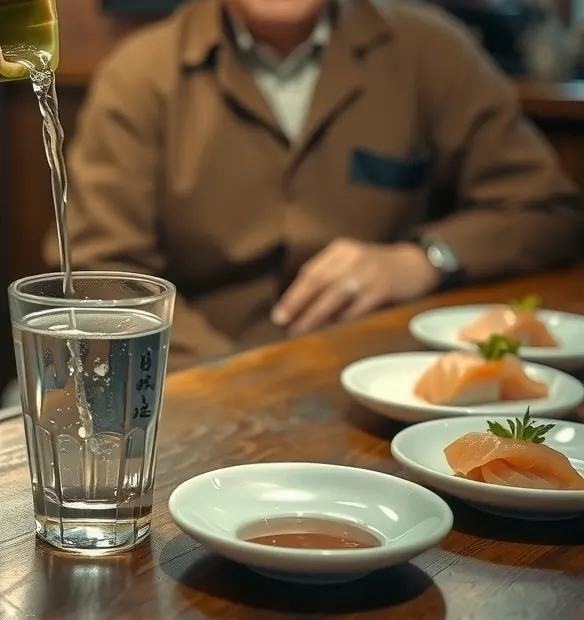
If you would rather sit down to a full meal than drink, Kappo Shinsuke reopens from 17:00 to 21:00.
Which day to come
Saturday. Kappo Shinsuke, Izakaya Dondon and the Sanyotsuru shop close on Sundays, as do 13 of the street’s 20 nightlife venues, and on the tourism association’s table when we checked, Kirei and Saijotsuru were closed that Sunday too. That week’s Saturday had every brewery shop open except Hakubotan, and Shinsuke, Shonosuke, Manten and Dondon all list Saturday hours.
You can come on a weekday too; just remember that Shonosuke’s lunch is by arrangement only, and most of the street’s kitchens list no hours before five.
Before you go
| Getting there | JR Sanyo Line from Hiroshima Station to Saijo Station. The breweries and the station street are both within walking distance of the station |
| Kappo Shinsuke | 11:00–14:00 and 17:00–21:00. Closed Sundays, and Mondays that are public holidays. Bishonabe set meals need booking two days ahead, for two or more |
| Kugurimon Coffee | 10:00–17:00 (café until 16:30). Closed the second and fourth Tuesday |
| Brewery shops | Hours differ by brewery and by day, and change at short notice. The Higashi-Hiroshima tourist association keeps a current table (“Sake Breweries’ Operating Hours”) |
| Chabudai Ozashiki Shonosuke | Dinner from 17:00 (until 23:30 Mon–Thu, 24:00 Fri–Sat, 21:30 Sun). Lunch by arrangement |
| Kuradokoro TARU | Its own website and the street association list different hours and days off. Check its Instagram before you go |
| Jibameshi & Jizake Manten | 17:00–1:00. The street association lists no regular day off |
| Izakaya Dondon | From 17:00. Closed Sundays |
Checked 26 September 2026. Small restaurants change their hours; if one stop matters to you, check before you go.
What I would do on a Saturday in Saijo
I would take a morning train from Hiroshima, eat lunch at the lid-topped counter inside Sanyotsuru, and spend the afternoon among the brick chimneys, leaving Kamotsuru, the latest to close, for last.
At five I would skip the train and cross to the station side: a tasting set at Shonosuke first, bamboo-tube sake at Dondon last, then a train back to Hiroshima, or a room in town so the night does not have to end on a timetable.
We have not visited Saijo or its shops for this guide. The facts here come from the official sources below, checked on 26 September 2026.
- Saijo Station Front Shopping Street Association — its 50 members and their categories, hours and days off; the descriptions of Shonosuke, Kuradokoro TARU, Manten and Izakaya Dondon: saijo-okamachi.ne.jp/shoplist/
- Higashi-Hiroshima Tourism Association — the seven breweries, the red-brick chimneys and white storehouses, bishonabe, and the current brewery hours: higashihiroshima-kanko.jp/saijo-sakaguradori/, higashihiroshima-kanko.jp/sakagura-schedule/, hh-kanko.ne.jp/ginjyo/
- Kappo Shinsuke — its setting inside Sanyotsuru, the counter, the dashi, hours, days off and the bishonabe booking rule: saijyo-shinsuke.jp
- Sanyotsuru — the brewery shop’s hours and days off: sanyotsuru.jp/archives/news/20240401, matching the tourism association’s table
- Kugurimon Coffee — hours, days off, the café and the brewing water: kugurimon.com
- Shonosuke — dinner hours and lunch by arrangement: bistrogroup.co.jp/mise_shounosuke.php
- Kuradokoro TARU — hours listed on its own site: higashihiroshima.wixsite.com/kuradokorotaru
- Photographs: the chimneys at dawn and the storehouse lane by Higashihiroshima City (CC BY-SA 4.0) and bishonabe by Naocchi (CC BY-SA 3.0), from Wikimedia Commons. The street at dusk and the sake at the counter are AI-generated illustrations, not photographs of Saijo or its shops
More in Hiroshima
- Peace Memorial Park — For the A-Bomb Dome, seen down the line the park was laid out on
- Hiroshima Castle — For the free, wooden Ninomaru and three trees that survived the atomic bomb
- Itsukushima Shrine — For the great torii in the sea, and the walk out to it when the tide allows
- Where to Stay — For choosing where to sleep: Miyajima after dark and at dawn, the Peace Park, or the station
Explore other areas
- Hokkaido — Sapporo
- Kanto — Hakone
- Hokuriku — Kanazawa
- Koshin-Tokai — Fuji Five Lakes
- Kansai — Nara
- Chugoku — Hiroshima · You are here
- Kyushu — Fukuoka
- Okinawa — Naha
