Hiroshima / Stay
Where to Stay in Hiroshima: Miyajima After Dark and at Dawn
Where to Stay広島の宿
Itsukushima Shrine has shut its gates by the time its lights come on. So the glowing shrine you see at night is one you cannot walk into: you watch it from the shore, or from a boat. If the night view is all you want, the last ferry still takes you back across to the mainland; if you also want to walk in when the gates open again in the morning, sleep on Miyajima.
The most common visit to the island, according to the Miyajima Tourist Association, lasts two or three hours. Its page on staying over names what a day trip misses, and its last item is what sold the night to me: the clear air at the shrine early in the morning.
The shrine you can only look at after dark
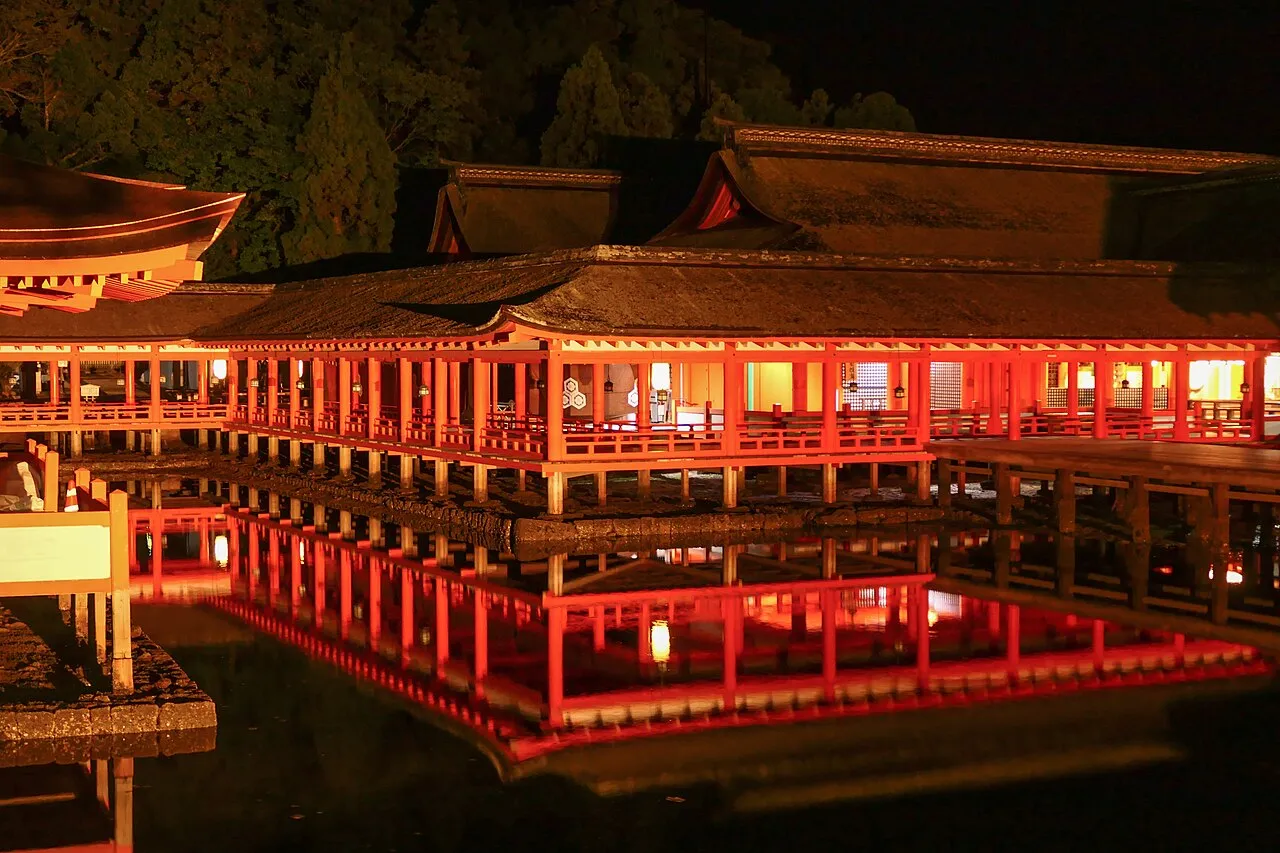
Half an hour after sunset, you see the lights come on, on the great torii and on the shrine’s halls standing over the water, and they stay on late into the evening. The tourist association calls the island at that hour a different world, away from the bustle of the day, where the sound of the waves carries.
While you wait for the lights, walk to Mikasa-hama, the stretch of shore where the torii comes closest to land, for the sunset the association suggests, on a lucky evening. On Machiya-dori, a back street of old townhouses, lanterns are lit under the eaves of shops and homes once it is dark. A roofed boat also sails out from the pier past the lit shrine, and when the tide is high enough it can take you nearer the torii; book it ahead.
Read when you can walk out to the torii before you choose your dates: the tide decides what the morning shows you.
If you want the lights and the morning, sleep on Miyajima
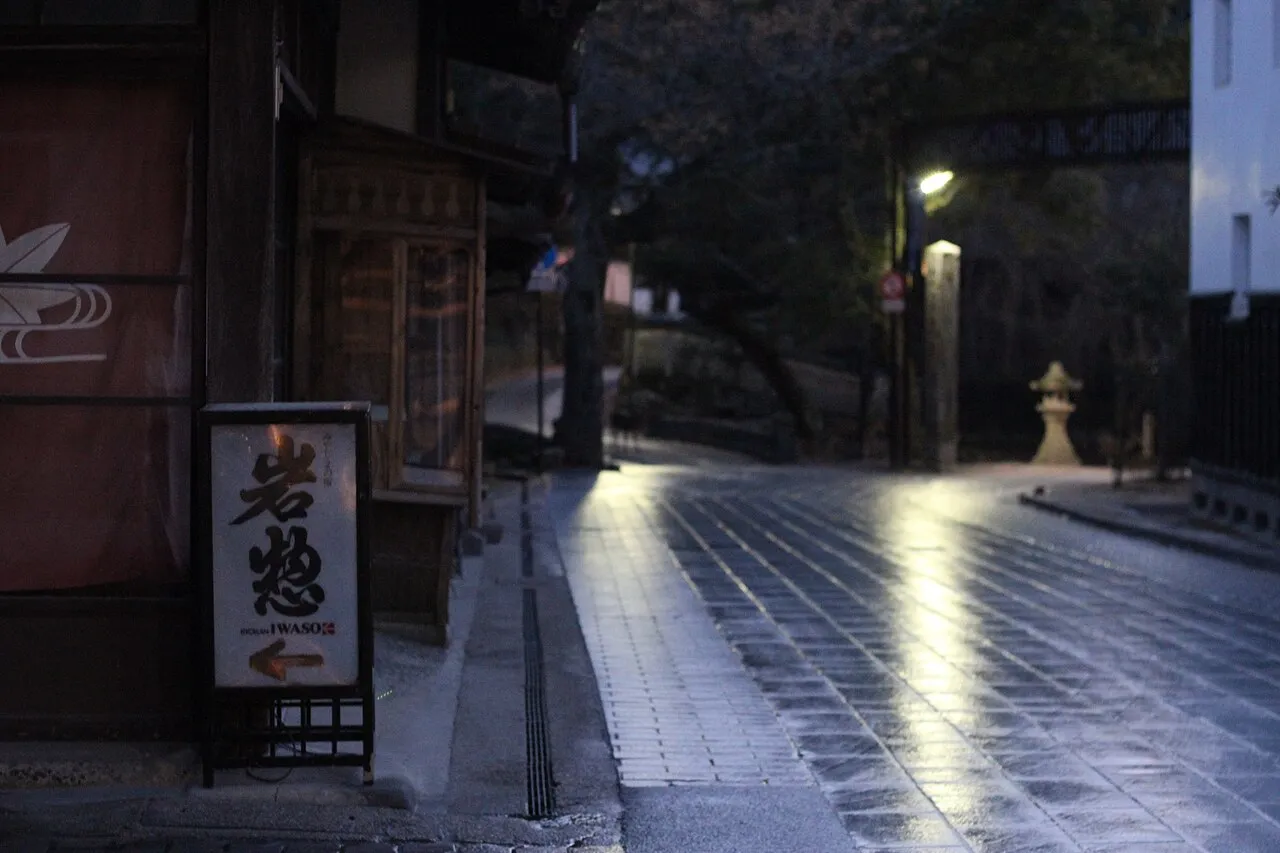
One inn we would look at: Iwaso. It opened in 1854 at the mouth of Momijidani, the maple valley behind the shrine, and its separate cottages, built between the Taisho and Showa eras, give each room a building of its own. In the main building, the inn says, the sound of the Momiji river comes right into the room, and that is the room I would ask for.
You can walk to the shrine in a few minutes, and if you ask, the inn will send its own bus to meet you at the pier. The chef trained for years in Kyoto kaiseki, so I would plan the evening around the inn’s table and walk out to the shore afterwards for the lights.
Or: Kinsuikan, an inn in the town since 1902. From a lounge on its roof you can take in the Seto Inland Sea, the great torii and the Senjokaku hall at once, the inn says. Guests can go up until late at night and again from early morning, so the same roof gives you the torii after dark and again in the morning.
If Miyajima is a day trip, sleep by the Peace Park
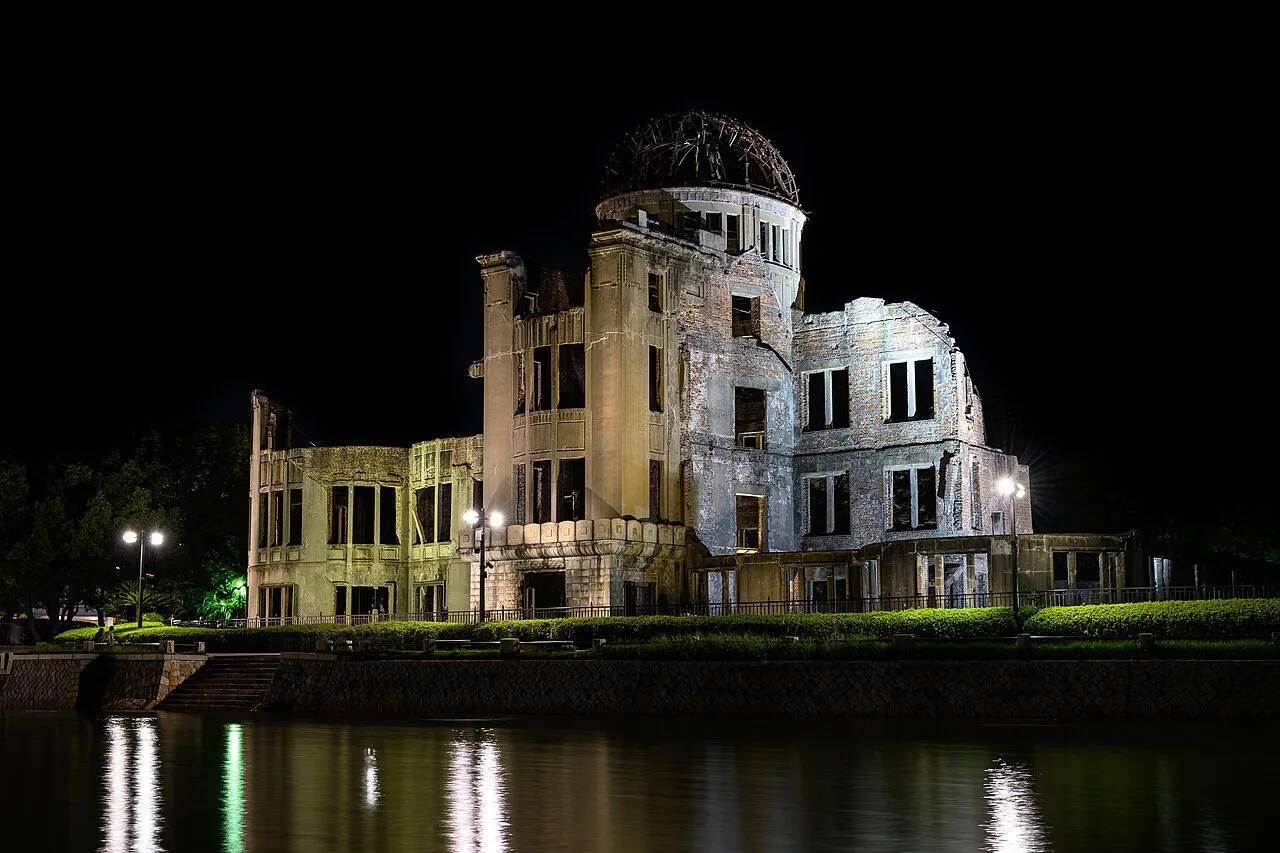
You will find Hiroshima’s centre compact and, outside its neon district, dark at night. At that hour the Atomic Bomb Dome, lit in white, looks sharper than by day, in the words of a night-view guide writing for the prefecture’s tourism site, who sends you to the riverbank, where the Dome lies reflected in the water, rather than up close. Read how to walk into the Peace Park along its line and what to see at Hiroshima Castle now that the keep is closed.
You can still reach Miyajima from here. A high-speed boat leaves from a pier by the park and reaches the island in about 45 minutes, slowly along the city’s rivers first, under the bridges, then at full speed across the sea. Its last sailing back leaves in the late afternoon, so if you stay on the island for the lights, come home by the ferry and the train.
One hotel we would look at: RIHGA Royal Hotel Hiroshima. It stands in the middle of the city, and from its south side, the hotel says, you look out over both of Hiroshima’s World Heritage sites, the Dome and Miyajima, and from its north side over Hiroshima Castle. If a view of the island you are going to tomorrow matters to you, ask for a south-facing room.
If you are moving on by bullet train, sleep at the station
One hotel we would look at: Hotel Granvia Hiroshima. It is joined to the Shinkansen exit of Hiroshima Station, so rain is no worry on the way in, and the airport bus leaves from a short walk away. From here you are about half an hour by JR from Miyajimaguchi, and then the ferry.
Before you go
| Hiroshima Station ↔ Miyajima | JR Sanyo Line to Miyajimaguchi about 30 minutes, then the ferry about 10 minutes. Pier to Itsukushima Shrine about 15 minutes on foot. Last JR ferry from Miyajima to Miyajimaguchi 22:14 (regular timetable) |
| Peace Park ↔ Miyajima by boat | About 45 minutes, no change. Last boat from Miyajima 17:30 (regular timetable). Some sailings are cancelled or re-routed because of the tide. A Miyajima visitor tax of 100 yen is added to tickets to the island |
| The lights | From 30 minutes after sunset to 23:00: the great torii, the shrine’s halls and the Tahoto pagoda. You cannot enter the shrine while they are on. May be cancelled once or twice a year for rituals or events |
| Shrine gates | 6:30–18:00 (1 March–14 October), 6:30–17:30 (15 October–30 November), 6:30–17:00 (December) |
| Five-storied pagoda | Under repair and out of sight. The shrine gives 20 November 2027 as the end of the work; the tourist association says December 2026, possibly later |
| Night boat to the torii | About 25 minutes, from Miyajima Pier No. 3. Nearer the torii only when the tide allows. Book at least 2 hours ahead; a sailing with no booking by 17:00 the day before is cancelled |
| Iwaso | Momijidani. About 3 minutes on foot to the shrine, 15 from the pier; pick-up from the pier on request (8:00–20:00). Chef trained in Kyoto-style kaiseki. Check-in 15:00, check-out 10:00 |
| Kinsuikan | In the town on Miyajima. Rooftop lounge for guests after check-in, 14:00–24:00 and 6:00–11:00. Check-in 15:00, check-out 11:00 |
| RIHGA Royal Hotel Hiroshima | Central Hiroshima. 3 minutes on foot from the Kamiyacho-higashi and Kamiyacho-nishi tram stops, about 10 minutes by tram from Hiroshima Station. Check-in 15:00, check-out 11:00 |
| Hotel Granvia Hiroshima | Joined to the Shinkansen exit of Hiroshima Station. Airport bus stop about 2 minutes on foot; about 50 minutes to the airport |
Checked 6 October 2026. We list no room rates.
Where I would sleep
I would take a room at Iwaso in autumn, eat in, walk down to the shore when the lights come on, and be back at the shrine’s gate when it opens in the morning.
For every area on this page, see hotels in Hiroshima on Expedia. That is an affiliate link: if you book through it, we earn a commission.
We have not stayed at any of the places on this page or visited the areas described. The facts here come from the official sources below, checked on 6 October 2026.
- Miyajima Tourist Association — how long most visitors stay, what staying gives you, the lights, Mikasa-hama, Machiya-dori, the five-storied pagoda: miyajima.or.jp
- Itsukushima Shrine — gate hours and the repair schedule (the shrine asks not to be linked to)
- JR West Miyajima Ferry — crossing time and last sailings: jr-miyajimaferry.co.jp
- Aqua Net Hiroshima — the World Heritage Sea Route boat and the night boat to the torii: aqua-net-h.co.jp
- Dive! Hiroshima (Hiroshima Prefecture tourism) — Hiroshima at night, the Atomic Bomb Dome and the route to Miyajima: dive-hiroshima.com
- Iwaso — its founding, cottages, the river, meals, access and times: iwaso.com
- Kinsuikan — its founding, rooftop lounge and times: kinsuikan.jp
- RIHGA Royal Hotel Hiroshima — views, access and times: rihga.co.jp/hiroshima
- Hotel Granvia Hiroshima (JR West Hotels) — the station connection and airport bus: jrwest-hotels.jp/granvia-hiroshima/
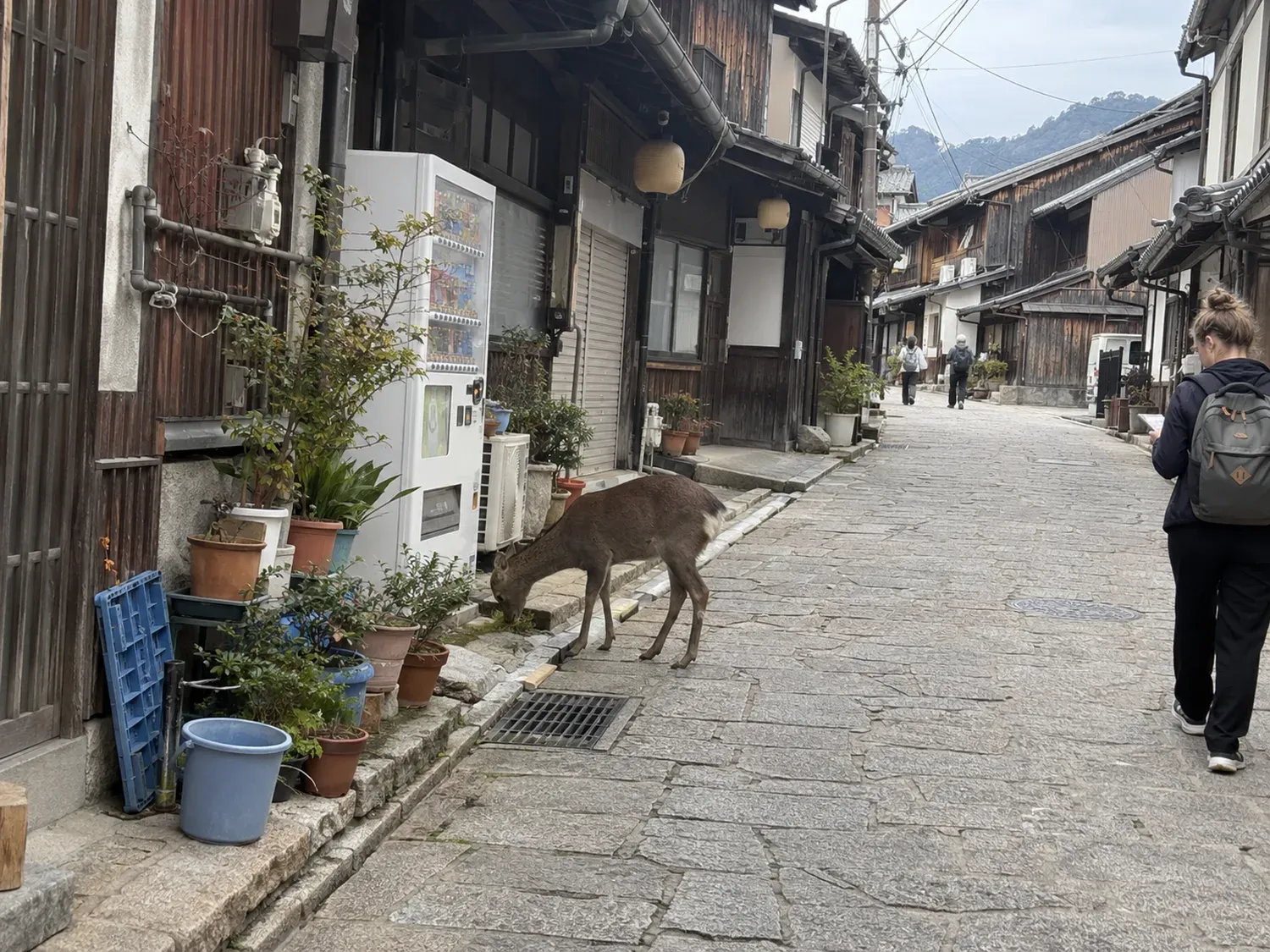
- Photographs: Itsukushima Shrine at night by MaedaAkihiko (CC BY-SA 4.0); Iwaso by fto mizno (CC BY 2.0); the Atomic Bomb Dome by K6ka (CC BY-SA 4.0). All from Wikimedia Commons. The hero image is an AI-generated photo illustration, not a photograph of any place to stay on this page.
More in Hiroshima
- Peace Memorial Park — For the A-Bomb Dome, seen down the line the park was laid out on
- Hiroshima Castle — For the free, wooden Ninomaru and three trees that survived the atomic bomb
- Itsukushima Shrine — For the great torii in the sea, and the walk out to it when the tide allows
- Saijo Station Street — For brick-chimneyed breweries by day, and the station street's izakaya from five
Explore other areas
- Hokkaido — Sapporo
- Kanto — Hakone
- Hokuriku — Kanazawa
- Koshin-Tokai — Fuji Five Lakes
- Kansai — Nara
- Chugoku — Hiroshima · You are here
- Kyushu — Fukuoka
- Okinawa — Naha
