Sapporo / Guide
Sapporo Beer Museum: Follow the Red Star on Your Own, in English
Sapporo Beer Museumサッポロビール博物館
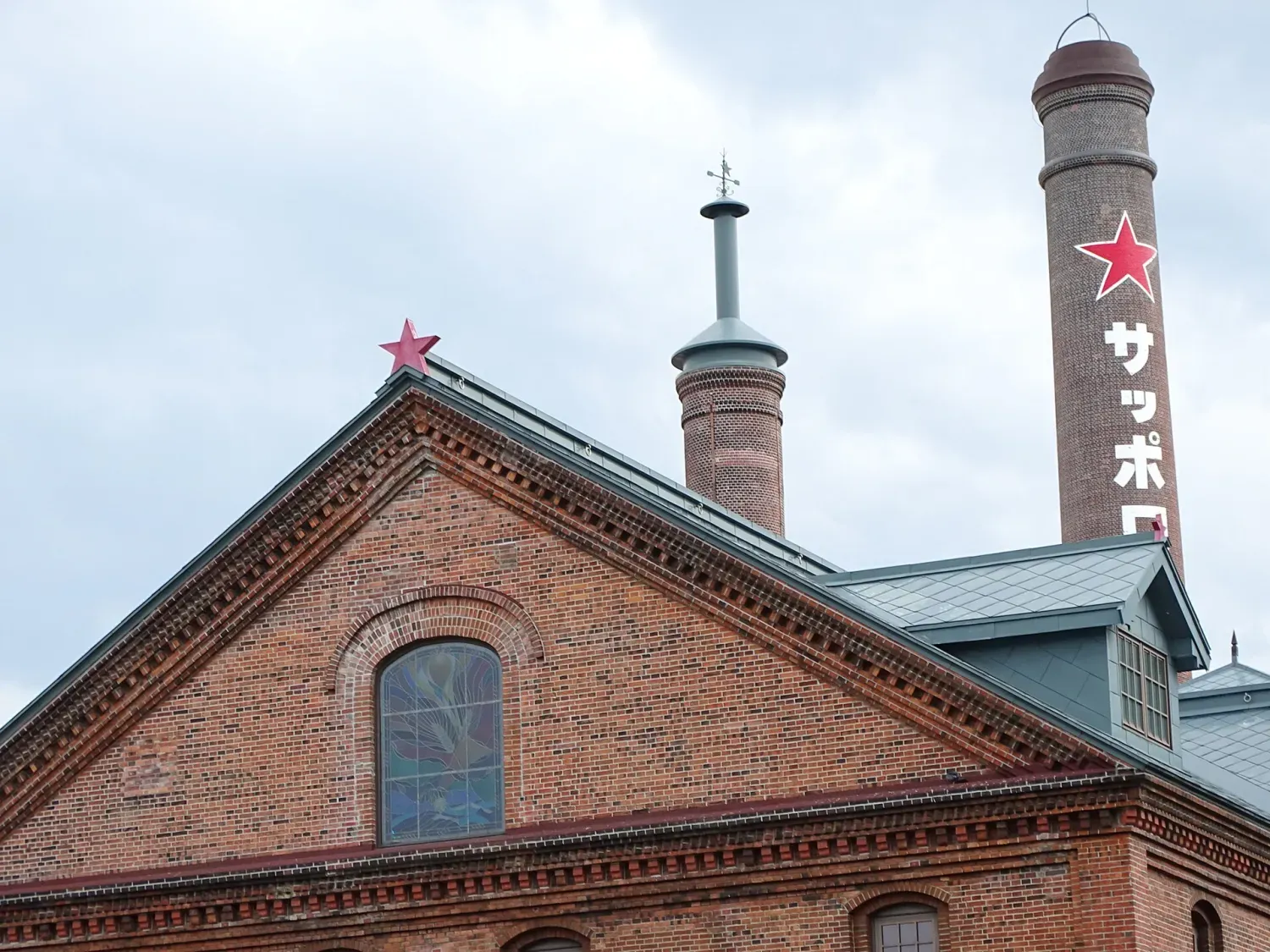
If you do not understand Japanese, walk the Sapporo Beer Museum on your own instead of booking its 55-minute tasting tour. The museum states plainly that the tour is conducted entirely in Japanese. The walk-in route comes with English audio on your phone, runs from the top floor of the red-brick building down to the ground, and ends at a tasting counter. I would choose it for its name alone. That audio is called “The Story of SAPPORO BEER: Guided by the star,” after the red star on the chimney outside: the emblem of the office that opened up Hokkaido, modeled on the North Star, which the company calls a sure signpost for the people who took on that work.
You may have heard that the museum is free. It isn’t anymore. Entry for the self-guided route is now 1,000 yen for adults, and the guided tour 2,000 yen. The walk-in route costs half as much and needs no booking, which makes it the place to start.
The star on the chimney
Before you go in, look up. The red five-pointed star on the brick chimney, the gōryōsei, was the emblem of the Kaitakushi, the office that led Hokkaido’s development. It shone on the uniforms of Kaitakushi officials and tondenhei soldier-settlers and was dyed red on the office’s ship flags, and Sapporo Breweries explains that it was modeled on the North Star.
I did not expect a beer company’s symbol to have started life on a pioneer’s coat, but the star came down through the Kaitakushi’s own brewery, opened in 1876, to the company that brews Sapporo today.
The museum and the Kaitakushi-kan beside it are both Meiji-era brick buildings listed as Hokkaido Heritage. The museum’s bricks came from Ebetsu, where brickmaking began in Hokkaido’s settlement years.
Three floors, one way down
You start at the top. A small elevator lifts you to the third floor, and from there the route only goes down, by ramps and stairs, through the second floor to the first. Your own phone and earbuds pick up the story at 15 points along the way, in English if you choose, and if your phone will not do, the museum lends one free.
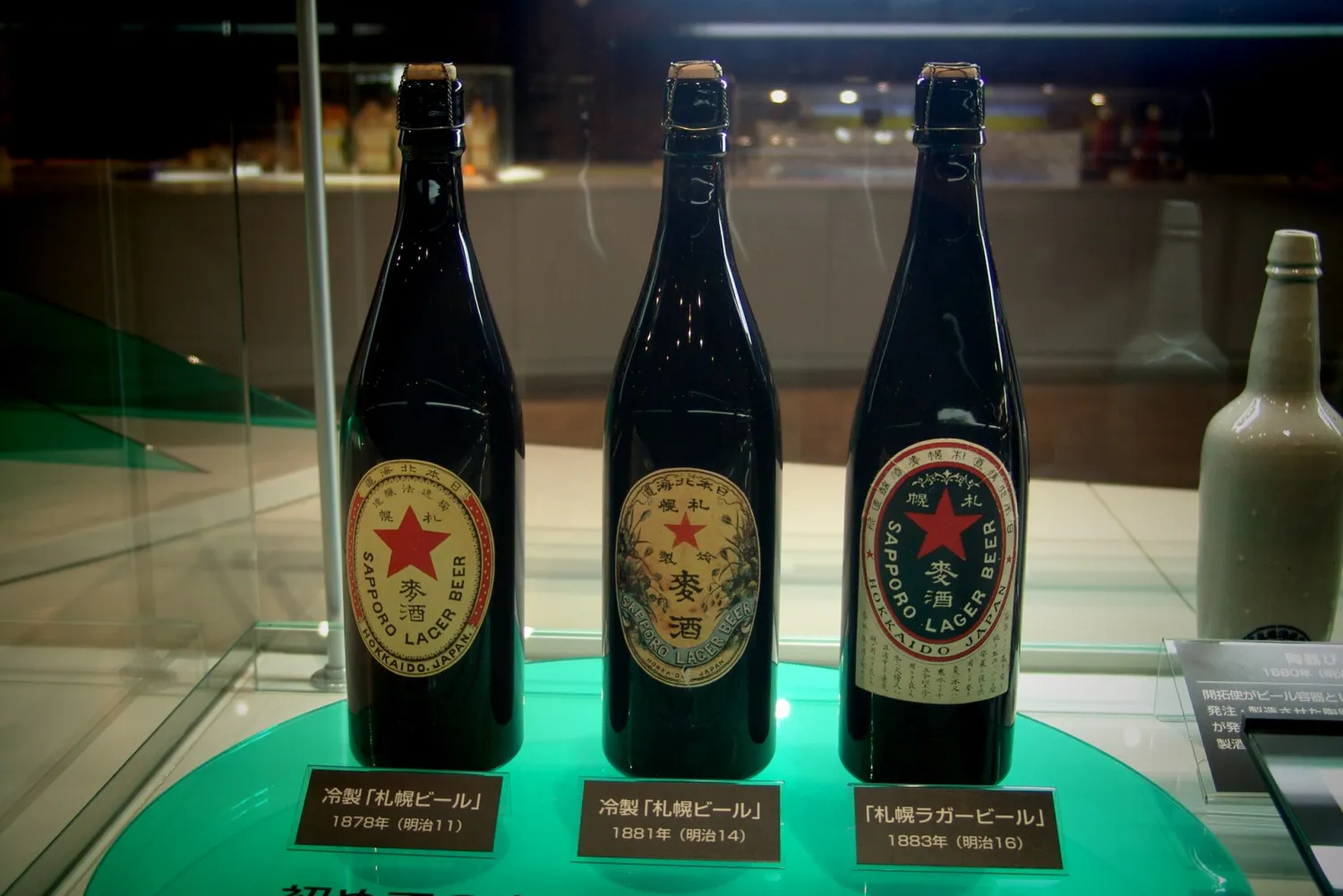
The object that pulls at me most is the brew kettle, used for real brewing until 2003 and so large, the tourism association says, that visitors find themselves just staring at it. The association also describes Sapporo beers from past eras lined up in a row, and the story of how Black Label got its name.
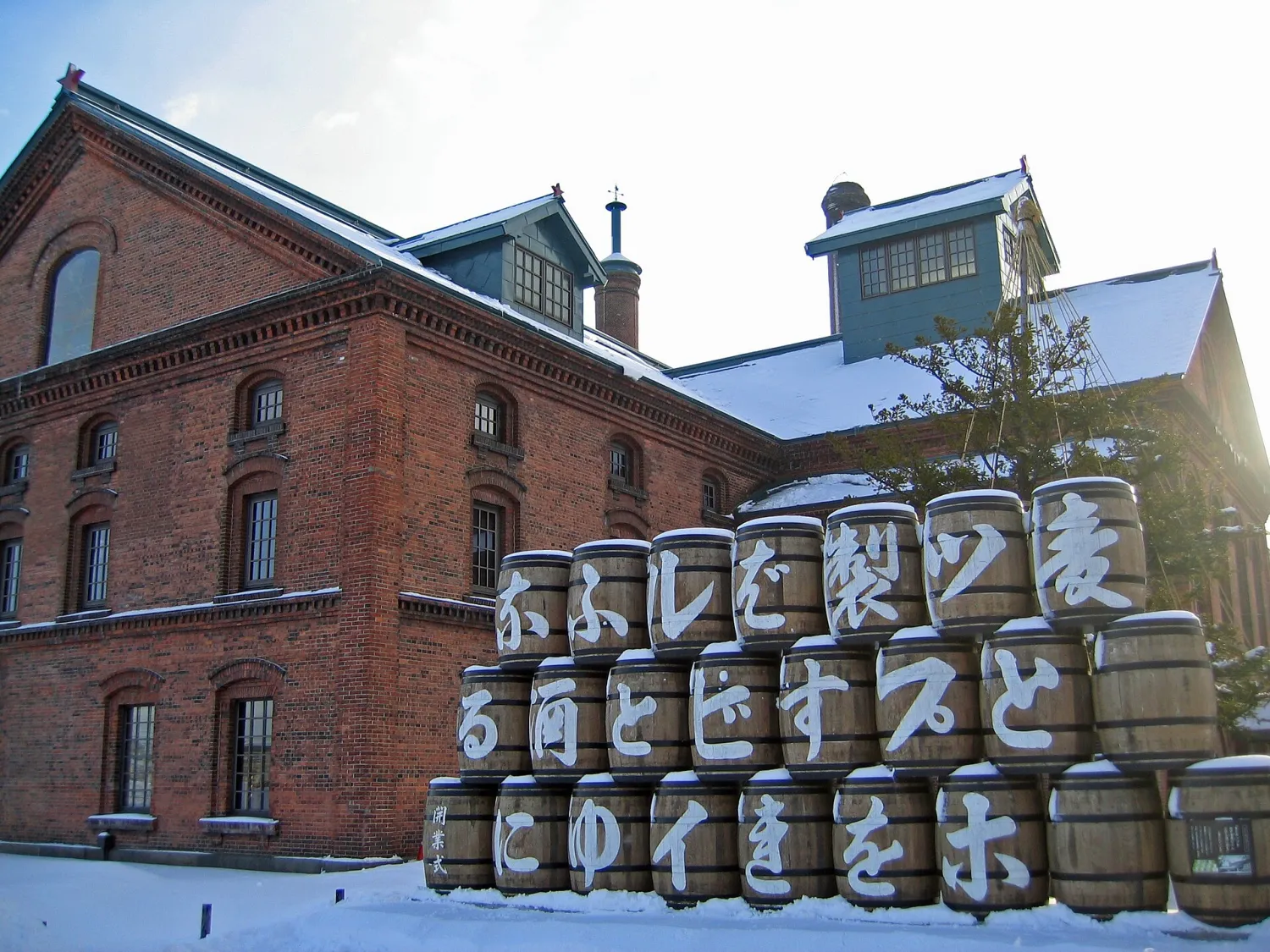
The line I keep turning over is one the tourism association says greets visitors on a great barrel: “If you process barley and hops, it becomes the drink called beer.” Sapporo Breweries reads the “if” as the point of the sentence. Barley and hops do not turn into beer by themselves; the if is where the difficulty, and the pioneers’ effort, is hidden.
Come in the afternoon rather than at the last minute. The doors take their last visitors at 17:30, and the tasting at the end is not something to rush.
The tasting hall at the end
The route lets you out into the Tasting Hall on the first floor, and the museum asks visitors not to come for the tasting alone. There are three beers to choose from. If you drink one, make it Kaitakushi Beer, the one the tourism association says you can drink only here. If you want to compare, a set of all three puts it beside Black Label and Sapporo Classic, which is sold only in Hokkaido.
If you would rather take the tour
The tour is worth it if you understand spoken Japanese, or if you want what the walk does not have: a 6K theater where the company’s history is retold on screen, and a taste of Fukkoku Sapporo Beer, a recreation of one of the founding-era brews that the tourism association describes as fruity first, then bitter with hops. It needs a reservation and usually does not run on Mondays; the details are in the table below.
Lamb next door
Next door, the Kaitakushi-kan began as a sugar factory in 1890, made malt until 1965, and has been the Sapporo Beer Garden since 1966. Its restaurants serve jingisukan, Hokkaido’s lamb dish.
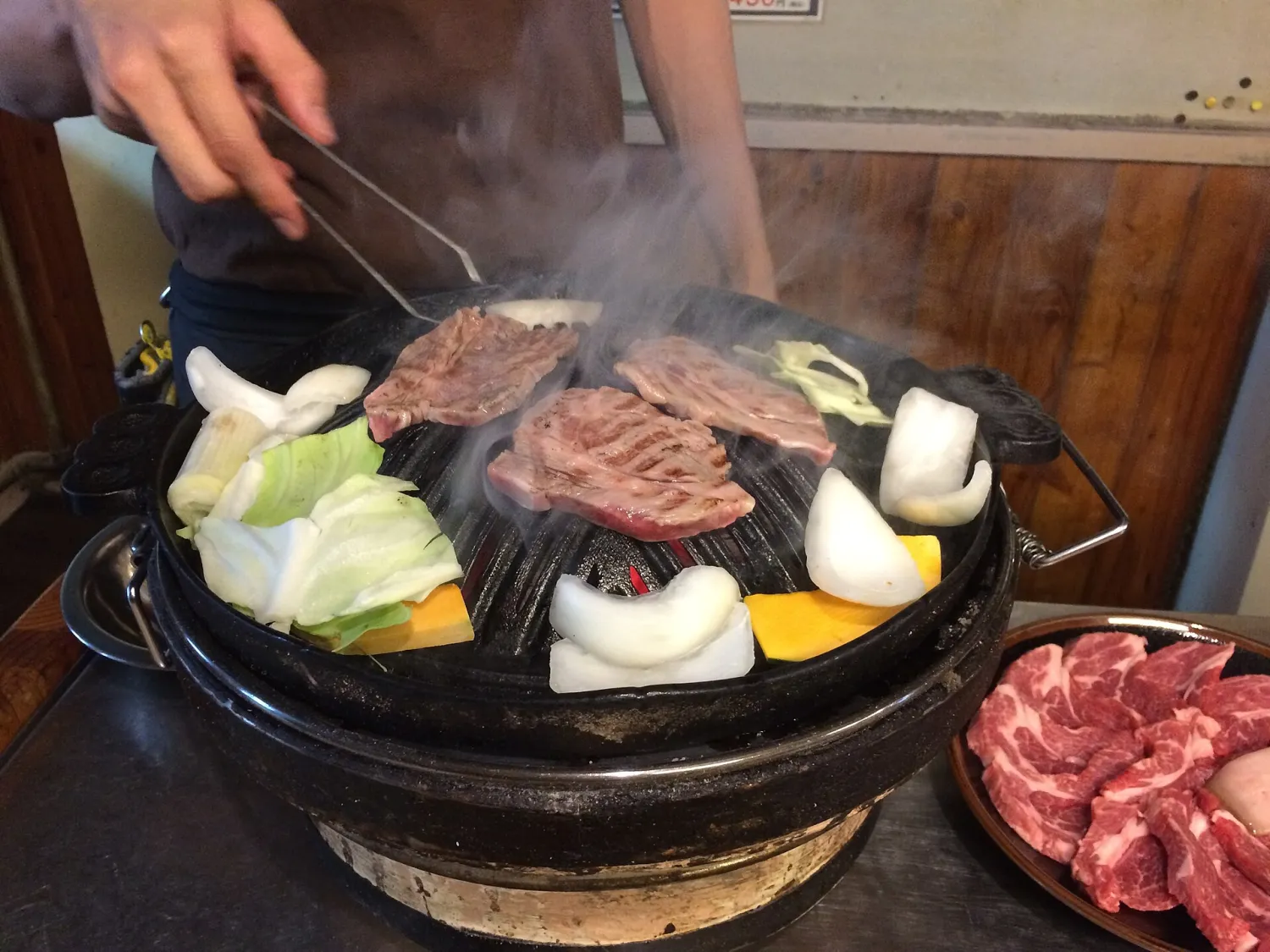
If you want dinner after the museum, I would walk over rather than head back into town. The beer garden stays open until 21:00, three hours after the museum shuts, and if you choose a restaurant in the Kaitakushi-kan, you eat inside the brick building you have just been reading about.
Before you go
| Hours | 11:00–18:00, last entry 17:30. Open every day except 31 December; the museum may close on other days at short notice. Tasting Hall 11:00–18:30 (last orders 18:00). Museum shop 11:00–19:30 |
| Self-guided route | Adults 1,000 yen, middle-school age to 19 years old 500 yen, elementary-school age and under free. No booking. 15–30 minutes, up to 40 with the audio. Audio guide in Japanese, English, Korean and Chinese on your smartphone; phones lent free |
| Guided tour | Japanese only. About 55 minutes with two tastings. Adults 2,000 yen, middle-school age to 19 years old 1,000 yen, elementary-school age free; no children under school age. Not on Mondays, except public holidays; after a holiday Monday, no tour on the Tuesday. First tour 11:30. Online booking until 9:30 on the day; seats left can be booked at the tour desk up to 20 minutes before. English or Korean audio device 1,000 yen extra |
| Tasting Hall | Black Label 450 yen, Sapporo Classic 450 yen, Kaitakushi Beer 550 yen, set of three 1,200 yen. Seats for up to 30 minutes. Drivers (including cyclists), and pregnant or breastfeeding visitors, are offered non-alcoholic beer or soft drinks |
| Getting there | Chūō Bus from Sapporo Station: route 188 from the North Exit (stop 2), or route Kan-88 from the Sapporo-ekimae stop on the south side, to the Sapporo Biiru-en stop, right outside. Or JR Naebo Station, North Exit, about 8 minutes on foot; subway Tōhō Line, Higashi-Kuyakusho-mae Station, Exit 4, about 10 minutes |
| Sapporo Beer Garden | Next door. 11:30–21:00 (last orders 20:40). Closed 31 December |
Checked 27 September 2026.
What I would do at the Sapporo Beer Museum
The star is the reason I would give this museum an afternoon, and the walk, not the tour, is how I would follow it: in English, from the third floor down, ending with a glass of Kaitakushi Beer, the one the tourism association says is poured only here.
We have not visited the Sapporo Beer Museum for this guide. The facts here come from the official sources below, checked on 27 September 2026.
- Sapporo Breweries (Sapporo Beer Museum) — the self-guided route, the audio guide, fees, the guided tours, the English audio devices, the tasting hall, drinking rules, hours and access: sapporobeer.jp/english/brewery/s_museum/, sapporobeer.jp/brewery/s_museum/kengaku/, sapporobeer.jp/brewery/s_museum/access/; Hokkaido Heritage and the phones lent free: sapporobeer.jp/brewery/s_museum/
- Sapporo Beer Garden — the move to paid entry, the star on the chimney and its meaning, the 1876 brewery, the Kaitakushi-kan, Ebetsu bricks, the barley-and-hops phrase and the restaurant hours: sapporo-bier-garten.jp/other/museum/, sapporo-bier-garten.jp/history/
- Sapporo Tourism Association (Welcome to Sapporo) — the brew kettle, the beers on display, the origin of the Black Label name, the barrel, Kaitakushi Beer and the recreated beer’s taste: sapporo.travel/spot/facility/sapporo_beer_garden/
- Photographs: the hero image by Adam Jones (CC BY-SA 2.0); the bottles by MIKI Yoshihito (CC BY 2.0); the barrels by Ruth Hartnup (CC BY 2.0); the jingisukan by pelican (CC BY-SA 2.0) — all from Wikimedia Commons
- Paid entry began in July 2026.
More in Sapporo
- Sapporo Clock Tower — For the 1881 clock that still strikes the hour, heard from the free terrace across the street, then a walk south to Tanukikoji
- Susukino — For a night of lamb at a fourteen-seat counter, then Sapporo miso ramen in the old alley or a parfait after midnight
- Otaru Canal — For the blue sky over the warehouses just after sunset, and a cruise by day or by night
- Jozankei Onsen — For free hot water on the street: a kappa hand bath, foot baths and a spring that cooks eggs
- Where to Stay — For choosing where to sleep by where your night ends: Susukino after the last bowl, the station for early trains, one night in Jozankei
Explore other areas
- Hokkaido — Sapporo · You are here
- Kanto — Hakone
- Hokuriku — Kanazawa
- Koshin-Tokai — Fuji Five Lakes
- Kansai — Nara
- Chugoku — Hiroshima
- Kyushu — Fukuoka
- Okinawa — Naha
