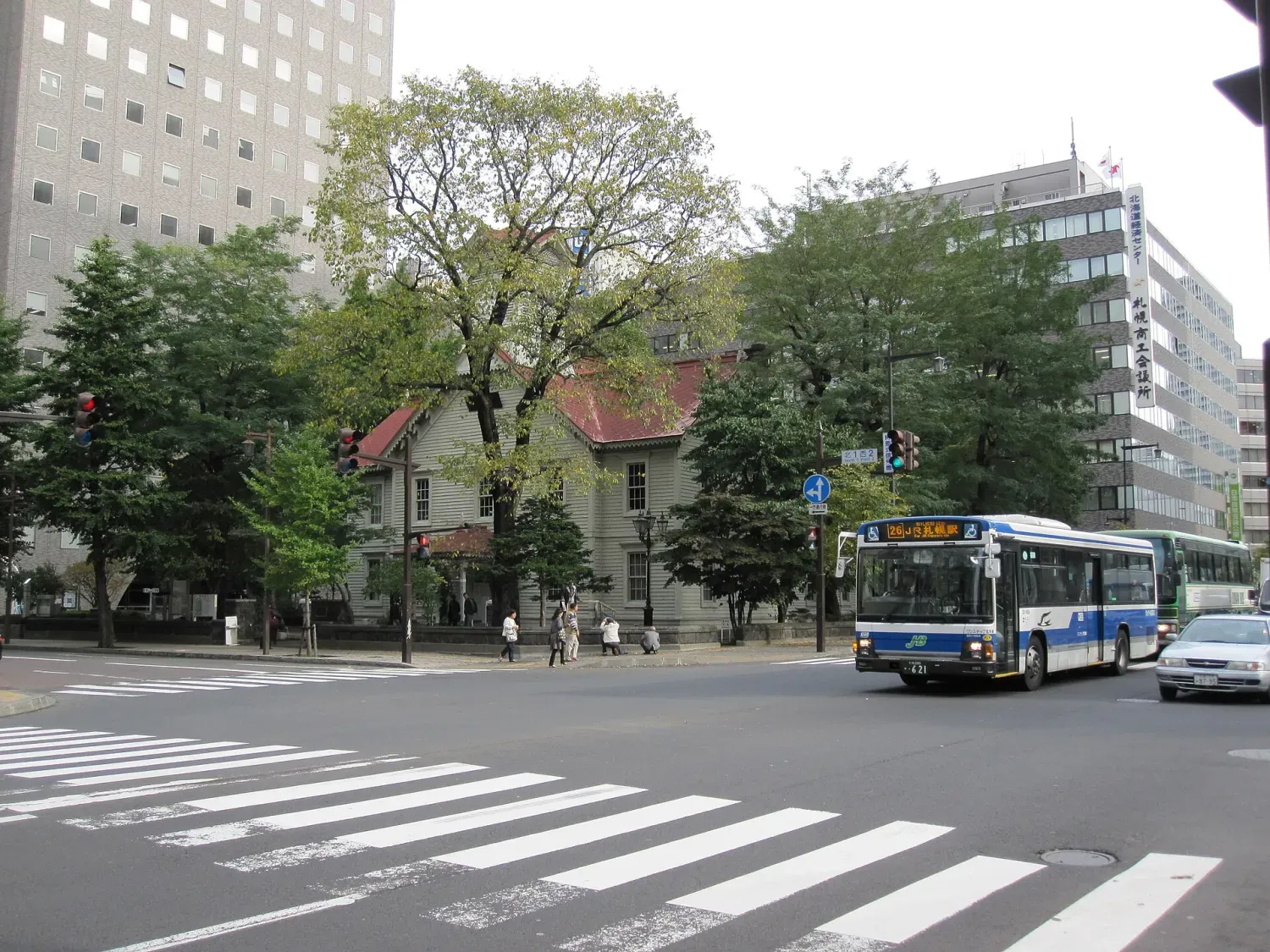
Sapporo / Guide
Sapporo Clock Tower: Hear the Hour, Then Walk South
Sapporo Clock Tower札幌市時計台
If you have ten minutes at the Sapporo Clock Tower, do not spend them at the gate. Cross the street, climb to the free photo terrace on the second floor of the building opposite, and be there a few minutes before the hour. The clock that first rang out the time over Sapporo on 12 August 1881 still strikes every hour, once for each hour, 156 times a day. At noon, that is twelve.
My favourite page on the tower’s own website is a repair list. In more than 130 years, the keepers have replaced the wire that holds the weights, the wooden hands on the dial, two broken gear teeth, a few screws and one shaft of the winding handle. Nearly everything else is the machine that came from the E. Howard company in New York.
Then walk south instead of taking the subway. Within a few blocks you pass a coffee counter that opened in 1971, a market said to have begun with fish sellers in the early Meiji years, and, at the far end of Tanukikoji, a tea shop founded in 1927 that says it roasts its hojicha every day.
A small white hall in an office district
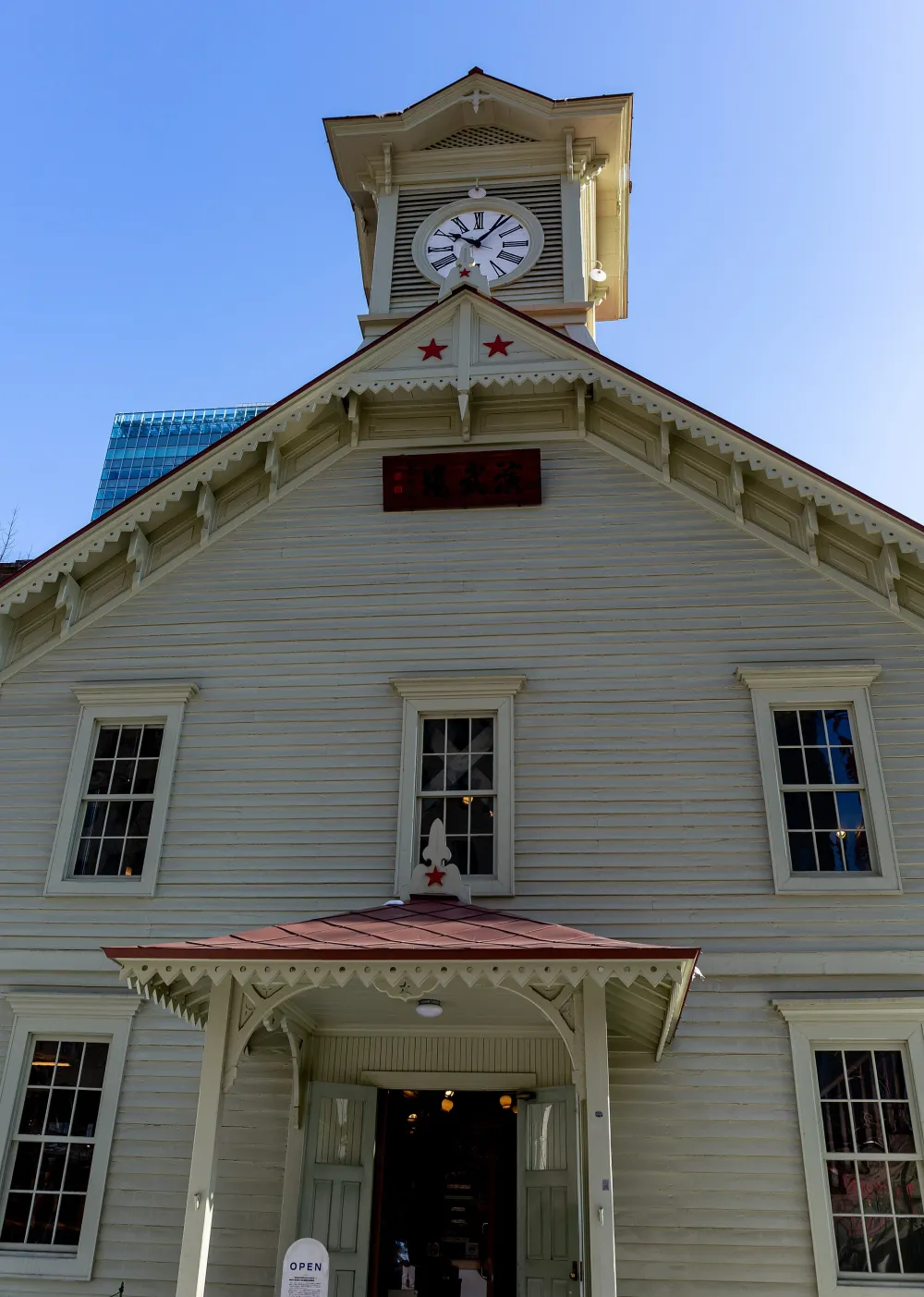
Do not expect a tower on a hill. The Clock Tower is a two-storey wooden hall in an office district. It was built in 1878 as the drill hall of the Sapporo Agricultural College, the school that became Hokkaido University, for military drill and for entrance and graduation ceremonies. There was no clock at first, only a small bell on the roof to mark the start and end of classes. The clock was ordered from New York that October and began keeping time three years later.
The tower’s own site admits that, because the clock tower was added afterwards, the front can look top-heavy, and that this odd shape is exactly what makes people fond of it. The walls are white boards, but the official history says they were grey when the hall was built, and pale green, then green, for a time after that. Look up and count the red stars, the symbol of Hokkaido’s old development commission: there are 17.
Some tower clocks are kept silent at night because of the noise, the tower’s staff write, but with only offices for neighbours, nobody here complains, so the bell keeps striking through the night.
Why the tower faces west
In 1906, after the college moved to the site of today’s university, the whole building was pulled about 150 metres to where it stands now, clock and all, without being taken apart. The record of the work is thin; the builder, the site says, is “said to have been” a man named Yamamoto Kintarō.
The ward assembly then argued about which way it should face. One side wanted it turned south, toward Ōdōri and the centre of town. The other wanted it to keep its original west-facing front. The vote was eight to six for west. I like that a two-vote margin decided where you stand to take its picture today: the photo terrace is across the street from the west-facing front door.
Inside, and the free views
You can go in from 8:45 to 17:10, with last entry at 17:00, on every day except 1 to 3 January. Adults pay 350 yen; elementary, junior high and high school students enter free, with student ID for junior high and high school. Cards, transport IC cards and QR-code payments are accepted, with some exceptions.
On the second floor, the old lecture hall, a statue of William Clark sits on a bench, and visitors sit beside him for photos. The clockwork room in the tower is closed to everyone but the people who maintain it, so you will not see the 1881 machine itself. Instead, you can watch a sister clock, also by Howard and made in 1928, that works the same way, with weights and a pendulum. On some mornings the staff give a winding demonstration at 10:30; the days are posted each week on the tower’s official site, and there is none on the first of the month.
If you come on a first Monday of the month (the next day, if Monday is a holiday), you can usually stay until 20:00 — the official site lists the exceptions, such as 5 January — and in the evening the piano in the hall is open for visitors to play, if you sign up at the desk.
If you would rather not go in, the terrace on the second floor of the Sapporo MN Building, directly opposite the front door, is free and open to anyone. The tower’s site suggests holding your camera low to fit both a person and the clock tower in the frame. In summer, the Sapporo City Hall observation corridor on the 19th floor, diagonally behind the tower, also opens free, and you can look down on the red roof.
If you come after sunset, you will find the tower lit until 21:30. The tourism association recommends winter nights in particular, when the snow around it catches the light.
Walk south: coffee, fish, tea
Head south from the tower toward Ōdōri Park. At Ōdōri Nishi 1-chōme, two floors below ground, is the first Kahisakan, the coffee roaster that opened here in 1971 and calls itself a pioneer of roasting its own beans in Hokkaido. It is counter seats only. It opens at 9:00 and closes at 20:00, or 18:00 on Sundays. The company roasts over direct flame, and for each cup it grinds 16 grams of freshly roasted beans to order.
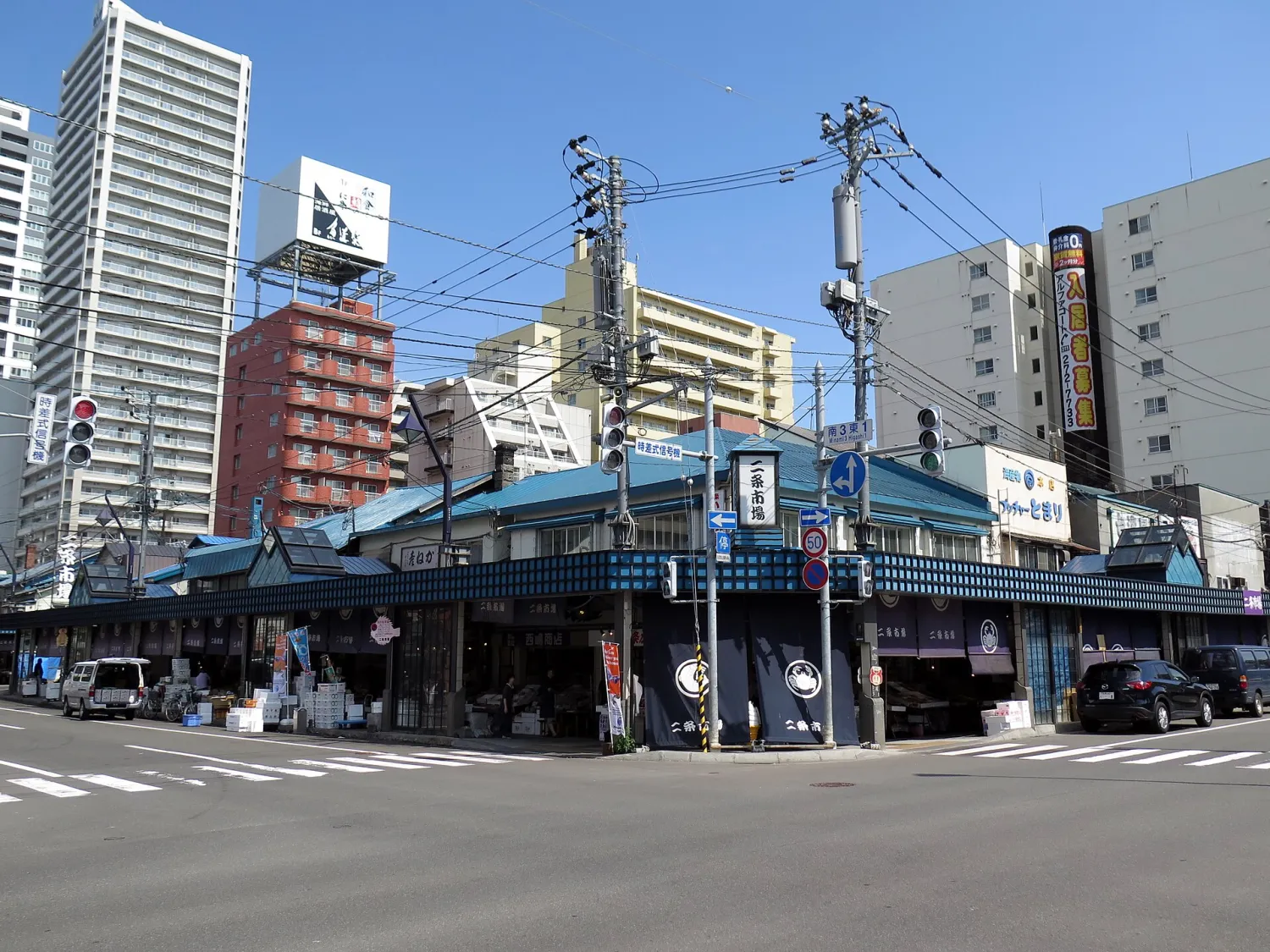
Keep going south-east. Nijō Market, five minutes on foot from Ōdōri Park by the market’s own reckoning, began, it is said, when fishermen from the Ishikari coast came up the Ishikari River in the early Meiji years and sold fresh fish near here. Thirteen shops formed a group on the east bank of the Sōsei River, the market burned to the ground in 1902, and it was rebuilt. It is open every day of the year from the morning, with hours that vary by shop, so this is where to start if you are up early: eat at the market, then walk back to the tower for its 8:45 opening.
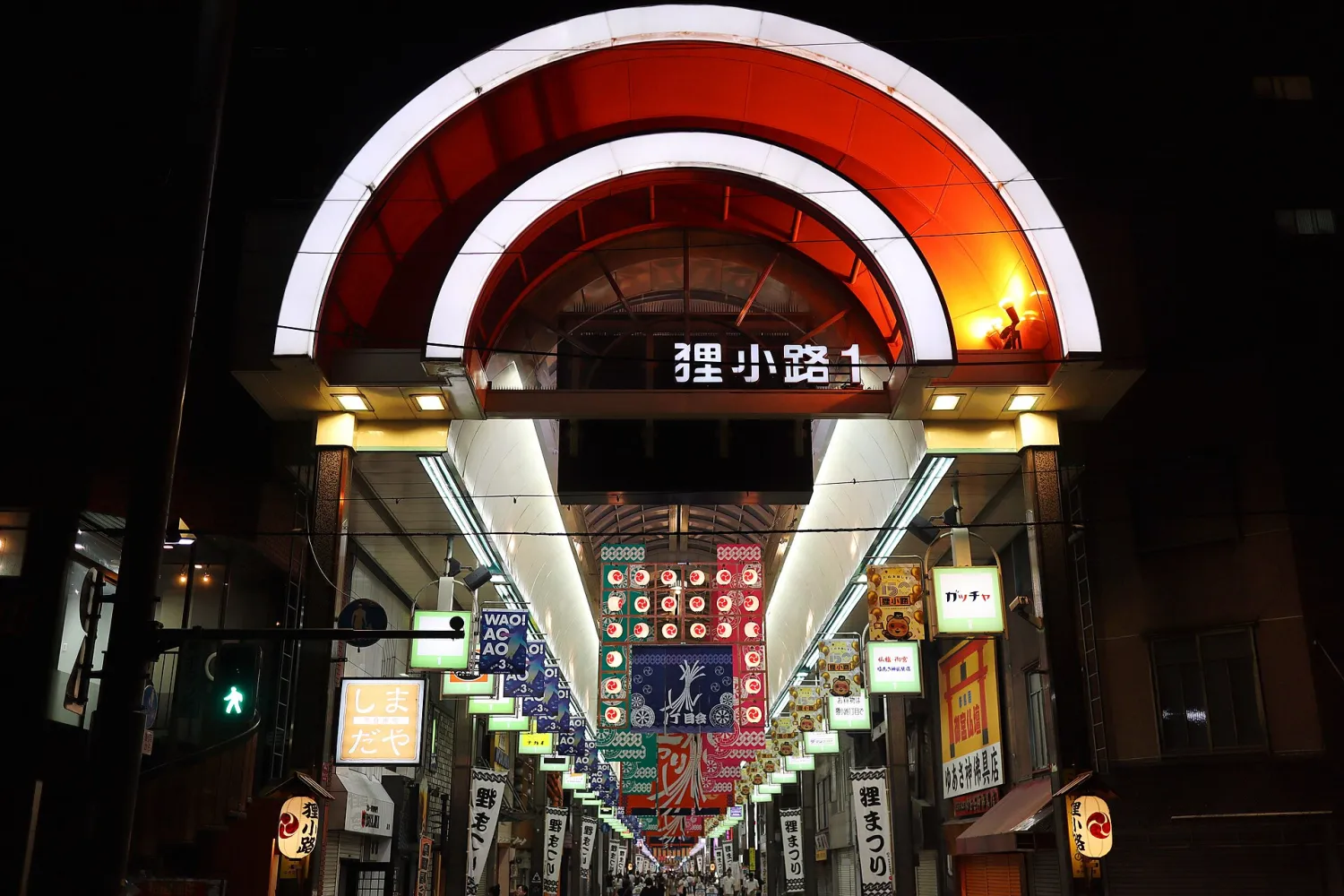
You reach Tanukikoji 1-chōme one minute from the market. Walk the shopping street west, block by block, to 7-chōme. There, Kōnoen Annaka Chaho has sold Japanese tea since 1927 and was founded, it says, as the only Japanese tea shop on Tanukikoji. It roasts its hojicha every day, using its own method, the shop says. It is open 10:00 to 19:00 on weekdays and 13:00 to 18:30 on Sundays and holidays, and closed on the third Sunday of the month, so do not plan to end your walk there on that day.
That is where this walk ends; Susukino and its evening come next.
Before you go
| Sapporo Clock Tower | 8:45–17:10 (last entry 17:00). Closed 1–3 January. Adults 350 yen; university students 150 yen with ID; elementary to high school students free (ID for junior high and high school). Kita 1-jō Nishi 2-chōme. About 10 minutes on foot from JR Sapporo Station through the underground walkway (exit 9), or 5 minutes from Ōdōri subway station, City Hall side. No parking |
| First Monday of the month | Usually open until 20:00 (next day if Monday is a holiday; exceptions listed on the official site). Piano open to visitors in the evening, sign up at the desk |
| Winding demonstration | 10:30, on days posted each week on the official site. None on the 1st of the month |
| Photo terrace | 2F of the Sapporo MN Building, opposite the front door. Free |
| Lit up | After sunset until 21:30 |
| Kahisakan Ōdōri | Ōdōri Nishi 1-chōme, B2F. 9:00–20:00 (Sundays until 18:00). Counter only. Closing days not listed on the official site |
| Nijō Market | Minami 3-jō Higashi 1–2-chōme. Open every day from the morning; hours vary by shop |
| Kōnoen Annaka Chaho | Tanukikoji 7-chōme. Weekdays 10:00–19:00, Sundays and holidays 13:00–18:30. Closed third Sunday. Occasional extra closures are announced on the shop’s site |
Checked 29 September 2026.
What I would do in central Sapporo
I would be on the terrace across the street at five to twelve, count the twelve strokes, and then walk. I would take my coffee at the 1971 counter below Ōdōri, cut across to the market, and follow Tanukikoji west to the tea shop at the far end, buying a bag of the shop’s hojicha before the evening starts in Susukino.
We have not visited the Sapporo Clock Tower or the shops in this guide. The facts here come from the official sources below, checked on 29 September 2026.
- Sapporo Clock Tower (official site) — history, the Howard clock and its repairs, the move in 1906 and the vote on its direction, the structure, the wall colours and red stars, the bell at night, the exhibits, hours, fees, the first-Monday evening opening, the winding demonstration, the photo terrace and access: sapporoshi-tokeidai.jp/know/walking.php, sapporoshi-tokeidai.jp/know/tell_defense.php, sapporoshi-tokeidai.jp/know/structure.php, sapporoshi-tokeidai.jp/know/bits_of_knowledge.php, sapporoshi-tokeidai.jp/inspect/exhibition.php, sapporoshi-tokeidai.jp/inspect/guide.php, sapporoshi-tokeidai.jp/access/, sapporoshi-tokeidai.jp/
- Agency for Cultural Affairs (Cultural Heritage Online) — the building and its designation as an Important Cultural Property in 1970: online.bunka.go.jp/heritages/detail/188689
- Sapporo Tourism Association (Welcome to Sapporo) — the terrace in the Sapporo MN Building, the City Hall observation corridor, the Clark statue, the lighting until 21:30: sapporo.travel/find/culture/clock_tower/
- Kahisakan — the Ōdōri shop, its hours and its history: kahisakan.jp/shop, kahisakan.jp/about_k
- Nijō Market — its history and hours: nijomarket.com/about
- Kōnoen Annaka Chaho — its history, roasting and hours: kounoen.net
- Photographs: the hero image by Ninosan (CC0); the front of the tower by Balon Greyjoy (CC0); Nijō Market by Wing1990hk (CC BY 3.0); Tanukikoji by MIKI Yoshihito (CC BY 2.0) — all from Wikimedia Commons
More in Sapporo
- Susukino — For a night of lamb at a fourteen-seat counter, then Sapporo miso ramen in the old alley or a parfait after midnight
- Otaru Canal — For the blue sky over the warehouses just after sunset, and a cruise by day or by night
- Sapporo Beer Museum — For the red star on the chimney, followed in English from the top floor down to the tasting hall
- Jozankei Onsen — For free hot water on the street: a kappa hand bath, foot baths and a spring that cooks eggs
- Where to Stay — For choosing where to sleep by where your night ends: Susukino after the last bowl, the station for early trains, one night in Jozankei
Explore other areas
- Hokkaido — Sapporo · You are here
- Kanto — Hakone
- Hokuriku — Kanazawa
- Koshin-Tokai — Fuji Five Lakes
- Kansai — Nara
- Chugoku — Hiroshima
- Kyushu — Fukuoka
- Okinawa — Naha
