Tokyo / Guide
Koenji: Take the North Exit to Drink
Koenji高円寺
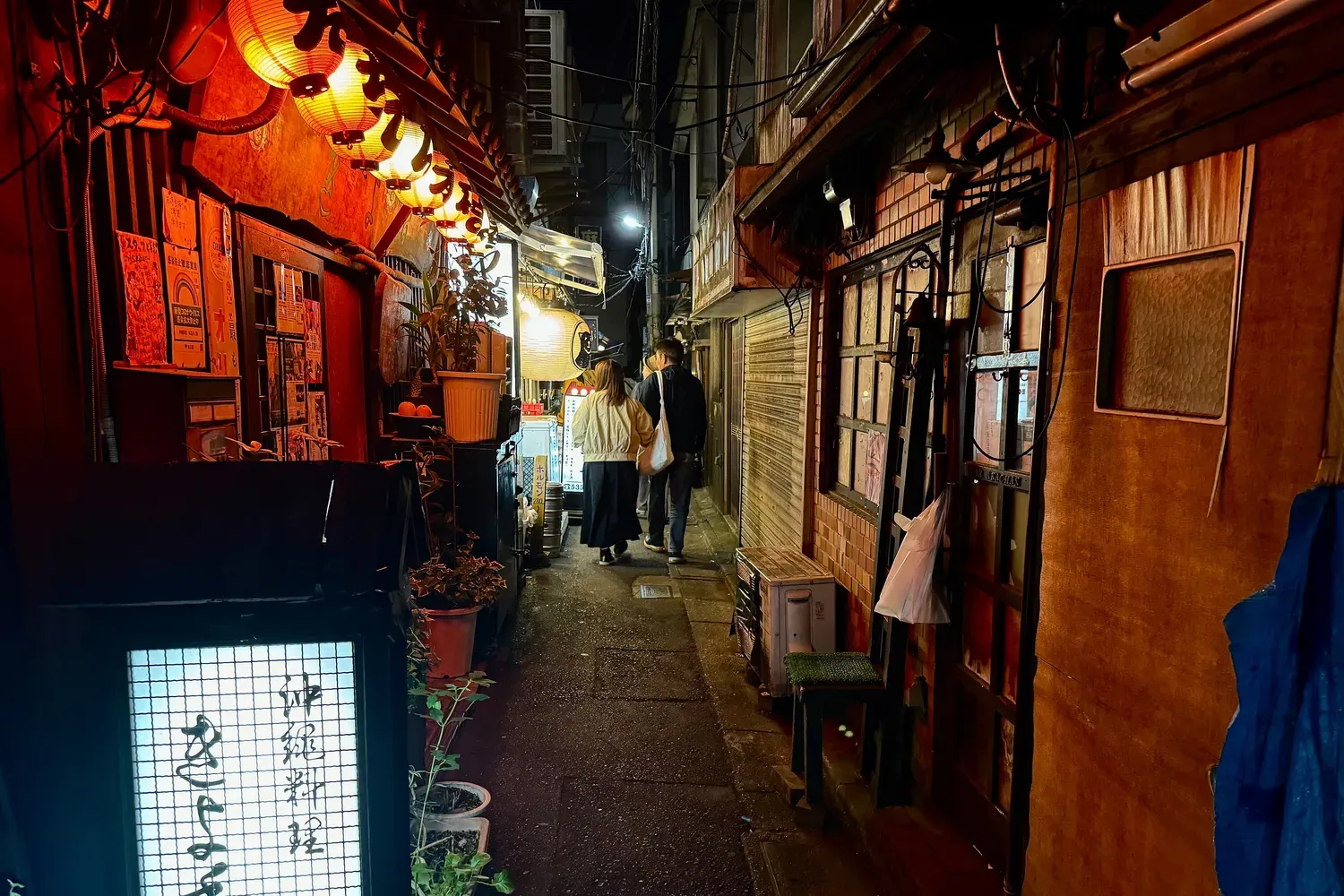
I have been to Koenji a few times, to drink and to watch the Awa Odori dance festival.
The bars I drank in were small, cheap and unpretentious, full of chatter, with plenty of young people and locals. I went from one bar to the next, and it was fun.
If you are coming to drink, take the north exit of the station rather than the south. The north side has more places to eat and drink, and the south leads into an arcade where fashion comes first. And the dance festival held here each summer once survived by a single vote.
North exit or south exit
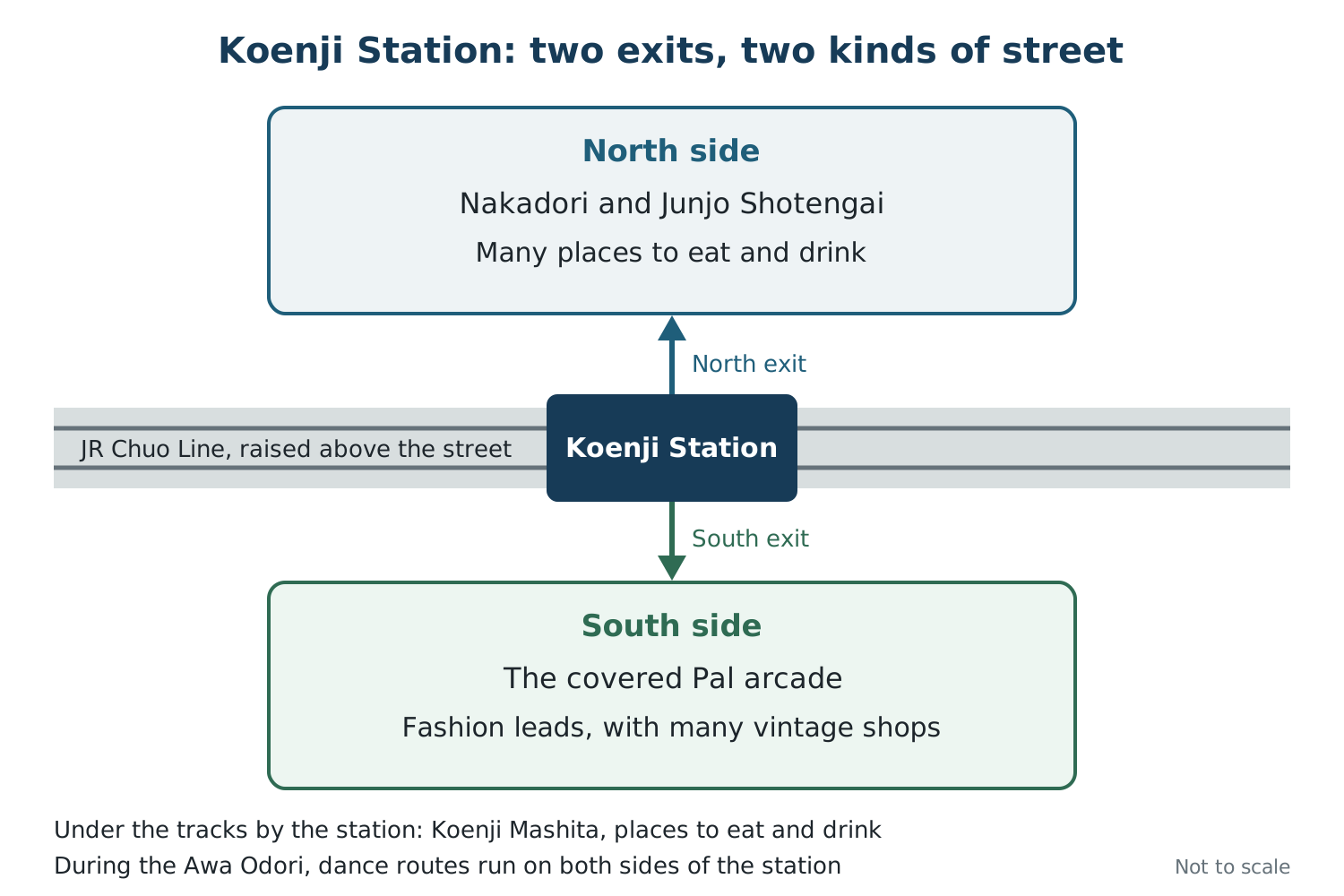
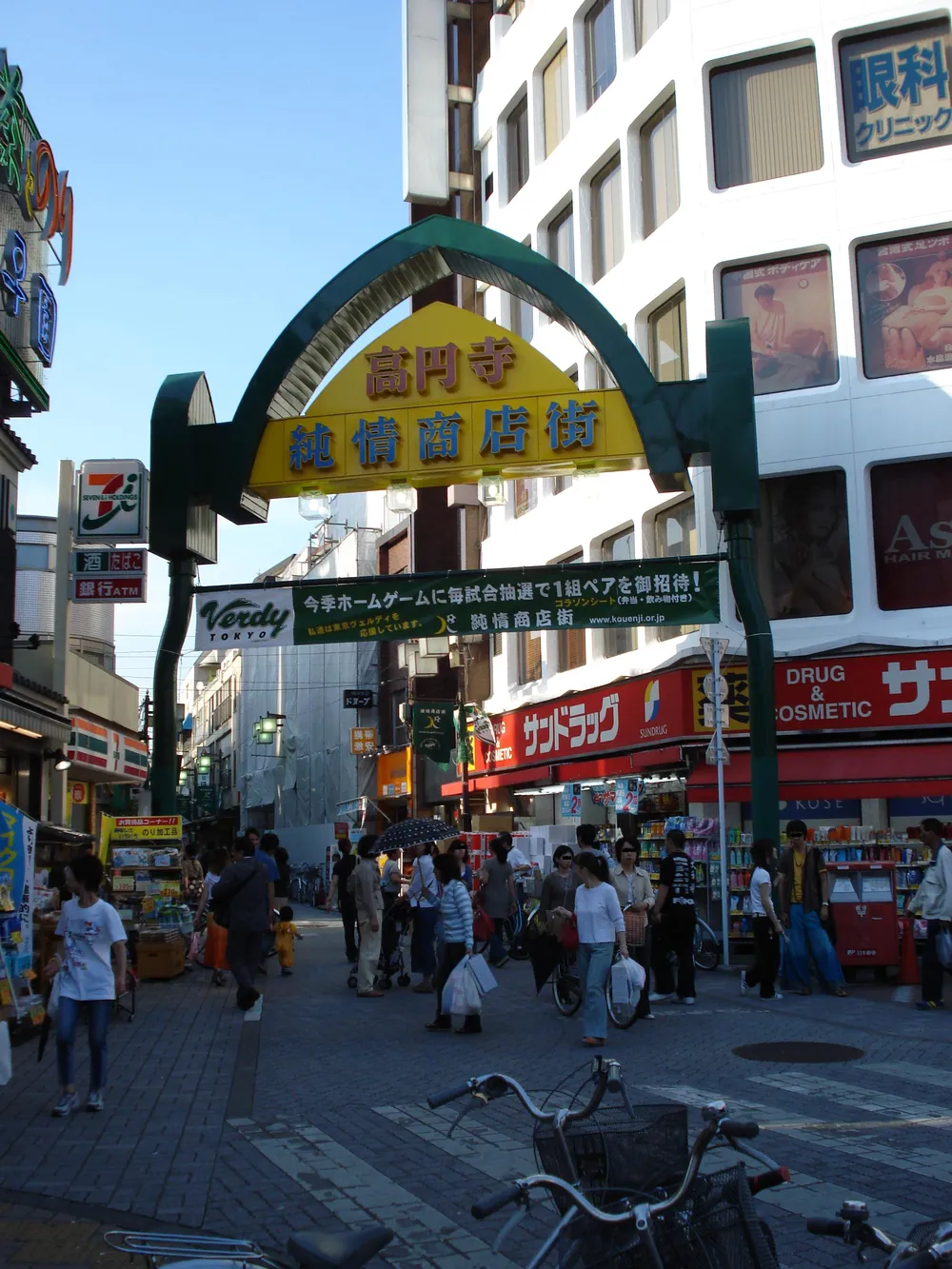
Step out of the north exit, and Nakadori is right in front of you, a street that describes itself as centred on places to eat and drink. Junjo Shotengai, another shopping street on the north side, has more places to eat and drink than any other kind of shop.
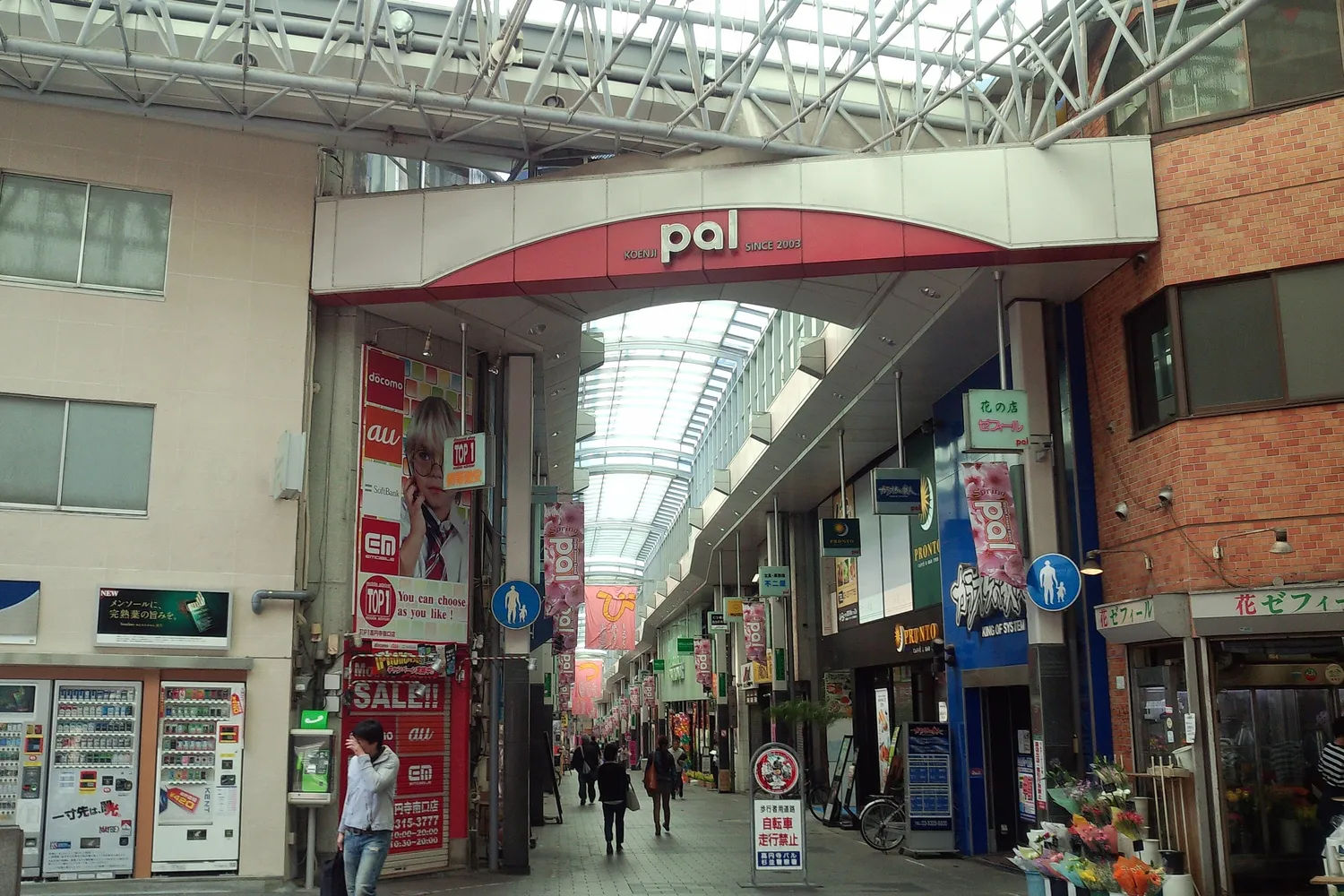
The south exit leads somewhere else. A gateway takes you from the station straight into the covered Pal arcade, out of the rain, where fashion leads and about one listed shop in five sells vintage clothes.
For clothes, start on the south side. The north side is where I would go to eat and drink.
Small bars, one after another
What I remember of the bars in Koenji is how close everyone sat. The next customer was right beside me, the room was loud with voices, and the smoke and smell of grilled yakitori hung in the air.
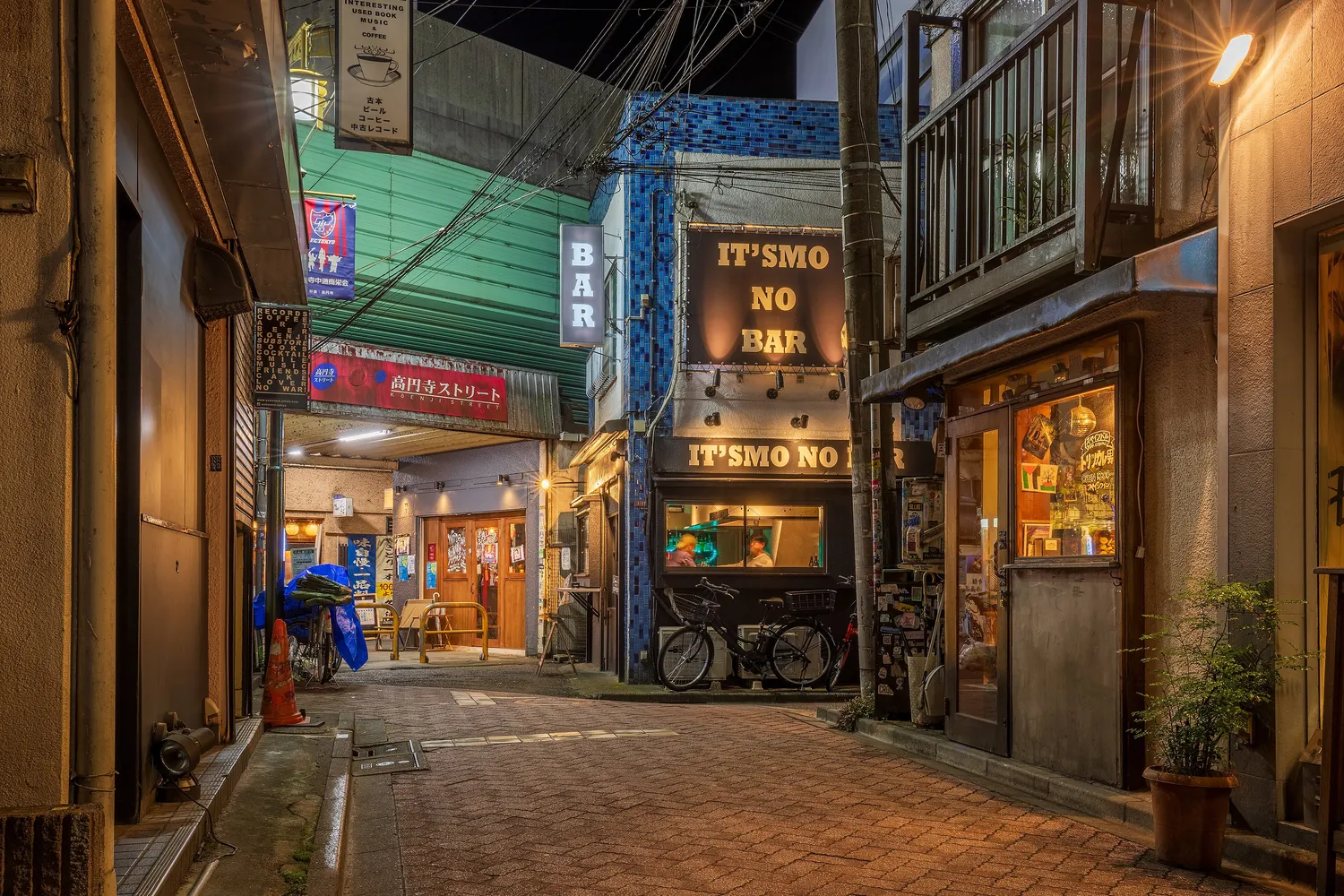
There are more places under the railway tracks, too. Koenji Mashita, a row of places to eat and drink, opened beneath the line next to the station, and two of them are standing bars.
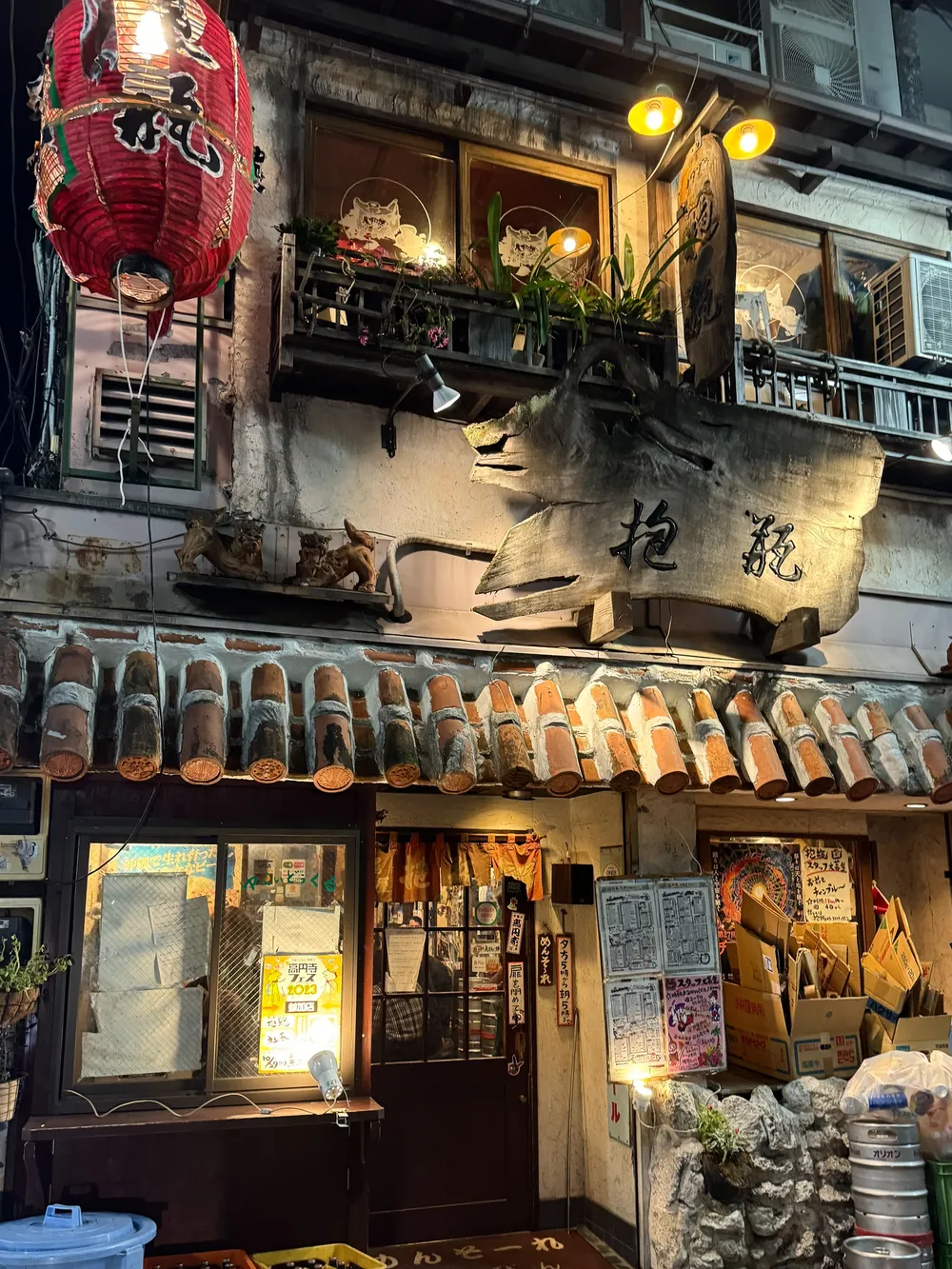
If you like drinking your way along a street, or you want to see everyday Tokyo rather than the sights, the north side is where I would send you.
The dance that survived by one vote
Koenji’s Awa Odori began under a different name.
In 1957, the young members of what is now the Pal shopping street association started a dance festival. The neighbouring town, Asagaya, already had a Tanabata festival, and they did not want to be outdone. They hesitated to call it Awa Odori, so they called it the Koenji Baka Odori, the “fool’s dance.”
A couple of years later, the young shopkeepers held a secret ballot on whether to keep it going or stop. It survived by a single vote.
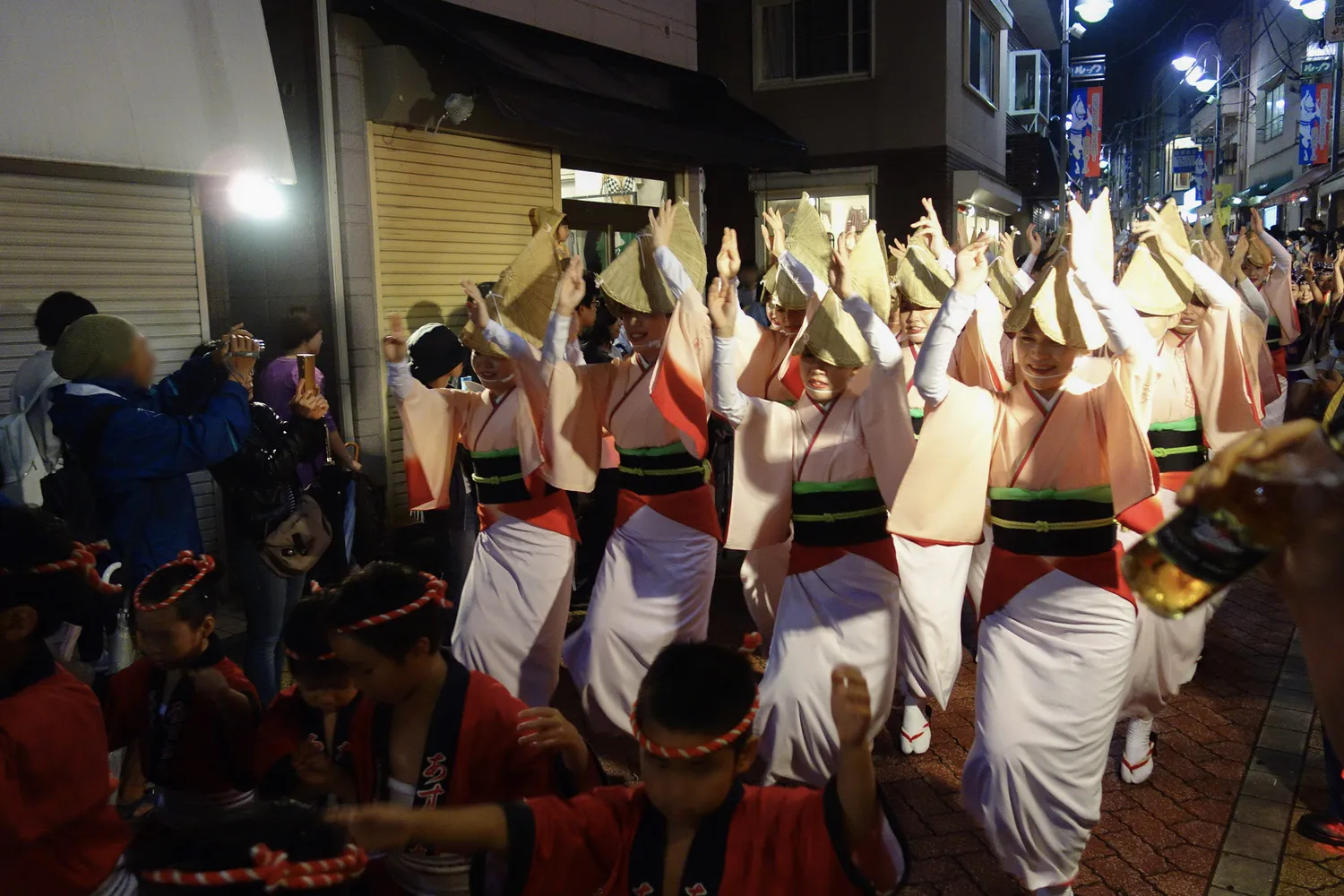
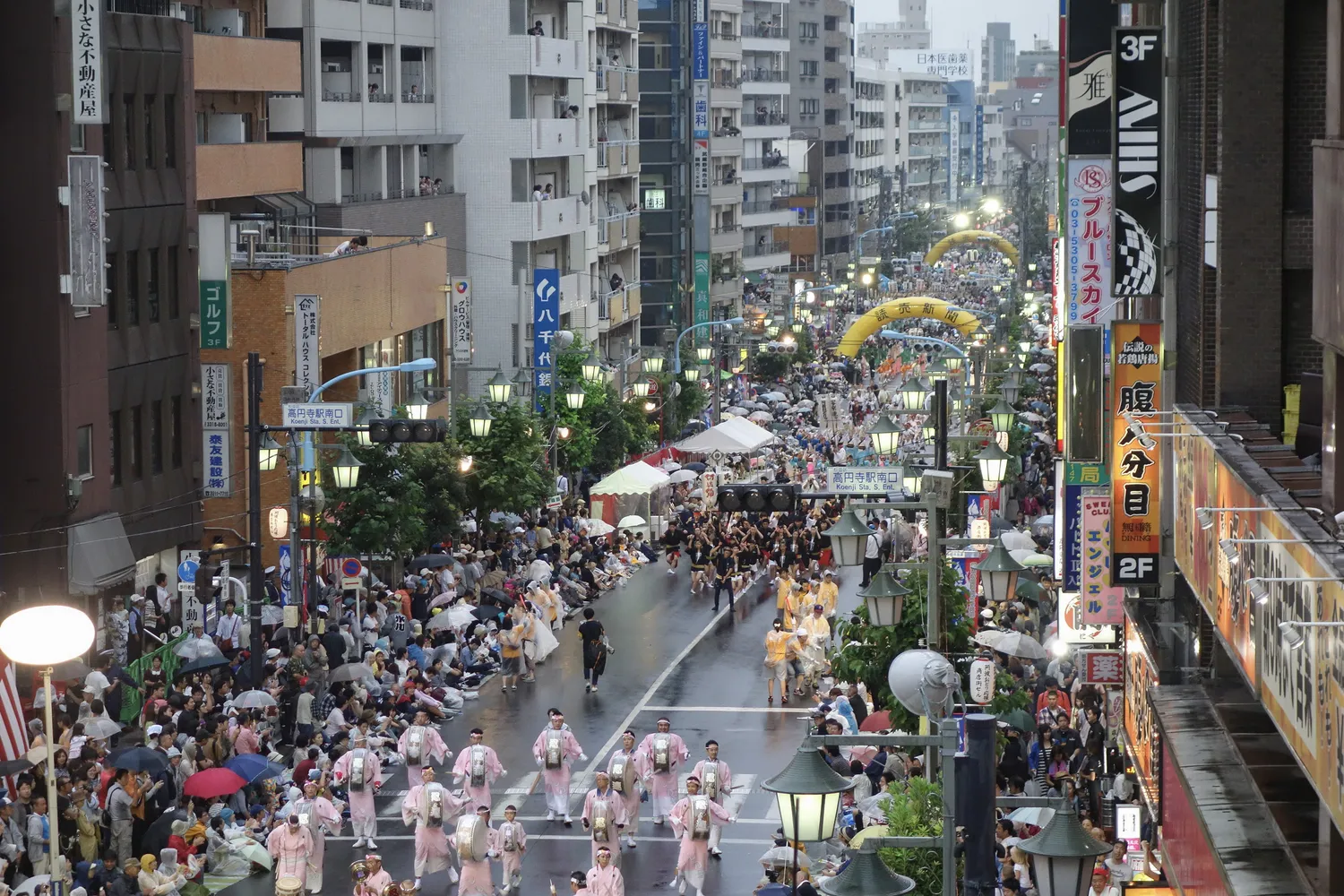
Now the festival is held on the last weekend of August, and its dance routes run along streets on both sides of the station. What I remember of it is the crowd. If you go, check that year’s dates first and expect to be packed in.
Before you go
| Getting there | Koenji Station, on the JR Chuo Line. Local trains on the Chuo-Sobu Line stop here. Tokyo’s official travel site gives about 15 minutes from Shinjuku on the Chuo Line Rapid; check a journey planner for the day and train you take. |
| North exit | Nakadori and Junjo Shotengai, two shopping streets with many places to eat and drink. |
| South exit | The Pal arcade, reached straight from the south exit under a covered gateway. Official site: Koenji Pal |
| Koenji Mashita | Places to eat and drink under the JR tracks by Koenji Station. Official site: Koenji Mashita |
| Tokyo Koenji Awa Odori | Held on the last weekend of August; check the official site for the year’s dates and access. Roads around the station close during the dance. In 2026, Chuo Line Rapid trains did not stop at Koenji on the festival days. Do not tape off a spot on the road or the kerb, and do not film with selfie sticks or tripods. Leave bicycles and pushchairs at home. Official site: Tokyo Koenji Awa Odori |
What I would do
In Koenji, I would come out of the north exit, find a small bar with a free seat, have one drink, and then go looking for the next.
We have visited Koenji. The practical information was checked against the official sources below on 17 November 2026.
- Tokyo Koenji Awa Odori (Japanese and English) — the festival’s start, its first name, the vote, its dates, its routes, access and the rules for watching: koenji-awaodori.com
- Koenji Nakadori (Japanese) — the street’s description: nakadori.jp
- Koenji Junjo Shotengai (Japanese) — its location and shop list: kouenji.or.jp
- Koenji Pal (Japanese) — the arcade, the gateway from the station and its shop list: koenji-pal.jp
- JR East Urban Development (Japanese) — Koenji Mashita: jrtk.jp
- GO TOKYO, the official Tokyo travel site — Koenji and the journey from Shinjuku: gotokyo.org
- Photographs: the lantern-lit lane (the lead image) and the red-lantern bar by Stephen Kelly (CC BY 2.0, cropped); the entrance to Junjo Shotengai by Tyoron2 (CC BY-SA 3.0, cropped); the Pal arcade by Yoshibay (public domain, cropped); the lane of small bars by Ximonic (Simo Räsänen) (CC BY-SA 4.0, cropped); the Awa Odori crowd and the dancers after dark by KQuhen (CC BY-SA 4.0, cropped); all via Wikimedia Commons. The diagram is our own.
More in Tokyo
- Shibuya Crossing and Shibuya Sky — For the crossing seen from an open roof, with little more than your phone in your pocket
- Senso-ji and Asakusa — For the dragon carved under the Kaminarimon lantern, and the lit grounds after five
- Harajuku and Meiji Shrine — For a forest planted with broad-leaved trees instead of cedar, then a crepe on Takeshita Street
- Tokyo Skytree and Tokyo Tower — For one tower to look out from and one to look at, up its outdoor stairs
- Akihabara — For starting in Radio Kaikan, where figures share the building with vacuum tubes
- Where to Stay — For choosing where to sleep by what you want to see after dinner and before breakfast
Explore other areas
- Hokkaido — Sapporo
- Kanto — Hakone, Tokyo · You are here
- Hokuriku — Kanazawa
- Koshin-Tokai — Fuji Five Lakes
- Kansai — Nara
- Chugoku — Hiroshima
- Kyushu — Fukuoka
- Okinawa — Naha
