Tokyo / Guide
Kichijoji: Give the Afternoon to Inokashira Pond, Not the Shops
Kichijoji and Inokashira Park吉祥寺・井の頭恩賜公園
What I remember most about Kichijoji is Inokashira Park. I walked all the way round the pond. What stayed with me were the couples out on dates, the people out for the cherry blossoms, and the smell of coffee from a café inside the park. If you want a slow afternoon, spend it on the pond instead of hurrying between shops. The loop is only 1.5 km, so there is no reason to rush it.
The park is a short walk from Kichijoji Station. It never closes and costs nothing to enter, so you can arrive whenever the shops have worn you out, or before they open.
Begin the loop at Nanai Bridge
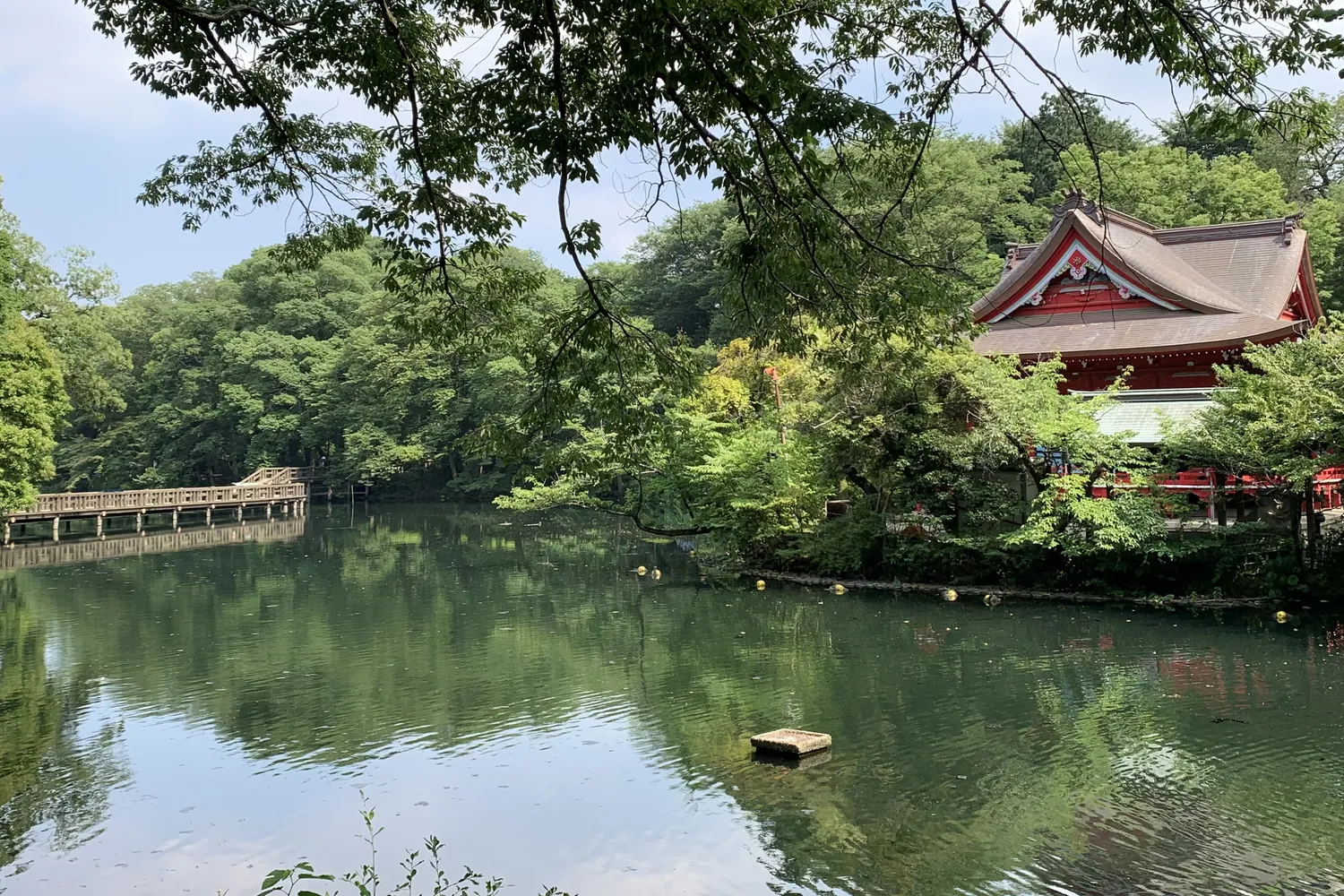
The pond runs from east to west, and Nanai Bridge crosses it in the middle. The name comes from the pond’s old nickname, the Pond of Seven Wells, because water once rose from several springs. Stand on the bridge for a moment before you set off.
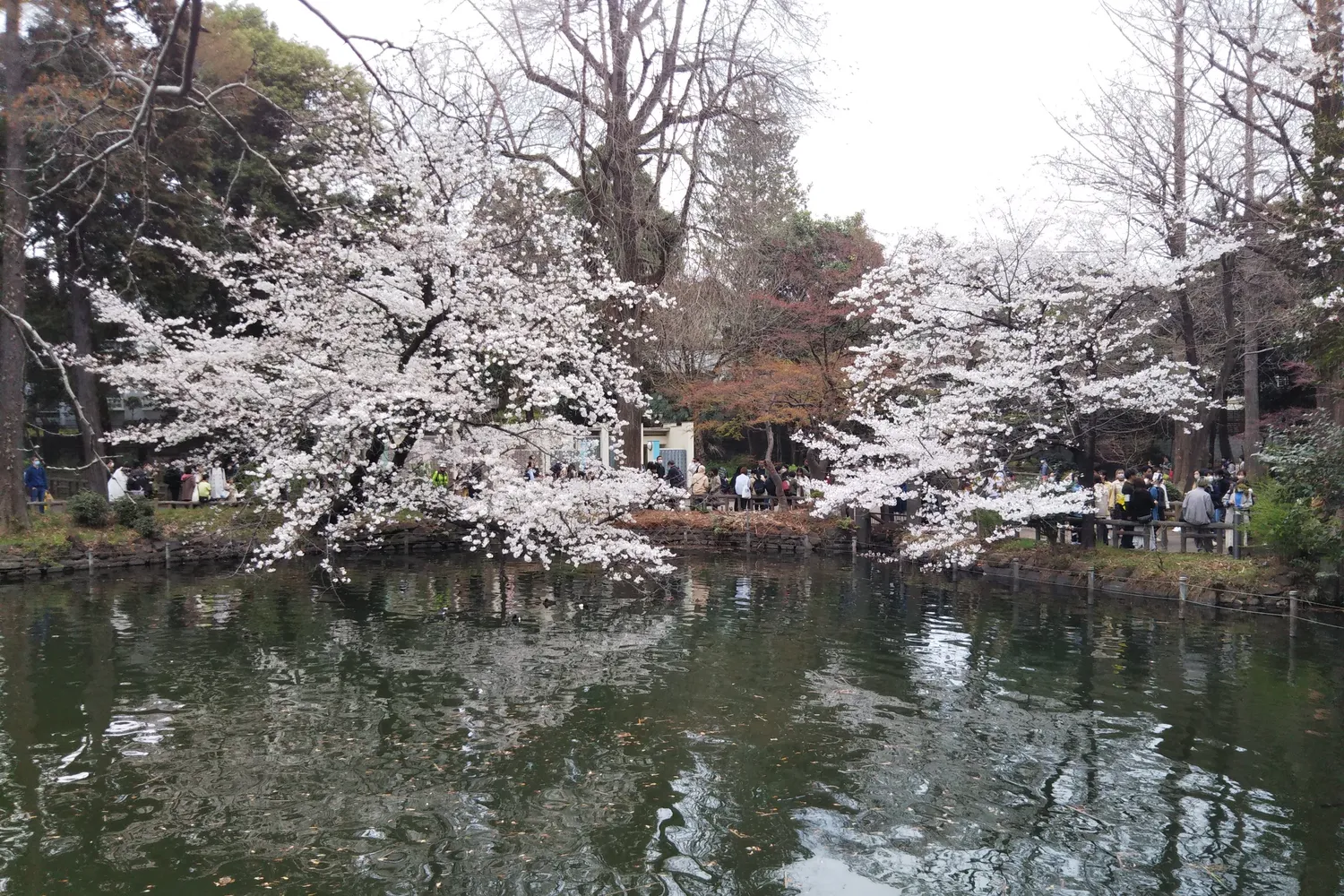
In spring, the cherry trees around the pond lean out over the water, and when the blossoms fall, the petals cover its surface. It is the season when the park is busiest, with crowds out for the blossoms.
The gate at the east end
Walk to the east end and look for a stone gate at the water’s edge. It is what remains of the intake of the Kanda waterworks, which carried water from this pond to Edo, the old name for Tokyo, for people to drink. The Kanda River still begins inside the park.
The waterworks closed at the end of the nineteenth century, once the city had a modern water supply. Later, the springs that gave the pond its nickname dried up. The water you walk beside today comes from deep wells, which keep the pond as it was.
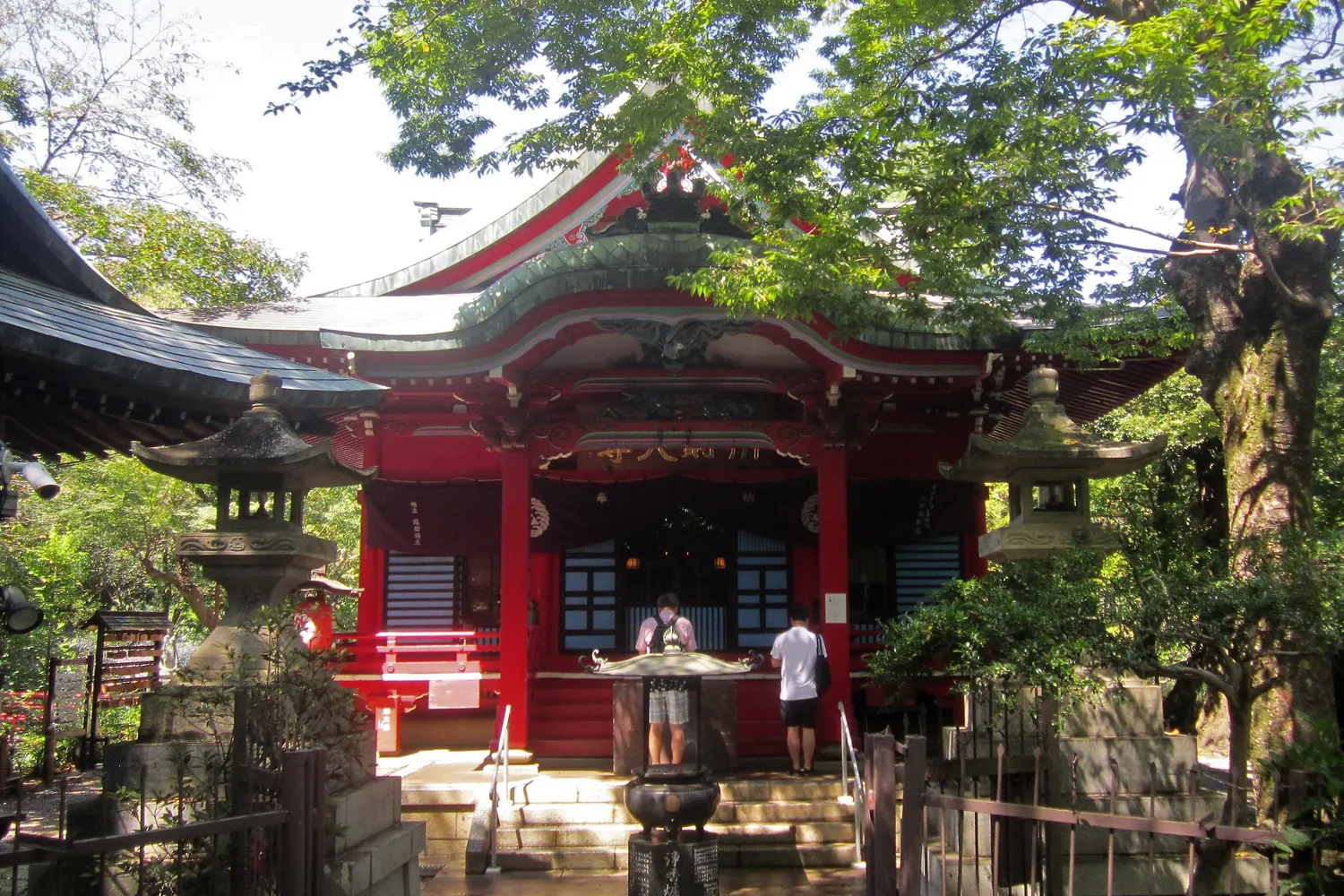
Keep walking round to the west end, where a stone rim marks an old well called Ochanomizu; the story goes that Tokugawa Ieyasu, the first shogun, had its water used for tea at Edo Castle. Along the shore stands Inokashira Benzaiten, a small temple hall to the goddess Benzaiten, where people wash coins for luck.
A boat, if you came as a couple or a family
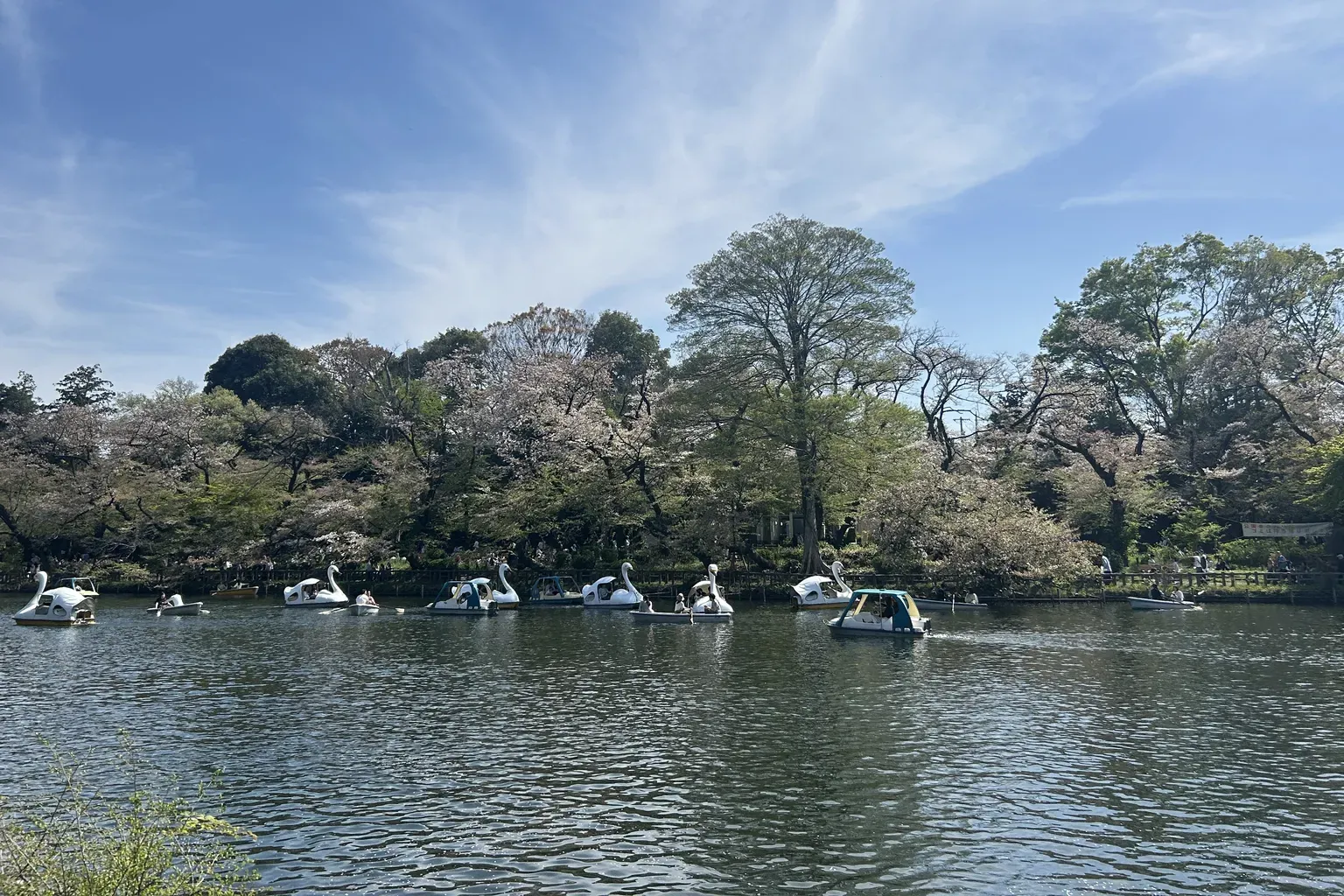
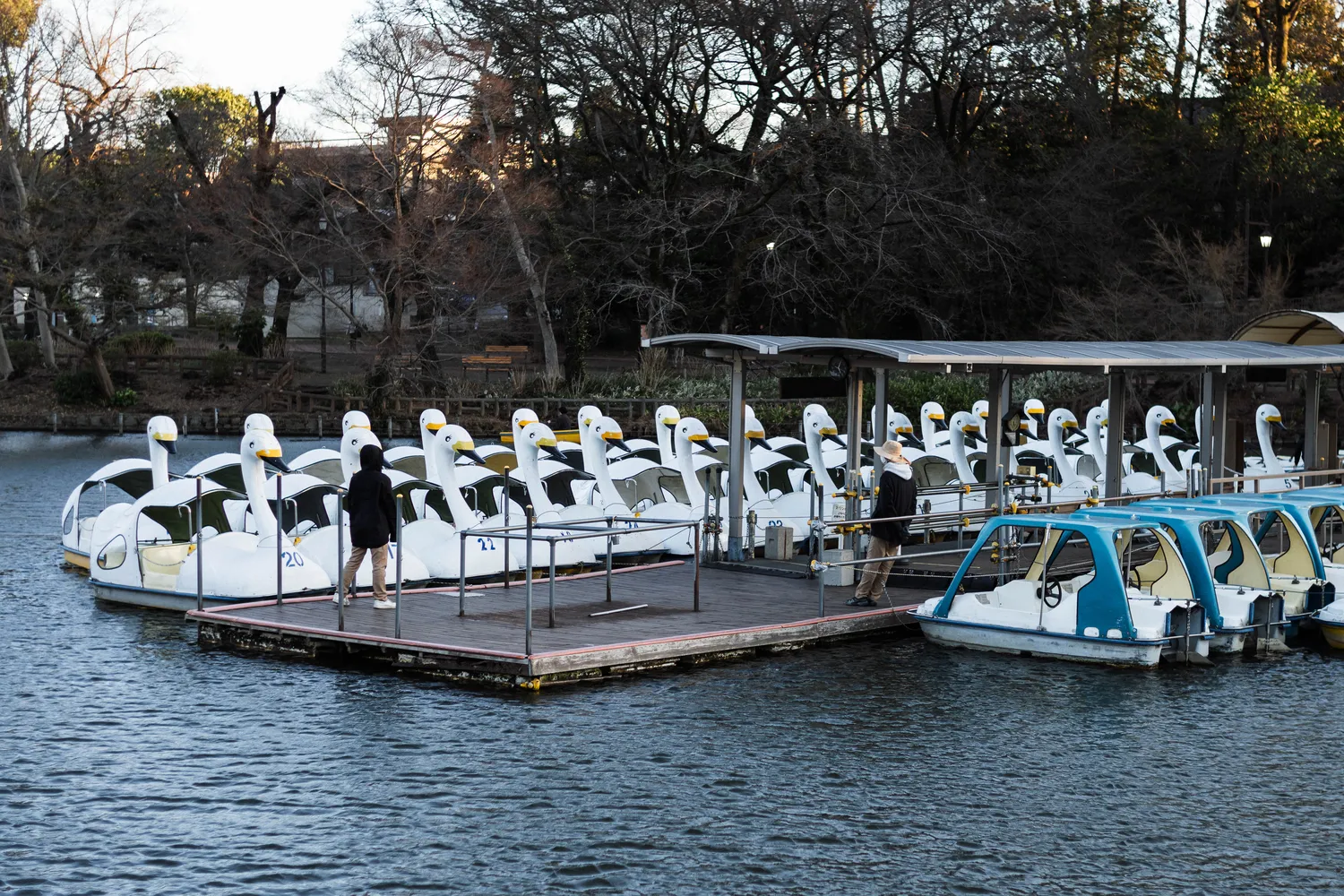
If you came as a couple or with children, you can add a boat to the walk and see the pond from the middle. There are rowing boats, pedal boats and swan-shaped pedal boats, rented by the half hour from the boathouse. In winter, the boathouse closes on Wednesdays, so check the day before you plan on one.
The Ghibli Museum is in the western part of the same park. Tickets are booked ahead for a set day and hour, so plan it before you come; if you already have one, here is what to expect at the Ghibli Museum.
After dark, Harmonica Yokocho
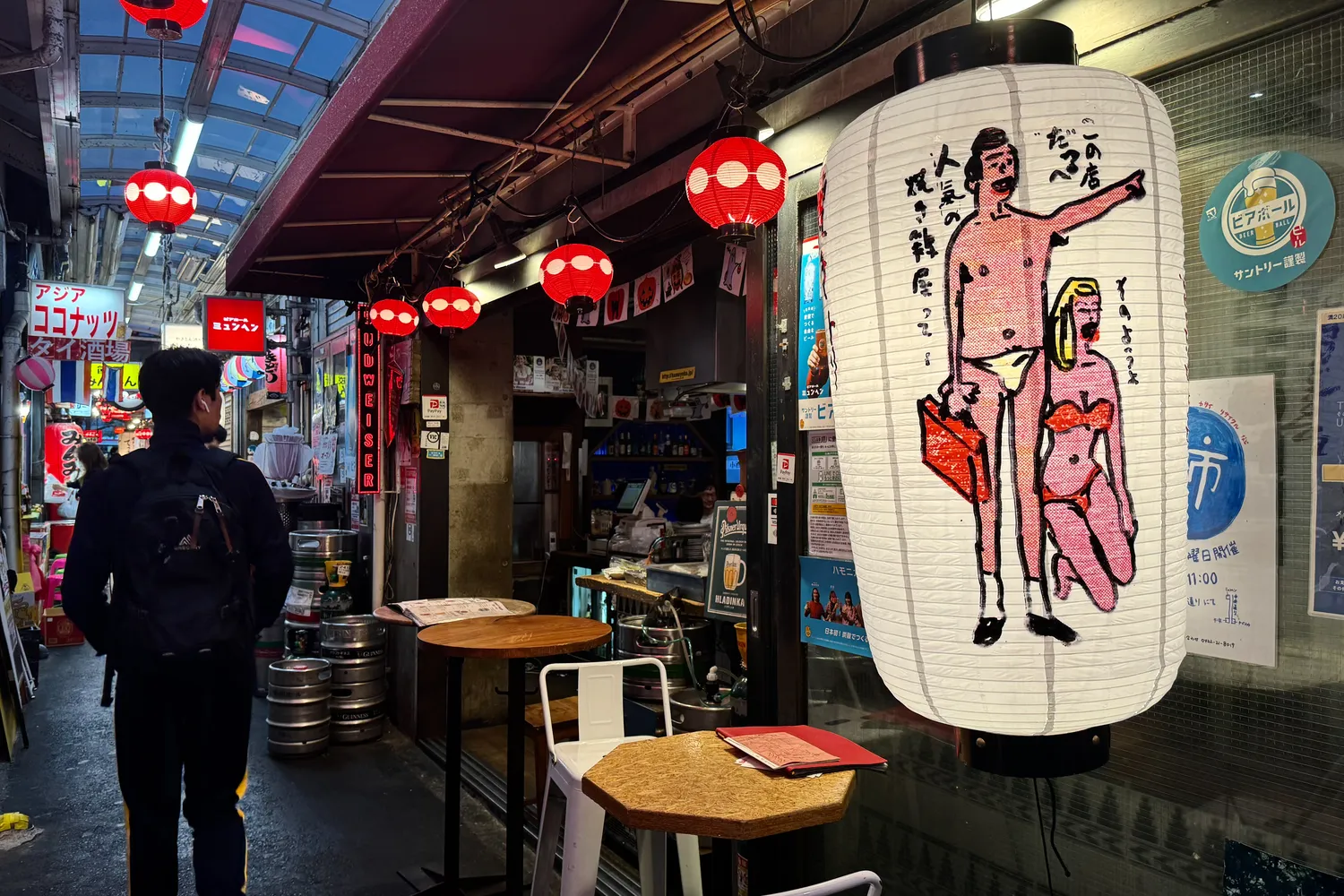
If you stay in Kichijoji into the evening, walk back to the station and out of the north exit to Harmonica Yokocho, a block of narrow lanes right in front of it. By day, shoppers fill its fishmongers, florists and Japanese sweet shops; at night the lanes fill with small restaurants and izakaya, Japanese pubs.
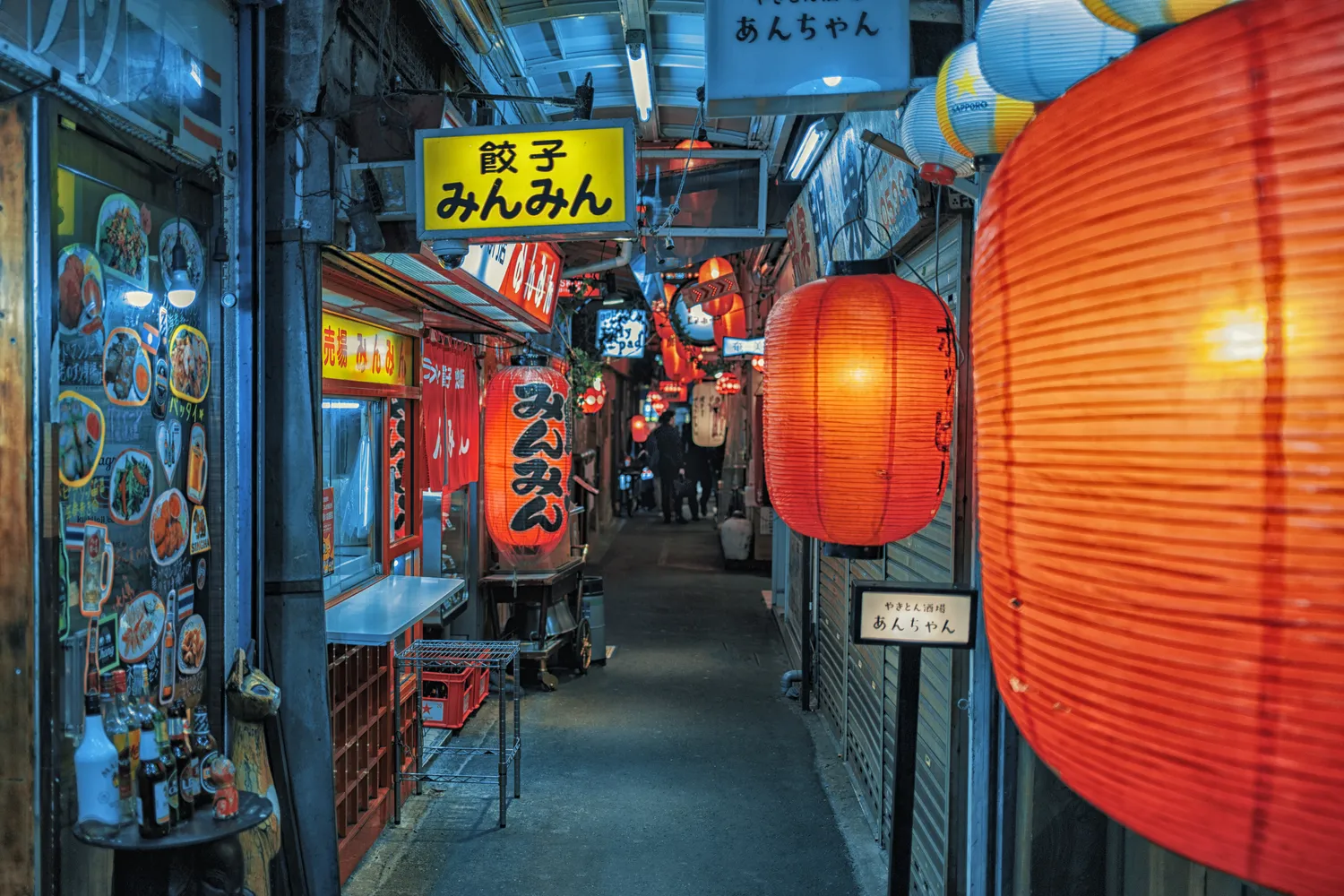
The lanes began as a black market in the years after the war. One account of the name credits the writer and critic Kamei Katsuichiro, who lived in Musashino, the city Kichijoji belongs to, and said the narrow shopfronts looked like the holes of a harmonica. In a talk he once gave here, he told his audience they could pretend to be buying stationery and slip into one of the little bars instead.
Before you go
| Inokashira Park | Open at all times; free to enter (some facilities charge). About 5 minutes’ walk from Kichijoji Station (JR Chuo Line, Keio Inokashira Line), or about 1 minute from Inokashira-koen Station on the Keio Inokashira Line. Official page: Tokyo Metropolitan Government |
| Boats | Rowing boat (up to 3 adults) 800 yen per 30 minutes; pedal boat and swan boat 1,000 yen per 30 minutes. Hours change by month (opening at 9:30 or 10:00); ticket sales end before closing time. Closed on Wednesdays from December to February. Times may change during the cherry blossom season because of crowds. |
| Inokashira Benzaiten | On the edge of the pond. Gates open from 7:00 until late afternoon (official sources give 16:00 and 16:30). |
| Harmonica Yokocho | Right outside the north exit of Kichijoji Station. There are no shared opening hours; each shop keeps its own. A morning market is held on the second Sunday of each month, 8:00–11:00. |
What I would do
In Kichijoji, I would walk straight from the station to the pond, stop on Nanai Bridge, go round the whole loop slowly, stopping at the stone gate at the east end, and leave the shops for the walk back.
We have visited Kichijoji and Inokashira Park. The practical information was checked against the official sources below on 1 November 2026.
- Tokyo Metropolitan Government, Bureau of Construction (Japanese) — Inokashira Park: opening history, the pond and Nanai Bridge, the cherry trees, the Kanda waterworks and the Kanda River, boat prices and hours, and directions: kensetsu.metro.tokyo.lg.jp
- Tokyo Metropolitan Park Association (Japanese) — opening days, admission and boat hours: tokyo-park.or.jp
- Ghibli Museum — tickets: ghibli-museum.jp
- Musashino City Tourism Organization (Japanese) — the stone intake gate, the springs and the deep wells, Ochanomizu, Inokashira Benzaiten, and Harmonica Yokocho: musashino-kanko.com
- Musashino City (Japanese) — the history of Harmonica Yokocho and Kamei Katsuichiro’s talk, in the city’s quarterly magazine Kikan Musashino: city.musashino.lg.jp
- Photographs: the pond with swan boats (the lead image) by Htanaungg (CC BY-SA 4.0, cropped); the pond in summer by ARandomName123 (CC BY-SA 4.0, cropped); the cherry blossoms by Kirin7739 (CC BY-SA 4.0, cropped); Inokashira Benzaiten by Suikotei (CC BY-SA 4.0, cropped); the swan boats by Ryohei Noda (CC BY 4.0, cropped); the lanterns in Harmonica Yokocho by Stele5cats (CC BY-SA 4.0, cropped); the lane in Harmonica Yokocho by Stephen Kelly (CC BY 2.0, cropped); all via Wikimedia Commons.
More in Tokyo
- Shibuya Crossing and Shibuya Sky — For the crossing seen from an open roof, with little more than your phone in your pocket
- Senso-ji and Asakusa — For the dragon carved under the Kaminarimon lantern, and the lit grounds after five
- Harajuku and Meiji Shrine — For a forest planted with broad-leaved trees instead of cedar, then a crepe on Takeshita Street
- Tokyo Skytree and Tokyo Tower — For one tower to look out from and one to look at, up its outdoor stairs
- Akihabara — For starting in Radio Kaikan, where figures share the building with vacuum tubes
- Where to Stay — For choosing where to sleep by what you want to see after dinner and before breakfast
Explore other areas
- Hokkaido — Sapporo
- Kanto — Hakone, Tokyo · You are here
- Hokuriku — Kanazawa
- Koshin-Tokai — Fuji Five Lakes
- Kansai — Nara
- Chugoku — Hiroshima
- Kyushu — Fukuoka
- Okinawa — Naha
